Study Tips
The hard parts of learning Korean, and how to get past them
Korean Word Order: 8 Sentences That Show How It Works
Korean puts the verb last and marks roles with particles instead of position. Eight short sentences that show the pattern — and how to stop translating word by word.

Korean vs Japanese vs Chinese Writing: How to Tell Them Apart
Hangul, kana and Chinese characters look nothing alike once you know what to look for. Here's the three-second test — and why the writing isn't the hard part of Korean.
Is Korean a Tonal Language? Pitch, Intonation, and Meaning
Korean isn't tonal — but pitch still does real work. Here's what actually changes meaning in Korean, and a drill to stop sounding flat or accidentally rude.
The Most Common Korean Mistakes: What 60 Real Learner Errors Show
We sorted every mistake our AI teachers corrected for 25 learners. Politeness beat grammar, too much politeness was as common as too little, and the number two caused every counter error.
9 Korean Titles to Use Instead of Someone's Name
In Korean, you often can't just say someone's name. Here are nine titles — 선생님, 선배, 사장님 and more — with when to use each and what to say when you don't know.
Freezing When You Speak Korean: How to Get Words Out
You know the words, but nothing comes out. Here's why Korean sentence order causes the freeze — and the ending-first habit plus time-buying phrases that fix it.

How to Connect Korean Sentences: -아서, -니까, and -는데
If your Korean has stalled at intermediate, the problem may not be vocabulary. It's that you stop at every period. Here's how natives glue clauses together instead.
Korean Speech Levels Explained: 해요체, 합쇼체, 반말
Every Korean sentence forces you to pick a politeness level before you can say it. Here's what each one sounds like — and the one default that keeps you safe almost everywhere.
9 Korean Spacing Rules (띄어쓰기) That Trip Up Learners
Korean spacing follows word boundaries, not the places you hear a pause. Nine rules — particles, bound nouns, 안/못, counters, 하다 — with examples you can copy.

9 Rules for Korean Numbers: When to Use 하나, 둘 vs 일, 이
Korean has two counting systems, and the choice never depends on the number — it depends on the word right after it. Nine rules, with the sentences you'll actually say.
Korean Pronunciation Rules: Why 국물 Sounds Like [궁물]
Korean spelling shows a word's parts, not its sound. Here are the handful of sound-change rules behind 국물 [궁물] and 같이 [가치] — and how to stop reading Hangul letter by letter.

How to Practice Speaking Korean When You Have Nobody to Talk To
You can read Hangul, you know a few hundred words, and you have never said a full sentence out loud. Here is how to fix that on your own — and what each method is actually good for.
How Long Does It Take to Learn Korean? An Honest Answer
The State Department says 2,200 hours. That number is real, but it answers a question you probably are not asking. Here is what each level actually costs in months.
Korean Vocabulary That Won't Stick — Why, and What Works
If Korean words slide out of your head a day after you learn them, the problem usually isn't your memory. It's that you're learning words alone instead of with a partner.
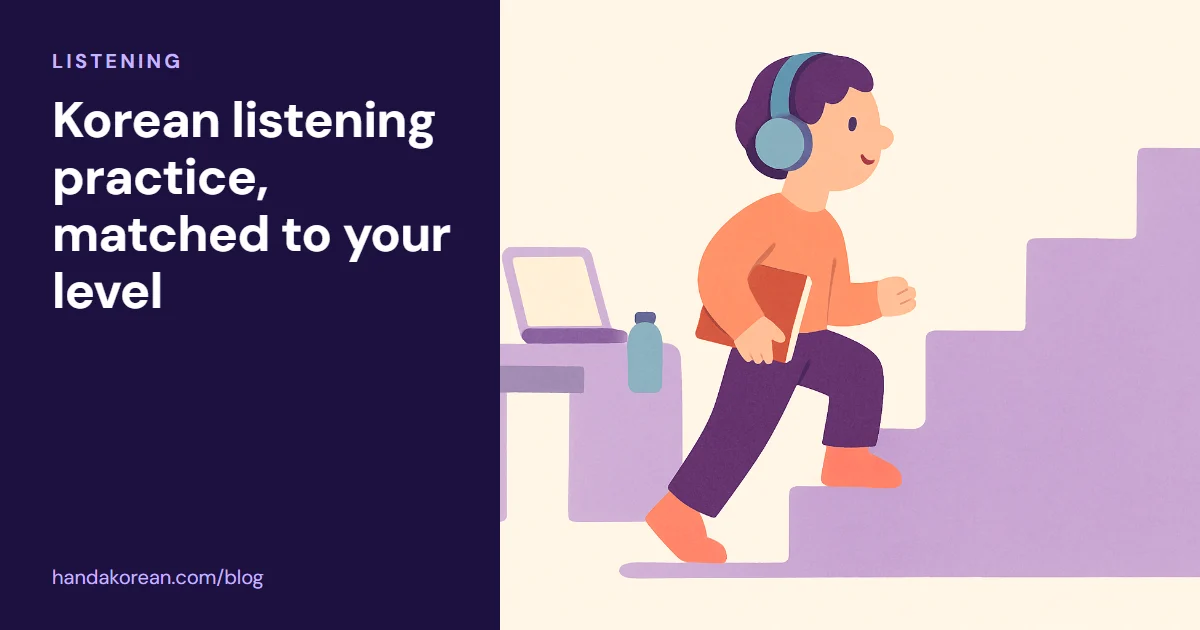
Korean Listening Practice, Matched to Your TOPIK Level
Dramas are too fast and textbook audio is too slow. The material that builds listening is the material you almost understand.
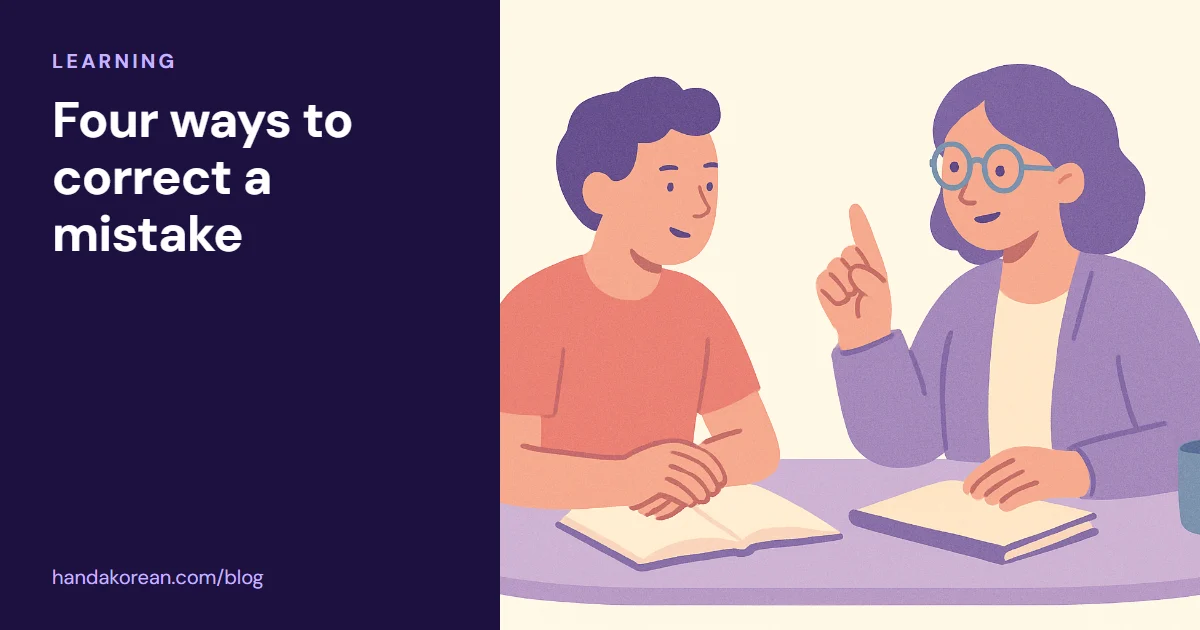
Four Ways to Correct a Korean Mistake — and Which One You Need
Recast, metalinguistic, explicit, elicitation. The way an error gets corrected changes whether you learn from it or just feel bad about it.