Freezing When You Speak Korean: How to Get Words Out
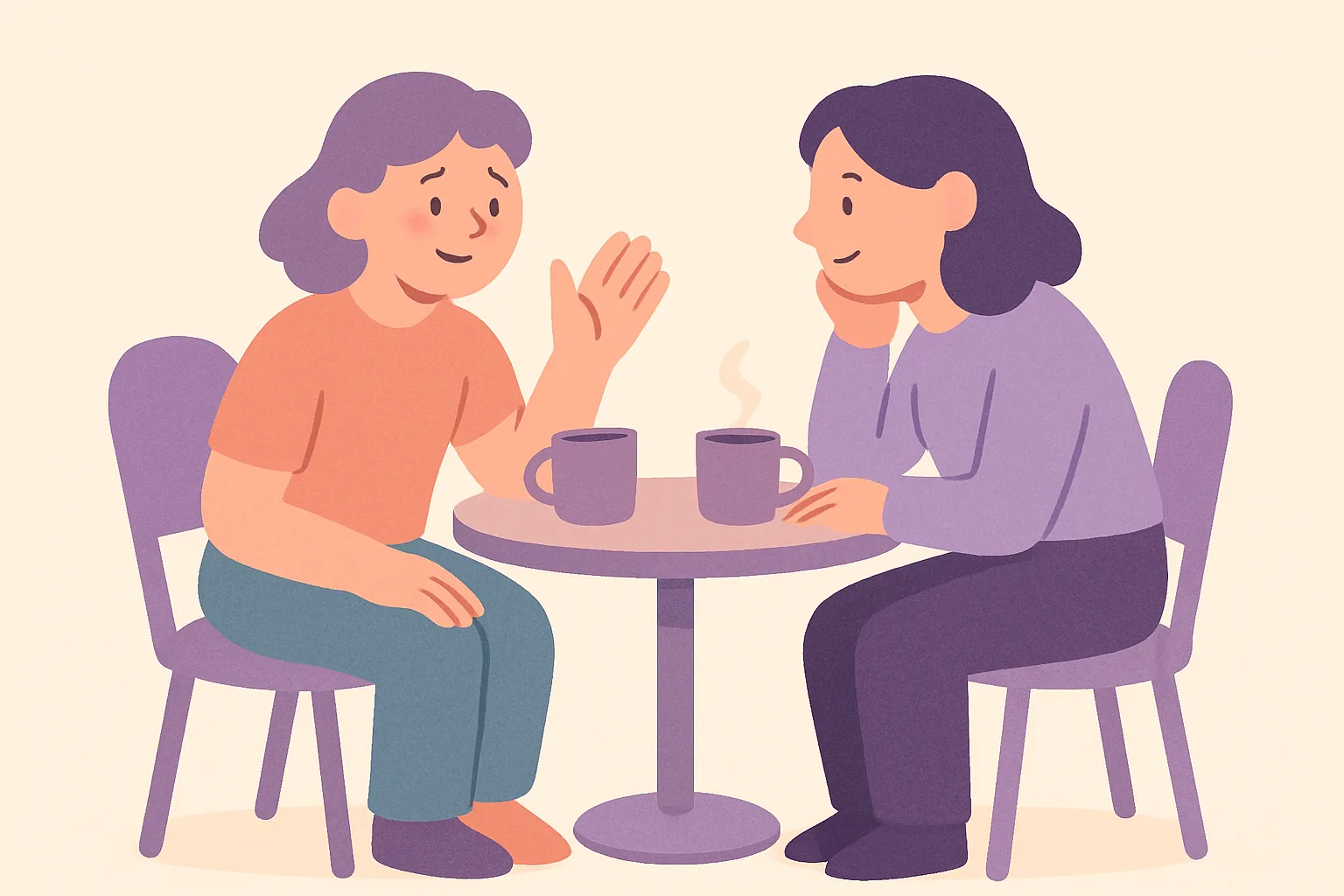
You've studied the words. Someone asks you a simple question in Korean. Your mouth opens, two syllables come out, and then — nothing. 머릿속이 하얘졌어요. My mind went blank.
Here's the one idea for today: you freeze because you are trying to finish an English sentence in Korean word order, and Korean saves the hardest part for last. The fix is to decide how the sentence ends before you start speaking, and to start as small as humanly possible.
Why Korean specifically makes you freeze
In English, the verb shows up early. "I went..." — you've already committed. Tense is done, the grammar is settled, and you can wander through the rest of the sentence at your leisure: "...to a café near my house with a friend yesterday."
Korean does the opposite. Everything is held until the end:
어제 친구랑 집 근처 카페에 갔어요. Yesterday I went to a café near my house with a friend.
Tense (갔), politeness (어요), and whether it's a statement or a question all live in that last word. So when an English speaker starts with 어제... and then begins assembling the middle, the brain is holding six items in the air while still not knowing how the sentence will land. That's the freeze. It isn't a vocabulary problem. It's a load problem.
The fix: build from the verb outward
Decide your verb first. Say it. Then add information in front of it, one piece at a time, only if you want to.
| What you say | English |
|---|---|
| 갔어요. | (I) went. |
| 카페에 갔어요. | (I) went to a café. |
| 친구랑 카페에 갔어요. | (I) went to a café with a friend. |
| 어제 친구랑 카페에 갔어요. | Yesterday I went to a café with a friend. |
Every line in that table is a complete, natural Korean sentence. That's the part English speakers don't believe. In English, "Went." is not an answer — it's a fragment. In Korean, the subject is dropped constantly, and 갔어요 on its own is a full, polite, perfectly normal reply.
So when someone asks 주말에 뭐 했어요? (What did you do on the weekend?), you do not owe them a paragraph. You owe them a verb.
- A: 주말에 뭐 했어요? — What did you do this weekend?
- B: 쉬었어요. — I rested.
- B: 집에 있었어요. — I stayed home.
- B: 친구 만났어요. — I met a friend.
None of that is lazy. It's how people actually talk. A learner who answers in short, correct 해요체 sounds far better than a learner who attempts a long sentence and stalls out in the middle of it.
When you do want to say more, don't make one long sentence — make two short ones and glue them. 어제 친구를 만났어요. 그래서 좀 피곤해요. (I met a friend yesterday. So I'm a bit tired.) Once that's comfortable, the connectors in how to link Korean sentences with -아서, -니까 and -는데 let you join them into one. But short first, always.
Phrases that buy you a second — and sound Korean while doing it
The other half of the freeze is silence. Two seconds of nothing feels like a minute, panic rises, and then you bail out into English. Koreans fill that gap too — they just fill it in Korean. Learn these and the silence stops being scary.
| Korean | English | Use it when |
|---|---|---|
| 음… / 그… | um… / uh… | you need half a second mid-sentence |
| 잠깐만요. | Just a second. | you need longer, and want to hold your turn |
| 뭐라고 하죠? | How do you say it? | you want the listener to help |
| 한국어로 어떻게 말해요? | How do you say it in Korean? | you know the English word, not the Korean |
| 단어가 생각이 안 나요. | I can't think of the word. | the word is gone |
| 그거 있잖아요. | You know, that thing. | reaching for a noun |
| 말이 잘 안 나와요. | The words aren't coming out. | explaining your own freeze |
A real exchange might go:
- A: 어제 뭐 샀어요? — What did you buy yesterday?
- B: 그… 비 올 때 쓰는 거요. 뭐라고 하죠? — Um… the thing you use when it rains. How do you say it?
- A: 우산이요? — An umbrella?
- B: 네, 우산이요! — Yes, an umbrella!
That conversation was a success. B never knew the word 우산 and still communicated, stayed in Korean the whole time, and learned the word permanently because they needed it.
Which one a native would pick
음… and 그… instead of English "um." This is a small thing with a big effect. The moment you say "um" or "like," your brain has switched languages and it's hard to switch back. 그… keeps you inside Korean. Also useful: 그게요… (the thing is…) when you're about to explain something.
뭐라고 하죠? vs 뭐라고 해요? Both are grammatical. 뭐라고 하죠? is what people actually say here, because -죠 leans toward the listener — it invites them to supply the answer. 뭐라고 해요? sounds more like a flat quiz question. Talking to yourself, you'd say 뭐라고 하지? or 뭐더라? in 반말, which is also completely normal out loud.
잠깐만요 vs 잠시만요. Nearly identical. 잠시만요 is a touch more formal and is what you'd hear in a shop or office; 잠깐만요 is everyday. Either keeps your turn in the conversation — it tells the other person I'm still coming, don't take over.
Don't apologize in a long sentence. Learners often try 죄송해요, 제가 한국어를 잘 못해서 조금 천천히… and freeze inside the apology. Just say 한국어 아직 잘 못해요. (My Korean isn't good yet.) or 천천히 말해 주세요. (Please speak slowly.) Short and polite beats long and stuck.
Two more escape hatches
React instead of producing. When you have nothing to build, respond to what you just heard. 아, 그래요? / 그러네요. / 진짜요? all keep the conversation alive and cost you almost nothing. The difference between reacting with -네요 and -군요 is worth knowing — here's when Koreans use each.
Prepare the first ten seconds. Freezing is worst at the start, before you've warmed up. Decide in advance how you'll answer 어디에서 왔어요?, 한국어 왜 배워요?, 무슨 일 하세요? — one short sentence each, said out loud until it's automatic. This matters most on the phone, where there's no face to read and the pressure is highest; these phone call phrases are worth having ready for the same reason.
And one habit that changes everything: when you practice alone, speak the last word first. See a picture, say 먹었어요, then build backward. Thirty seconds a day. The freeze comes from the verb arriving too late — so train the verb to arrive early in your head, even if it leaves your mouth last.
Practice
- Someone asks 주말에 뭐 했어요? You went to a café. Give the shortest complete polite answer, then a longer one with 친구랑.
- Mid-sentence, you lose the Korean word for scissors. Say two things in Korean that keep the conversation going.
- Build outward in 해요체: 먹었어요 → add with a friend → add dinner → add yesterday.
- The other person is speaking too fast. Ask them politely to slow down.
- You hear a piece of news you didn't know. React in one short sentence instead of building a full reply.
Answers
- 카페에 갔어요. / 친구랑 카페에 갔어요.
- 그… 뭐라고 하죠? / 단어가 생각이 안 나요. (also fine: 그거 있잖아요.)
- 먹었어요. → 친구랑 먹었어요. → 친구랑 저녁 먹었어요. → 어제 친구랑 저녁 먹었어요.
- 천천히 말해 주세요. (softer: 죄송한데, 천천히 말해 주세요.)
- 아, 그래요? / 그러네요. / 진짜요?
Learn this properly, not just once
Blog posts teach one thing at a time. The HanDa books teach level 1 in order — every lesson built to be spoken, with a workbook and writing book beside it.
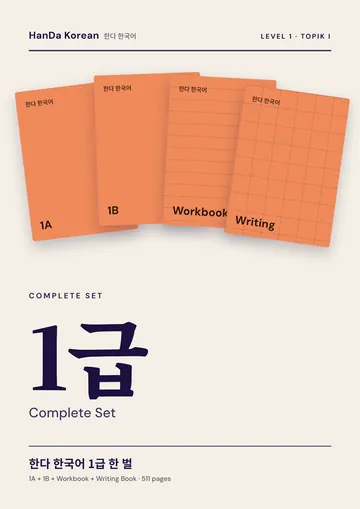 HanDa Korean Level 1 — Complete Set
Everything for level 1 — books, workbook and writing book · 511 pages
$10
HanDa Korean Level 1 — Complete Set
Everything for level 1 — books, workbook and writing book · 511 pages
$10
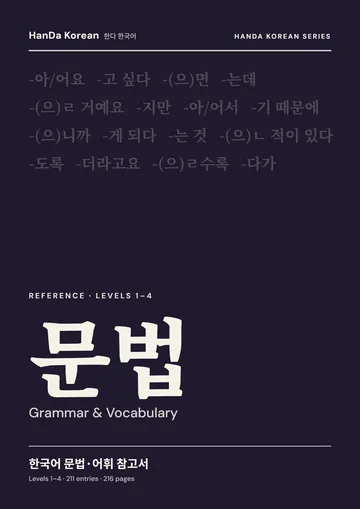 Korean Grammar & Vocabulary Reference
Every pattern in one place · 216 pages
$8
Korean Grammar & Vocabulary Reference
Every pattern in one place · 216 pages
$8
Practice this with an AI tutor
HanDa corrects every sentence you write or say — in real conversation, not flashcards.