Korean Speech Levels Explained: 해요체, 합쇼체, 반말
Here is the default, before anything else: use 해요체 with everyone until someone tells you not to. Not your closest friend, not the CEO — everyone else. It is correct in almost every situation a learner actually finds themselves in, and in the rare cases where it isn't, it sounds slightly soft rather than rude.
That's the whole answer. The rest of this article is why the choice feels so frightening, and how to recognise the moments when 해요체 isn't the right call.
Why this is genuinely hard for English speakers
In English, politeness is optional decoration. You can say "Sit down," "Please sit down," or "Would you like to have a seat?" — three levels of care, but the verb never changes. If you're unsure how formal to be, you can hedge with tone of voice and get away with it.
Korean gives you no hedge. The politeness lives in the verb ending, and every sentence needs an ending. You cannot say "go" in Korean without also saying how you feel about the person you're talking to:
- 가. — Go. (반말, to a close friend or a child)
- 가요. — Go. / I'm going. (해요체, polite everyday)
- 갑니다. — I'm going. (합쇼체, formal)
So before you even open your mouth, you've made a social judgement: how old is this person, how close are we, what is this situation. English speakers aren't used to doing that consciously, and that's where the panic comes from.
The good news is that the judgement is much less delicate than it feels. There are three settings, and one of them is the default.
The three levels, side by side
| 반말 (casual) | 해요체 (polite) | 합쇼체 (formal) |
|---|---|---|
| 밥 먹었어? | 밥 먹었어요? | 식사하셨습니까? |
| 고마워 | 고마워요 | 감사합니다 |
| 나 학생이야 | 저는 학생이에요 | 저는 학생입니다 |
| 어디 가? | 어디 가세요? | 어디 가십니까? |
A few things to notice.
합쇼체 is the -(스)ㅂ니다 ending. 갑니다, 먹습니다, 합니다, 예쁩니다, 학생입니다. It's the Korean of announcements, news, job interviews, the army, and staff speaking to customers. It sounds formal and a little distant — which is exactly what you want in those situations, and exactly what you don't want over dinner with a friend's family.
반말 is the 해요체 form with 요 dropped. 가, 먹어, 해, 예뻐. That's genuinely how it works for most verbs, which is why 요 gets called the politeness particle. The one to learn separately is 이에요/예요, which becomes 이야/야 — 학생이야, 친구야.
해요체 sits in the middle and does far more work than the other two.
Why 해요체 is the default (and not just a compromise)
해요체 has a practical advantage nobody tells beginners: one form covers statement, question, suggestion and request. Only the intonation changes.
- 같이 가요. — Let's go together.
- 같이 가요? — Shall we go together?
- 먼저 가요. — Go ahead first. / I'm leaving first.
In 합쇼체 you'd need a different ending for each: 갑니다, 갑니까?, 가십시오, 갑시다. And that last one is a trap worth flagging — 갑시다 exists, but it's a notch lower. It's fine to peers or juniors, and it sounds flat or even bossy said to a boss, a client or an elder. To suggest something to someone you're speaking 합쇼체 to, use 가시지요 (or its contracted 가시죠). Either way, that's four endings to keep straight instead of one.
And socially, 해요체 is warm. 합쇼체 is correct but cool — a bank teller, a flight announcement, a soldier. If you say 저는 미국에서 왔습니다 to someone your own age at a party, you sound like you're giving a presentation about yourself. 저는 미국에서 왔어요 sounds like a person. This is also why the phrases you use when meeting someone for the first time are mostly 해요체, with a couple of fixed formal ones mixed in.
Which brings up the exception worth memorising: a few 합쇼체 phrases are the default way to say these things to anyone you're not close to — strangers, staff, coworkers, elders — even in otherwise relaxed situations.
- 감사합니다. — Thank you.
- 죄송합니다. — I'm sorry.
- 알겠습니다. — Understood. / Got it. (very common at work and in service situations)
Use them freely; they won't make you sound stiff. With close friends, though, these turn into 고마워, 미안, and 알았어.
When a native switches to 합쇼체
Even Koreans who speak 해요체 all day switch up for specific moments:
- Introducing yourself to a group. Idol groups do exactly this on stage — that crisp 저희는 ○○입니다 opening, which you can read more about in how K-pop groups greet fans.
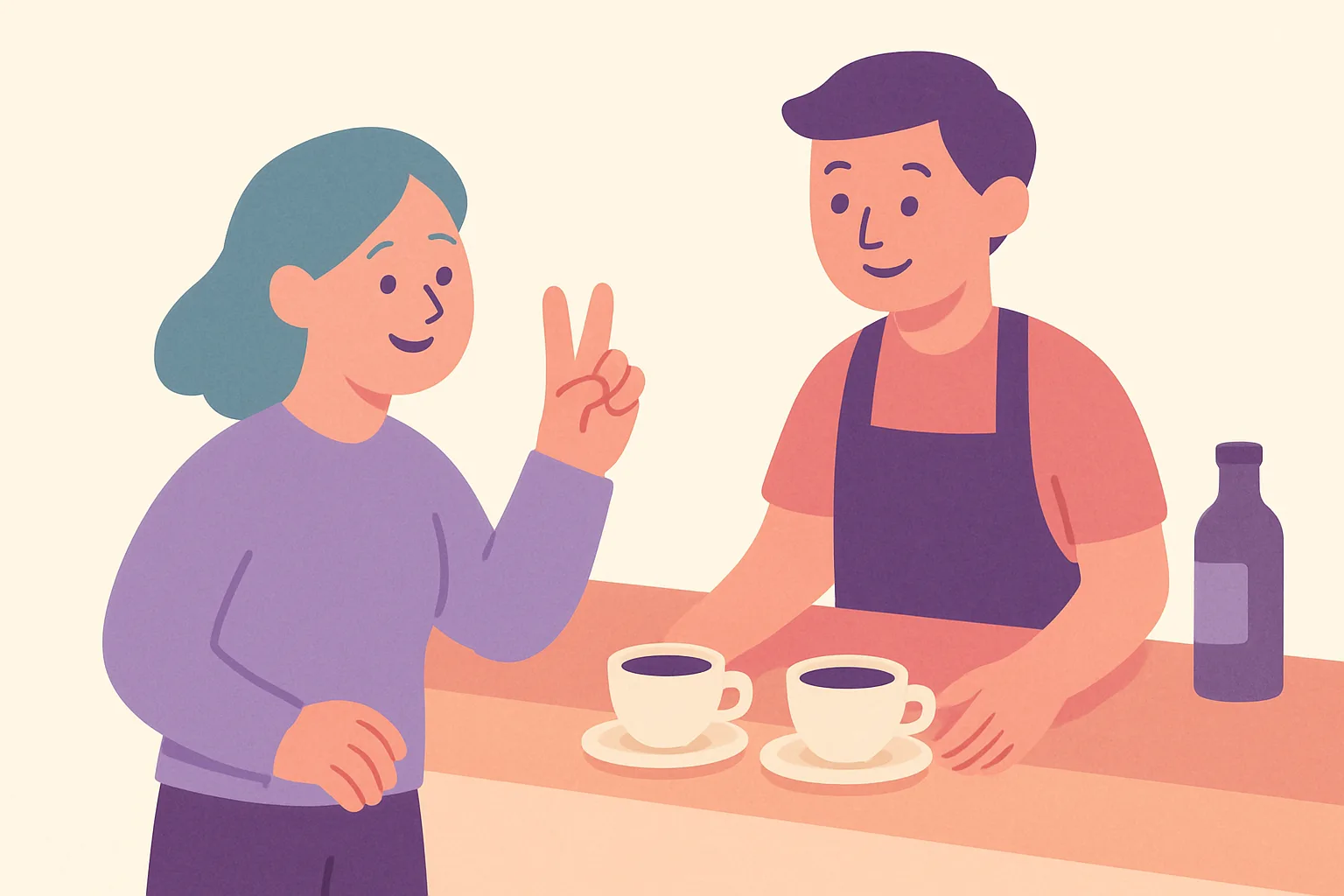
- Speaking to customers. Convenience store and café staff use 합쇼체 constantly: 봉투 필요하십니까? (Do you need a bag?)
- Work settings, interviews, anything with an audience.
And here's the part textbooks skip: people mix. In a meeting, a Korean might say 합쇼체 for the main point and slip into 해요체 for a friendly aside. That mixing isn't sloppy — it's how you sound both professional and human. You don't need to do it deliberately. Just know that hearing both in one conversation is normal.
When 반말 is okay — and how you'll know
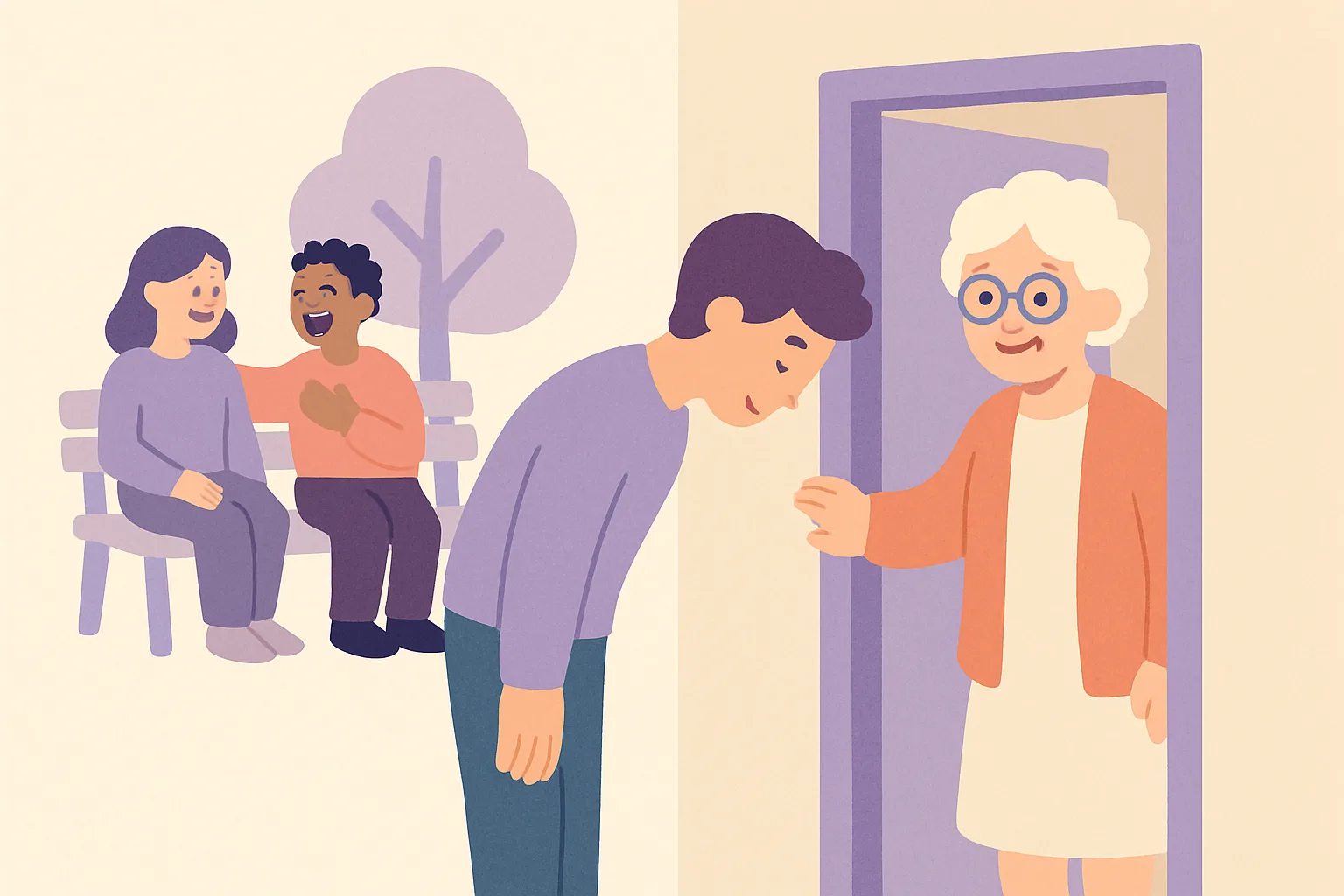
The short answer: when someone invites you, or when the person is clearly a child.
The invitation is a real, spoken moment. An older person or someone you've gotten close to will say:
- 말 편하게 하세요. — Speak comfortably (drop the formality).
- 말 놓으셔도 돼요. — You can speak casually with me.
The natural reply is 네, 그럼 편하게 할게요. (Okay, then I'll speak comfortably.) If they're older than you, many learners still keep 해요체 for a while anyway — nobody has ever been offended by that.
What does offend: using 반말 to a stranger, a shop worker, or anyone older who hasn't invited it. To a Korean ear it doesn't sound like a grammar mistake. It sounds like an attitude — roughly the tone of an adult saying "Hey, kid" to someone they've never met. That's the real risk, and it only runs in one direction. Being too polite costs you nothing.
The second dial: -시-
One more thing that confuses learners, because it looks like a fourth speech level but isn't.
Speech level shows respect to the person you're talking to. The honorific infix -시- shows respect to the person you're talking about. They're separate dials.
- 선생님이 오세요. — The teacher is coming. (해요체 to my listener + 시 for the teacher)
- 친구가 와요. — My friend is coming. (해요체, no 시 — a friend doesn't need it)
So 가요 and 가세요 are both 해요체. 가세요 just adds respect toward the subject. When you're speaking to the person, the two often land together, which is why 어디 가세요? is the standard polite way to ask a stranger where they're going. Knowing who gets 시 and who doesn't goes hand in hand with knowing what to call people you don't know.
The takeaway
Set your default to 해요체 and stop deliberating. Add 감사합니다 and 죄송합니다 as fixed phrases. Add 합쇼체 later, when you need to introduce yourself formally. Add 반말 only after someone says the magic sentence — and if you're unsure whether they said it, they didn't.
Practice
- Put this into 합쇼체: 저는 한국어를 공부해요.
- You're meeting your friend's mother for the first time. Which level, and how would you ask if she's eaten?
- Put this into 반말 for a close same-age friend: 어디에 살아요?
- An older coworker says 말 편하게 하세요. What do you say back?
- You're ordering at a café. Which is right: 아메리카노 한 잔 주세요 or 아메리카노 한 잔 줘?
Answers
- 저는 한국어를 공부합니다. — I study Korean. (합쇼체)
- 해요체, with -시- because she's older: 식사하셨어요? — Have you eaten? (Plain 해요체 밥 먹었어요? is also understandable, but 식사하셨어요? is what you'd actually say to her.)
- 어디에 살아? — Where do you live? (반말)
- 네, 그럼 편하게 할게요. — Okay, then I'll speak comfortably. Staying in 해요체 a bit longer is also perfectly polite.
- 아메리카노 한 잔 주세요. — One Americano, please. 줘 is 반말 and would sound rude to a stranger behind the counter.
Learn this properly, not just once
Blog posts teach one thing at a time. The HanDa books teach level 1 in order — every lesson built to be spoken, with a workbook and writing book beside it.
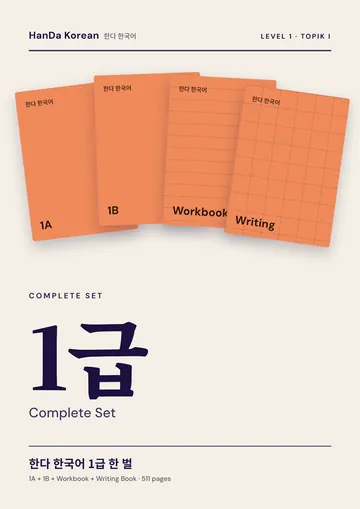 HanDa Korean Level 1 — Complete Set
Everything for level 1 — books, workbook and writing book · 511 pages
$10
HanDa Korean Level 1 — Complete Set
Everything for level 1 — books, workbook and writing book · 511 pages
$10
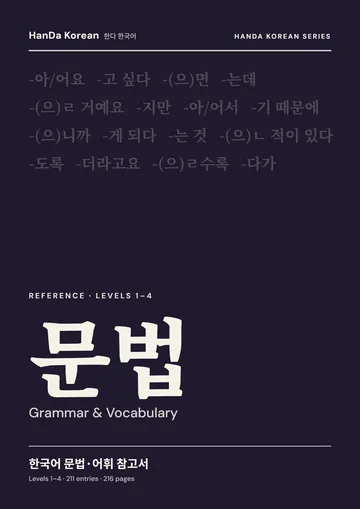 Korean Grammar & Vocabulary Reference
Every pattern in one place · 216 pages
$8
Korean Grammar & Vocabulary Reference
Every pattern in one place · 216 pages
$8
Practice this with an AI tutor
HanDa corrects every sentence you write or say — in real conversation, not flashcards.