9 Korean Phrases for Meeting Someone for the First Time

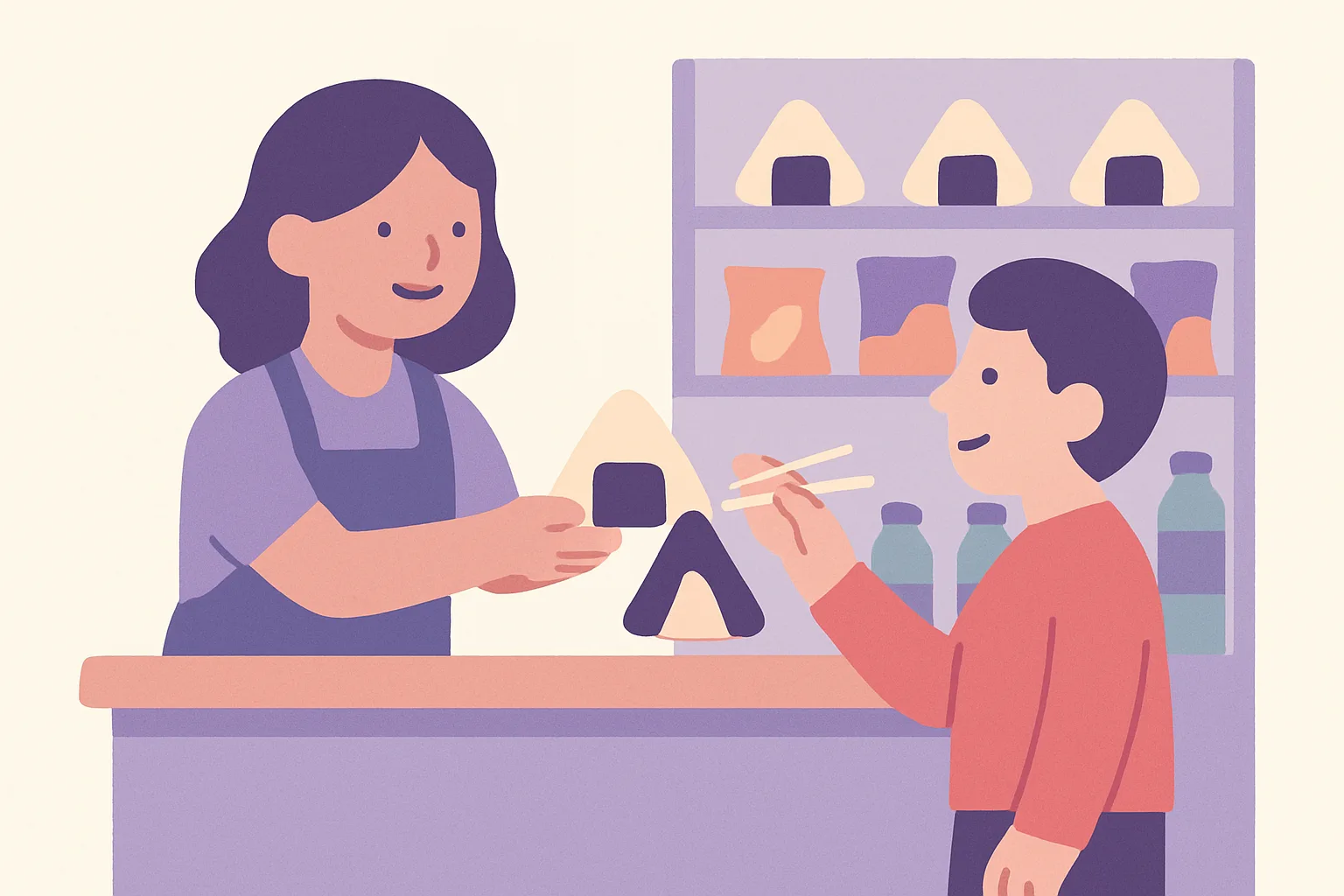
A first meeting in Korean is short, and it's mostly script. That's good news: you can learn the whole thing in one sitting and never freeze again. The trick is knowing which version of each line fits the room — a business introduction and a friend-of-a-friend at a barbecue place use different words for the same idea.
Here's how it usually sounds when a colleague introduces two people:
A: 안녕하세요. 처음 뵙겠습니다. 김민수라고 합니다. Hello. It's a pleasure to meet you. My name is Kim Minsu.
B: 안녕하세요. 저는 사라예요. 만나서 반갑습니다. Hello. I'm Sarah. Nice to meet you.
A: 사라 씨, 어디에서 오셨어요? Sarah, where are you from?
B: 캐나다에서 왔어요. I'm from Canada.
Nine lines below. Each one stands alone — take the ones you need.
1. 처음 뵙겠습니다.
처음 뵙겠습니다. — It's the first time I'm meeting you. (= Pleased to meet you.)
This is the formal 합쇼체 opener, used at work, with someone older, or with anyone you want to show clear respect to. 뵙다 is the humble form of "to see," so the phrase literally means "I shall see you for the first time" — it lowers you, which is exactly why it sounds polished. Note the pronunciation: 뵙겠습니다 comes out as [뵙께씀니다], one of those predictable consonant changes that make written and spoken Korean look different.
With your friend's friend at a café, this is too stiff — you'd sound like you're closing a deal.
2. 만나서 반갑습니다. / 만나서 반가워요.
만나서 반갑습니다. — Nice to meet you. (formal) 만나서 반가워요. — Nice to meet you. (friendly 해요체)
Same meaning, different temperature. 반갑습니다 is the crisp version for introductions at work or with an older person; 반가워요 is what you say to someone roughly your age in a relaxed setting. You can drop 만나서 and just say 반가워요 — natives do this constantly, and it sounds warm rather than lazy.
3. 저는 사라라고 합니다.
저는 사라라고 합니다. — My name is Sarah. (formal) 저는 사라예요. — I'm Sarah. (friendly)
-(이)라고 하다 means "I'm called ~," and it's the standard formal self-introduction. Use 라고 after a vowel (사라라고), 이라고 after a consonant (민준이라고). The 해요체 version is simply 이름 + 예요/이에요, and that's the one you'll use most in everyday life.
One warning: don't say 제 성함은… about yourself. 성함 is the honorific word for someone else's name, so using it for your own name sounds like you're bowing to yourself.
4. 성함이 어떻게 되세요?
성함이 어떻게 되세요? — May I ask your name? (honorific) 이름이 어떻게 되세요? — What's your name? (polite, neutral)
Koreans rarely ask 이름이 뭐예요? to an adult they've just met — it's fine for kids, but to a grown-up it lands a bit blunt, like "Name?" The -이 어떻게 되세요? pattern is the soft, grown-up way to ask for personal information, and it works for other things too: 연락처가 어떻게 되세요? (What's your contact number?).
Use 성함 for people clearly older than you or in a business setting; 이름 with peers.
5. 앞으로 잘 부탁드립니다.
앞으로 잘 부탁드립니다. — I look forward to working with you. (literally: "Please take good care of me from now on.")
There is no clean English equivalent — it's one of those Korean phrases that carry a whole social feeling in a single set expression. Say it when the meeting implies a continuing relationship: a new job, a new class, a new teammate, your partner's parents. The casual version is 잘 부탁해요.
Saying it to a stranger you'll never see again would be odd; saying it on day one at work is close to expected.
6. 무슨 일 하세요?
무슨 일 하세요? — What do you do (for work)?
This is the standard small-talk question after names, and it isn't considered nosy in Korea the way it might be elsewhere. Answer with 저는 + job + 이에요/예요: 저는 회사원이에요 (I'm an office worker), 저는 학생이에요 (I'm a student), 저는 영어 가르쳐요 (I teach English).
If you're not working right now, 지금은 한국어 공부하고 있어요 (Right now I'm studying Korean) is a perfectly normal, complete answer.
7. 실례지만, 나이가 어떻게 되세요?
실례지만, 나이가 어떻게 되세요? — Excuse me, but how old are you? 몇 년생이세요? — What year were you born?
This question surprises learners, but it has a practical job: Koreans need to know who's older to choose the right speech level and the right words (형/오빠/언니/누나 or just 씨). 실례지만 (excuse me, but) softens it. 몇 년생이세요? is the more casual version friends use, and often the quicker route to an answer.
To answer, remember that age takes native numbers and a birth year takes Sino-Korean ones — 저는 스물다섯 살이에요 versus a year read as 이천 년. If that split still trips you up, here's when to use 하나, 둘 vs 일, 이.
8. 죄송한데, 다시 한번 말씀해 주시겠어요?
죄송한데, 다시 한번 말씀해 주시겠어요? — Sorry, could you say that once more?
This is the off-script line, and it's the one that saves you. Names go by fast, and nodding at a name you didn't catch means you'll be stuck for the rest of the evening. 말씀하다 is the honorific of "to speak," so this stays polite even with a stranger or a boss.
A gentler variation: 조금만 천천히 말씀해 주시겠어요? (Could you speak a little more slowly?). Both are normal; neither makes you look bad. Koreans use them with each other all the time.
9. 다음에 또 뵙겠습니다. / 조심히 들어가세요.
다음에 또 뵙겠습니다. — I hope to see you again. (formal) 조심히 들어가세요. — Get home safely.
A Korean goodbye after a first meeting is rarely just 안녕히 가세요. 다음에 또 뵙겠습니다 closes a formal meeting cleanly; with peers, 다음에 또 봐요 does the same job in a lighter voice. 조심히 들어가세요 — literally "go in carefully" — is the standard parting kindness when someone is heading home, and it always sounds warm.
Quick notes on tone
| Situation | Greeting | Name | Closing |
|---|---|---|---|
| Work, older person | 처음 뵙겠습니다 | 성함이 어떻게 되세요? | 다음에 또 뵙겠습니다 |
| Friend's friend, your age | 반가워요 | 이름이 어떻게 되세요? | 다음에 또 봐요 |
One last thing: 반말 has no place in a first meeting, even with someone visibly younger. Wait until someone offers — 말 편하게 하세요 (feel free to speak comfortably) — and until then, 해요체 is never wrong.
Practice
Say these in Korean.
- You're meeting your new manager. Greet them formally and say your name is 제임스.
- Ask an older stranger for their name, politely.
- You didn't catch what they said. Ask them to repeat it.
- It's your first day on a team. Say you look forward to working with them.
- Your new friend is heading home. Tell them to get home safely and that you'll see them next time.
Answers
- 안녕하세요. 처음 뵙겠습니다. 제임스라고 합니다.
- 실례지만, 성함이 어떻게 되세요?
- 죄송한데, 다시 한번 말씀해 주시겠어요?
- 앞으로 잘 부탁드립니다.
- 조심히 들어가세요. 다음에 또 봐요.
Learn this properly, not just once
Blog posts teach one thing at a time. The HanDa books teach level 1 in order — every lesson built to be spoken, with a workbook and writing book beside it.
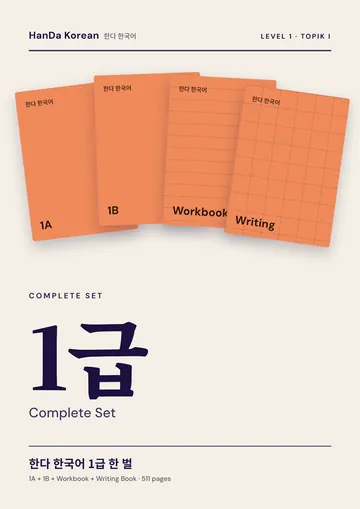 HanDa Korean Level 1 — Complete Set
Everything for level 1 — books, workbook and writing book · 511 pages
$10
HanDa Korean Level 1 — Complete Set
Everything for level 1 — books, workbook and writing book · 511 pages
$10
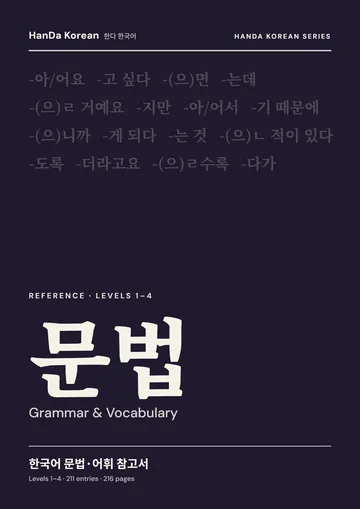 Korean Grammar & Vocabulary Reference
Every pattern in one place · 216 pages
$8
Korean Grammar & Vocabulary Reference
Every pattern in one place · 216 pages
$8
Practice this with an AI tutor
HanDa corrects every sentence you write or say — in real conversation, not flashcards.