9 Rules for Korean Numbers: When to Use 하나, 둘 vs 일, 이
Korean makes you learn two sets of numbers. 하나, 둘, 셋 (native Korean) and 일, 이, 삼 (Sino-Korean). Both go up past a hundred. Both are used every single day. And learners spend months guessing between them.
Here is the one idea that fixes it: the number system is chosen by the word that comes after the number, not by the number itself. 분 (minutes) takes 일, 이, 삼 — always, whether it's 5 minutes or 55. 잔 (cups) takes 하나, 둘, 셋 — always. So you are not learning a rule about numbers. You are learning a small fact about each unit word, the same way you learn a noun's gender in Spanish.
Which means the way past this is not a table you re-read. It's chunks: 두 잔, 오 분, 세 명, 만 원 — memorized as single units of sound, so your mouth produces them without a decision. This is the same trick that makes vocabulary finally stick, and it's why this particular hard part of Korean is hard for about three weeks and then stops being hard forever.
Nine rules, each one liftable on its own.
1. Hours on the clock: native numbers
지금 몇 시예요? — 세 시예요. What time is it? — It's three.
The hour is always 한 시, 두 시, 세 시, 네 시 — never 일 시. This is the rule learners break most often, and 일 시 doesn't sound like a small slip to a Korean ear; it sounds like a robot reading a number out loud. Note the shape change: 하나 → 한, 둘 → 두, 셋 → 세, 넷 → 네 before a counter.
2. Minutes and seconds: Sino-Korean
네 시 십오 분에 만나요. Let's meet at 4:15.
The same sentence uses both systems, and that's normal — 네 (native) for the hour, 십오 (Sino) for the minutes. 분 and 초 are Sino-only, so 십 분, 삼십 분, 오십오 분. If you say 다섯 분 meaning "five minutes," a Korean hears "five people" (honorific 분), which is a genuinely confusing sentence.
3. Things and people you count: native numbers
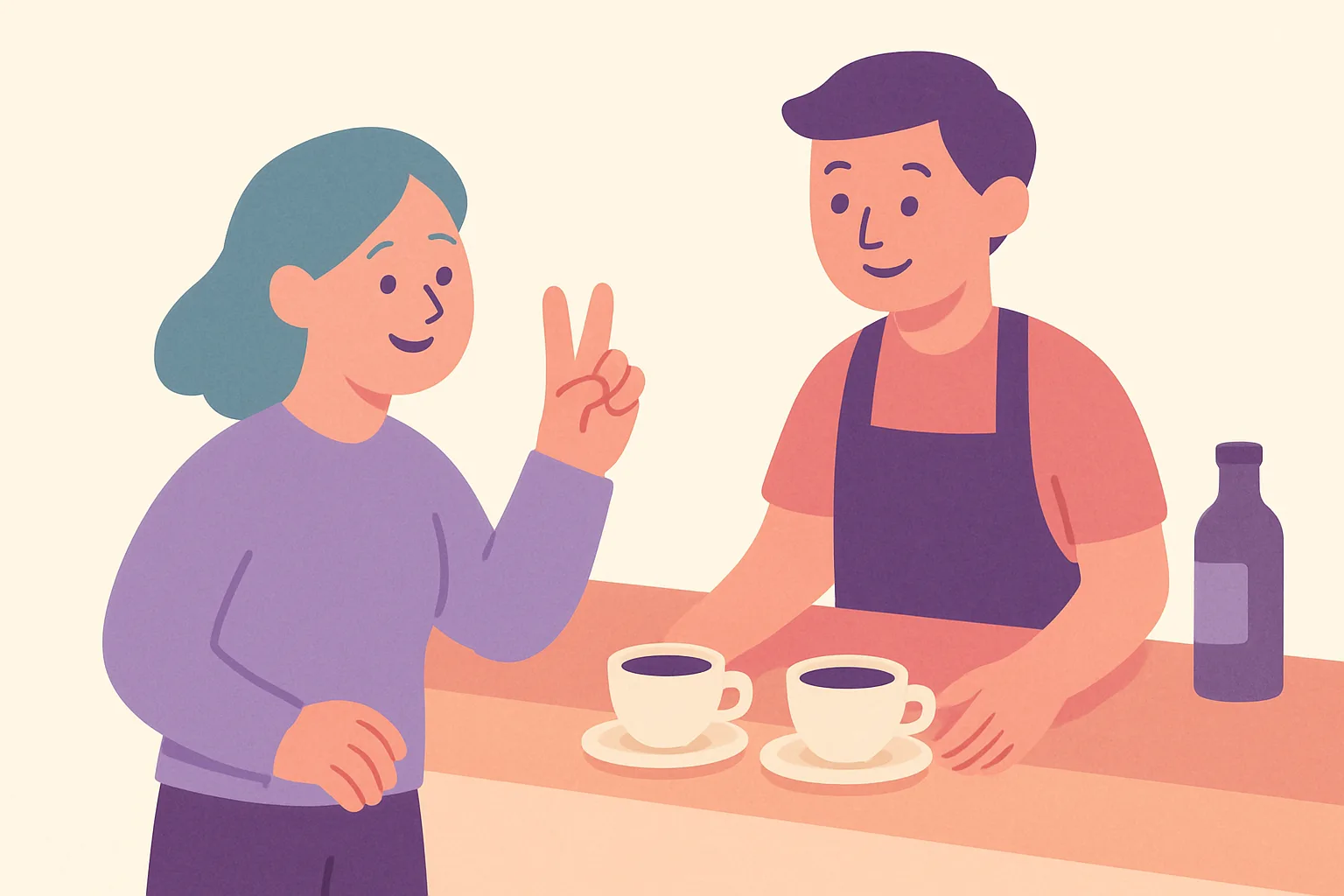
김밥 두 줄이랑 라면 하나 주세요. Two rolls of gimbap and one ramyeon, please.
Anything with a counter — 개 (things), 잔 (cups), 명 (people), 마리 (animals), 병 (bottles), 권 (books) — takes native numbers: 한 개, 두 잔, 세 명, 네 마리. Watch two irregulars: 스물 becomes 스무 before a counter (스무 개), and 하나 can stand alone without a counter, as in 하나 주세요. Above a hundred, natives usually switch to Sino out of convenience — 백 개, 이백 명 — but under twenty, native is the only natural choice.
4. Money: Sino-Korean
얼마예요? — 만 오천 원이에요. How much is it? — It's 15,000 won.
원 is Sino-only, so prices are 천 원, 오천 원, 만 원, 십만 원. Two things to remember: 10,000 is just 만 원, not 일만 원, and Korean groups large numbers by 만 (ten thousand), so 150,000 is 십오만 원 — fifteen ten-thousands. Saying prices out loud in the shop is the fastest way to make this automatic.
5. Age with 살: native numbers
몇 살이에요? — 스물다섯 살이에요. How old are you? — I'm 25.
Everyday age uses native numbers with 살: 한 살, 스무 살, 서른 살. On forms, at the hospital or in the news you'll see the Sino counter 세 instead — 이십오 세 — which sounds official and a little cold. In casual conversation, stick with 살; 이십오 살 is wrong, and 스물다섯 세 is wrong too. The counter decides the system.
6. Dates on the calendar: Sino-Korean
제 생일은 6월 3일이에요. My birthday is June 3rd.
년, 월, 일 are all Sino: 이천이십오 년, 유월, 삼 일. Two months change shape when you read them aloud — 6월 is 유월 (not 육월) and 10월 is 시월 (not 십월). Everything else is regular: 일월, 이월, 삼월, 사월… Days of the month are plain Sino numbers: 1일 (일 일), 15일 (십오 일), 31일 (삼십일 일).
7. Numbers used as labels: Sino-Korean
몇 층이에요? — 3층이요. Which floor? — Third floor.
When a number is a name rather than a quantity — floors (삼 층), subway lines (2호선 → 이호선), room numbers, bus numbers, addresses, phone numbers — Korean uses Sino. Phone numbers are read digit by digit, with 0 pronounced 공 and the hyphen read as 에, so this is also the system you need when you make a reservation by phone and someone asks 전화번호가 어떻게 되세요?
8. How long something takes: 시간 native, 분 Sino
학교까지 한 시간 삼십 분 걸려요. It takes an hour and thirty minutes to get to school.
Duration splits exactly like the clock: 시간 (hours) is native — 한 시간, 두 시간, 세 시간 — and 분 stays Sino. For months, 개월 is Sino (육 개월) while the native word 달 takes native numbers (여섯 달). Both are used and both are natural; just don't cross them, because 육 달 and 여섯 개월 are the kind of mismatch a Korean notices immediately.
9. Counting out loud: 하나, 둘, 셋
하나, 둘, 셋! One, two, three!
Before a photo, before lifting something heavy together, while doing push-ups — Koreans count up in native numbers. Counting down, as at midnight on New Year's Eve, flips to Sino: 삼, 이, 일. If you only ever drill one chunk out loud, make it this one; it's the rhythm of native numbers, and it's the same rhythm that comes back to you later in 한 잔, 두 잔, 세 잔 — just with the shortened forms in front of the counter.
The concrete fix
Don't practice the two lists. Practice five chunks until they're reflexes, each one carrying its system with it:
| Chunk | Meaning | System |
|---|---|---|
| 두 잔 | two cups | native |
| 오 분 | five minutes | Sino |
| 세 명 | three people | native |
| 만 원 | 10,000 won | Sino |
| 한 시간 | one hour | native |
Say them in the shower, say them while walking, say them when you order. Once 두 잔 and 오 분 come out whole, your brain stops asking "which system?" and starts asking "which counter?" — which is a much easier question, and the one Koreans are actually answering.
Practice
Translate into Korean (해요체):
- Three coffees, please.
- It's 10:20.
- It's 8,000 won.
- I'm 20 years old.
- It takes two hours.
- My birthday is October 9th. (How do you read 10월?)
Answers
- 커피 세 잔 주세요. (native + 잔)
- 열 시 이십 분이에요. (native hour, Sino minutes)
- 팔천 원이에요. (Sino — 원 is always Sino)
- 스무 살이에요. (스물 → 스무 before a counter)
- 두 시간 걸려요. (시간 takes native numbers)
- 제 생일은 10월 9일이에요. 10월 is read 시월, not 십월.
Learn this properly, not just once
Blog posts teach one thing at a time. The HanDa books teach level 1 in order — every lesson built to be spoken, with a workbook and writing book beside it.
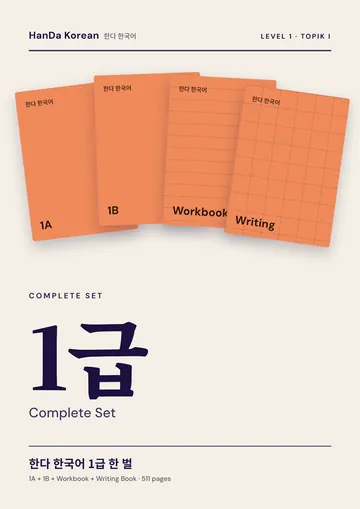 HanDa Korean Level 1 — Complete Set
Everything for level 1 — books, workbook and writing book · 511 pages
$10
HanDa Korean Level 1 — Complete Set
Everything for level 1 — books, workbook and writing book · 511 pages
$10
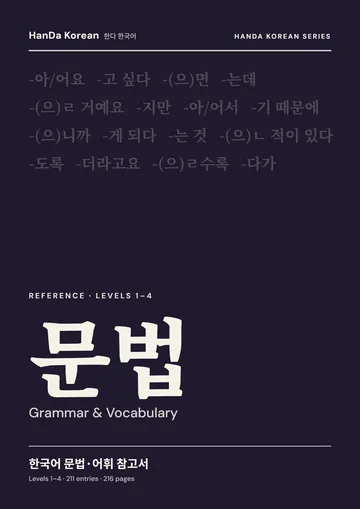 Korean Grammar & Vocabulary Reference
Every pattern in one place · 216 pages
$8
Korean Grammar & Vocabulary Reference
Every pattern in one place · 216 pages
$8
Practice this with an AI tutor
HanDa corrects every sentence you write or say — in real conversation, not flashcards.