9 Korean Sentences That Leave Out 'I' and 'You'
Quick answer: Korean normally leaves out 저 (jeo, "I") and 너 (neo, "you") when the situation already makes them clear. 밥 먹었어요? is a complete, natural sentence meaning "Have you eaten?" — no pronoun needed. And 당신 is not the everyday word for "you"; using it with a stranger sounds cold or confrontational.
This is one of the genuinely hard parts of Korean for English speakers, and not because it's complicated. It's hard because English forces you to name the subject in every sentence. "Ate?" is not English. "Went yesterday" is not English. Your mouth has twenty-odd years of training telling you that a sentence needs an I or a you bolted to the front, so you bolt one on — and every single sentence comes out as 저는 이거 하고 저는 저거 하고, which to a Korean ear sounds like someone insisting on themselves over and over.
Here's the one idea to walk away with: in Korean, the pronoun is information. If it's already obvious, saying it adds emphasis you didn't mean. Below are nine sentences that leave it out, plus the cases where you genuinely need to put it back.
1. 어디 가세요? — "Where are you going?"
No "you" anywhere, and none is possible without sounding strange. The honorific -(으)시- inside 가세요 already points at the listener — it's a marker you only use about someone you're respecting, never about yourself. That ending is doing the job your English pronoun does; if you want the full picture of how it works, see why it's 하세요 and not 해요.
2. 밥 먹었어요? — "Have you eaten?"
Two words, no subject, and every Korean hears it as a question about you. Questions default to the listener, statements default to the speaker — that's the quiet rule underneath most of this article. 밥 먹었어요? is also a standard greeting rather than a real inquiry about food, one of several Korean greetings that aren't really questions.
3. 네, 먹었어요. — "Yes, I have (eaten)."
The answer drops the pronoun too. You do not need 저는 먹었어요 here; the question was aimed at you, so the answer is about you. Adding 저는 would flip the meaning toward contrast — I ate (but maybe someone else didn't) — which is a reasonable thing to say, just not what you meant.
4. 마이클이에요. 캐나다에서 왔어요. 지금 서울에 살아요. — "I'm Michael. I'm from Canada. I live in Seoul now."
Three sentences, one subject, stated zero times — and this is exactly how a Korean person would introduce themselves. You may open with 저는 마이클이에요 to set the topic, but after that first line, dropping it is the natural move. Learners who repeat 저는 at the head of all three sentences sound like they're reading a form out loud.
5. 내일 전화할게요. — "I'll call you tomorrow."
The ending -(으)ㄹ게요 can only ever be about the speaker — it's a promise or a commitment, and you can't promise on someone else's behalf. So "I" is built into the grammar. Notice the "you" disappeared as well: the object is obvious, so it goes.
6. 제가 할게요. — "I'll do it." / "Let me do it."
Here's when the pronoun comes back. 제가 (the subject form of 저) is for stepping forward out of a group: volunteering, taking responsibility, correcting an assumption. At a table, 제가 낼게요 means "I'll pay" — I'll be the one, not you — which is also handy when a meal turns into a round of splitting the bill. Dropped pronoun = neutral. 제가 = me specifically.
7. 민수 씨는 뭐 드실래요? — "What would you like to have, Minsu?"
When you really do need to point at the person — picking them out of a group, changing the topic to them — Korean uses their name plus 씨, or a title like 선생님, 과장님, 언니. Not a pronoun. This is the single habit that will clean up your Korean fastest: wherever English says "you," either say nothing or say the person's name or title.
8. 당신 누구세요? — "Who are you?" (said to an intruder)
당신 is the word every dictionary gives for "you," and it's the word to avoid. Spoken to a stranger's face, it lands somewhere between a challenge and an accusation — the kind of line a drama character delivers to someone they've just found standing in their living room. It does exist warmly between married couples, and it appears in song lyrics and formal writing, but as a general-purpose "you" it will make people uncomfortable. If you need a stranger's attention, say 저기요.
9. 그 사람 아직 안 왔어요. — "He/she hasn't come yet."
Third person has the same problem. 그 and 그녀 look like "he" and "she," but they live in novels and translated text, not in conversation. Out loud, Koreans say 그 사람 (that person), 그분 (polite), 걔 (casual, about a friend), or simply the person's name. Say 그녀는 안 왔어요 at a café and you'll sound like a book being read aloud.
How to actually break the habit
Knowing the rule doesn't fix the mouth. Two things help.
First, build sentences from the verb outward, not from the subject forward. Korean puts the verb last and lets everything else fall away around it, which is easier to feel once you've seen how Korean word order works. Decide "call" → 전화하다 → 전화할게요. Done. You never had to choose a pronoun.
Second, make 저는 and 제가 cost something. Give yourself a rule: you only get to say 저는 when you're contrasting with someone else, and 제가 when you're volunteering. Treat them as emphasis words, like "as for me" and "I'll be the one." That single reframe turns an error into a tool.
| English habit | Unnatural Korean | Natural Korean |
|---|---|---|
| Where are you going? | 당신은 어디에 가요? | 어디 가세요? |
| I'm fine, thanks. | 저는 괜찮아요. | 괜찮아요. |
| Did you see it? | 당신은 그거 봤어요? | 그거 봤어요? |
| She's not here yet. | 그녀는 아직 안 왔어요. | 그 사람 아직 안 왔어요. |
FAQ
How do you say "you" in Korean?
Usually you don't. Korean leaves the listener unmentioned when context is clear, so 어디 가세요? and 밥 먹었어요? already mean "where are you going" and "have you eaten." When you must specify, use the person's name plus 씨, or their title (선생님, 사장님, 언니). Reserve 너 for close friends in 반말 and avoid 당신 entirely as a beginner.
What does 당신 mean in Korean?
Literally "you," but it almost never functions as a neutral "you" in speech. Said to a stranger it sounds hostile — it's the tone of an argument. It is used affectionately between spouses and appears in songs, poems, and formal written notices, which is why learners meet it early and then misuse it.
Is it wrong to say 저는 in every sentence?
It's not ungrammatical, just marked. Each 저는 adds a little "as for me," so repeating it makes you sound like you're constantly contrasting yourself with other people. Use it to introduce yourself or to make a real contrast, then drop it and let the verb carry the meaning.
Practice
Fix or complete each one.
- Your coworker is walking toward the door. Ask politely where they're going (해요체, with honorifics).
- Make this natural: 당신은 어디에서 왔어요?
- The bill arrives and you want to pay for everyone. Say it in one short sentence.
- Someone asks 밥 먹었어요? You have eaten. Answer in two words.
- Make this sound like speech, not a novel: 그녀는 지금 집에 있어요.
Answers
- 어디 가세요?
- 어디에서 오셨어요? (or 어느 나라에서 오셨어요? — drop 당신, add -(으)시-)
- 제가 낼게요.
- 네, 먹었어요.
- 그 사람 지금 집에 있어요. (or 그분 지금 집에 계세요.)
Learn this properly, not just once
Blog posts teach one thing at a time. The HanDa books teach level 1 in order — every lesson built to be spoken, with a workbook and writing book beside it.
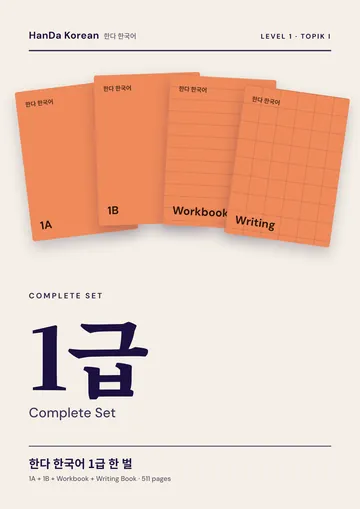 HanDa Korean Level 1 — Complete Set
Everything for level 1 — books, workbook and writing book · 511 pages
$10
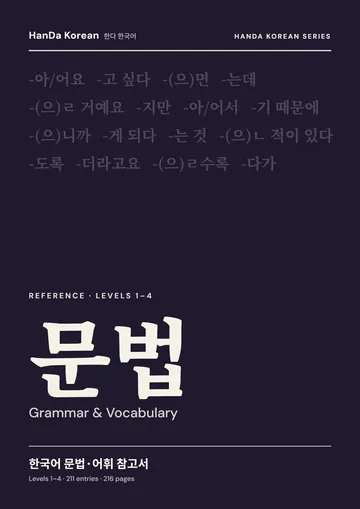 Korean Grammar & Vocabulary Reference
Every pattern in one place · 216 pages
$8
Practice this with an AI tutor
HanDa corrects every sentence you write or say — in real conversation, not flashcards.