8 Korean Greetings That Aren't Real Questions: 식사하셨어요?
Quick answer: 식사하셨어요? (siksahasyeosseoyo) literally means "Have you eaten?", but most of the time it is not a question about food at all — it is simply a polite hello, like "How are you?" in English. The expected reply is short and positive: 네, 먹었어요. ("Yes, I've eaten.") You do not need to explain what you ate, and nobody is about to offer you a meal.
This is the thing to walk away with: a whole set of Korean greetings are shaped like questions but function as social noise — warm, friendly noise that says I see you, I wish you well. If you answer them as real questions, you sound like you missed the point. If you answer them with a short set phrase, you sound like someone who has lived there.
Here's how it usually goes in a stairwell:
이웃: 어, 식사하셨어요? 민호: 네, 먹었어요. 들어가세요.
Neighbor: Oh, have you eaten? Minho: Yes, I have. Have a good one.
Two lines, three seconds, done. Below are eight of these, with the reply that keeps the exchange moving.
1. 식사하셨어요? — "Have you eaten?"
식사하셨어요? — "Have you eaten?" (polite, 해요체 with honorific -시-)
This is the classic. Older neighbors, a senior colleague, your friend's parents — anyone who wants to be warm but formal will use it, especially around noon or in the evening. Say 네, 먹었어요. ("Yes, I've eaten.") even if you only had coffee, or 아직이요. ("Not yet.") if you want to be honest. 아직이요 sometimes does lead to "then let's eat together," so only use it if you're open to that.
2. 밥 먹었어? — "Did you eat?" (casual)
밥 먹었어? — "Did you eat?" (반말, between friends)
This is the 반말 version, and friends use it as a text opener the way English speakers use "hey, what's up." Reply 응, 먹었어. 너는? ("Yeah, I ate. You?") and the conversation starts itself. Among close friends the question is genuinely half-real — if you say 아직, there's a decent chance of an actual dinner — so it's warmer than it looks. If you're not sure whether you're at the 반말 stage with someone, the usual way people drop formality is worth knowing first.
3. 어디 가세요? — "Where are you going?"
어디 가세요? — "Where are you going?" (polite)
When a neighbor or a building manager says this as you pass, it is not nosiness and it is not a request for your itinerary. It's the Korean equivalent of "off somewhere?" The safe reply is vague and cheerful: 네, 잠깐 마트에 가요. ("Yes, just going to the store for a bit.") or simply 네, 잠깐 나가요. ("Yes, just heading out for a bit.") The little 좀/잠깐 is what makes it sound easy rather than evasive — Korean leans on small softening words like 좀 constantly.
4. 잘 지냈어요? — "How have you been?"
잘 지냈어요? — "Have you been well?" (polite, for someone you haven't seen in a while)
Use this for anyone you haven't seen for weeks or months. It does invite a sentence or two of real news, but the default is still a short positive: 네, 잘 지냈어요. ○○ 씨는요? ("Yes, I've been well. And you?") Answering with a long list of problems is possible but marks the conversation as a serious one, so Koreans usually give the short answer first and save the real story for after they sit down.
5. 별일 없으시죠? — "Nothing's come up, right?"
별일 없으시죠? — "Everything's fine with you, I assume?" (polite, slightly formal)
This one is built to be agreed with — the -죠 ending already assumes the answer is yes. You'll hear it from a landlord, a shop owner you know, a colleague on the phone. Reply 네, 별일 없어요. ("Yes, all fine.") To a friend it becomes 별일 없지?, and the answer is 응, 별일 없어. If something has happened, people still say 네 first and bring it up a beat later.
6. 오셨어요? — "You've come?"
오셨어요? — "You're here." (polite greeting to someone who just arrived)
Literally it's "did you come?", which makes no sense as a question — the person is standing right there. It functions as "ah, you made it, welcome." You hear it in offices, at someone's home, at a clinic reception. Reply with 네, 안녕하세요. The casual version between friends is 왔어?, and you answer 어, 왔어. ("Yeah, I'm here.") Shops use the fixed 어서 오세요 instead, which is a welcome, not a question.
7. 언제 밥 한번 먹어요. — "Let's eat sometime."
언제 밥 한번 먹어요. — "Let's have a meal sometime." (polite, almost never a real plan)
Not a question, but it belongs here because learners take it literally and then wait for a call that never comes. This is a warm parting line, the Korean cousin of "we should get coffee sometime." Reply 네, 좋아요. 연락드릴게요. ("Sure, sounds good. I'll be in touch.") You can tell a real invitation apart by the details: if a day, a time, or a place appears — 이번 주 금요일 어때요? — it's real. If not, it's goodwill.
8. 잘 들어갔어요? — "Did you get home okay?"
잘 들어갔어요? — "Did you get home safely?" (polite, usually by text)
After dinner or a date, the message that lands an hour later is this one. It is a real question in form but a caring ritual in practice, and the reply is short: 네, 방금 도착했어요. 오늘 고마웠어요. ("Yes, I just got in. Thanks for today.") With friends it's 잘 들어갔어? / 응, 잘 들어왔어. Note the switch — the asker uses 들어가다 (go in), the answerer often uses 들어오다 (come in), from their own doorway.
Bonus: the work version
At the end of a shift, nobody asks anything — they say 수고하셨습니다, which works as both thanks and goodbye. If that one is new to you, here's what 수고하셨습니다 actually covers. And when there is genuinely nothing to say, Koreans fall back on the same safe topic English speakers do: the weather.
Why these sound wrong when you answer them "correctly"
Imagine someone in English asks "How's it going?" and you reply with a two-minute account of your morning. Nothing is ungrammatical; the register is just off. That's exactly how 식사하셨어요? → 아, 오늘 점심에 김치찌개를 먹었는데... lands on a Korean ear. The greeting asked for a beat of warmth, and you handed over data.
The other common slip is treating 어디 가세요? as an intrusion and answering with nothing, or with a flat 네. A greeting needs a greeting back. Short, warm, and a little vague is the target — and when in doubt, bounce the same question back with ○○ 씨는요? or 너는?
FAQ
What does 식사하셨어요 mean in Korean?
Literally it means "Have you eaten (a meal)?", using the honorific 하시다, so it's polite and usually aimed at someone older or senior to you. In practice it works as a greeting, roughly "Hello, how are you?" The standard answer is 네, 먹었어요 — short and positive — and then you both move on.
How do you answer 밥 먹었어요?
Say 네, 먹었어요 if you've eaten, or 아직이요 / 아직 안 먹었어요 if you haven't. Then return the question with 식사하셨어요? or, with a friend, 너는? Be aware that saying you haven't eaten can turn into a real meal invitation, especially from older Koreans, who genuinely like feeding people.
Why do Koreans ask 어디 가세요 when they don't need to know?
Because it's a greeting, not a request for information. Asking about the small facts of someone's day — eating, going out, getting home — is how Korean shows friendly attention, the way English uses "How's it going?" A short, vague answer like 네, 잠깐 나가요 is exactly right; you're not expected to give your destination.
Practice
Write a natural reply to each.
- Your neighbor, an older woman, says: 식사하셨어요? (You've eaten.)
- A close friend texts: 밥 먹었어?
- A colleague you haven't seen in months says: 잘 지냈어요?
- After dinner, your friend texts: 잘 들어갔어?
- A coworker says on the way out of the building: 언제 밥 한번 먹어요.
Answers
- 네, 먹었어요. 안녕히 가세요. — "Yes, I've eaten. Take care."
- 응, 먹었어. 너는? — "Yeah, I ate. You?"
- 네, 잘 지냈어요. ○○ 씨는요? — "Yes, I've been well. How about you?"
- 응, 잘 들어왔어. 오늘 고마웠어. — "Yeah, I got in fine. Thanks for today."
- 네, 좋아요. 연락드릴게요. — "Sure, sounds good. I'll be in touch."
Learn this properly, not just once
Blog posts teach one thing at a time. The HanDa books teach level 1 in order — every lesson built to be spoken, with a workbook and writing book beside it.
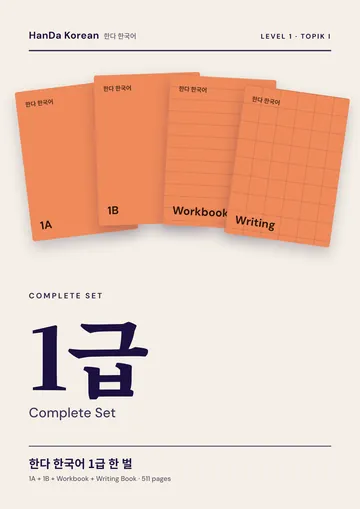 HanDa Korean Level 1 — Complete Set
Everything for level 1 — books, workbook and writing book · 511 pages
$10
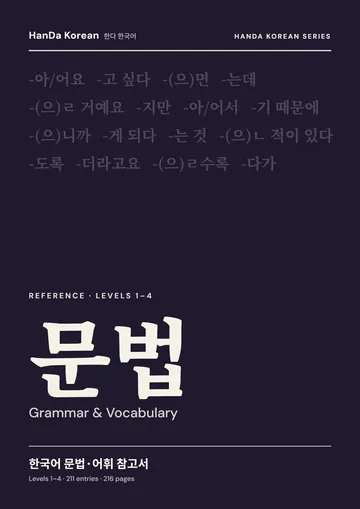 Korean Grammar & Vocabulary Reference
Every pattern in one place · 216 pages
$8
Practice this with an AI tutor
HanDa corrects every sentence you write or say — in real conversation, not flashcards.