The HanDa Blog
Korean lessons, study guides, and product news — from the team building an AI Korean tutor.

9 Korean Words for Feelings Beyond Happy and Sad
설레다, 뿌듯하다, 서운하다 and six more Korean feeling words that say exactly why you feel something — plus how each one lands on a Korean ear.

Blue and Green in Korean: 파랗다, 푸르다, 초록색
Korean's 파랗다 and 푸르다 cover a stretch of color that English splits into blue and green. Here's why the green light is 파란불, and when only 초록색 works.
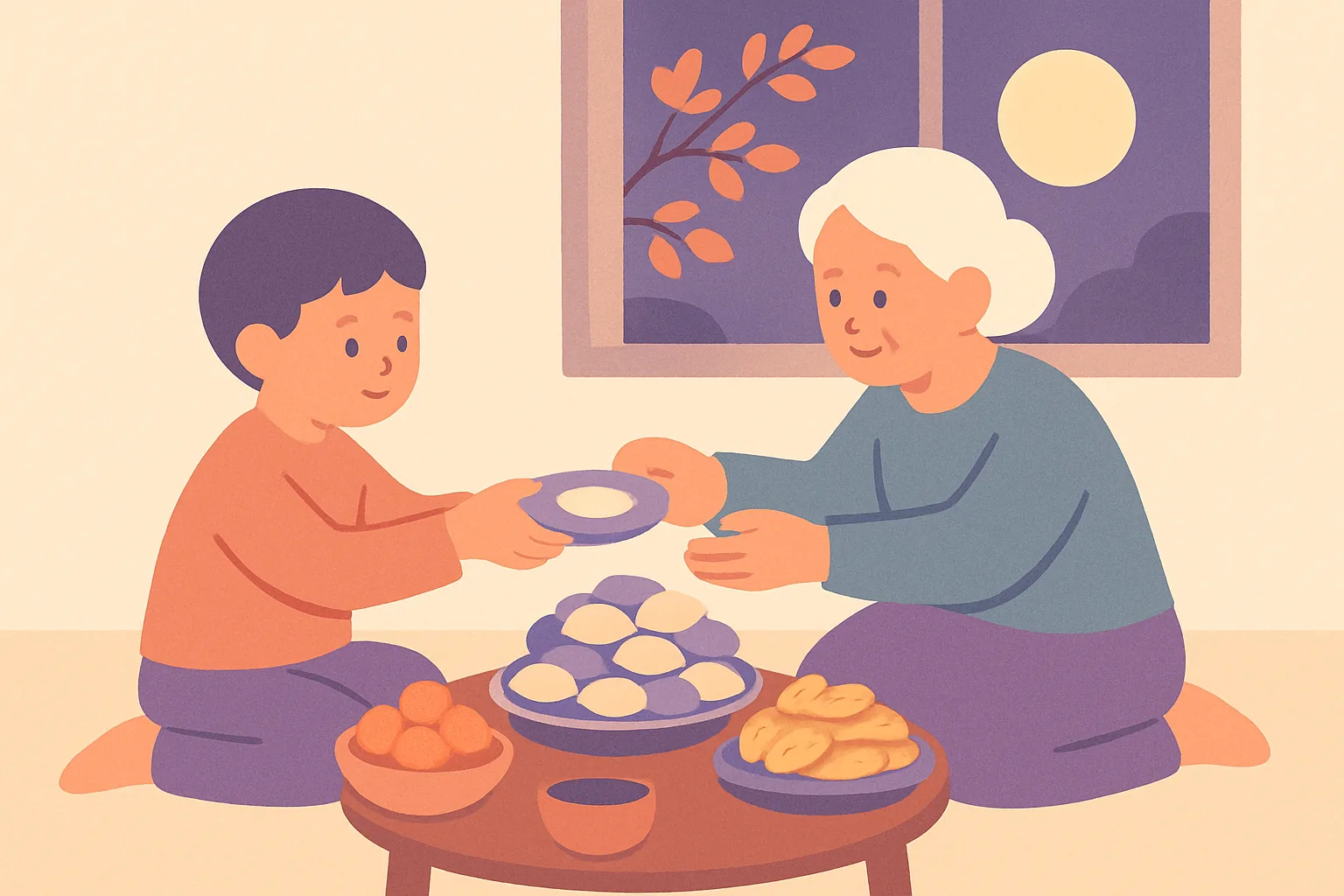
Chuseok (추석): What Happens and What to Say in Korean
Koreans don't say "Happy Chuseok" — they say "spend Chuseok well." Here's why 추석 잘 보내세요 is the phrase, plus the words for the food, the traffic and the family table.
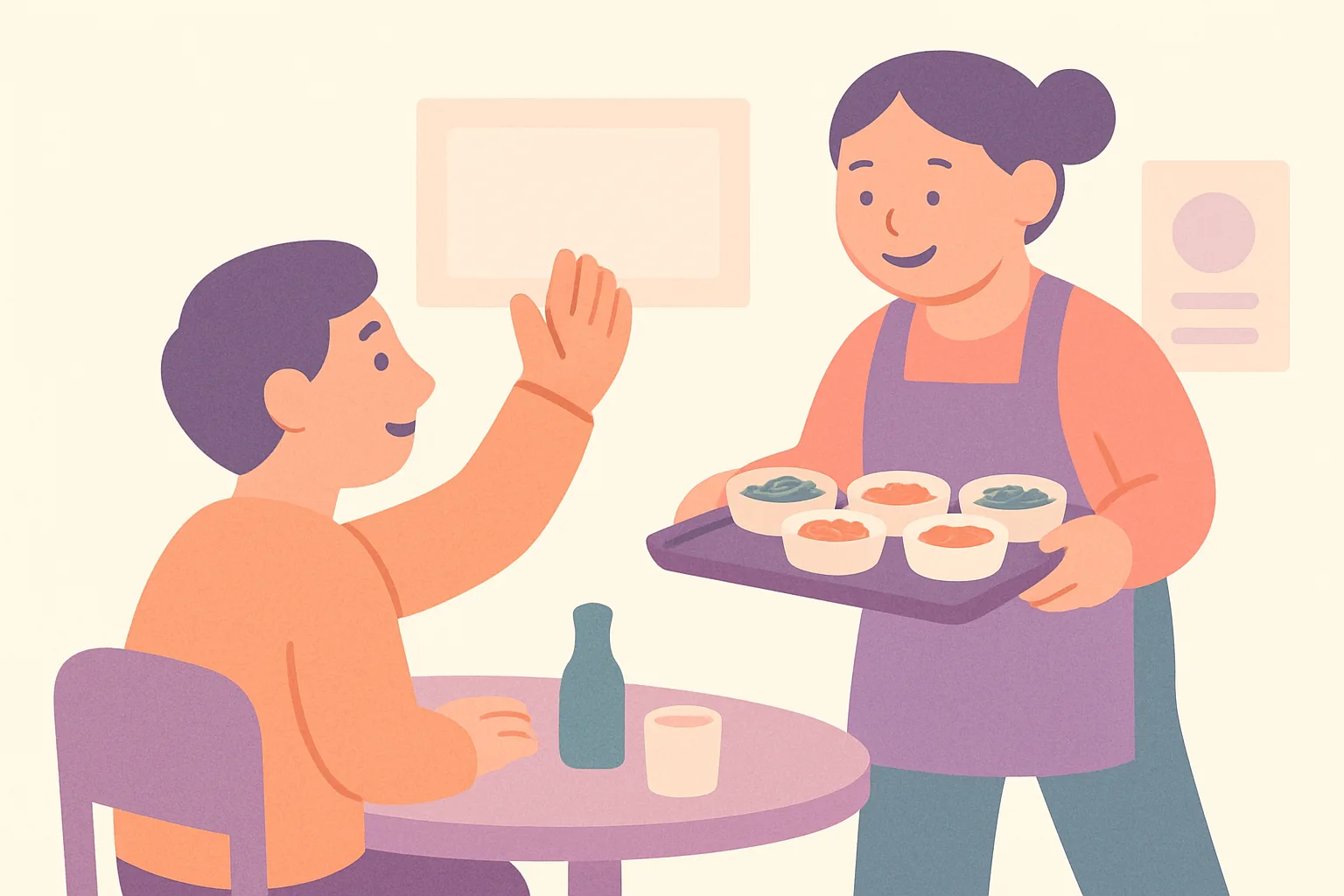
9 Ways to Address Strangers in Korean: 저기요, 사장님, 이모
Korean almost never says "you" to a stranger. Instead you pick a title — 저기요, 사장님, 이모, 기사님 — and each one lands differently. Here's which to use, and when.
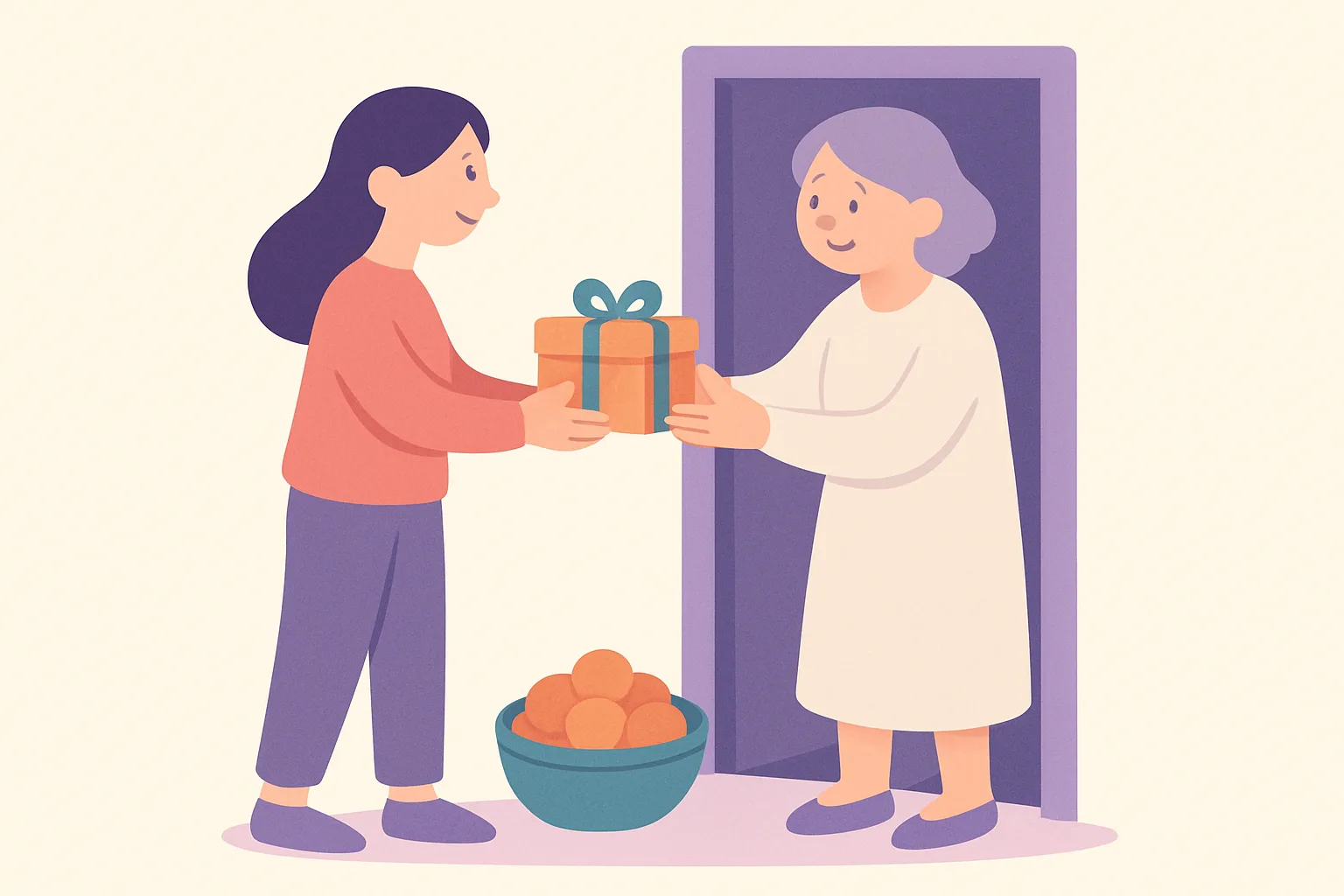
Korean Gift-Giving Etiquette: What to Say When You Give a Gift
In Korea the giver shrinks the gift and the receiver makes it big. Learn the exact phrases for handing something over, taking it with two hands, and saying thank you.
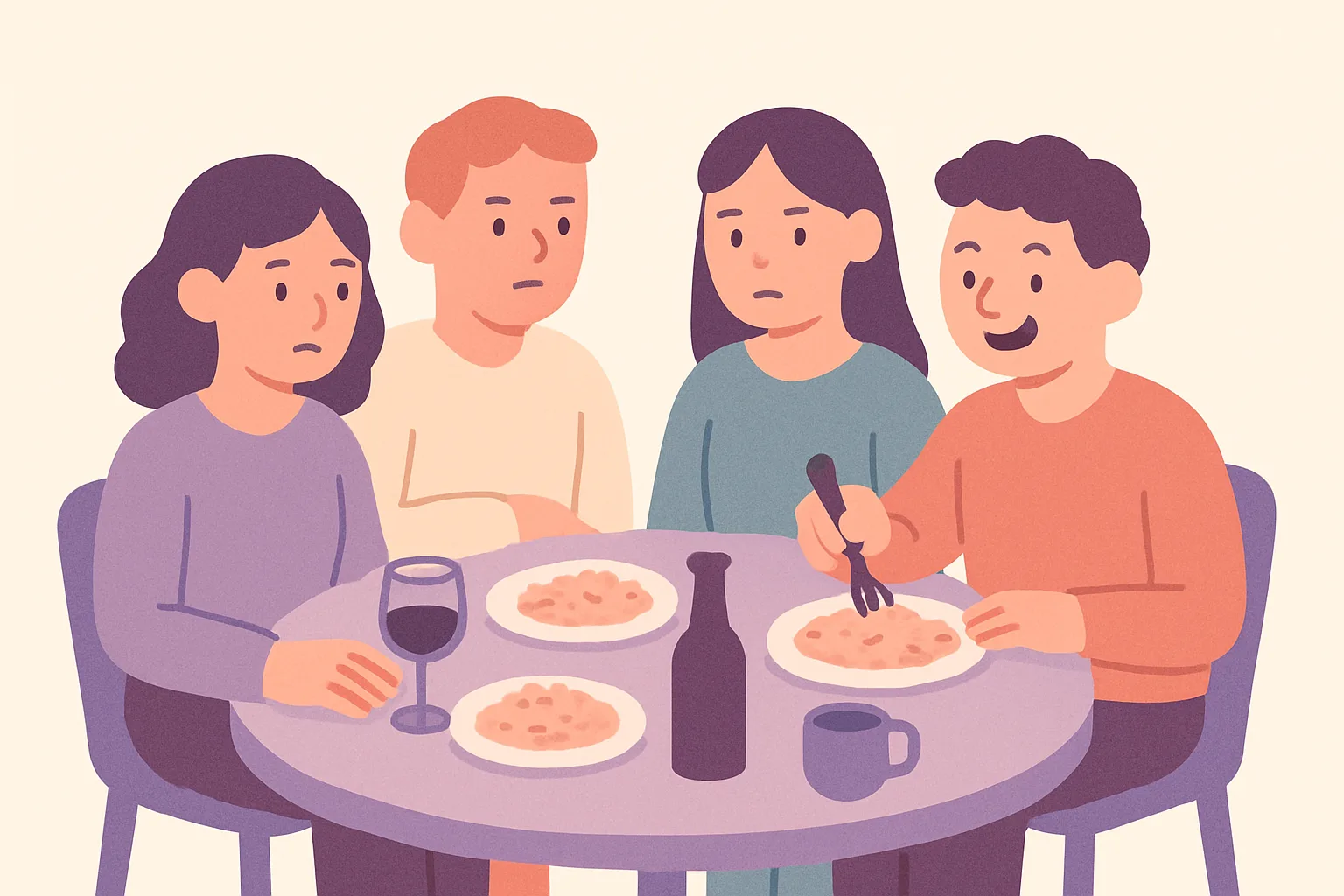
8 Korean 눈치 Phrases for Reading the Room in K-Dramas
눈치 is the K-drama word subtitles keep flattening into "tact." Here are 8 ways Koreans actually use it — and why the verb attached to it changes everything.
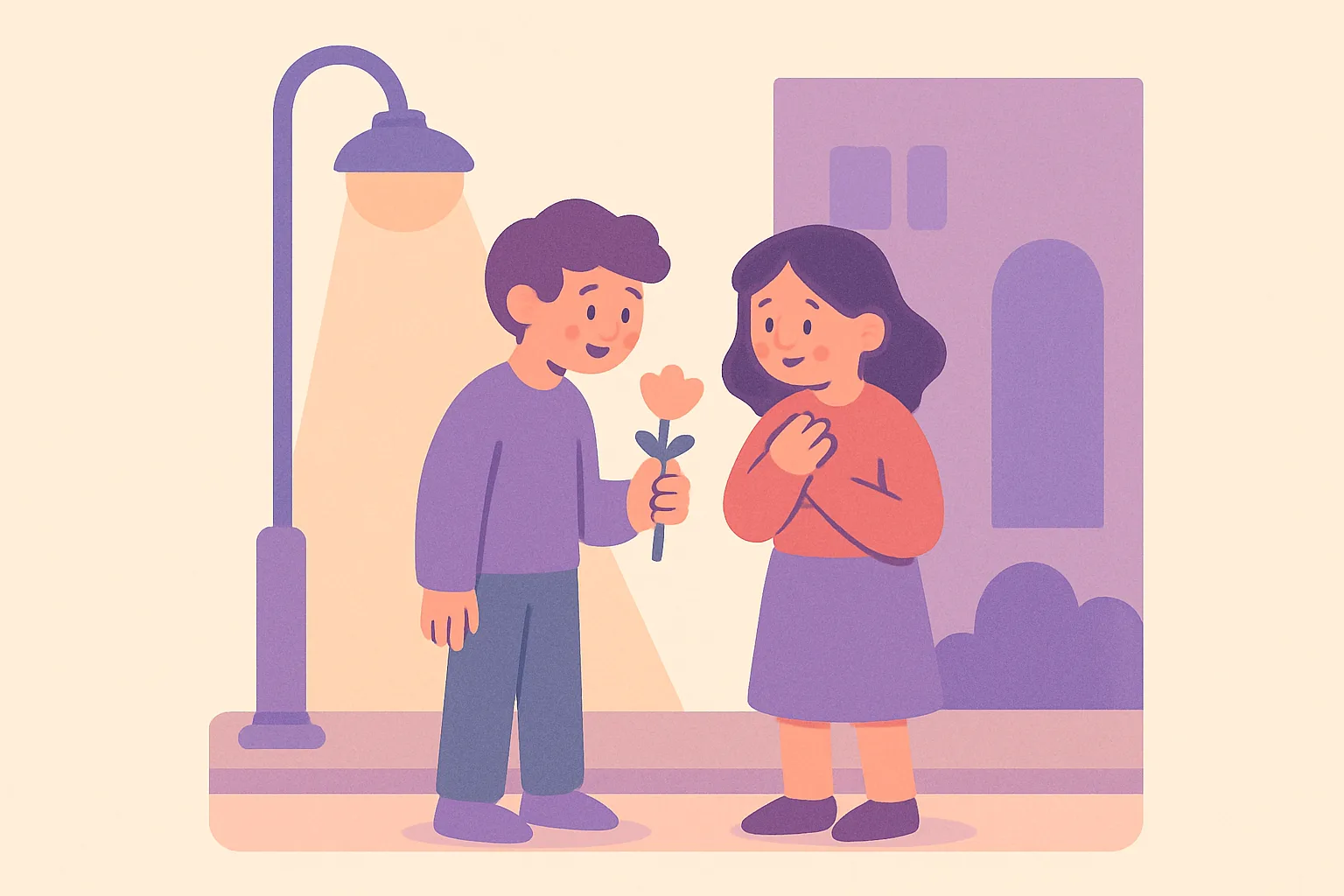
좋아해 vs 사랑해: Saying "I Like You" in Korean
In K-dramas the big confession scene almost never uses 사랑해. Here's why 좋아해 is the real "I have feelings for you" — and when 사랑해 finally shows up.
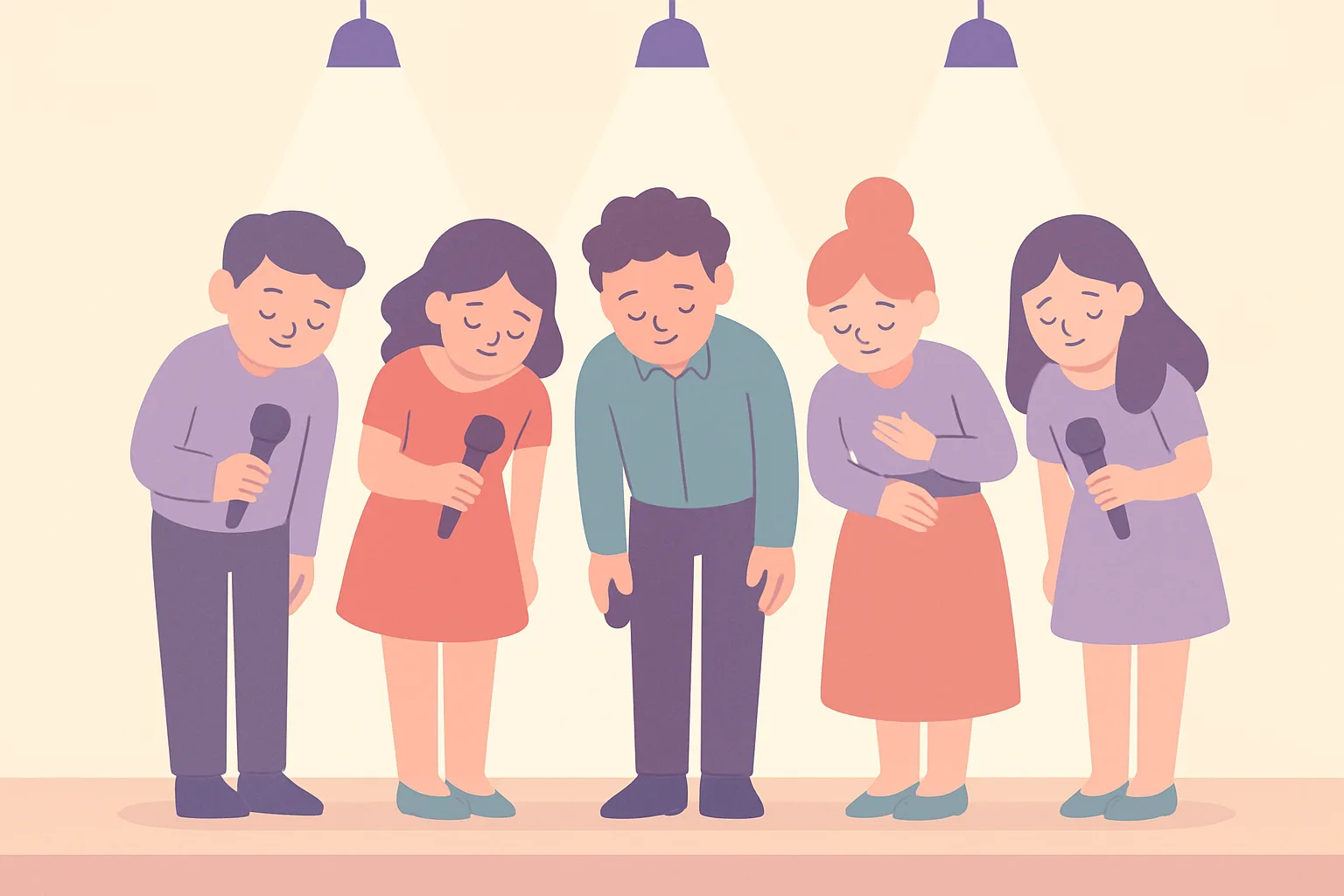
How K-pop Groups Greet Fans in Korean: 저희는 ○○입니다
That shouted group greeting at the start of every stage isn't random — it's a four-part formula, and it's the same self-introduction Koreans use on their first day at work.
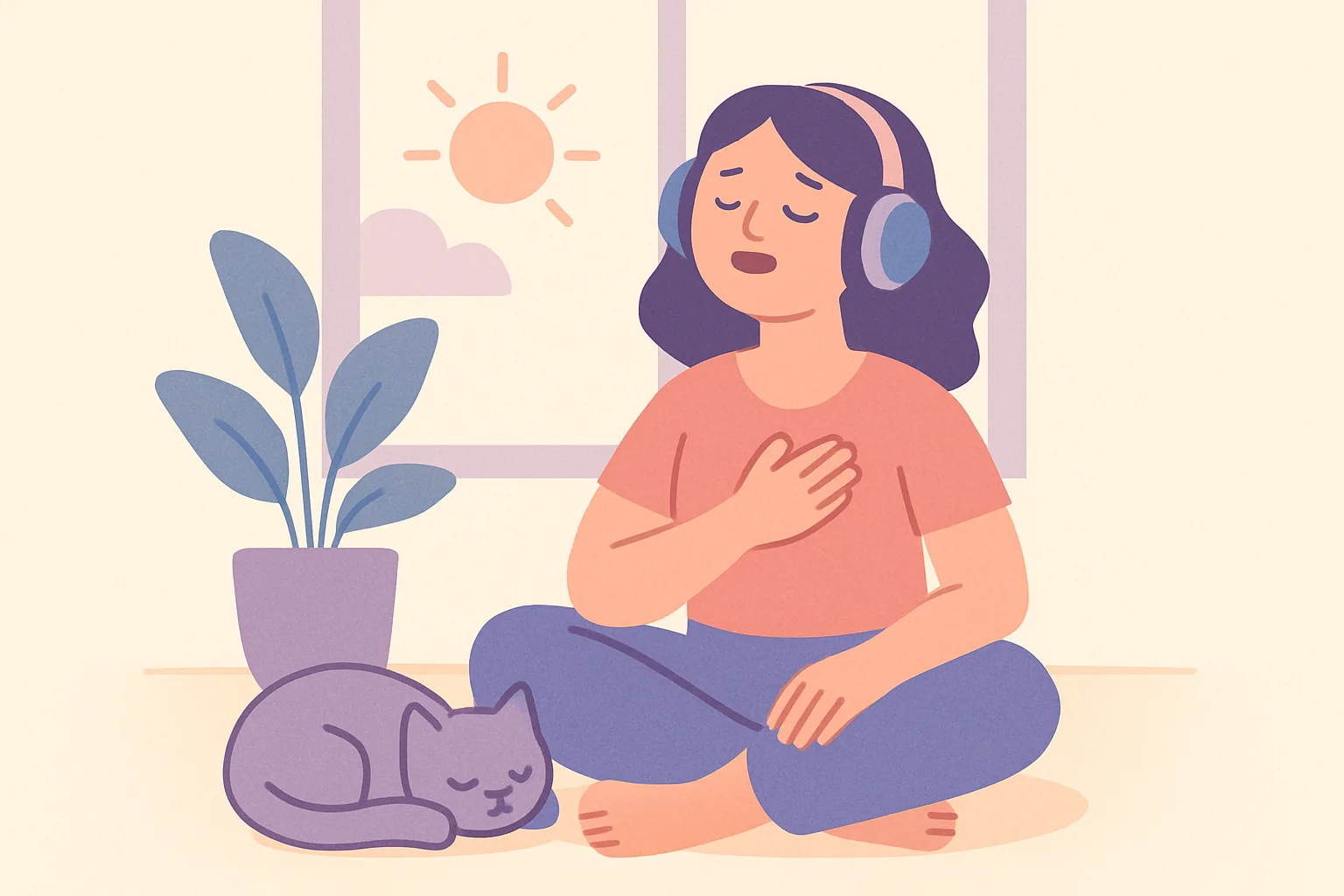
10 Korean Words You Hear in Almost Every K-pop Song
사랑, 마음, 너, 우리 and six more words that show up in song after song — what each one really means, and which ones you can safely say to a real person.

9 Korean Phrases for Meeting Someone for the First Time
처음 뵙겠습니다, 잘 부탁드립니다, 성함이 어떻게 되세요? — the nine lines Koreans actually use when they meet you, and how formal each one sounds.
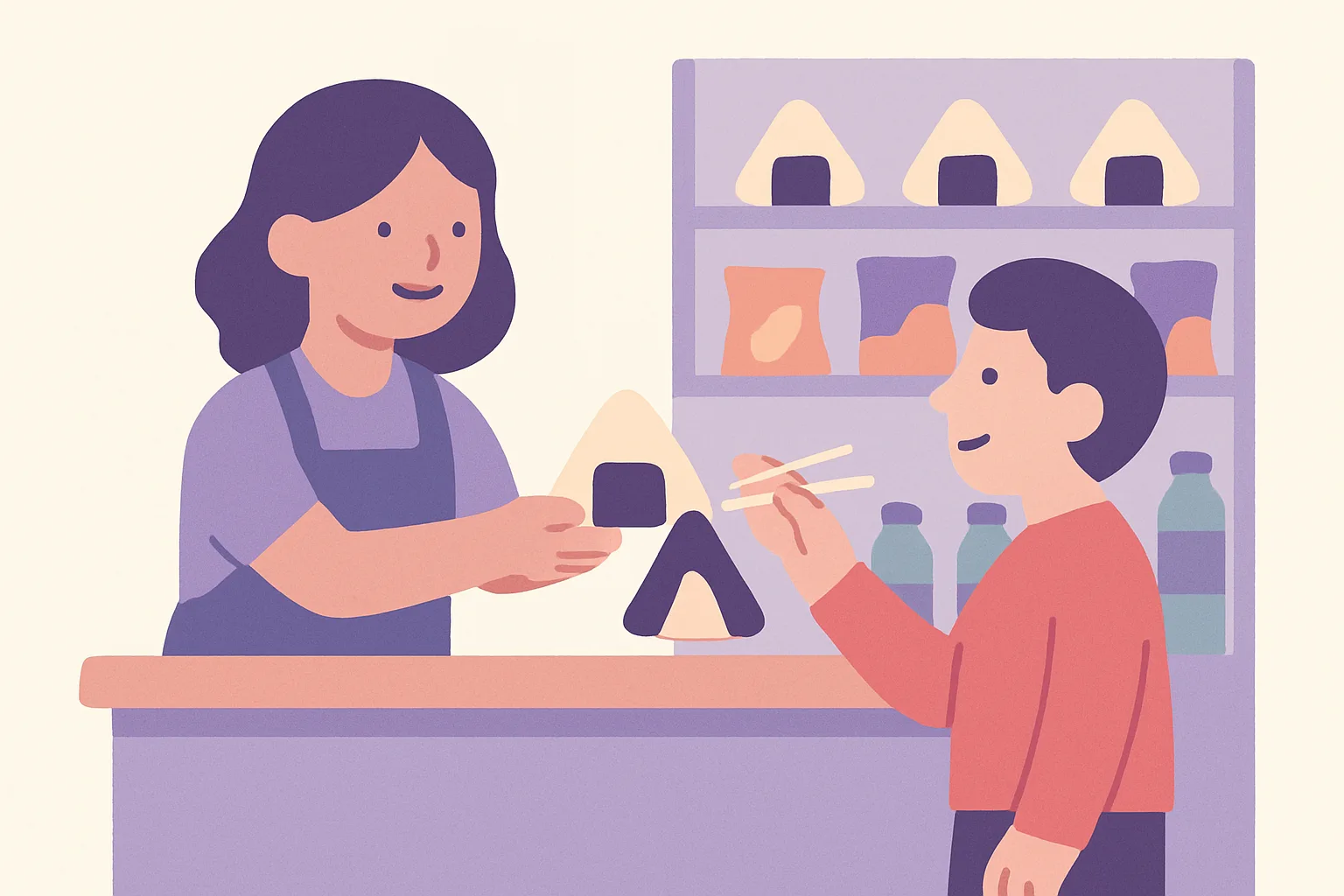
At the Convenience Store in Korean: What the Clerk Asks You
You don't have to start the conversation at a Korean convenience store. The clerk asks four or five predictable questions — learn those, and the answers take care of themselves.
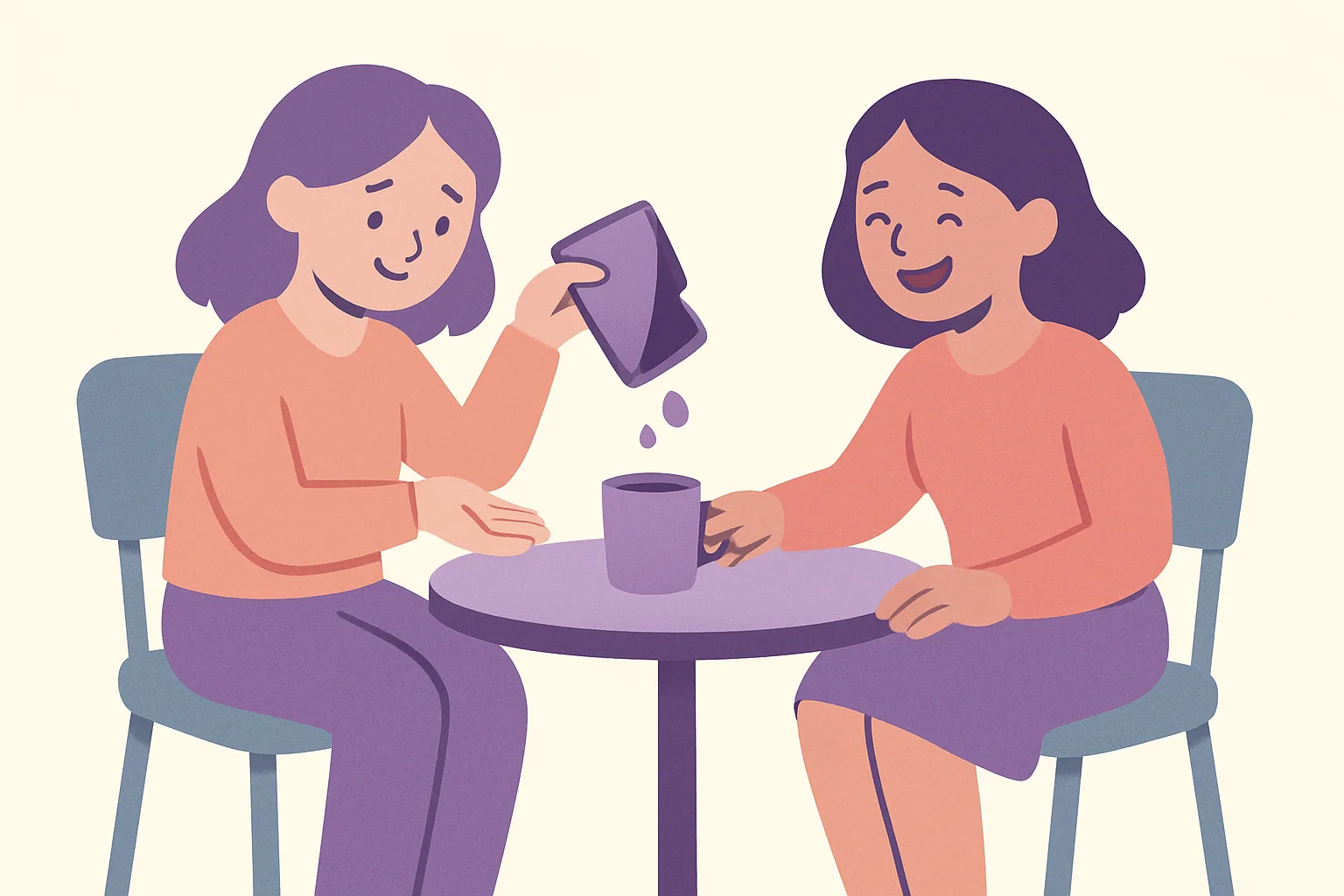
9 Examples of 만 vs 밖에: How to Say "Only" in Korean
Korean has two words for "only": 만 just counts, 밖에 complains. Nine real sentences that show which one a Korean speaker would pick, and why.
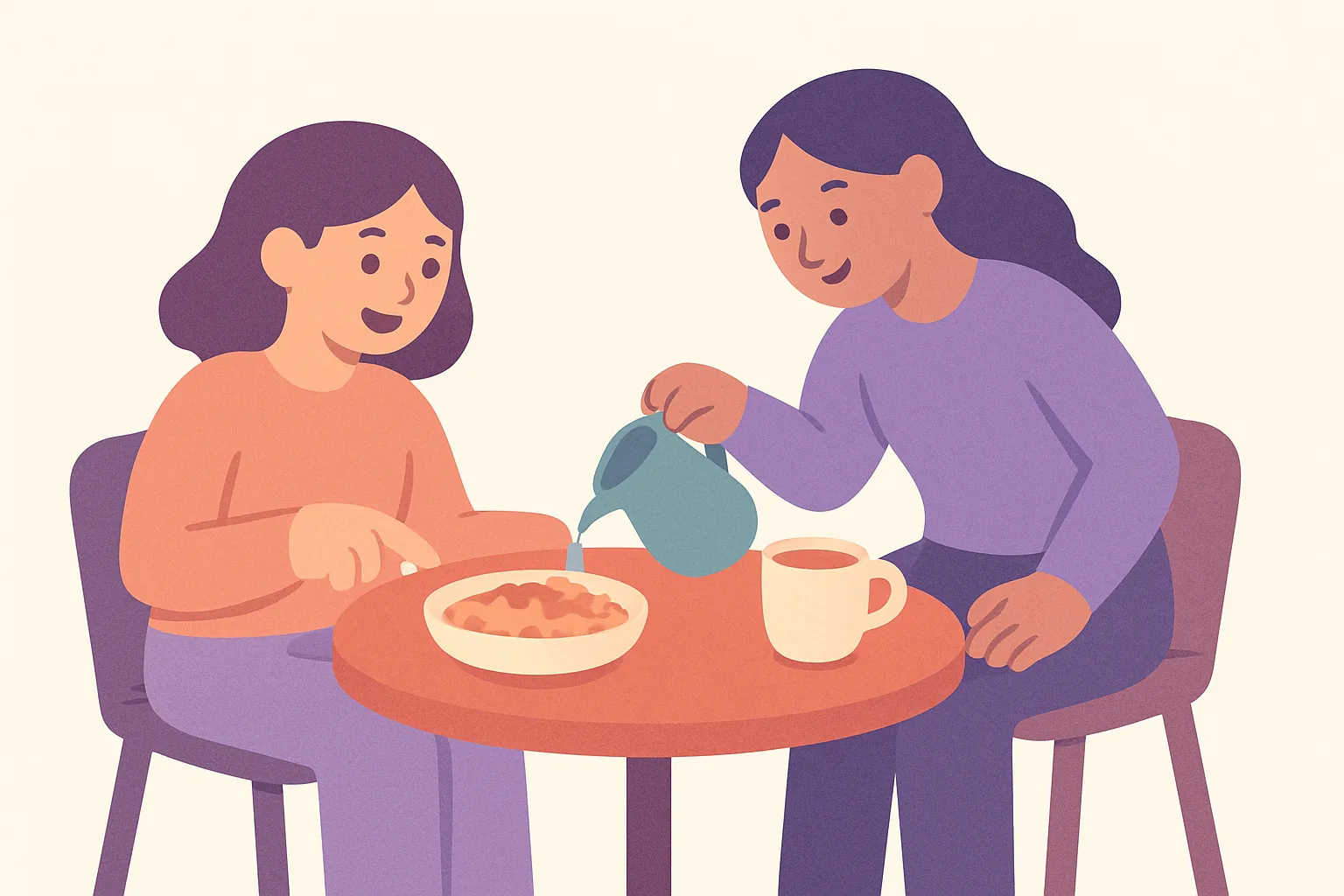
-(으)ㄹ게요 vs -(으)ㄹ래요: "I'll Do It" vs "I Want To"
-(으)ㄹ게요 is a promise you make with the listener in mind. -(으)ㄹ래요 is your own choice or preference. Here's the form, the nuance, and the mistakes to avoid.
Korean Weekly — Sep 14 – Sep 20
35 beginner Korean words, 7 grammar patterns and 7 drills from Sep 14 – Sep 20.

9 Rules for Korean Numbers: When to Use 하나, 둘 vs 일, 이
Korean has two counting systems, and the choice never depends on the number — it depends on the word right after it. Nine rules, with the sentences you'll actually say.
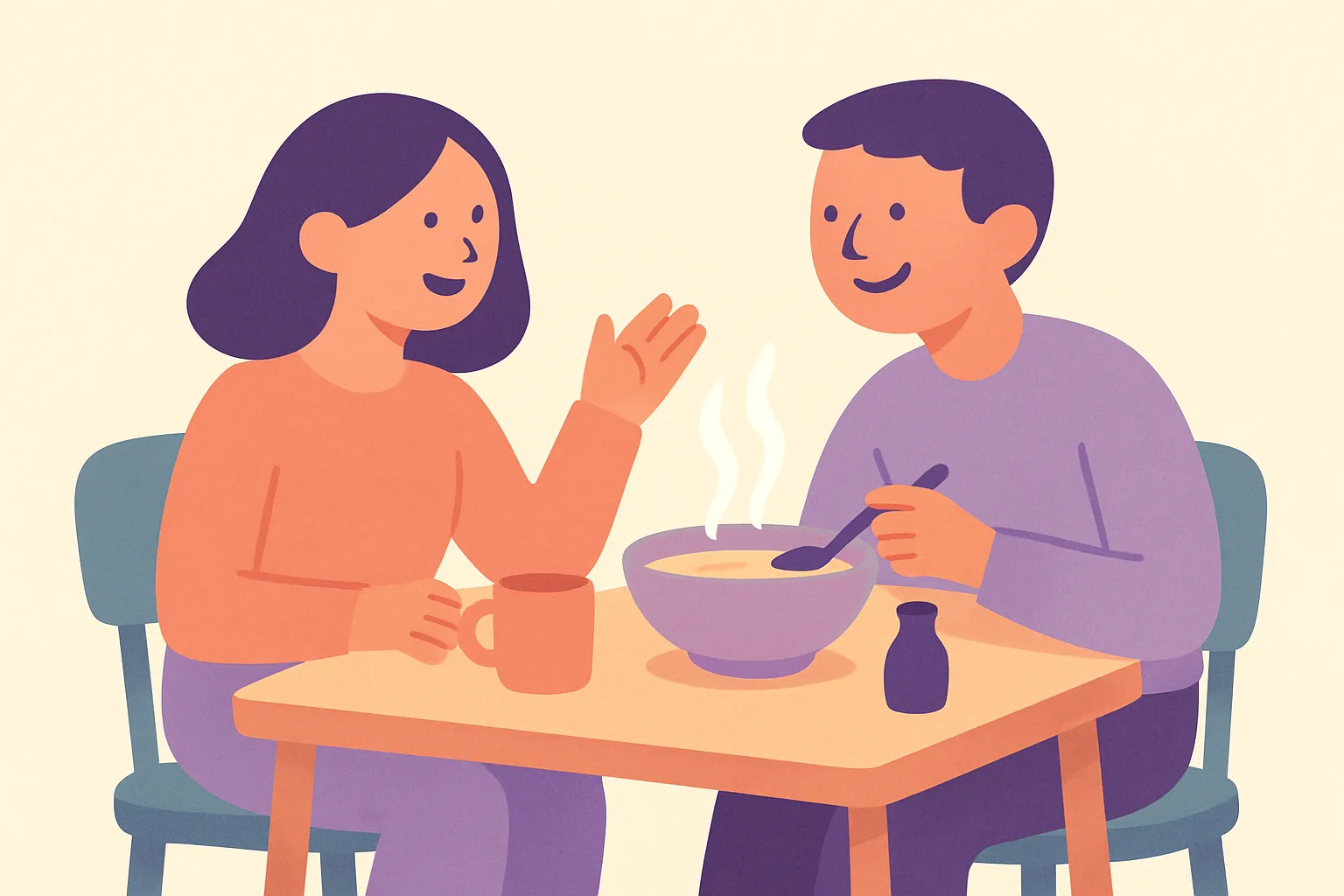
Korean Pronunciation Rules: Why 국물 Sounds Like [궁물]
Korean spelling shows a word's parts, not its sound. Here are the handful of sound-change rules behind 국물 [궁물] and 같이 [가치] — and how to stop reading Hangul letter by letter.
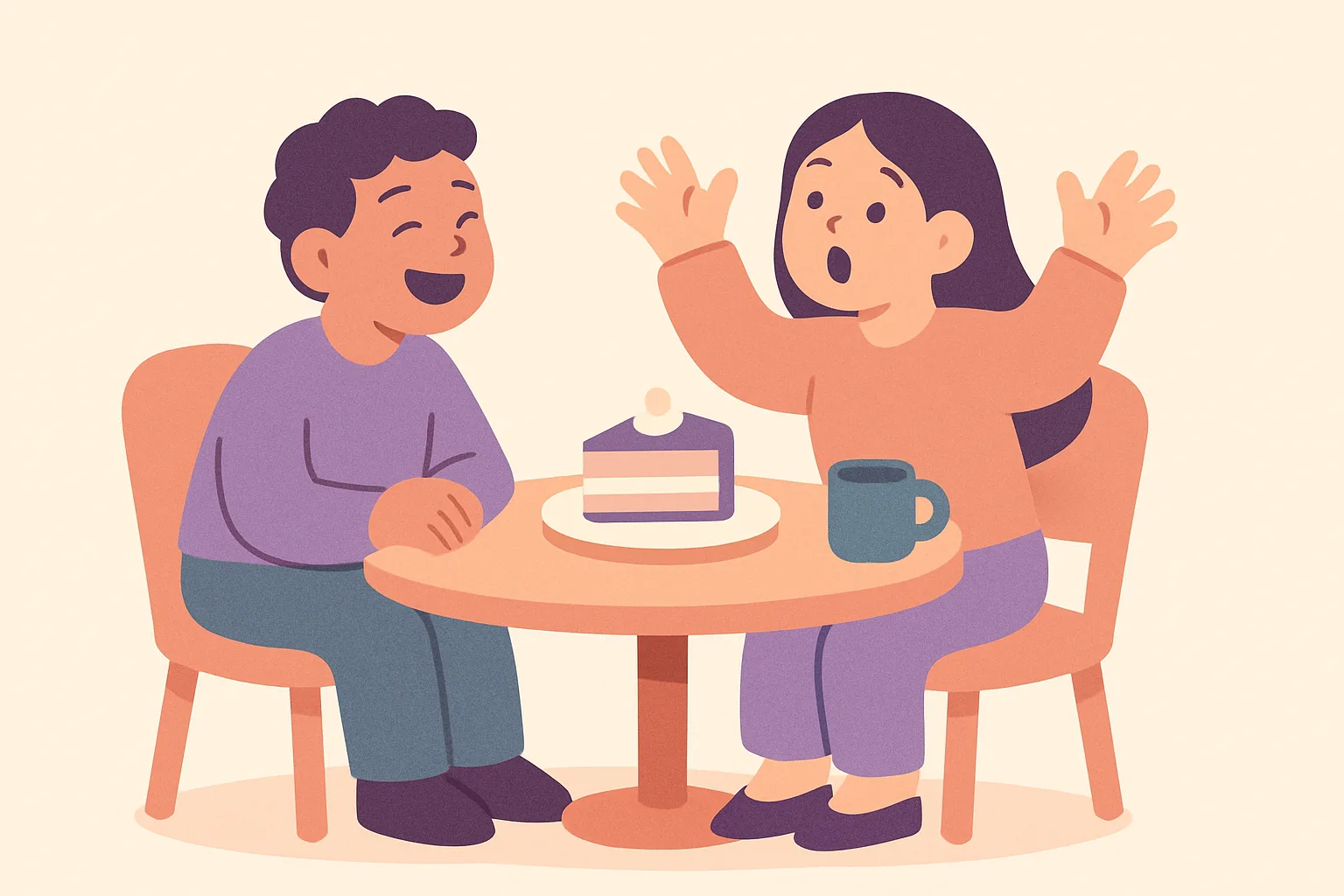
9 Ways to Say "Very" in Korean: 진짜, 정말, 너무, 완전
진짜, 정말, 너무, 완전 and five more Korean intensifiers — which ones sound casual, which sound like a textbook, and what each one does to a sentence.
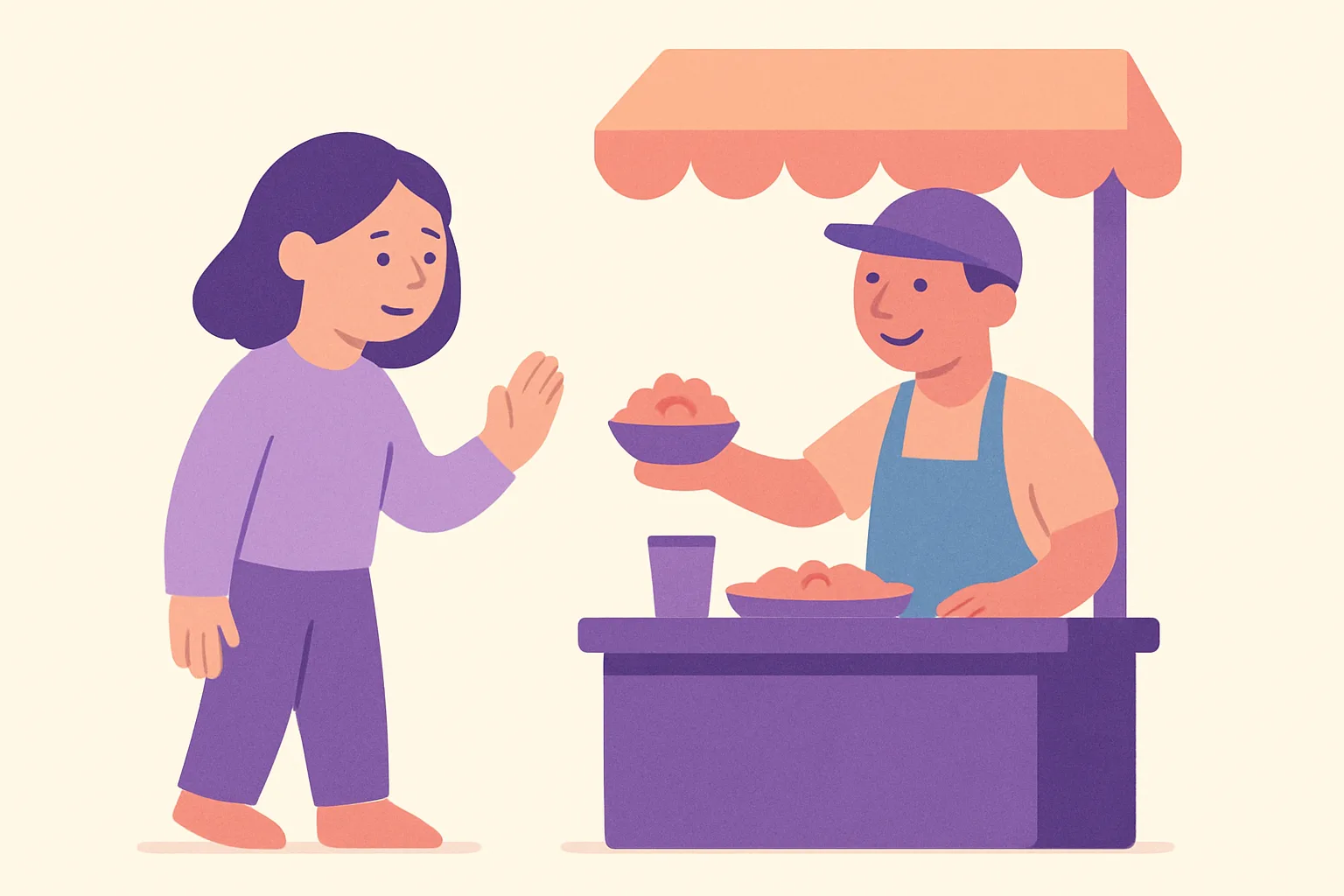
How to Say No Politely in Korean: 괜찮아요, 됐어요, 다음에요
Korean rarely says no with the word for no. Here are the six softeners natives actually use — and the one that sounds cold if you pick it by accident.
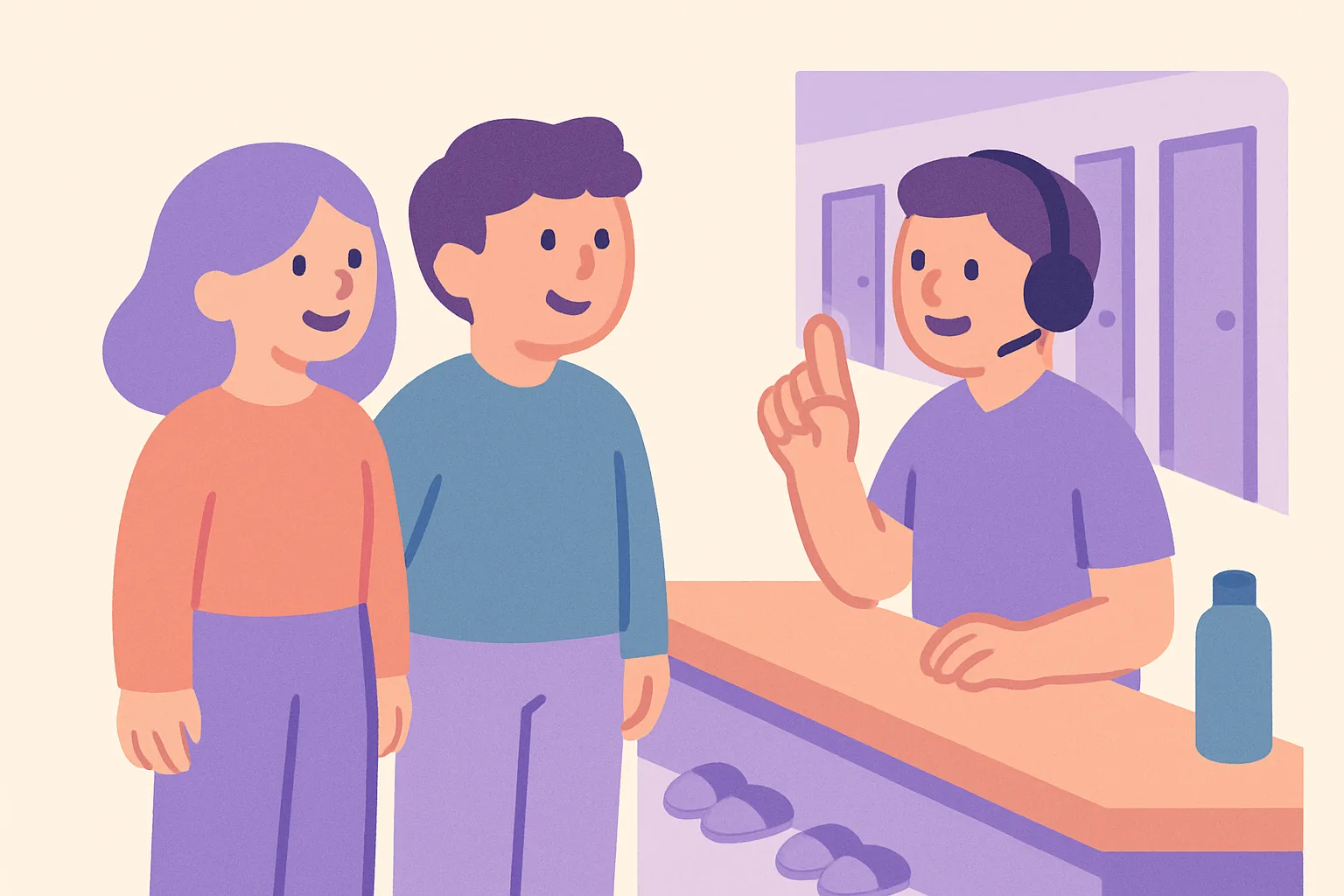
Paying by the Hour in Korean: 노래방, PC방, 찜질방
In Korea's 방 places you don't buy a thing — you buy time. Learn the counter Korean for that: 한 시간 할게요, 연장, 추가, 충전, 선불.

전하, 마마, 아니 되옵니다: The Korean of 사극 K-Dramas
Historical K-dramas run on a different grammar. Here's what 전하, 마마, 저하 and endings like -옵니다 and -소서 actually tell you — and how each one maps onto modern Korean.

9 Korean Words for Noona Romance K-Dramas: 누나, 연하, 썸
In older-woman/younger-man K-dramas, the plot moves through what the couple calls each other and how formally they speak. Here are the nine words that carry it.
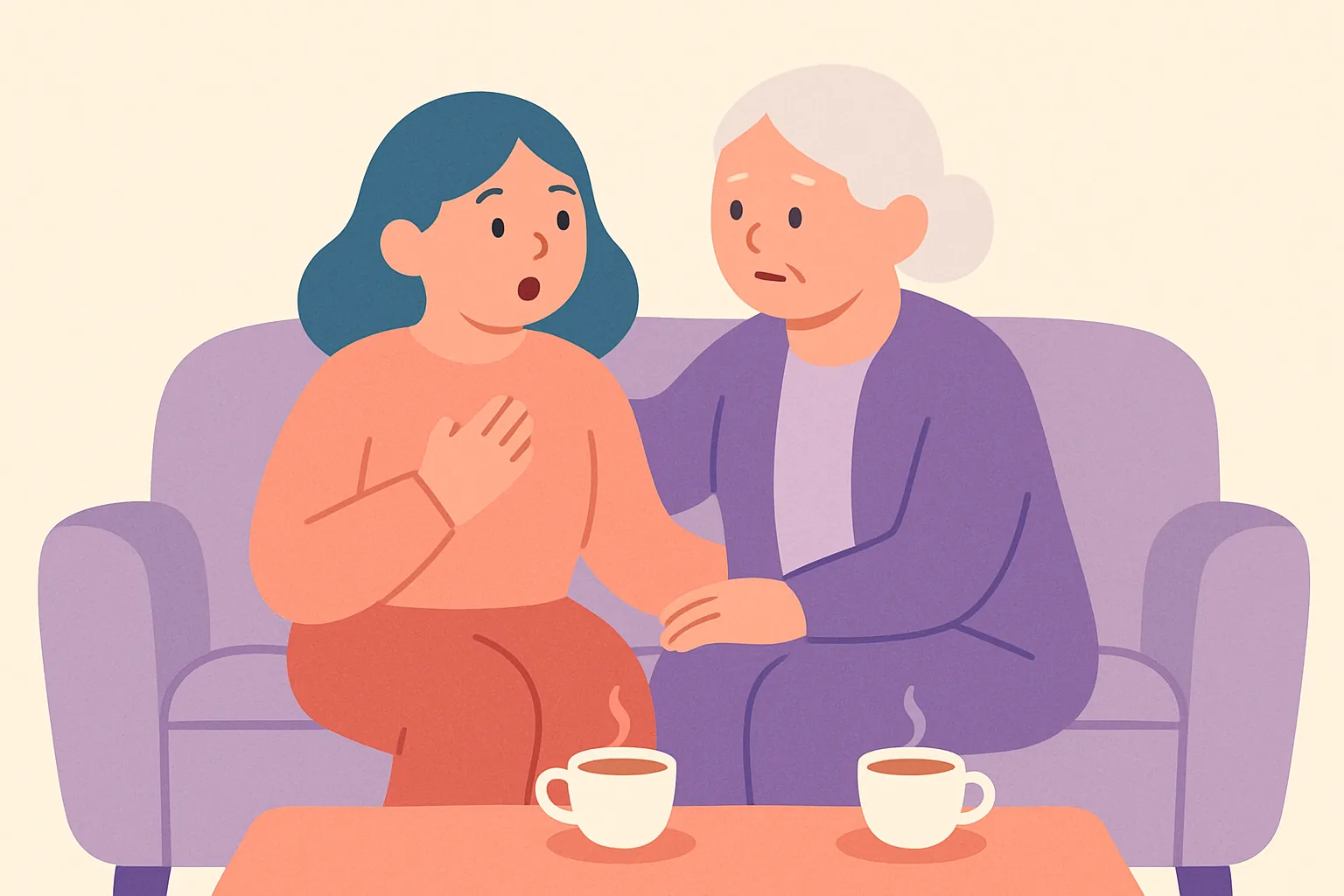
아이고, 어머, 헐, 대박: Korean Exclamations in K-Dramas
Subtitles turn all four into "Oh my god." In Korean they tell the listener your age, your mood, and how close you are to the person you're talking to.
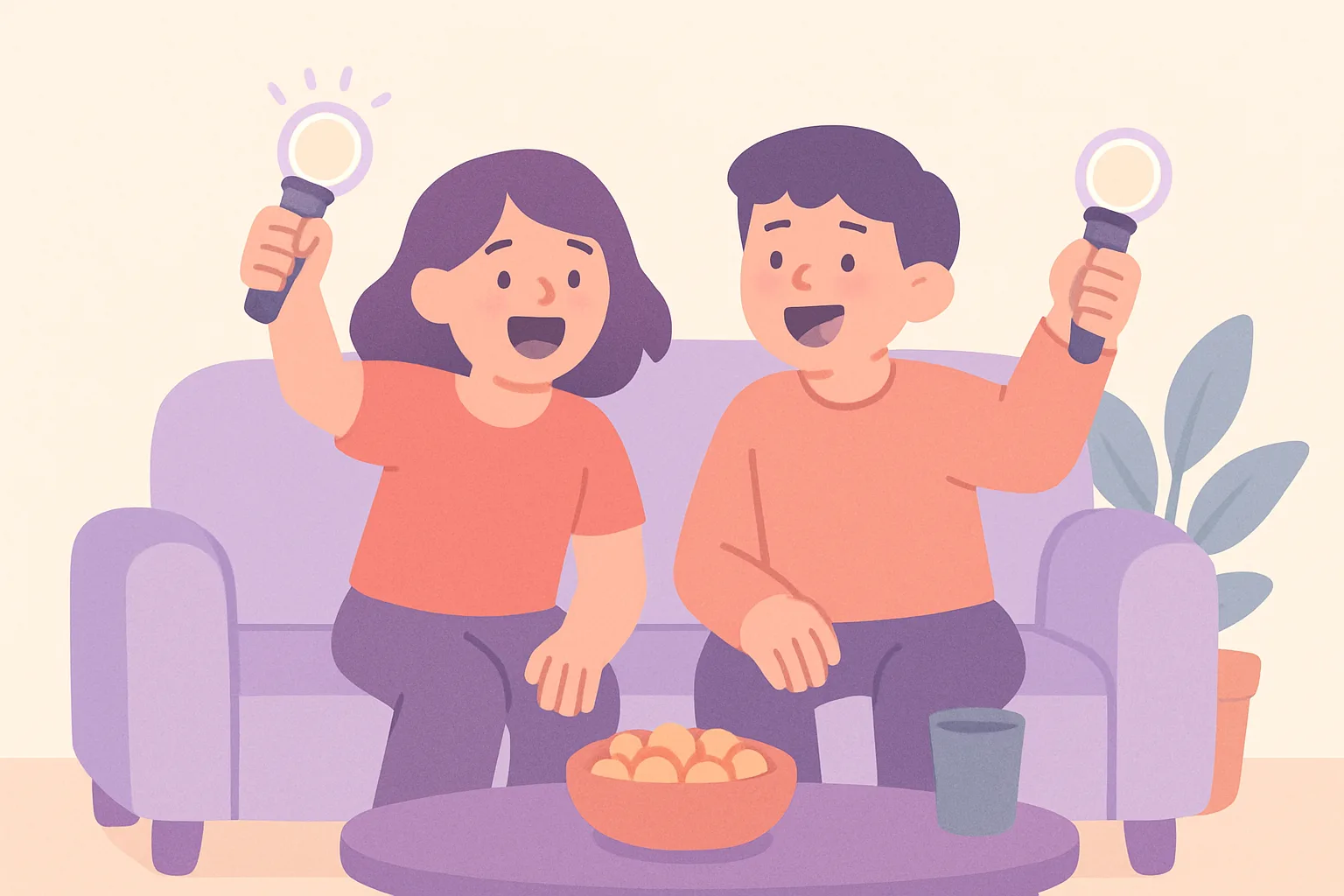
10 Konglish Words Every K-pop Fan Should Know in Korean
컴백, 굿즈, 케미, 원픽 — the English-looking words inside Korean pop don't always mean what they look like. Here's how ten of them actually work.
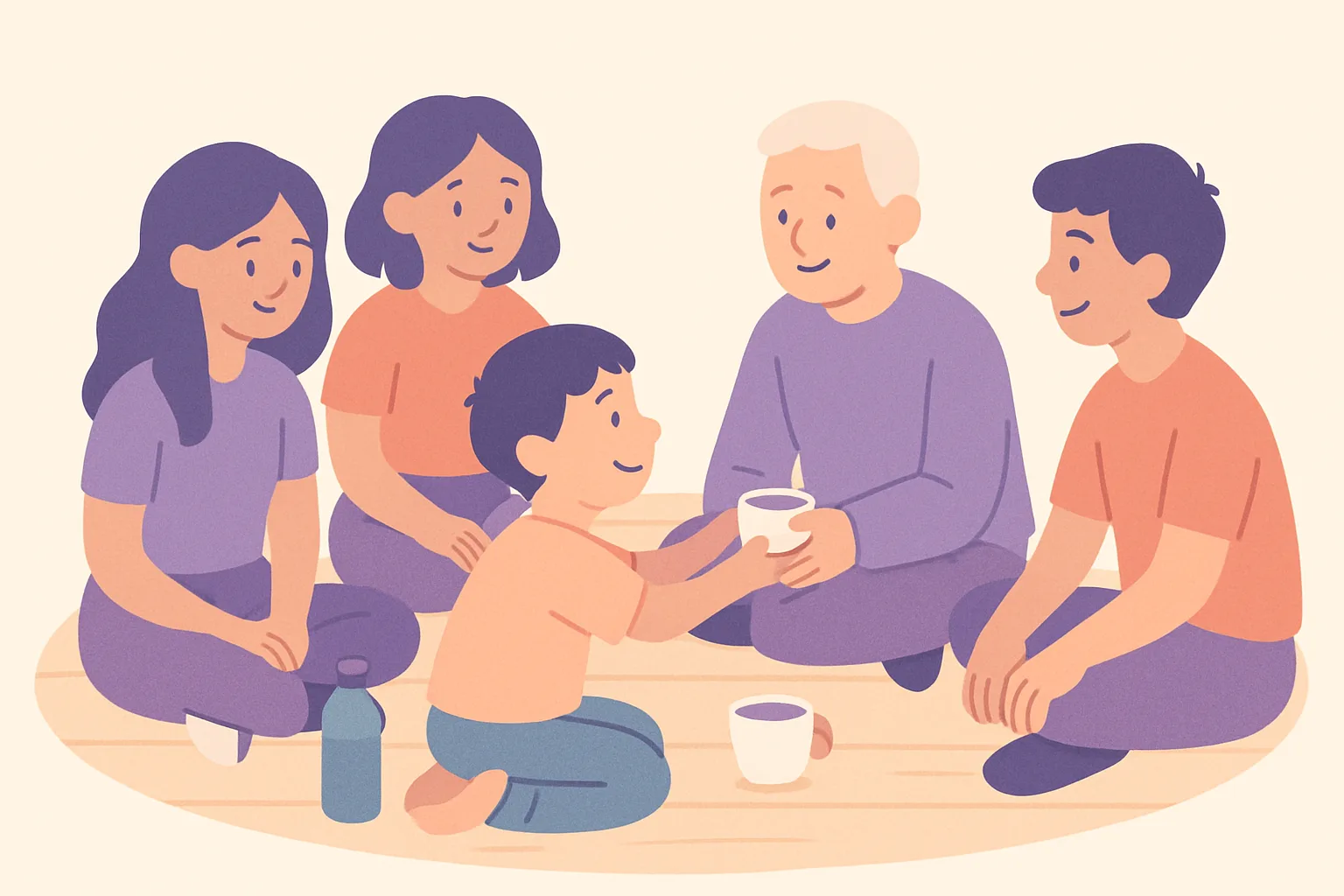
Korean Idol Hierarchy: 선배, 후배, 막내, 리더 Explained
In a K-pop group, who outranks who isn't about age — it's about who debuted first. Here's what 선배, 후배, 막내 and 리더 actually mean, and how members talk because of them.
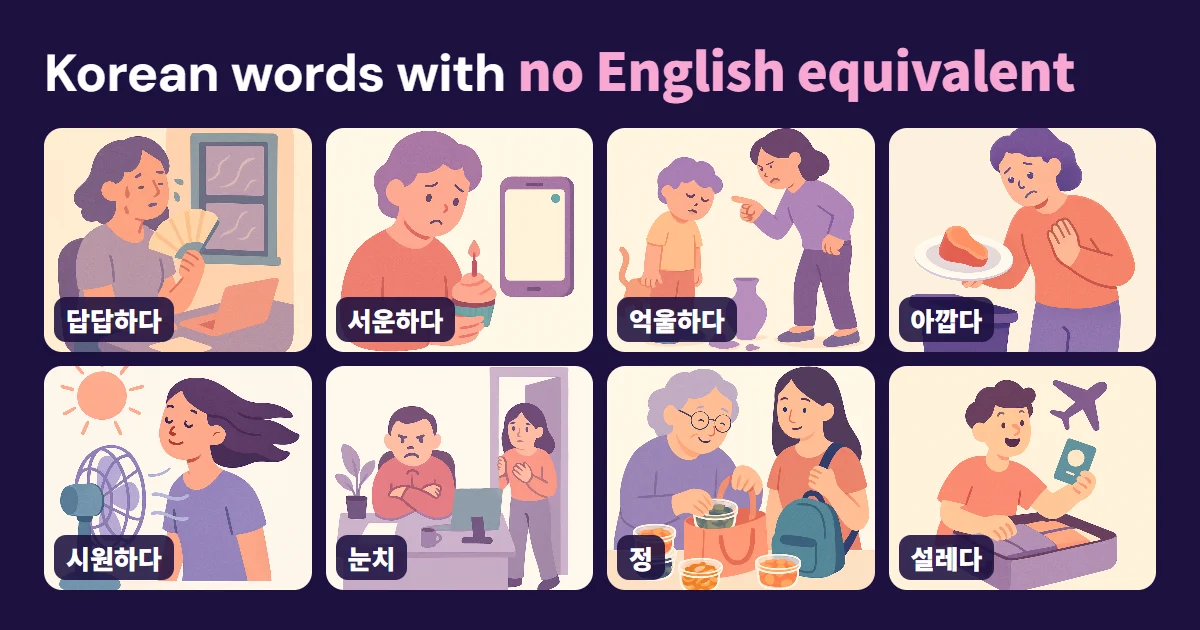
8 Korean Words With No English Equivalent (With Pictures)
답답하다, 서운하다, 눈치, 정 — Korean packs a whole situation into one word. Here are eight words English needs three or four words to say, with pictures.
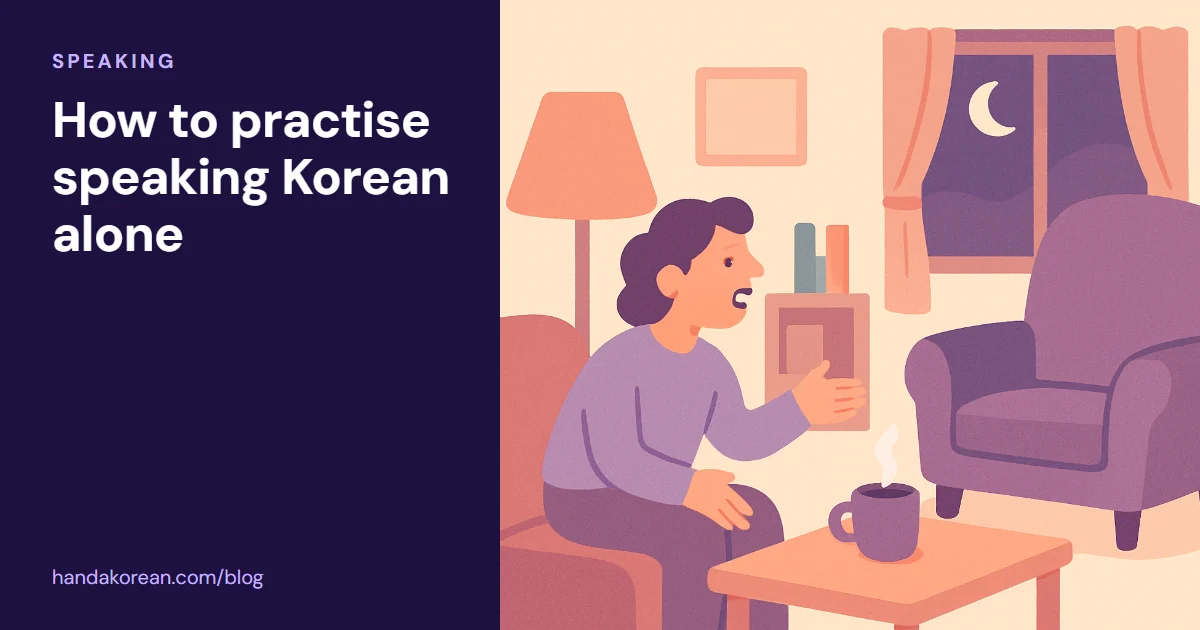
How to Practice Speaking Korean When You Have Nobody to Talk To
You can read Hangul, you know a few hundred words, and you have never said a full sentence out loud. Here is how to fix that on your own — and what each method is actually good for.

Is Korean Hard to Learn for English Speakers?
Korean is officially one of the four hardest languages for English speakers. But the hard parts are not the ones people expect, and two of the famously difficult features are genuinely easy.
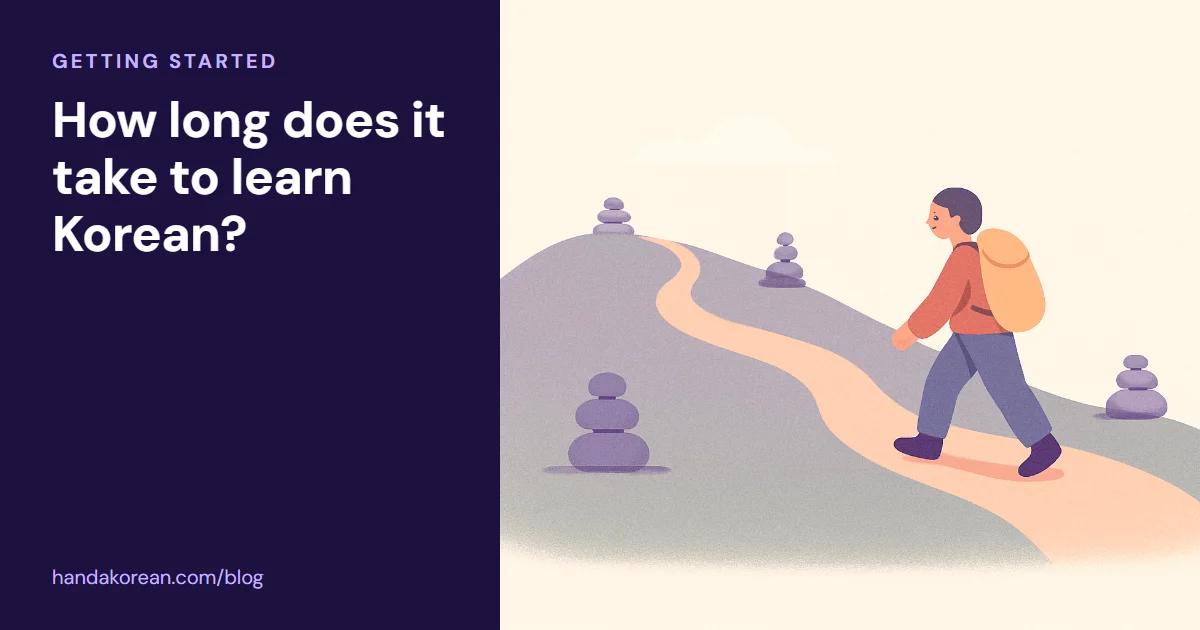
How Long Does It Take to Learn Korean? An Honest Answer
The State Department says 2,200 hours. That number is real, but it answers a question you probably are not asking. Here is what each level actually costs in months.
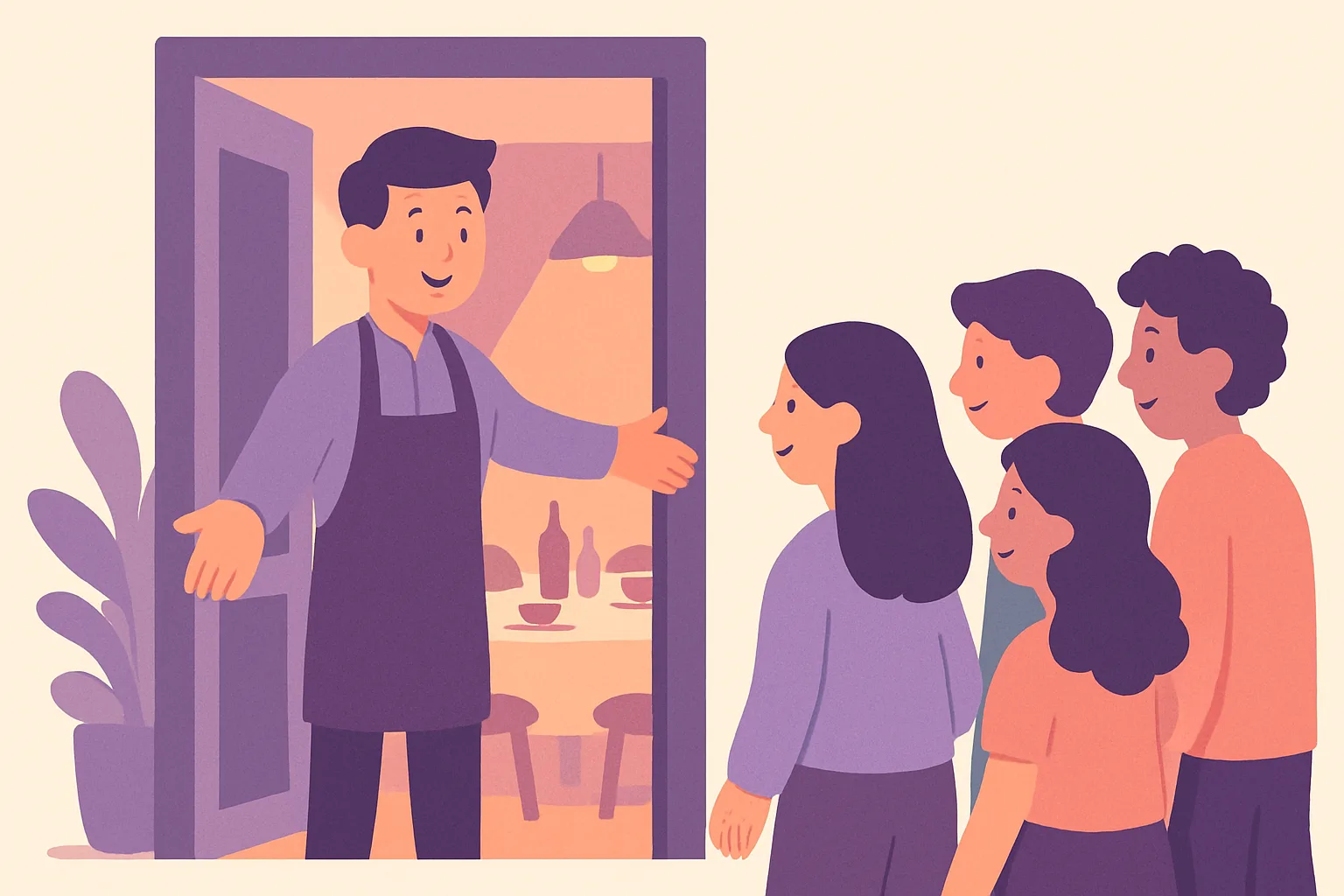
Making a Reservation by Phone in Korean
A Korean reservation call is really just three facts in a fixed order: when, how many, who. Learn that spine and you can book a table, a haircut or a clinic visit.
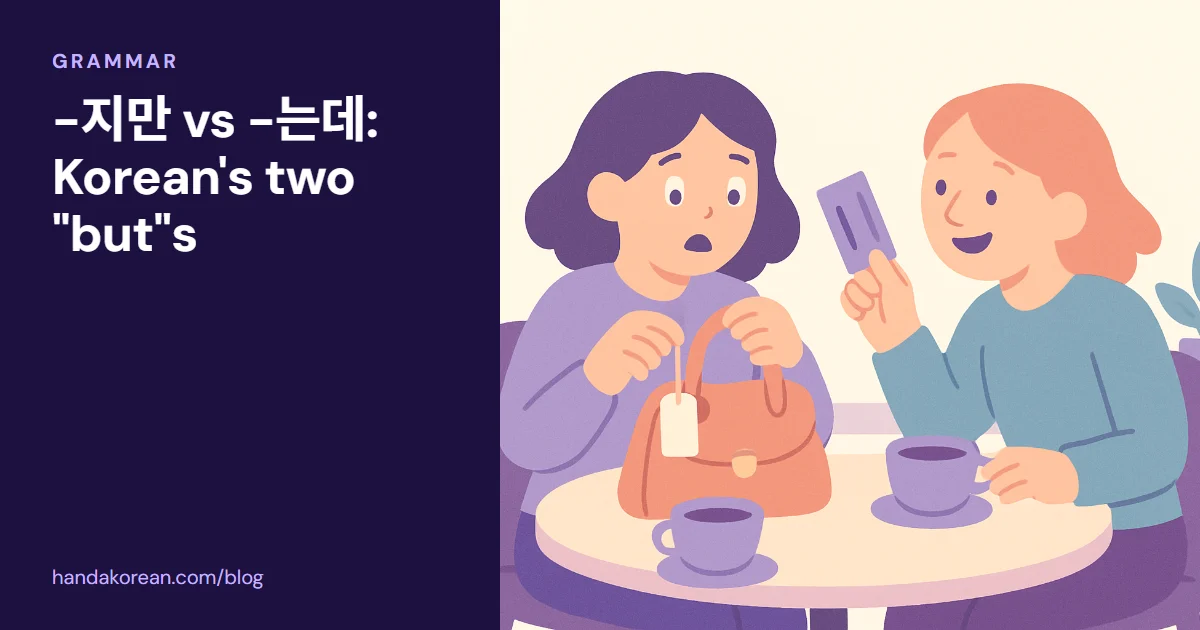
-지만 vs -는데: Korean's two "but"s aren't the same
Both get translated as "but," but only -지만 is really a contrast. -는데 sets the scene for what comes next — here's how to hear the difference.
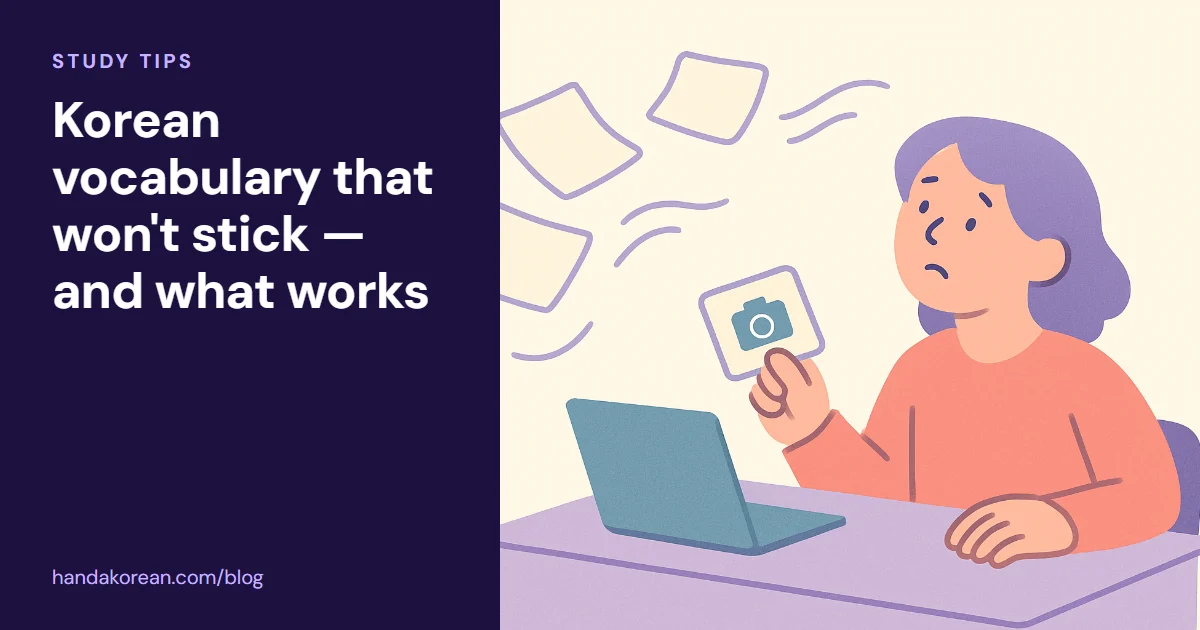
Korean Vocabulary That Won't Stick — Why, and What Works
If Korean words slide out of your head a day after you learn them, the problem usually isn't your memory. It's that you're learning words alone instead of with a partner.
Korean Weekly — Sep 6 – Sep 12
35 beginner Korean words, 7 grammar patterns and 7 drills from Sep 6 – Sep 12.
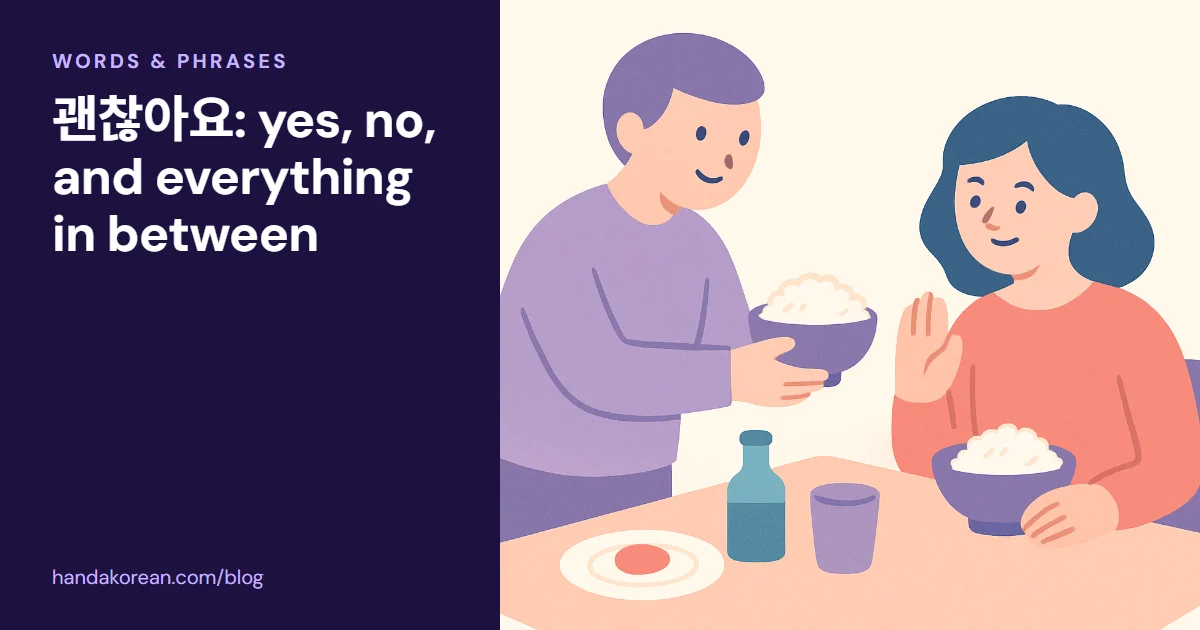
괜찮아요: yes, no, and everything in between
괜찮아요 can mean "I'm fine," "no problem," "no thanks," and "pretty good" — here's how Koreans tell them apart, and how to make sure you're understood.

노래방, PC방, 찜질방: How to Survive Korea's "방" Culture
노래방, PC방, 찜질방 — Korea rents you a room by the hour. Learn the handful of counter phrases that work at all three, and you can walk into any of them.
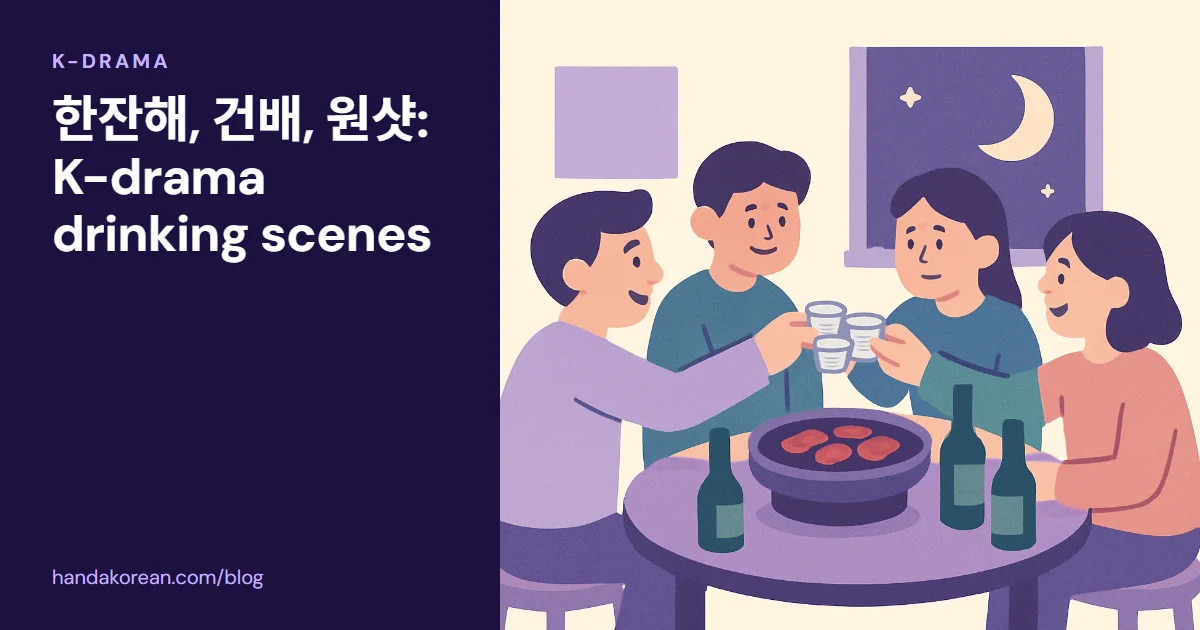
한잔해, 건배, 원샷: the Korean of K-drama drinking scenes
Why "한잔하자" almost never means one glass, what 건배, 짠 and 위하여 each signal, and how to pour, receive and politely stop.
Korean Weekly — Aug 31 – Sep 6
35 beginner Korean words, 7 grammar patterns and 7 drills from Aug 31 – Sep 6.
은/는 vs 이/가 — The Difference Nobody Explains Properly
Textbooks say 은/는 is the "topic marker" and 이/가 is the "subject marker." That tells you nothing. Here is the rule that actually works.
How to Learn Korean With a Friend (Without Paying Twice)
Almost every AI language app is built for one person. Here is how to study Korean with a partner or friend anyway — and why doing it together works.
HanDa vs Speak for Learning Korean
Both let you practise speaking with AI. They are built on opposite bets — one covers many languages well, the other covers one language deeply.
Korean Conjugation Is a Production Problem, Not a Memory Problem
You can recite the 하다 rules and still freeze mid-sentence. The gap is between recognising a form and producing one under time pressure.
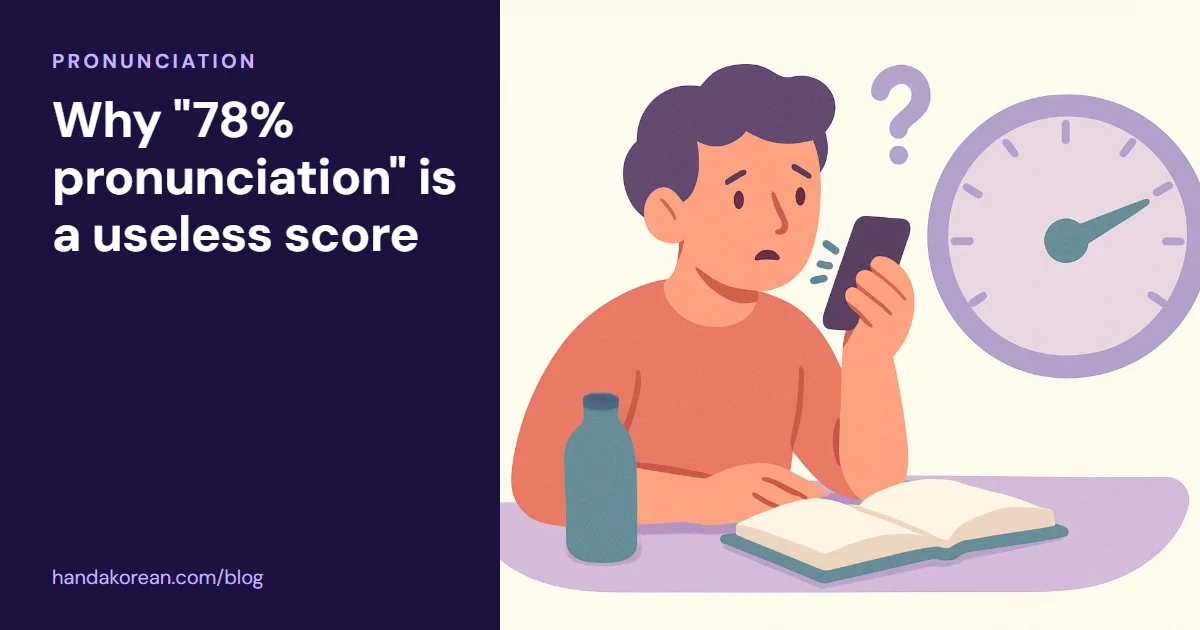
Why "78% Pronunciation" Is a Useless Score
Most apps grade your Korean pronunciation with one number per sentence. That number cannot tell you what to fix — here is what to look for instead.
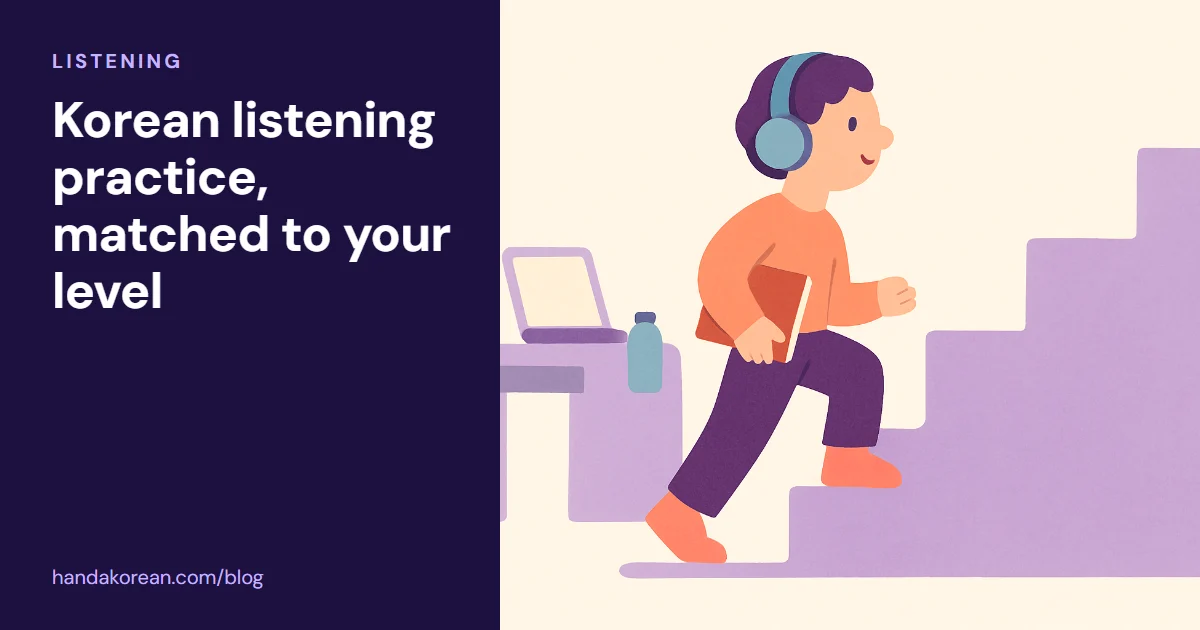
Korean Listening Practice, Matched to Your TOPIK Level
Dramas are too fast and textbook audio is too slow. The material that builds listening is the material you almost understand.

The Best AI Korean Tutor Apps in 2026
Twelve AI apps that let you practise Korean conversation, sorted by who each one is actually for — including the cases where our own app is the wrong choice.
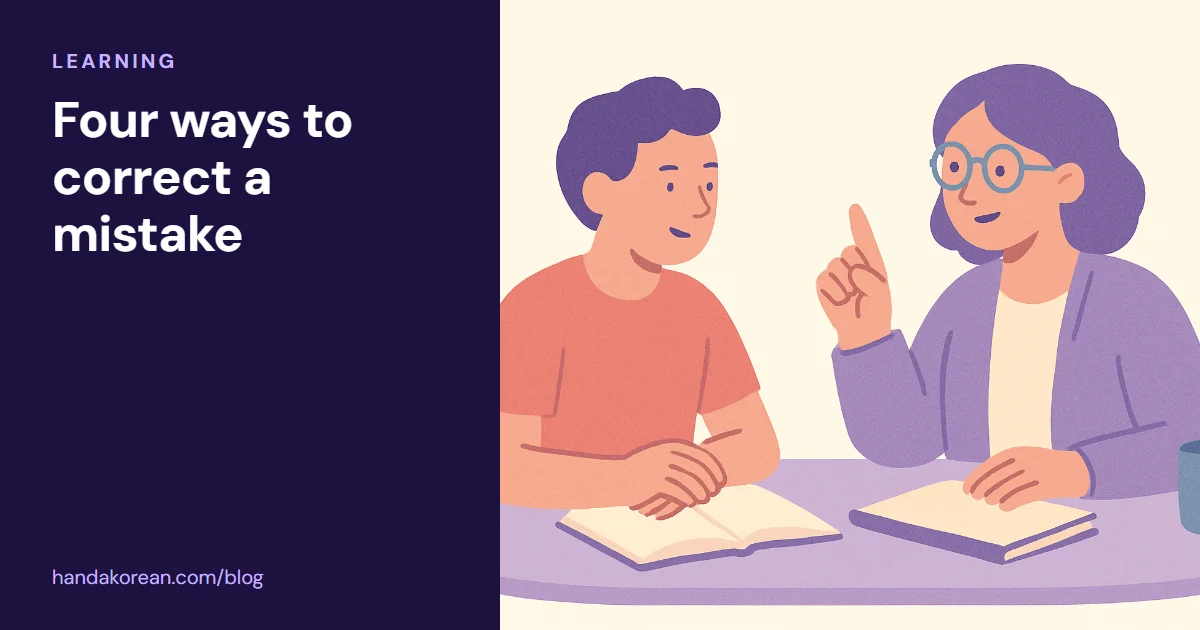
Four Ways to Correct a Korean Mistake — and Which One You Need
Recast, metalinguistic, explicit, elicitation. The way an error gets corrected changes whether you learn from it or just feel bad about it.