Words & Phrases
Everyday Korean words and expressions, and how natives use them
9 Ways to Say "Maybe" in Korean: 아마, 혹시, 글쎄요
"Maybe" in Korean isn't one word. 아마 means probably, 혹시 softens a question, 글쎄요 dodges one — nine natural ways to hedge, with examples.
How to Say "A Little" in Korean: 조금, 좀, 약간, 살짝
조금, 좀, 약간, 살짝, 잠깐 all translate as "a little" — but Koreans pick between them automatically. Here's the logic, with natural examples.
Korean Sound Words: 두근두근, 반짝반짝, 쿵쿵 and More
Korean doubles a sound to make a word. Here's what 두근두근, 반짝반짝 and 쿵쿵 really mean, which ones take 하다, and why 반짝 and 번쩍 feel different.

8 Korean Time Words for Later, Earlier, and Right Now
이따가 or 나중에? 방금 or 금방? Eight everyday Korean words for when something happened — with the nuance that decides which one a Korean speaker picks.
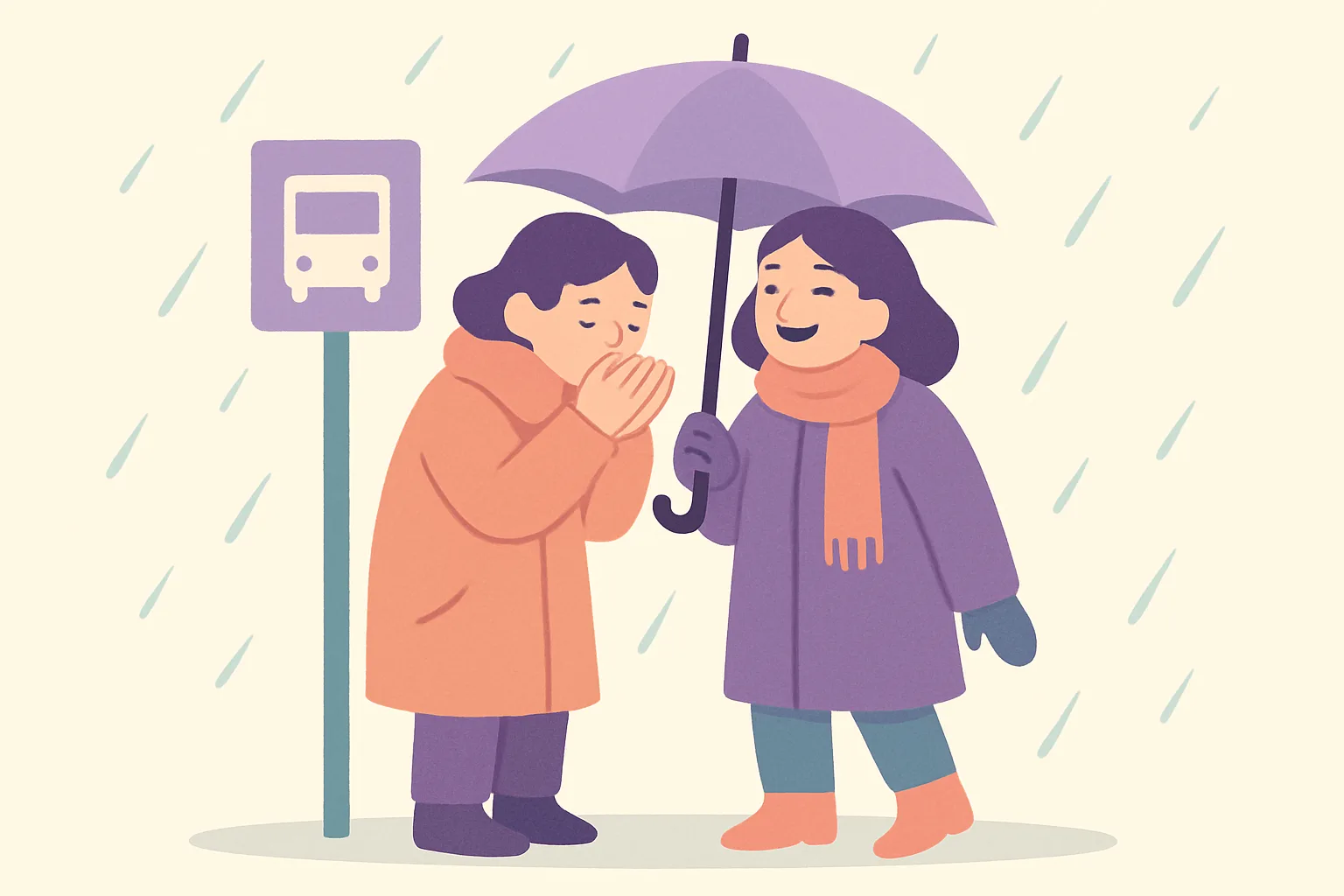
How to Talk About the Weather in Korean: 덥다, 춥다, 비가 오다
덥다 and 춥다 describe the air; 뜨겁다 and 차갑다 describe things you touch. Here's the difference, plus the small talk Koreans actually make about the weather.
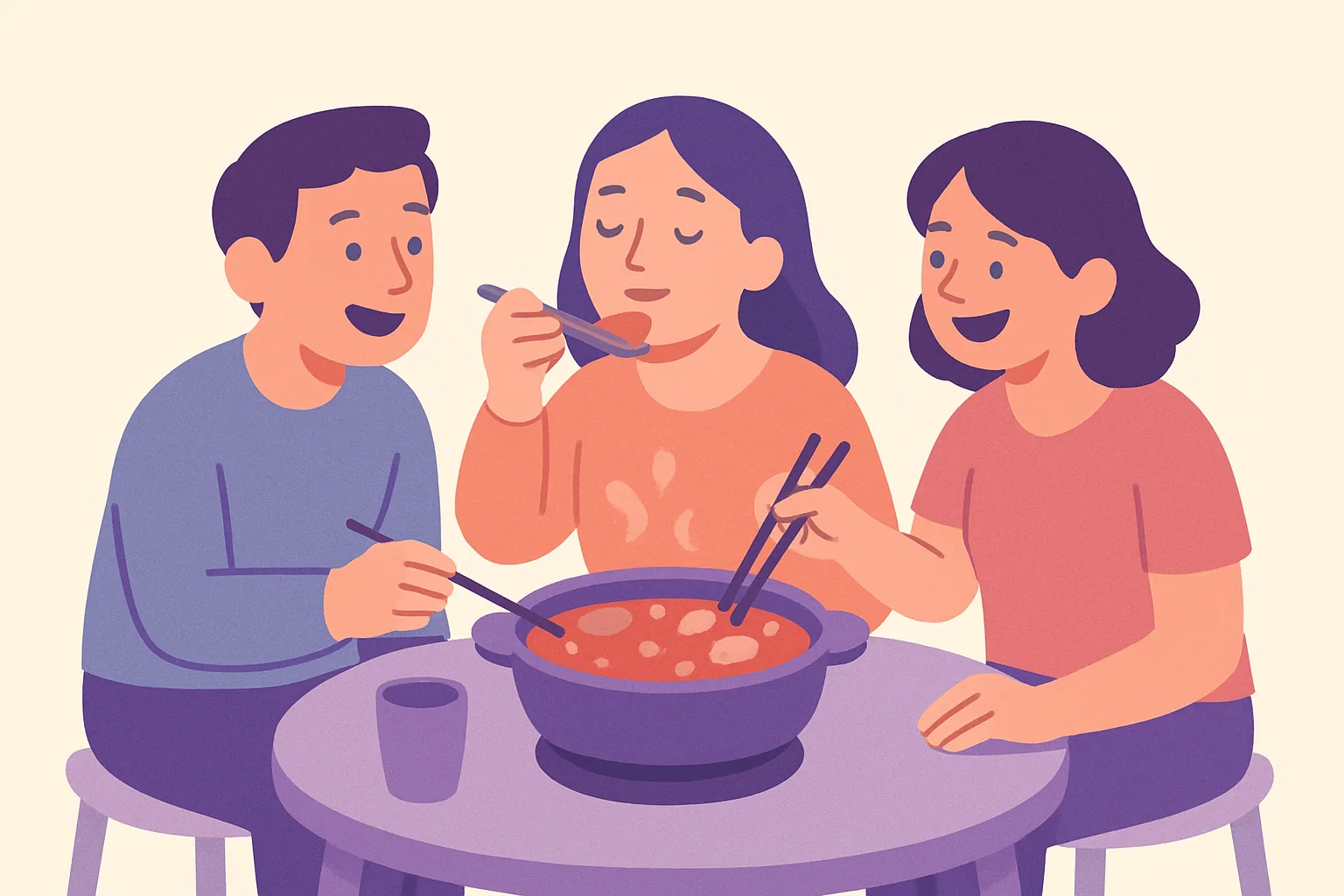
9 Korean Words to Describe Food Taste Beyond 맛있어요
맛있어요 is only the beginning. Here are nine Korean taste and texture words — 고소해요, 담백해요, 느끼해요, 쫄깃해요 and more — with the nuance English translations miss.
Days of the Week in Korean: 월요일 to 일요일
The seven Korean day names all end in 요일, and each first syllable is an element — moon, fire, water. Plus how to say this week, next week and last week.

9 Korean Slang Words Young Koreans Actually Say Out Loud
꿀잼, 찐, 인싸, 현타 and more — the casual Korean you'll hear in real conversation, what each one signals, and who you can safely say it to.

네, 예, 아니요, 응, 아니: Yes and No in Korean
네 means "yes" — but it really means "what you said is right." Here's how 네, 예, 아니요, 응 and 아니 actually work, including the negative-question trap.

10 Korean Animal Words and the Sounds They Make
Dog, cat, rabbit, tiger and more in Korean — plus the sounds Koreans say they make, like 멍멍, 야옹 and 어흥, and when each word carries a hidden meaning.
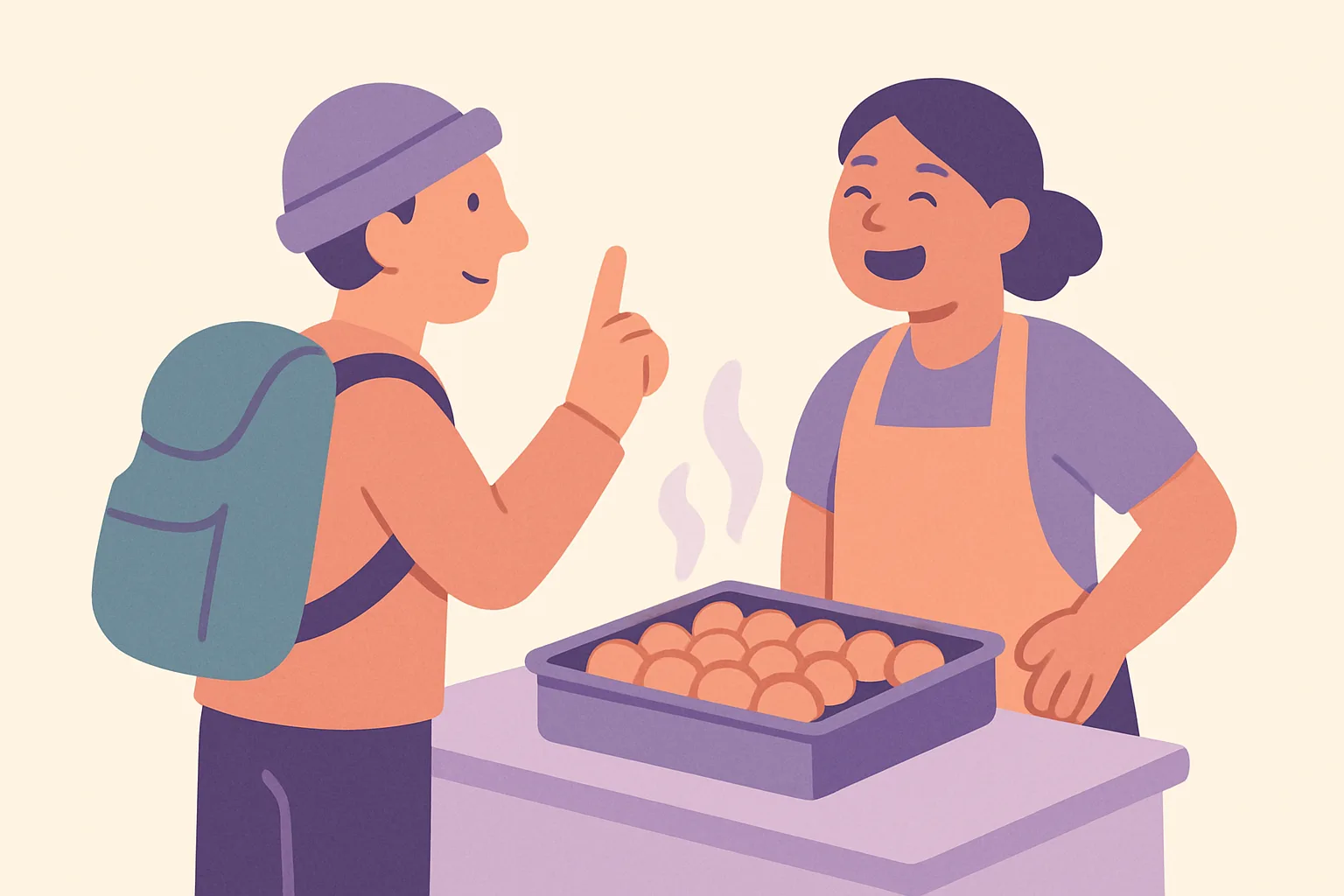
9 First Korean Phrases for Beginners and When to Use Each
Past 안녕하세요 and 감사합니다, these are the nine phrases that actually keep a Korean conversation alive — with the nuance that decides which one a native picks.
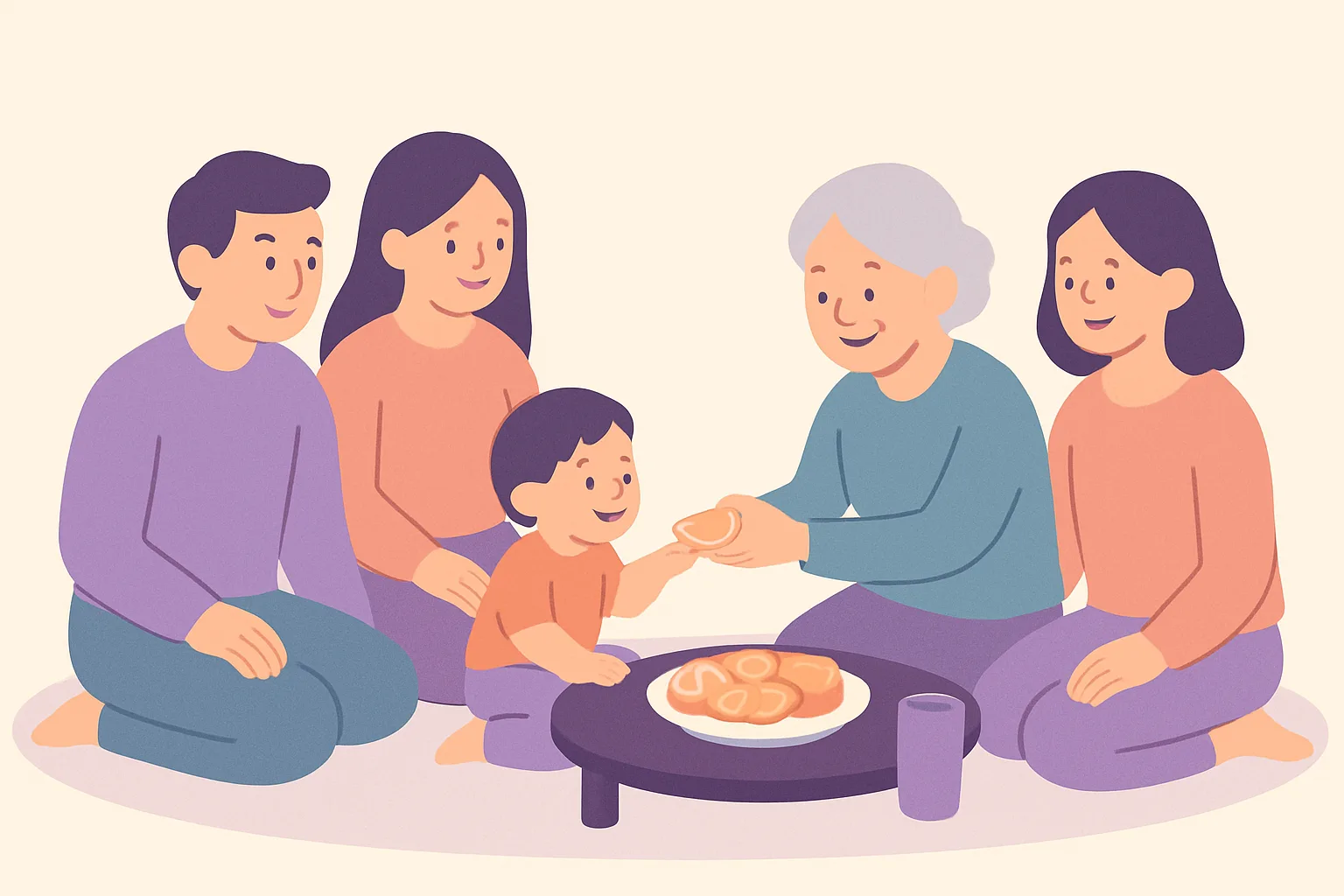
9 Korean Family Words: Mom, Dad, Grandma, Grandpa, Aunt, Uncle
엄마, 아빠, 할머니, 할아버지, 이모, 고모, 삼촌 — what each family word means, which side of the family it belongs to, and how Koreans actually use them.
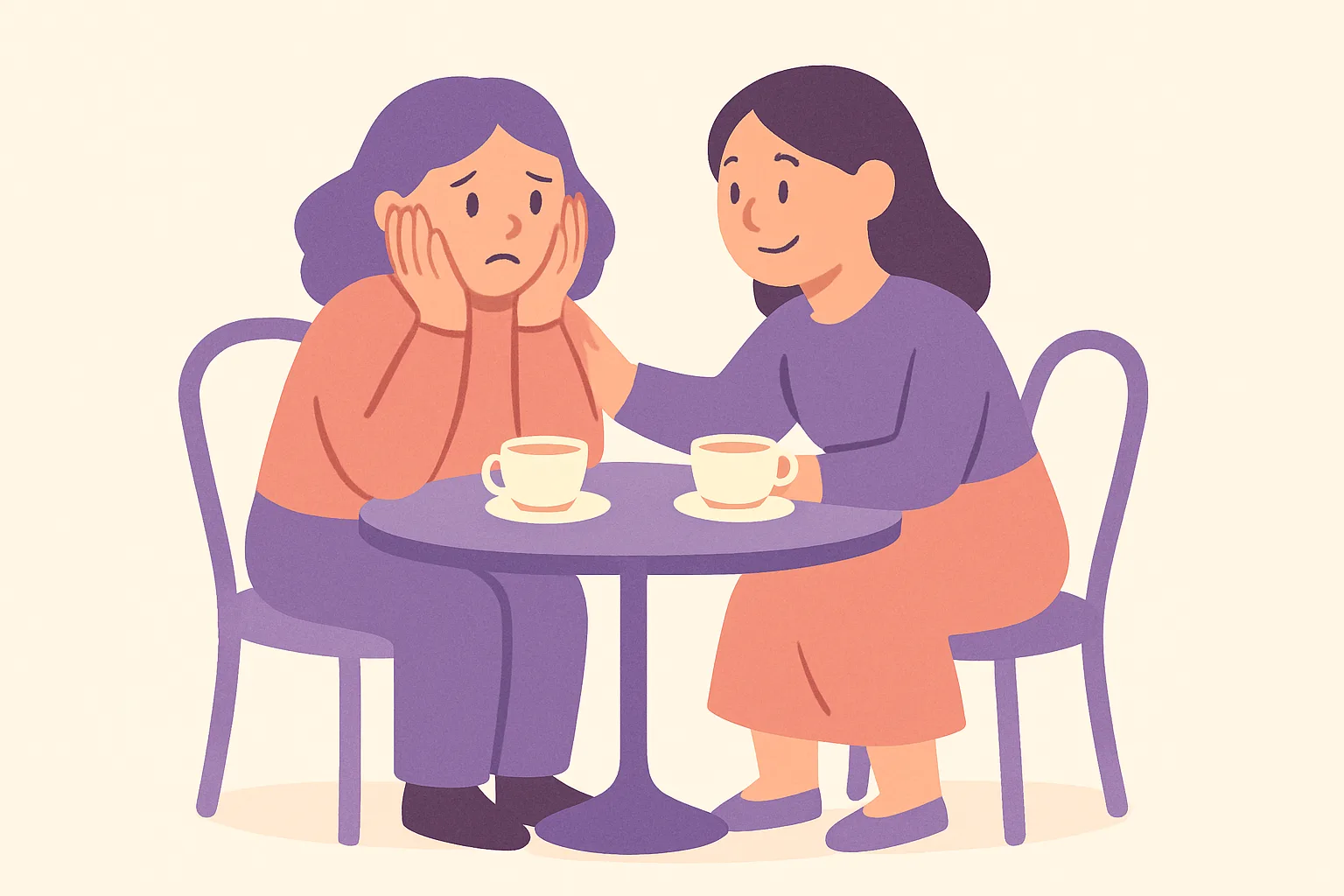
어떡해 vs 어떻게: 9 Korean Phrases and the Difference
어떻게 means "how" and needs a verb after it. 어떡해 is a whole sentence — "what do I do?" Nine phrases that show you which one to use, and when.
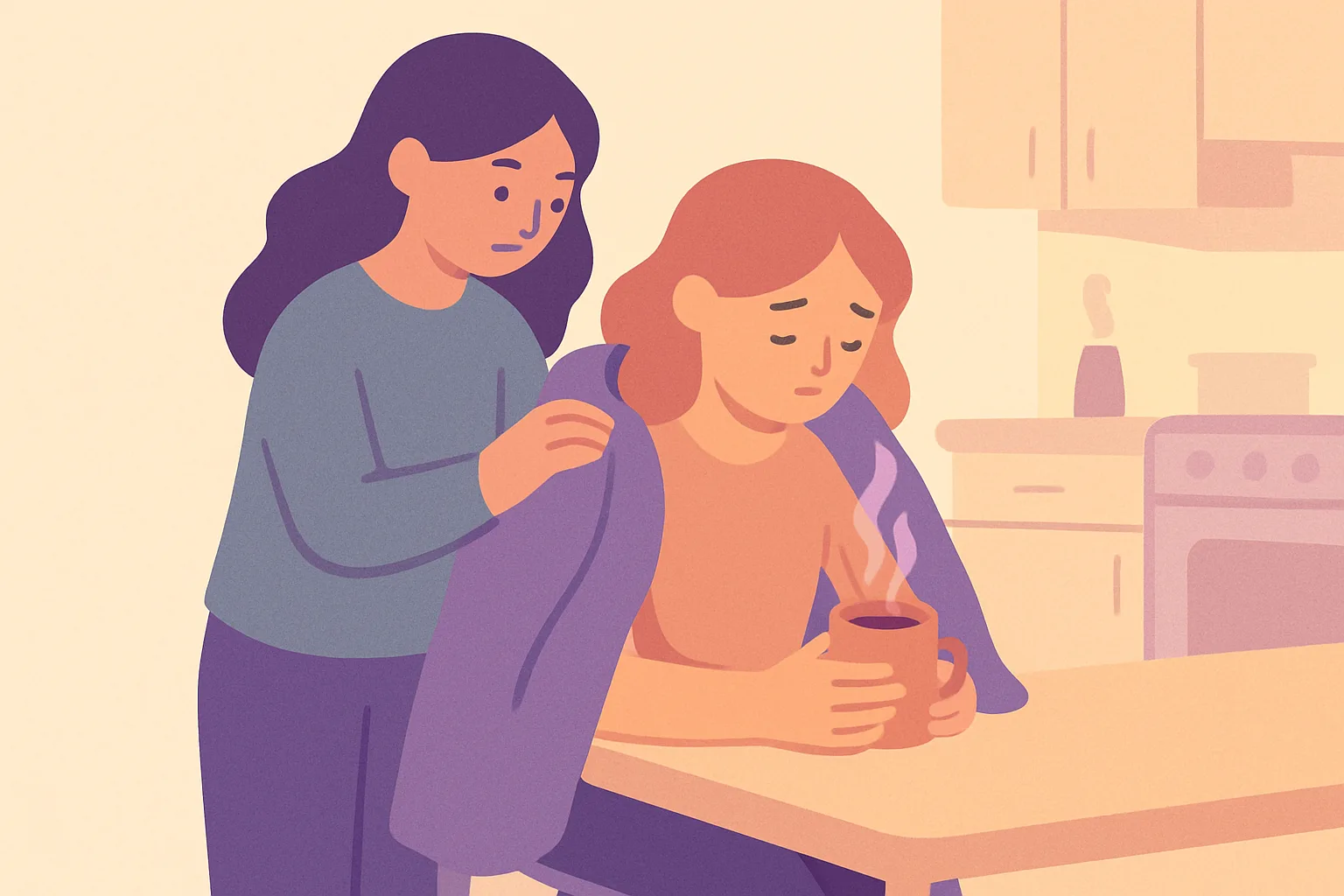
Korean Words for Tired: 피곤하다, 지치다, 힘들다
Three Korean words all translate as "tired," but they point at different things: your body, your limit, or the thing you're doing. Here's how Koreans pick.
Korean Body Idioms: 발이 넓다, 손이 크다, 입이 짧다
In Korean, personality is often described as a condition of a body part. Here's how 발이 넓다, 손이 크다, 입이 짧다 and friends actually work — and when natives use them.

9 Korean Words for Feelings Beyond Happy and Sad
설레다, 뿌듯하다, 서운하다 and six more Korean feeling words that say exactly why you feel something — plus how each one lands on a Korean ear.

Blue and Green in Korean: 파랗다, 푸르다, 초록색
Korean's 파랗다 and 푸르다 cover a stretch of color that English splits into blue and green. Here's why the green light is 파란불, and when only 초록색 works.
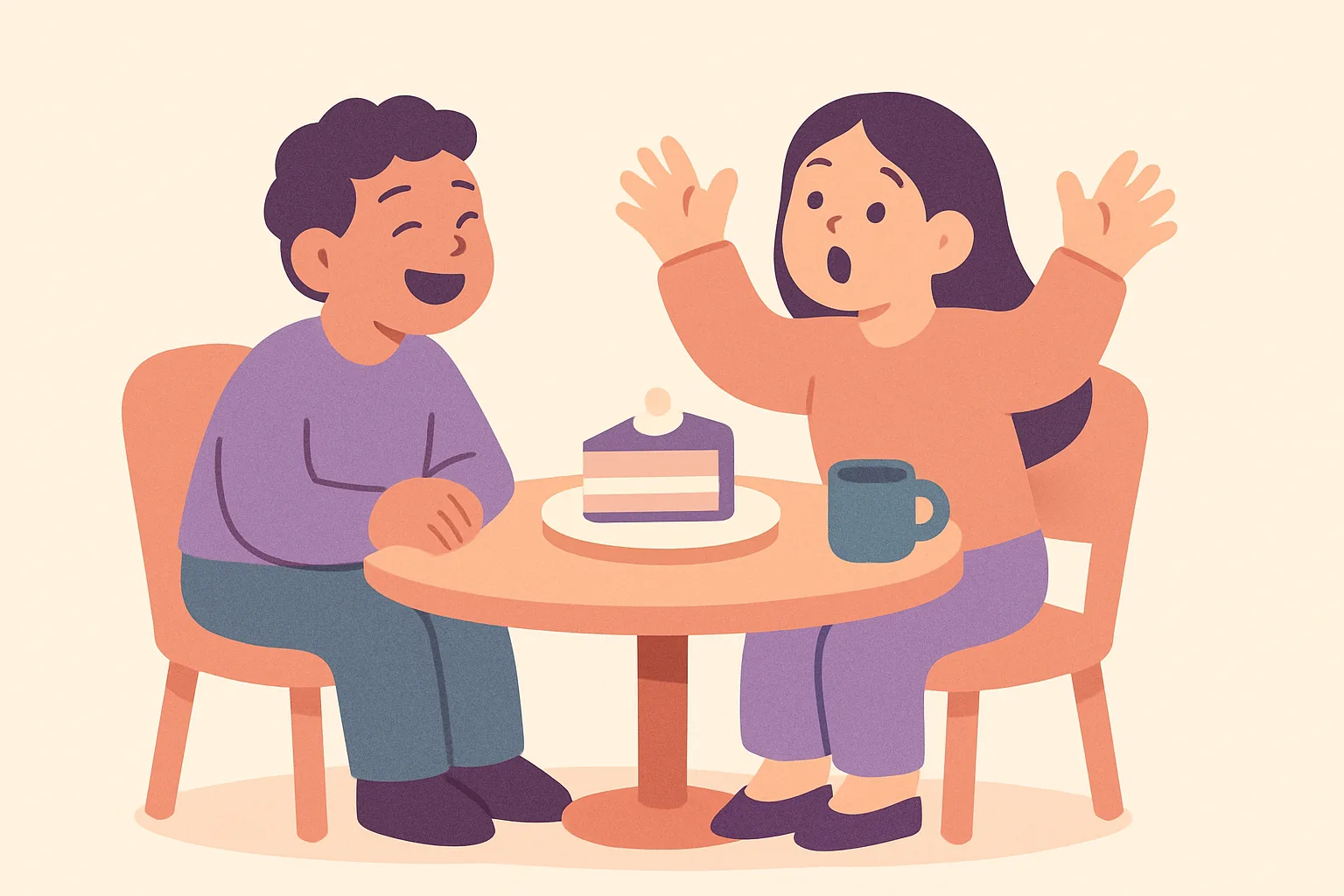
9 Ways to Say "Very" in Korean: 진짜, 정말, 너무, 완전
진짜, 정말, 너무, 완전 and five more Korean intensifiers — which ones sound casual, which sound like a textbook, and what each one does to a sentence.
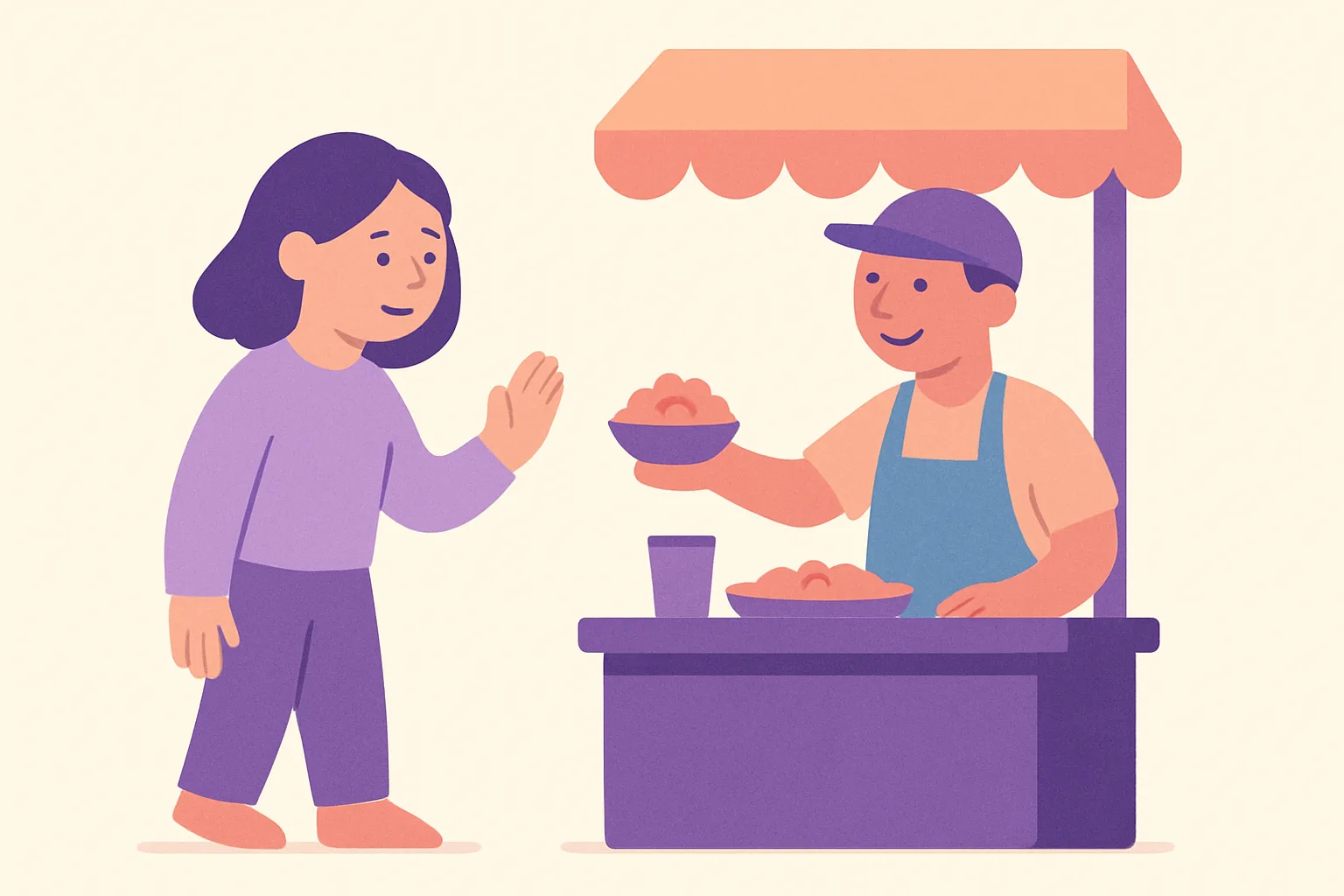
How to Say No Politely in Korean: 괜찮아요, 됐어요, 다음에요
Korean rarely says no with the word for no. Here are the six softeners natives actually use — and the one that sounds cold if you pick it by accident.
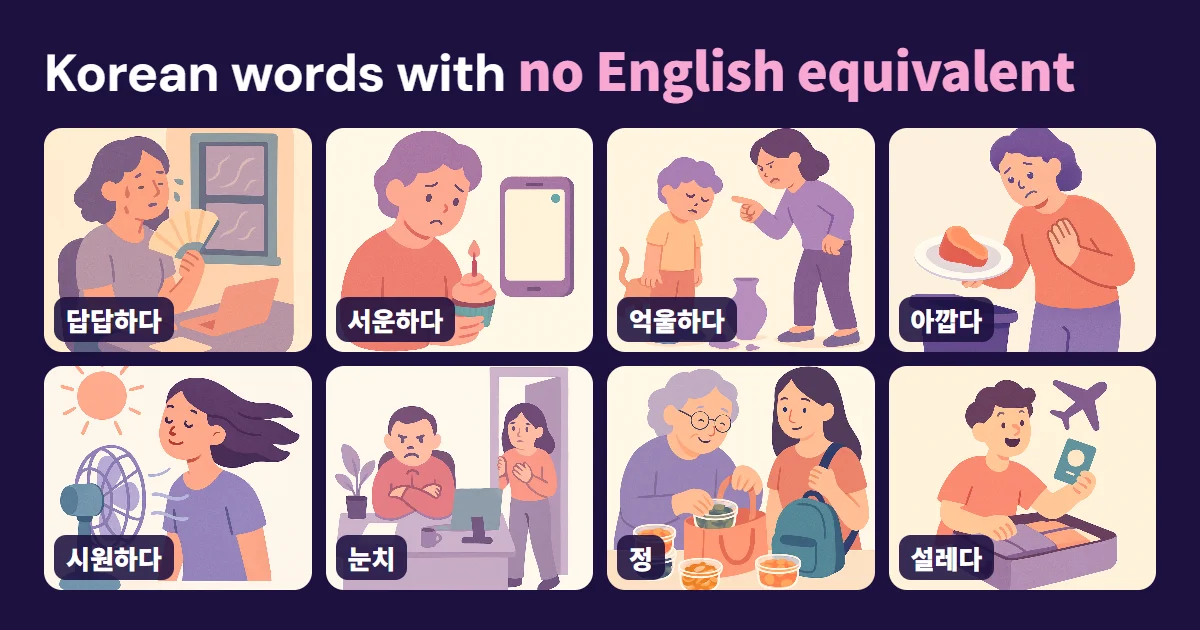
8 Korean Words With No English Equivalent (With Pictures)
답답하다, 서운하다, 눈치, 정 — Korean packs a whole situation into one word. Here are eight words English needs three or four words to say, with pictures.
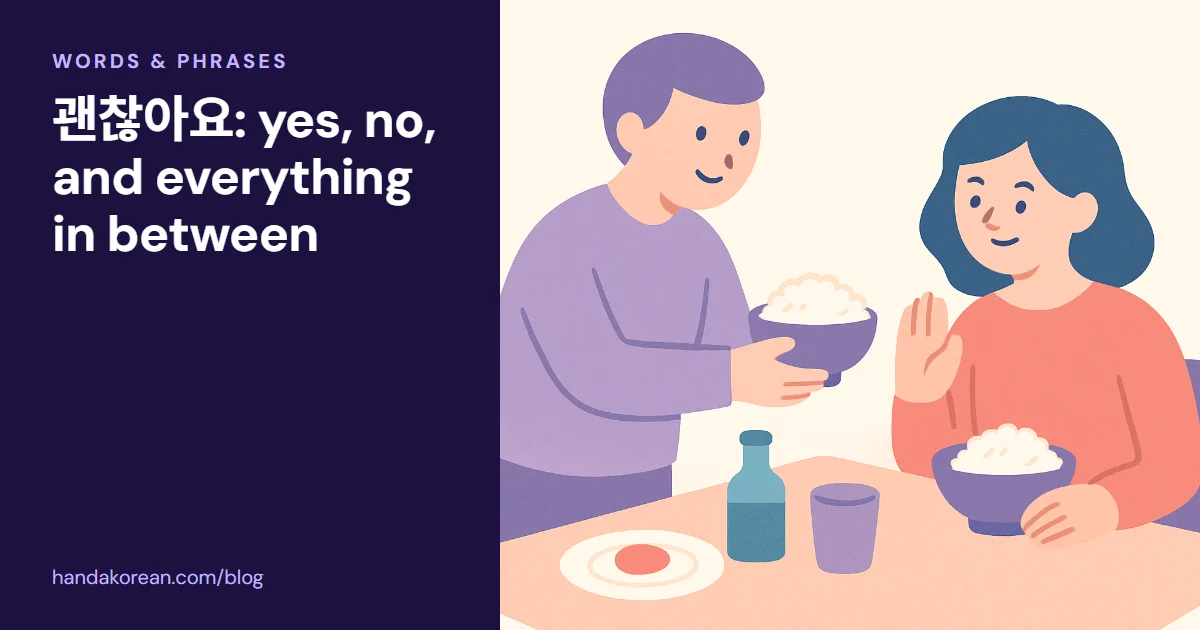
괜찮아요 Meaning: Yes, No, and Everything in Between
괜찮아요 can mean "I'm fine," "no problem," "no thanks," and "pretty good" — here's how Koreans tell them apart, and how to make sure you're understood.