Korean Words for Tired: 피곤하다, 지치다, 힘들다
English makes you say "I'm tired" for almost everything — short night, long week, bad month. Korean splits that into three, and the choice is not about how tired you are. It's about what you're pointing at.
- 피곤하다 points at your body right now. Low battery.
- 지치다 points at you after something wore you down. A change, not a baseline.
- 힘들다 points at the thing itself. It's demanding, it takes a toll.
Get that straight and you'll stop sounding like a dictionary. All the examples below are 해요체 — the everyday polite style you'd use with a coworker, a classmate, a shop owner. If you want the map of levels, see Korean speech levels explained.
피곤하다 — the battery reading
피곤하다 is an adjective (형용사). It describes a physical state you're in now, usually traceable to sleep, work, or travel.
- 오늘 진짜 피곤해요. — I'm really tired today.
- 어제 늦게 자서 좀 피곤해요. — I went to bed late yesterday, so I'm a bit tired.
- 피곤하면 먼저 들어가세요. — If you're tired, head home first.
That 자서 is the plain cause-and-effect connector; if you're unsure when to use it instead of -(으)니까, here's the difference between -아서 and -(으)니까.
Because it's an adjective, the present tense 피곤해요 means "I am tired" — no past tense needed. 피곤했어요 means you were tired, earlier, and the implication is you're fine now.
Two things a dictionary won't tell you:
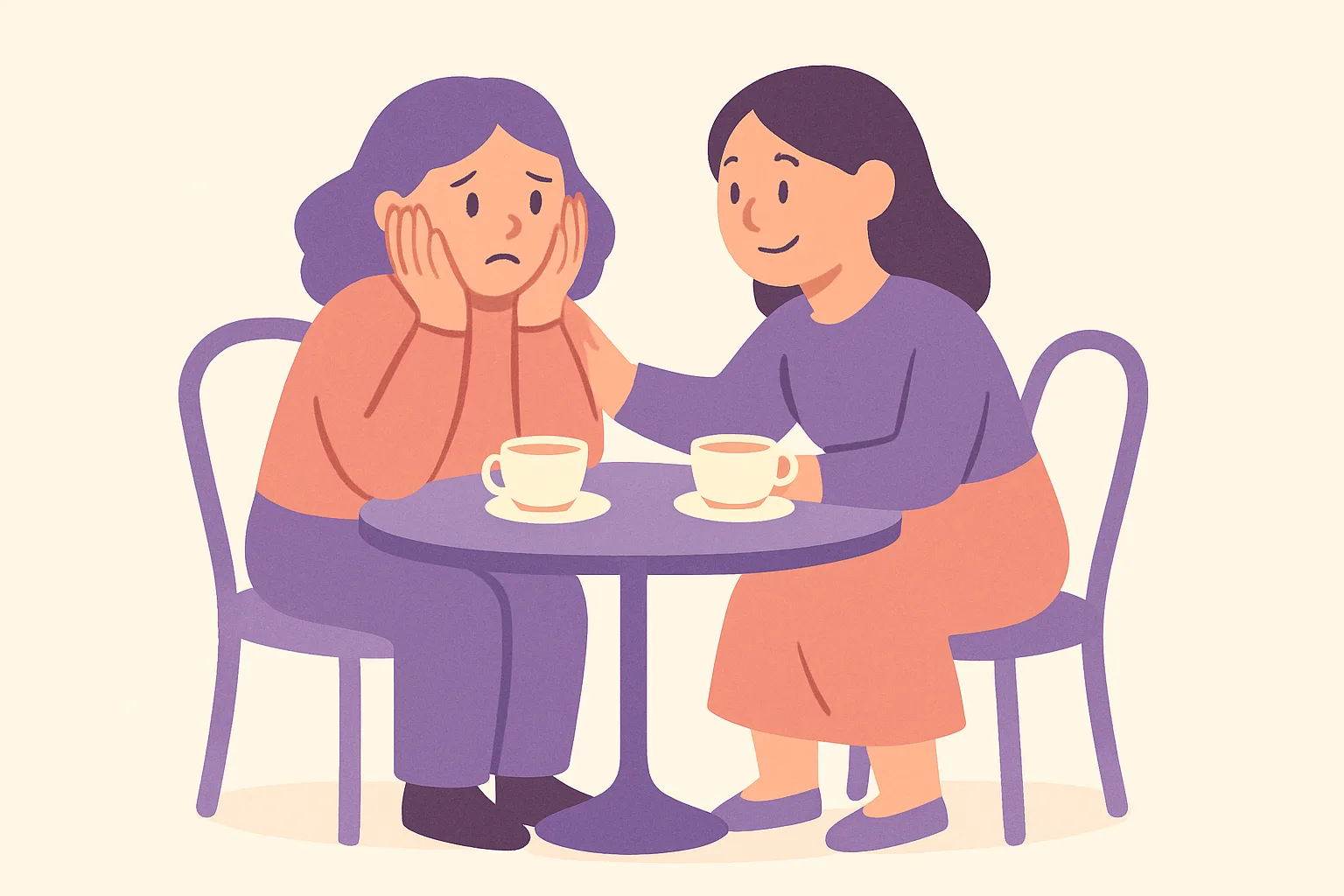
1. 피곤해 보여요 is kind, not rude. Telling a Korean friend they look tired is normal and caring, not an insult about their face.
- 얼굴이 좀 피곤해 보이네요. 푹 쉬세요. — You look a little tired. Get some good rest.
That -네요 ending is the "I just noticed this" ending — more on -네요 vs -군요.
**2. 피곤하다 can describe a person.** Not that they're sleepy — that dealing with them is draining. High-maintenance, needs constant managing.
- 그 사람이랑 얘기하면 좀 피곤해요. — Talking with him is kind of exhausting.
Say that about a coworker and every Korean in the room knows exactly what you mean.
지치다 — worn down, and it took a while
지치다 is a verb, and this is the single most useful fact about it. Verbs of change in Korean use the past form to describe the resulting present state — like 앉았어요 ("I'm seated") or 결혼했어요 ("I'm married"). So:
- 요즘 일이 많아서 많이 지쳤어요. — There's been so much work lately, I'm worn out.
- 하루 종일 걸었더니 완전히 지쳤어요. — I walked all day and now I'm completely wiped.
- 이제 좀 지쳤어요. 쉬고 싶어요. — I'm worn out now. I want to rest.
Learners say 지쳐요 when they mean "I'm exhausted right now." To a Korean ear that sounds like a general habit — I get worn out (in general) — and it lands oddly. Use 지쳤어요.
The other half of 지치다 is that it isn't only physical. It carries accumulation: something has been going on too long and you've reached your limit. A single bad night makes you 피곤하다. Three months of a job that isn't working makes you 지치다.
- 매일 똑같은 일만 하니까 지쳤어요. — Doing the same thing every day has worn me down.
There's also a nice idiom here: 녹초가 되다, to be completely wiped out — the image is a candle melted down to nothing.
- 오늘은 완전히 녹초가 됐어요. — I'm absolutely wiped today.
힘들다 — the thing is hard
힘들다 is literally 힘(이) 들다, "strength is required" — the same 들다 as in 돈이 들다 (it costs money). It takes effort out of you. The crucial point: the subject is usually the task or the situation, not your body.
- 이사가 생각보다 힘들었어요. — Moving was harder than I expected.
- 이 일은 혼자 하기 힘들어요. — This job is hard to do alone.
- 매일 아침 여섯 시에 일어나는 게 힘들어요. — Getting up at six every morning is rough.
Notice the thing takes 이/가. That's the shape to copy: (something)이/가 힘들어요.
When the person is the subject, 힘들다 turns emotional. 저 요즘 좀 힘들어요 is not "I'm sleepy" — it's "I'm going through a hard time." Koreans use this for stress, grief, money trouble, a rough stretch generally. Say it lightly to a friend and they will take it seriously, which is often exactly right.
- 요즘 좀 힘들어요. — I'm having a hard time these days.
- 많이 힘드셨겠어요. — That must have been really hard for you.
That last one is gold. 힘드셨겠어요 (or 힘들었겠다 in 반말) is the standard way to show you understand someone's situation. It's the Korean equivalent of "oh, that sounds awful."
힘들다 vs 어렵다
Both get translated "hard." 어렵다 is difficulty — you might not be able to do it. 힘들다 is cost — you can do it, but it drains you.
- 한국어 문법이 어려워요. — Korean grammar is difficult. (I don't understand it)
- 매일 두 시간씩 공부하는 게 힘들어요. — Studying two hours every day is tough. (I understand fine; it's the slog)
Three more you'll hear constantly
| Expression | Means | Example |
|---|---|---|
| 졸리다 | sleepy — eyes closing | 졸려요. 커피 한 잔 마실까요? (I'm sleepy. Shall we get a coffee?) |
| 기운이 없다 | no energy, listless | 밥을 못 먹어서 기운이 없어요. (I haven't eaten, so I have no energy.) |
| 피곤해 죽겠다 | dying of tiredness | 아, 피곤해 죽겠어요. (Ugh, I'm dead tired.) |
졸리다 is the one learners get wrong most. If your eyes are closing in a meeting, that's 졸려요, not 피곤해요. Saying 피곤해요 when you mean sleepy isn't wrong exactly, but it's vague where Korean is specific.
What to say to a tired person
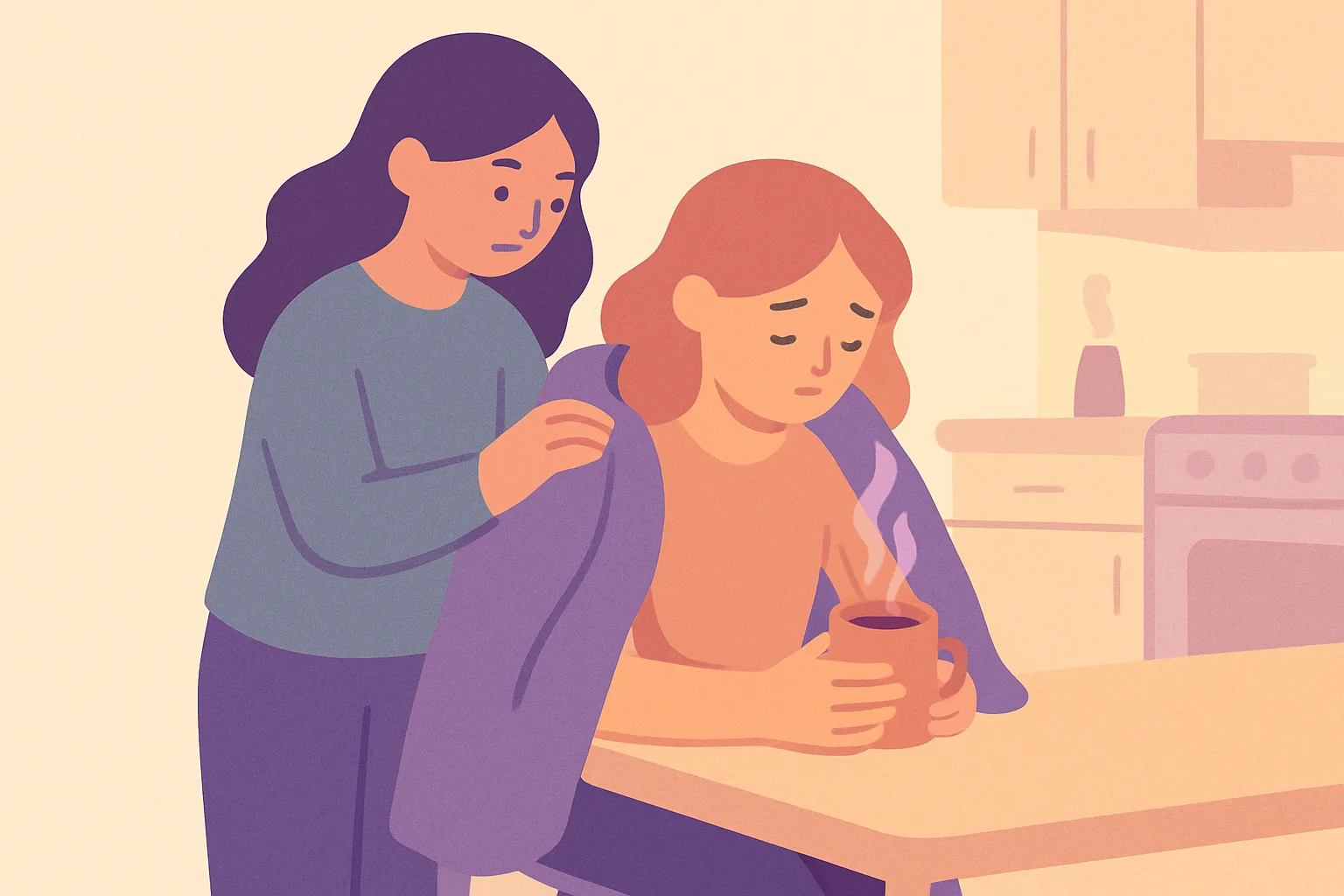
- 푹 쉬세요. — Get plenty of rest. (the safest, warmest thing)
- 고생하셨어요. — You've been through a lot / thanks for your hard work.
- 수고했어요. — Good work. (to peers or juniors — many people avoid saying this upward to a boss; with a superior, 고생 많으셨습니다 or a simple 감사합니다 is safer)
One caution: 힘내세요 means "find some strength." For someone who has just said 지쳤어요, it can land like you're asking for more from an empty tank. 푹 쉬세요 almost always fits better.
Quick decision rule
| You mean | Say |
|---|---|
| I slept badly / long day | 피곤해요 |
| My eyes are closing | 졸려요 |
| This has gone on too long, I'm done | 지쳤어요 |
| This task is demanding | (이게) 힘들어요 |
| Life is hard right now | 요즘 힘들어요 |
Practice
Fill in the blank with 피곤해요, 졸려요, 지쳤어요, or 힘들어요.
- 어제 세 시간밖에 못 자서 오늘 너무 ______.
- 수업 중인데 자꾸 ______. 커피 마셔야겠어요.
- 삼 개월 동안 주말에도 일했어요. 이제 정말 ______.
- 이 가방 혼자 드는 거 좀 ______. 도와주세요.
- Your friend says 요즘 회사 때문에 너무 힘들어요. Which reply fits better — 힘내세요 or 푹 쉬세요?
Answers
- 피곤해요 — a specific short night, physical, right now.
- 졸려요 — eyes closing in class is sleepiness, not fatigue.
- 지쳤어요 — three months of accumulation; past form for a present state.
- 힘들어요 — the task is the subject: lifting this bag is taxing.
- 푹 쉬세요 is warmer here. 힘내세요 asks for more effort from someone who's already out of it. Even better: 많이 힘드셨겠어요. 푹 쉬세요.
Learn this properly, not just once
Blog posts teach one thing at a time. The HanDa books teach level 1 in order — every lesson built to be spoken, with a workbook and writing book beside it.
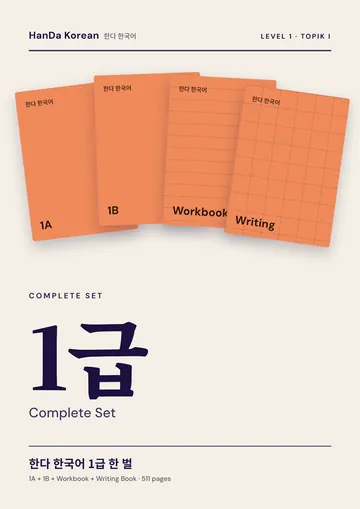 HanDa Korean Level 1 — Complete Set
Everything for level 1 — books, workbook and writing book · 511 pages
$10
HanDa Korean Level 1 — Complete Set
Everything for level 1 — books, workbook and writing book · 511 pages
$10
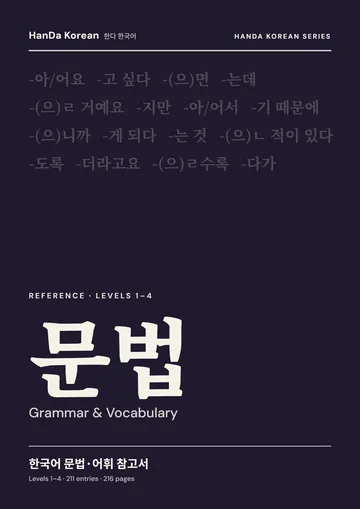 Korean Grammar & Vocabulary Reference
Every pattern in one place · 216 pages
$8
Korean Grammar & Vocabulary Reference
Every pattern in one place · 216 pages
$8
Practice this with an AI tutor
HanDa corrects every sentence you write or say — in real conversation, not flashcards.