Korean Body Idioms: 발이 넓다, 손이 크다, 입이 짧다
Here's the one idea: in Korean, a lot of personality traits are described as the condition of a body part. Not "she is sociable" but "her feet are wide." Not "he's generous" but "his hands are big." The body part names the area of life — social reach, spending, appetite, how easily you're persuaded — and the adjective tells you how much.
Once you see the pattern, these stop being random phrases to memorize. They start making a kind of sense. Let's take the three most common ones first.
발이 넓다 — "wide feet" = knows everybody
Think of someone whose feet cover a lot of ground. They know people in every circle: work, church, the neighborhood, their old university club. That's 발이 넓다.
민수 씨는 발이 넓어서 모르는 사람이 없어요. Minsu knows so many people — there's nobody he doesn't know.
이 동네에서는 우리 이모가 제일 발이 넓어요. In this neighborhood, my aunt is the best-connected person around.
This one is positive or neutral. Nobody is insulted by it. There's a more formal, written-sounding alternative — 인맥이 넓다 ("has a wide network") — and you'll see it in articles or job talk. In conversation, people say 발이 넓다. If you said 인맥이 넓으시네요 to a friend over dinner, it would sound like you were reading from a business magazine.
Note the shape: person + 은/는, body part + 이/가, adjective. 민수 씨는 발이 넓어요. Korean lets a sentence have two subject-ish parts like this, and every idiom below follows the same frame.
손이 크다 — "big hands" = generous portions
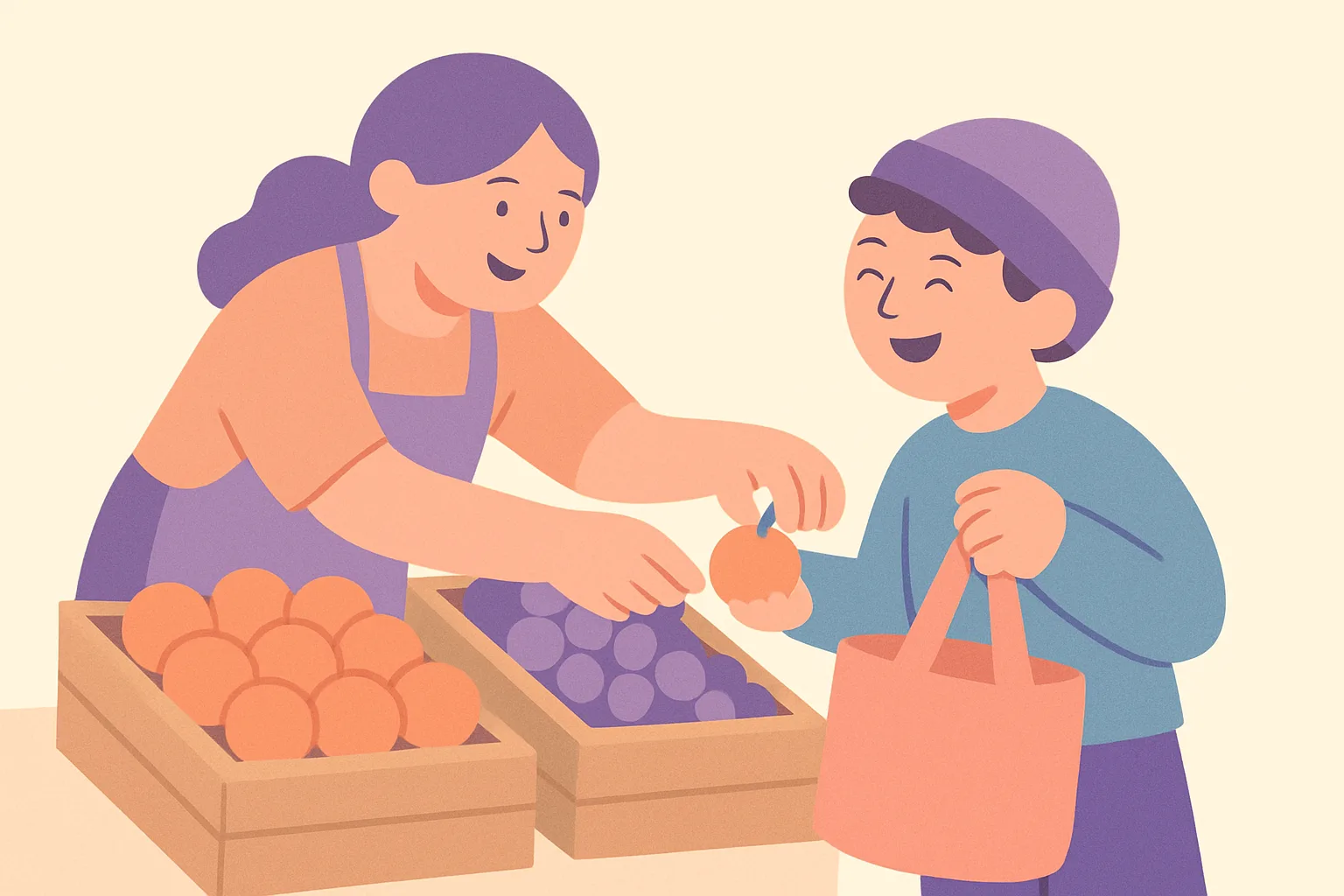
This is not about generosity in the abstract. It's about quantity. The person who cooks for four and feeds twelve, who buys the big box because the small one looks sad, who hands you a shopping bag of fruit when you only asked for one apple.
우리 엄마는 손이 커서 음식을 항상 너무 많이 하세요. My mom always makes way too much food — she cooks for an army.
손이 크시네요! 이걸 저희 둘이 다 못 먹어요. You've made so much! The two of us can't finish all this.
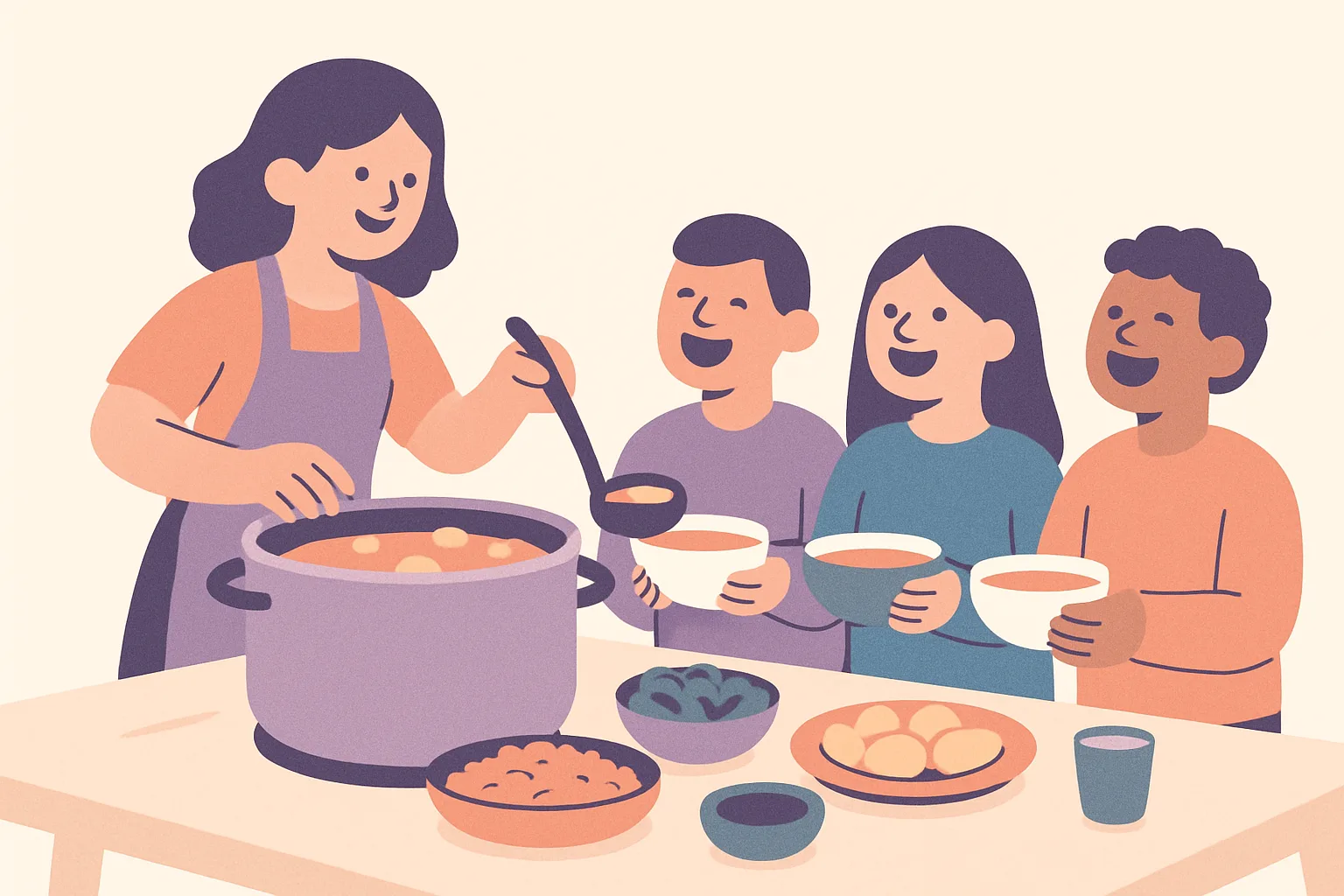
That second line is a real compliment at a Korean table, said with a laugh when the host keeps bringing out dishes. (The -네요 ending is doing the work of "oh wow, look at that" — more on reacting to something you just noticed if you want that ending in your pocket.) If you ever eat from a shared pot with Korean friends, this is the kind of phrase that lives right next to the language of sharing food.
One nuance: 손이 크다 can tilt slightly negative when money is the subject.
남편이 손이 커서 돈을 못 모아요. My husband spends big, so we can't save money.
The opposite, 손이 작다, exists but is used much less and sounds stingy. Koreans usually just say 아껴 써요 (spends carefully) instead.
Also: 손이 크다 can literally mean someone has large hands. Context decides, and the literal reading almost always comes with a clue — 손이 커서 장갑이 안 맞아요 (my hands are big, so gloves don't fit).
입이 짧다 — "short mouth" = eats little, eats picky
입이 짧다 covers two things English splits apart: eating small amounts, and not liking many foods. The feeling is "this person's eating runs out quickly."
저는 입이 짧아서 조금만 주세요. I don't eat much, so just give me a little.
우리 아이가 입이 짧아서 걱정이에요. My kid is such a picky eater, I worry about it.
Why pick this over 편식하다 (to eat an unbalanced diet)? 편식하다 is a criticism — it's what a parent or a doctor says about a child who only eats meat. 입이 짧다 is softer and more forgiving, something you can say about yourself without sounding difficult. And 입맛이 없다 is different again: that's no appetite right now, because you're sick or stressed. 입이 짧다 is a permanent trait; 입맛이 없다 is today.
Saying 저는 입이 짧아요 as you sit down is a genuinely useful move at a Korean meal, where the host will keep pushing food at you. It explains your half-eaten bowl before anyone worries.
Three more you'll hear constantly
귀가 얇다 — "thin ears" = easily persuaded
If your ears are thin, everything gets through. This is the friend who buys whatever was recommended to them five minutes ago.
친구가 좋다고 하면 저는 바로 사요. 제가 귀가 좀 얇거든요. If a friend says something's good, I buy it immediately. I'm easily swayed, you see.
That -거든요 is the natural way to tack on a reason the listener didn't know — there's a whole piece on giving a reason with -거든요. 귀가 얇다 is mildly self-deprecating and very commonly used about yourself. Said about someone else, it's a gentle tease, not an insult.
눈이 높다 — "high eyes" = high standards
Mostly used about dating, sometimes about taste in general.
언니는 눈이 높아서 아직 남자친구가 없어요. My older sister has such high standards that she still doesn't have a boyfriend.
눈이 너무 높은 거 아니에요? Aren't your standards a little too high?
This is teasing territory — fine among friends, risky with someone you just met. Keep it for people you'd already joke with.
입이 무겁다 / 입이 가볍다 — "heavy mouth" / "light mouth"
A heavy mouth doesn't open easily: that person keeps secrets. A light mouth flies open: that person tells everyone.
그 사람은 입이 무거우니까 말해도 괜찮아요. He keeps things to himself, so it's fine to tell him.
입이 가벼운 사람한테는 비밀을 말하면 안 돼요. Don't tell secrets to someone who can't keep their mouth shut.
입이 무겁다 is one of the better compliments you can pay a coworker. If you're collecting ways to say nice things, it pairs well with Korean compliment phrases.
How to use them in a sentence
They're all descriptive verbs (adjectives), so they conjugate like 좋다 or 많다:
| Form | Example |
|---|---|
| Plain 해요체 | 발이 넓어요 |
| Because… | 손이 커서, 입이 짧아서 |
| Modifying a noun | 발이 넓은 사람, 입이 무거운 친구 |
| Negative | 귀가 안 얇아요 / 눈이 높지 않아요 |
| Honorific | 어머니는 손이 크세요 |
That last row matters. To honor a person, Korean attaches 시 to whatever belongs to them — so it's 손이 크세요, not 손이 커요, when you're talking about someone's elder. Same with 할아버지는 발이 넓으세요.
One more thing: keep the 이/가 in. 발 넓어요 and 손 커요 happen in fast casual speech, but as a learner you'll sound more natural saying the full 발이 넓어요.
What goes wrong
Translating them literally into English situations. "She has big hands" in English means her hands are big. If you translate an English compliment the other direction — trying to say "he's generous" as 손이 커요 when you mean he donates to charity — it lands oddly. 손이 크다 is about amounts of stuff, especially food and shopping. For moral generosity, Koreans say 마음이 넓어요 (big-hearted) or 인심이 좋아요.
Using 눈이 높다 about a stranger. It implies they're rejecting people. Fine with a close friend, uncomfortable otherwise.
Mixing up 입이 짧다 and 입이 가볍다. They both start with 입 and they mean completely different things — one is about food, one is about secrets. A quick memory hook: 짧다 (short) is about how long you keep eating; 가볍다 (light) is about how easily your mouth opens.
Practice
Fill in the body part (발, 손, 입, 귀, 눈) and the right adjective where needed.
- 친구가 추천하면 바로 사요. 제가 좀 ___이/가 얇거든요.
- 우리는 네 명인데 어머니가 음식을 10인분이나 하셨어요. 정말 ___이 크세요.
- 그 선배는 아는 사람이 정말 많아요. ___이 넓어요.
- 밥을 반도 못 먹었어요. 제가 ___이 짧아서요.
- 비밀 얘기해도 돼요? — 네, 그 사람은 ___이 무거워요.
Answers
- 귀 — 제가 좀 귀가 얇거든요. (I'm easily persuaded.)
- 손 — 정말 손이 크세요. (She really cooks in huge quantities.)
- 발 — 발이 넓어요. (That 선배 is very well-connected.)
- 입 — 제가 입이 짧아서요. (I don't eat much.)
- 입 — 그 사람은 입이 무거워요. (He keeps secrets.)
Pick one that's true about you — most learners land on 귀가 얇다 or 입이 짧다 — and say it out loud as a full sentence with 아/어서. That's how these move from a list into your actual speech.
Learn this properly, not just once
Blog posts teach one thing at a time. The HanDa books teach level 1 in order — every lesson built to be spoken, with a workbook and writing book beside it.
 HanDa Korean Level 1 — Complete Set
Everything for level 1 — books, workbook and writing book · 511 pages
$10
HanDa Korean Level 1 — Complete Set
Everything for level 1 — books, workbook and writing book · 511 pages
$10
 Korean Grammar & Vocabulary Reference
Every pattern in one place · 216 pages
$8
Korean Grammar & Vocabulary Reference
Every pattern in one place · 216 pages
$8
Practice this with an AI tutor
HanDa corrects every sentence you write or say — in real conversation, not flashcards.