10 Korean Phrases for Giving and Receiving Compliments

Here's the one thing to know before the list: in Korean, a compliment is usually the first half of a two-part exchange. Someone praises you, and you say something back that softens it — a small denial, a thank-you with a reason, or a compliment returned. Saying only "감사합니다" and stopping isn't rude, but it can land a little flat, like catching a ball and not throwing it back.
Here's the shape of it in real life:
A: 그 셔츠 잘 어울리네요. B: 아, 감사해요. 세일할 때 산 거예요. A: 진짜요? 잘 사셨네요.
A: That shirt really suits you. B: Oh, thank you. I got it on sale. A: Really? Good buy.
Notice that B doesn't just accept the praise — B adds a small, ordinary detail, and A hands something back. That's the rhythm. Below are ten phrases, six for giving and four for receiving. Everything is in 해요체, the everyday polite level you'd use with a coworker, a classmate, a friend's parent, or someone you just met.
Giving a compliment
1. 그 셔츠 잘 어울리네요. — "That shirt really suits you."
어울리다 means "to suit / to go well with," and it's the workhorse of Korean compliments about clothes, glasses, hair, colors — anything you wear. Swap in any noun: 그 안경 잘 어울리네요 (those glasses), 그 색 잘 어울리네요 (that color). The -네요 ending matters here: it makes you sound like you just noticed, which is exactly what a compliment should sound like. If you want the difference between that and -군요, see how -네요 and -군요 react to something new.
2. 오늘 좋아 보이시네요. — "You look good today."
This is the safe, warm, all-purpose compliment for a person rather than a thing. 좋아 보이다 is literally "look good," but it covers well-rested, cheerful, healthy, in good form — it doesn't fixate on someone's face or body, which is why it works with a boss or a colleague. Koreans say it a lot after a long weekend or when someone clearly got some sleep.
3. 한국어 진짜 잘하시네요. — "Your Korean is really good."
You'll hear this one directed at you constantly, but it's also yours to give — to a Korean friend's English, to another learner, to anyone. 잘하시네요 uses the honorific -시-, which keeps it respectful. And if you want alternatives to 진짜, there are several with different strengths — 진짜, 정말, 너무 and 완전 aren't interchangeable.
4. 진짜 맛있어요. 요리 잘하시네요. — "This is really good. You're a great cook."
At someone's home, saying the food is delicious is close to obligatory, and one line isn't enough — Koreans say it when they start, again in the middle, and once more at the door. Pairing the food compliment with a person compliment (요리 잘하시네요) is what makes it feel sincere rather than polite noise. To a friend's mother, this is the single most useful sentence in this article.
5. 이거 어디서 사셨어요? — "Where did you buy this?"
This is a compliment disguised as a question, and Koreans use it constantly. Asking where something came from says I want one too without the slight awkwardness of direct praise, and it hands the other person something to talk about. It works on bags, shoes, mugs, snacks — anything. Pair it with 예쁘네요 or 좋아 보이네요 and you've given a full compliment.
6. 진짜 부러워요. — "I'm really jealous."
In English, "I'm jealous" can sound bitter. In Korean, 부럽다 is a standard, friendly way to praise someone's good news — a new job, a trip, a talent. Say it with a smile and it reads as that's wonderful, I wish that were me, never as resentment. 부럽다 is one of a handful of Korean feeling words that don't map neatly onto English; here are more of them.
Receiving a compliment
7. 아니에요, 뭘요. — "Oh no, it's nothing."
This is the classic deflection, and it's the most common reply you'll hear a Korean adult give. 아니에요 denies the praise lightly and 뭘요 shrugs it off; together they take about one second to say and nobody expects you to mean the denial literally. It's the same reflex behind softening a refusal with 괜찮아요 or 됐어요 — the words say no, the tone says thank you.
8. 그렇게 말해 주셔서 감사해요. — "Thank you for saying that."
When you actually want to accept a compliment — and you're allowed to — this is the graceful way. It thanks the act of saying it rather than agreeing with the content, so you sound pleased without sounding proud. In a more formal setting, such as with a client or your manager, use 그렇게 말씀해 주셔서 감사합니다.
9. 아직 많이 부족해요. — "I still have a long way to go."
Literally "I'm still lacking a lot." This is the standard modest reply for a compliment about a skill — your Korean, your cooking, your work. Said with a small laugh, it's humble in the ordinary Korean way, not self-pitying. Beginners often reply 네, 감사합니다 to 한국어 잘하시네요 and then feel the conversation stall; try 아니에요, 아직 많이 부족해요 instead and watch it keep going.
10. 민수 씨가 더 잘하시잖아요. — "You're the one who's better at it."
The best reply is often a compliment sent back. -잖아요 means "as you know" and gives the line a warm, familiar tone — you're not arguing, you're reminding them. Another version for team situations: 다 팀원들 덕분이에요 ("It's all thanks to my teammates"). Both moves — returning the praise or spreading the credit — are what Korean speakers reach for automatically.
When it goes off script
If someone compliments you three times in a row and you've run out of phrases, 감사해요 with a small bow of the head closes it politely. If a compliment makes you uncomfortable — about your face, your weight, your age — 아, 네… with a change of subject is a normal Korean exit; you don't owe anyone an engagement. And if you're the one giving, avoid commenting on a stranger's body or asking about age or salary. 좋아 보이시네요 and 잘 어울리네요 are never wrong.
Practice
- A coworker says 한국어 진짜 잘하시네요. Give a modest reply in two short phrases.
- You love your friend's jacket and want one too. Ask the compliment-question.
- Your friend's mother made dinner. Compliment the food and her.
- Your manager praises your presentation and you want to credit the team. What do you say?
- Your friend tells you she's going to Jeju next week. React with a compliment-style phrase.
Answers
- 아니에요, 아직 많이 부족해요.
- 이거 어디서 사셨어요?
- 진짜 맛있어요. 요리 잘하시네요.
- 다 팀원들 덕분이에요. (More formal: 팀원들 덕분입니다.)
- 진짜 부러워요.
Learn this properly, not just once
Blog posts teach one thing at a time. The HanDa books teach level 1 in order — every lesson built to be spoken, with a workbook and writing book beside it.
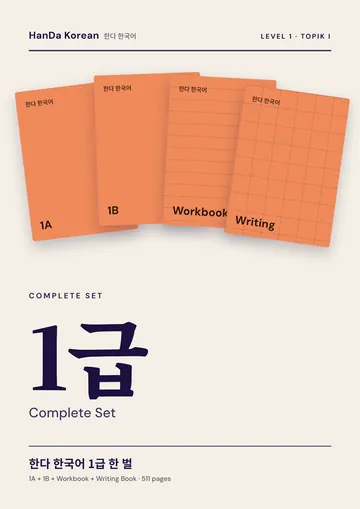 HanDa Korean Level 1 — Complete Set
Everything for level 1 — books, workbook and writing book · 511 pages
$10
HanDa Korean Level 1 — Complete Set
Everything for level 1 — books, workbook and writing book · 511 pages
$10
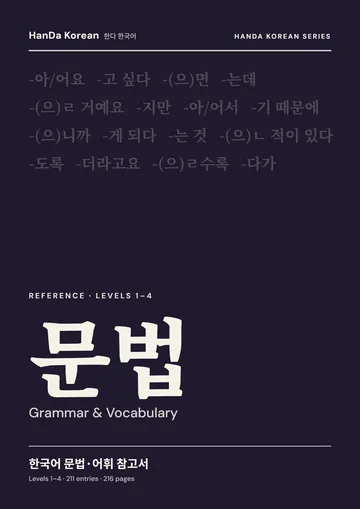 Korean Grammar & Vocabulary Reference
Every pattern in one place · 216 pages
$8
Korean Grammar & Vocabulary Reference
Every pattern in one place · 216 pages
$8
Practice this with an AI tutor
HanDa corrects every sentence you write or say — in real conversation, not flashcards.