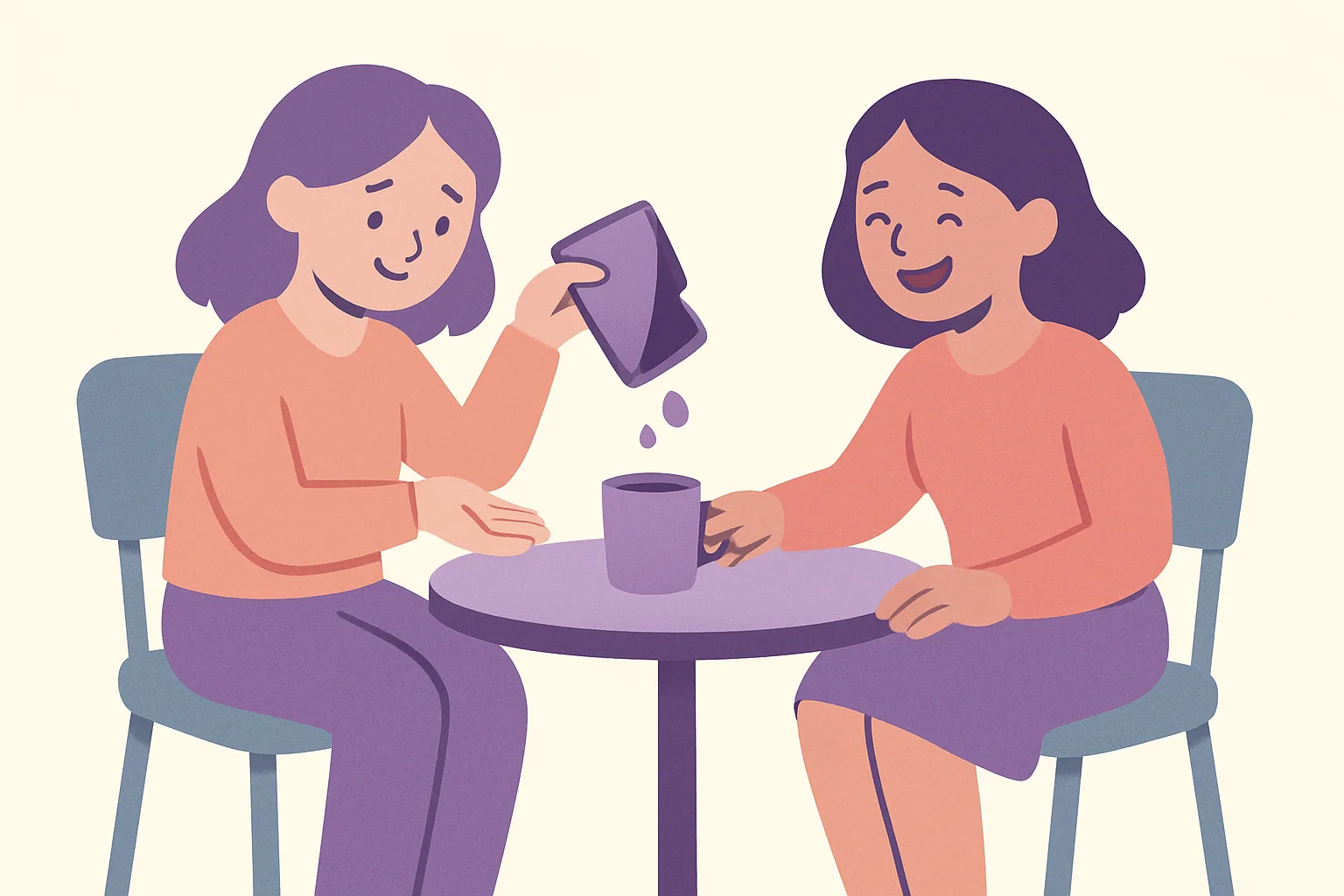
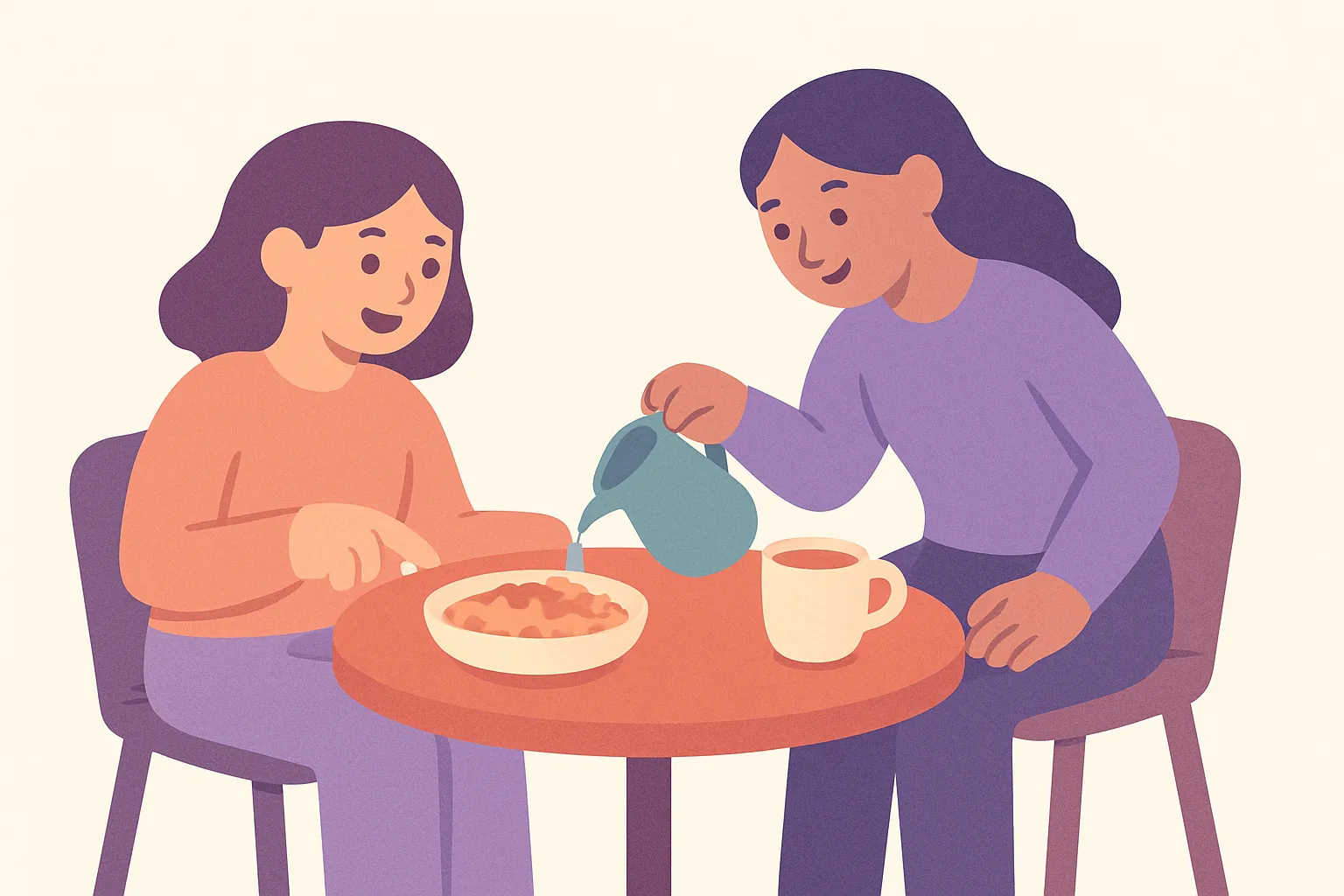
-네요 vs -군요: Reacting to Something You Just Noticed in Korean
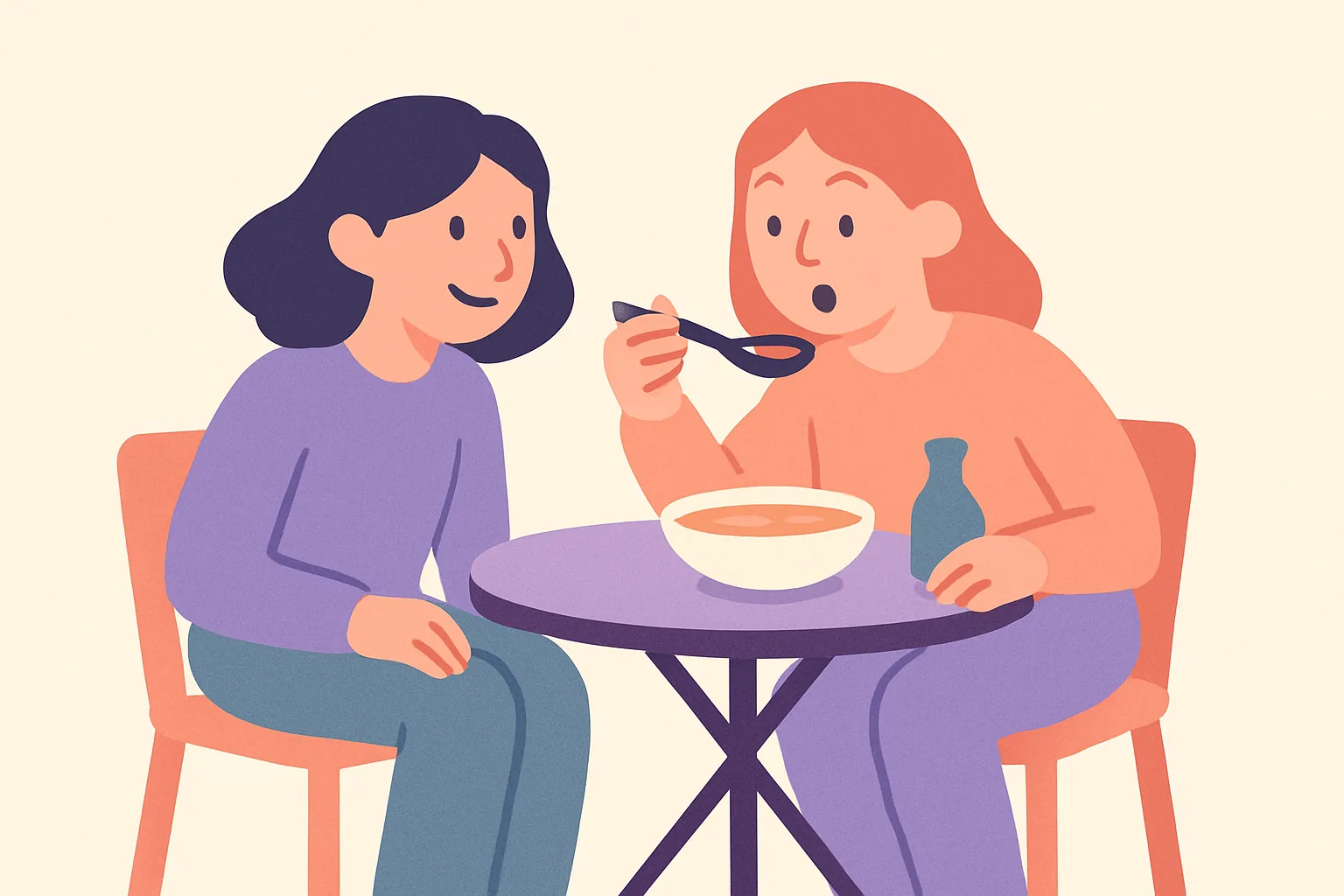
Here's the one idea: -네요 is what you say when you notice something yourself, right now. -군요 is what you say when you finally understand something — usually because someone just told you.
Both are "oh!" endings. Both mean you didn't know this a second ago. But the source of the information is different, and that's what a Korean ear picks up on. Get that straight and these two stop being confusing forever.
The forms first
-네요 is beautifully lazy: attach it to any stem, verb or adjective, no changes.
-군요 splits. Verbs take -는군요. Adjectives take -군요. Nouns take -(이)군요.
| Base | -네요 | -군요 |
|---|---|---|
| 오다 (verb) | 오네요 | 오는군요 |
| 좋다 (adjective) | 좋네요 | 좋군요 |
| 학생이다 (noun) | 학생이네요 | 학생이군요 |
| 갔다 (past) | 갔네요 | 갔군요 |
| 반말 | 오네 / 좋네 | 오는구나 / 좋구나 |
Two small things. In the past tense the verb/adjective split disappears — it's always -았/었군요. And ㄹ-stems drop the ㄹ before -네요: 멀다 → 머네요, 길다 → 기네요.
One pronunciation note, because learners often say these wrong: the ㅅ, ㅆ, ㅈ, ㅎ before 네요 turns into an ㄴ sound. 맛있네요 is pronounced [마신네요], 좋네요 is [존네요]. If that surprises you, the rules behind those sound changes are worth ten minutes of your time.
-네요: you're seeing it, tasting it, feeling it
Use -네요 when the evidence is in front of you at this moment.
와, 이거 진짜 맛있네요. Wow, this is really good. (first bite)
밖에 비가 오네요. Oh, it's raining outside. (looking out the window)
어머, 벌써 여섯 시네요. Oh my, it's already six. (glancing at the clock)
지하철역이 생각보다 머네요. The subway station is farther than I thought.
한국어를 정말 잘하시네요. You speak Korean really well.
That last one matters. Compliments almost always take -네요, because you're reacting to something you're witnessing right now. A Korean who hears your Korean for the first time will say 잘하시네요, not 잘하시는군요.
-네요 also does something -군요 can't: agree with the person in front of you.
A: 오늘 좀 춥지 않아요? — Isn't it a bit cold today? B: 아, 그렇네요. — Oh, you're right, it is.
B isn't learning a fact. B is checking the air and confirming it. That's pure -네요 territory.
And it pairs constantly with -겠- to show empathy about someone's situation:
어제 세 시간밖에 못 잤어요? 많이 피곤하시겠네요. You only slept three hours yesterday? You must be really tired.
This is one of the most useful sentence patterns in everyday Korean. When a friend tells you something hard, 힘드시겠네요 ("that must be tough") is warm, correct, and safe.
-군요: the penny just dropped
Use -군요 when new information arrives and clicks — usually through someone's explanation, not your own eyes.
A: 어제 감기 때문에 병원에 갔어요. B: 아, 그래서 어제 수업에 안 오셨군요. A: I went to the clinic yesterday because of a cold. B: Ah, so that's why you didn't come to class yesterday.
Notice 그래서. -군요 loves 그래서 and 아, because it's the ending of a small logical conclusion: I now understand.
두 분이 아는 사이였군요. Ah, so you two already know each other.
부산에 사시는군요. I see, you live in Busan.
매운 음식을 잘 못 드시는군요. Ah, you can't handle spicy food.
And the single most common one, which you should just memorize as a chunk:
아, 그렇군요. Ah, I see. / I understand.
You will hear this from customer service staff, from teachers, from anyone politely absorbing what you just told them. It's the Korean "I see."
The nuance natives actually feel
Three things beyond the textbook rule.
1. -네요 is far more common in spoken 존댓말. In an ordinary conversation, Koreans reach for -네요 many times a day and -군요 much less often. -군요 has a slightly formal, composed, written flavor. It's completely correct — but if you use it constantly with a friend, you'll sound like you're narrating.
2. In 반말, the balance flips. -구나 is everywhere among friends: 아, 그랬구나 ("ah, I see"), 여기 있었구나 ("oh, here it was"). Meanwhile -네 is also alive and well: 맛있네, 춥네. Both work in casual speech — it's the polite -군요 that feels stiff. If the 해요체/반말 distinction is still fuzzy for you, this guide to Korean speech levels will help.
3. -네요 carries feeling; -군요 carries understanding. Compare these two reactions to a friend's new haircut:
머리 잘랐네요! — Oh, you cut your hair! (reacting, a little delighted) 머리 잘랐군요. — I see, you cut your hair. (observing, a bit flat)
The second isn't wrong, but it sounds oddly detached for something you can see with your own eyes. For genuine surprise, -네요 — often after an exclamation like 어머 or 헐. (Those exclamations have their own rules, by the way.)
Three mistakes to avoid
Mistake 1: -네요 about your own long-standing self.
✗ 저는 한국 음식을 좋아하네요. ✓ 저는 한국 음식을 좋아해요.
-네요 means "I just discovered this." Saying it about your own preferences sounds like you've only just met yourself. (One exception: something you genuinely notice about your body right now — 아, 배고프네요 is fine.)
Mistake 2: forgetting the -는- on verbs.
✗ 비가 오군요. ✓ 비가 오는군요.
But don't over-apply it. Adjectives take plain -군요: 춥군요, not ✗춥는군요. If you can't tell whether a word is a verb or an adjective, this is one more reason -네요 is the safer default — it never asks.
Mistake 3: -군요 for something you're both looking at.
If you and a friend are staring at the same rain, 비가 오는군요 sounds like you're reading a weather report aloud. Say 비가 오네요. Save -군요 for information that came from the other person.
Quick decision rule
Ask yourself: did I just find this out with my own senses, or did someone just explain it to me?
- Own eyes, ears, tongue → -네요
- Someone's explanation clicking into place → -군요 (or 아, 그렇군요)
- Not sure and you want to sound normal → -네요
Practice
Fill in or fix the Korean. Keep everything in 해요체 unless the item says otherwise.
- You taste your friend's home cooking for the first time: 와, 정말 ______! (맛있다)
- Your coworker explains she was at a wedding all Saturday. React: 아, 그래서 주말에 ______. (바쁘다, past tense, honorific)
- Fix this: 밖에 눈이 오군요.
- Fix this: 저는 커피를 매일 마시네요.
- Say "It's really cold" as a spontaneous reaction, in 반말. (춥다)
Answers
- 와, 정말 맛있네요! — You're tasting it right now, so -네요.
- 아, 그래서 주말에 바쁘셨군요. — New information from her explanation, plus 그래서. -네요 (바쁘셨겠네요) also works if you want to add empathy, but 군요 is the "now I understand" answer here.
- 밖에 눈이 오는군요. — 오다 is a verb, so it needs -는군요. (In real life, looking out at the snow yourself, you'd more likely say 눈이 오네요.)
- 저는 커피를 매일 마셔요. — This is a habit you've always known about, so no -네요.
- 춥네. — The 반말 form. 춥구나 also exists but sounds more like quiet realization; plain 춥다! is another very natural exclamation here.
Learn this properly, not just once
Blog posts teach one thing at a time. The HanDa books teach level 1 in order — every lesson built to be spoken, with a workbook and writing book beside it.
 Korean Grammar & Vocabulary Reference
Goes with this post · 216 pages
$8
Korean Grammar & Vocabulary Reference
Goes with this post · 216 pages
$8
 HanDa Korean Level 1 — Complete Set
Everything for level 1 — books, workbook and writing book · 511 pages
$10
HanDa Korean Level 1 — Complete Set
Everything for level 1 — books, workbook and writing book · 511 pages
$10
Practice this with an AI tutor
HanDa corrects every sentence you write or say — in real conversation, not flashcards.