아이고, 어머, 헐, 대박: Korean Exclamations in K-Dramas
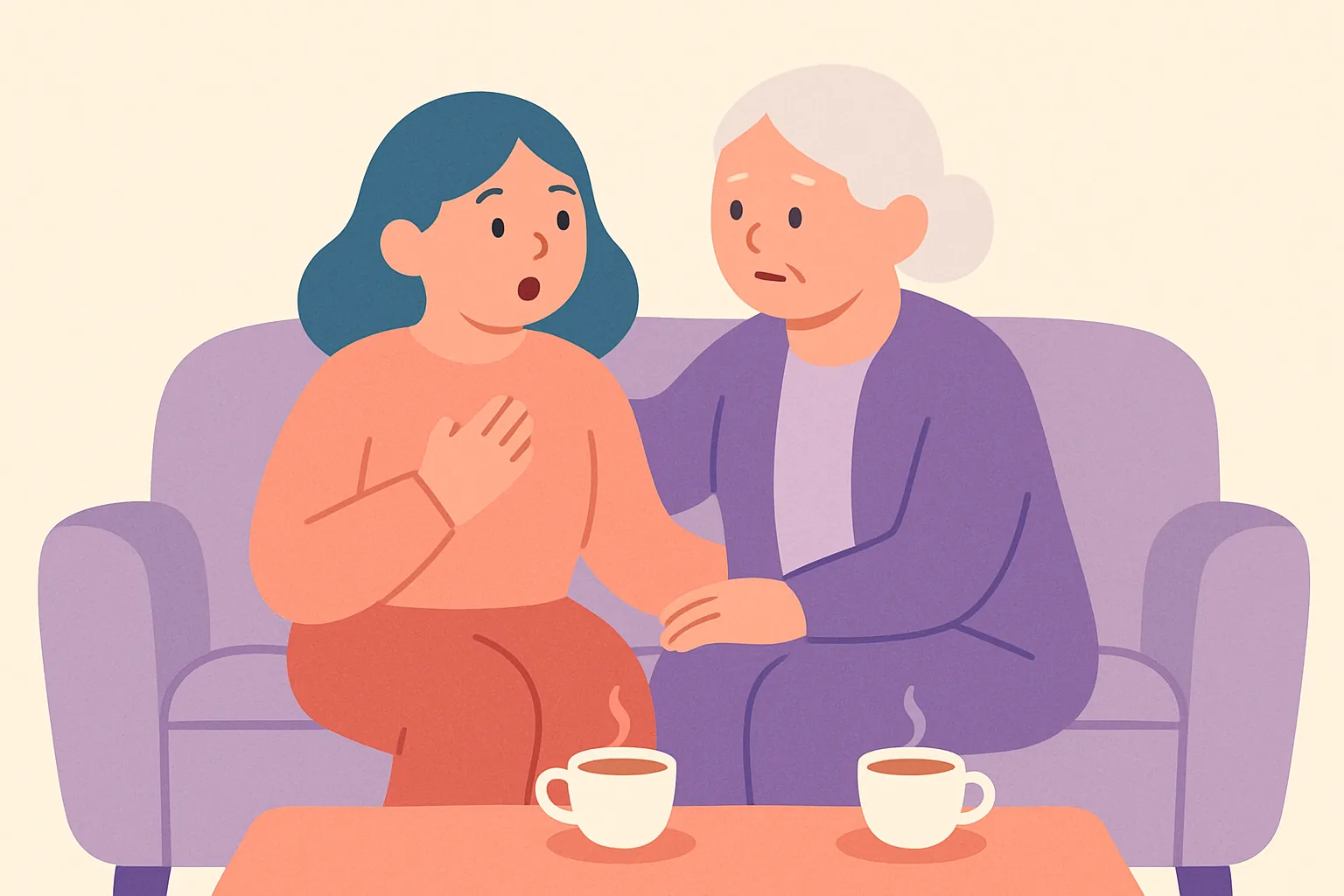
You've heard all four a hundred times. A grandmother sighs 아이고. A woman spots her friend across a café and says 어머. A college student reads a text and says 헐. Someone gets good news and the whole room says 대박.
The subtitle says the same thing every time: Oh my god. Sometimes Wow. Sometimes it isn't translated at all.
Here's the one idea to take away: in Korean, the exclamation you choose tells the listener how old you are and how close you are to them — before you've said a single real word. They are not four flavors of the same sound. 아이고 and 어머 are safe with anyone, including your boss. 헐 and 대박 are young, casual, and will sound strange coming out of your mouth in the wrong room.
Let's go through them properly.
아이고 — the all-purpose sigh
아이고 is the oldest and by far the most flexible. Its core feeling is the weight of something: tiredness, pity, dismay, or sometimes sheer relief. Older speakers use it constantly, but a 25-year-old dropping into a chair after work says it too.
아이고, 힘들다. Ugh, I'm wiped out.
아이고, 허리야. Oof, my back.
That 아이고 + body part + 야 pattern is everywhere in Korean life. 아이고, 다리야. 아이고, 머리야. It's a complete sentence and a complaint at once.
It's also the standard sound of sympathy. This is the use learners miss most:
A: 어머니가 많이 편찮으세요. B: 아이고, 어떡해요. A: My mother is quite ill. B: Oh no… I'm so sorry.
And it can be warm — grandparents say it to children with pure affection:
아이고, 우리 손자 많이 컸네. Goodness, my grandson has gotten so big.
One more: 아이고 works as a soft apology cushion when you bump into someone.
아이고, 죄송합니다. Oh — I'm sorry.
You'll also hear 아이구, 아유, 아이참. Same family, slightly softer. If you only learn one Korean exclamation, learn this one. It's the only one on this list you can say to a professor, a client, and your friend's grandmother without a second thought.
어머 — surprise, and who says it
어머 (and its longer cousin 어머나) means oh! — a small, sudden surprise. Pleasant or unpleasant, either works.
어머, 언제 오셨어요? Oh! When did you get here?
어머, 이거 너무 예쁘다. Oh, this is so pretty.
The thing subtitles never tell you: 어머 is overwhelmingly used by women, across all ages. It isn't a rule anyone enforces, and no one will correct you, but a man saying 어머 sounds noticeably soft or playful — it registers. Men reaching for the same beat usually say 어? or 어어? (a plain startled huh?), 뭐야?, or 아이고 / 어이구.
What makes 어머 useful is that it's surprise without slang. It's polite. You can say 어머, 교수님! when you run into your professor at the supermarket and nothing about it is rude. 헐 in that same moment would be a small disaster.
헐 — the young one
헐 is internet-born slang that grew into everyday speech. It means roughly whoa / no way / you're kidding, and it leans toward disbelief and mild dismay. Short, flat, a single beat.
헐, 진짜? Whoa, seriously?
헐, 나 지갑 놓고 왔어. Oh no — I left my wallet behind.
A: 나 회사 그만뒀어. B: 헐, 왜? A: I quit my job. B: What?! Why?
Age line: 헐 belongs to people roughly under forty, in casual 반말 or relaxed 해요체 with people your own age. Say it to your boss and you don't sound rude exactly — you sound like a teenager who wandered into a meeting. That mismatch is the mistake, not the word itself.
One thing that helps: 헐 is mostly a reaction to information, not to a thing in front of you. You hear news and say 헐. You look at a beautiful view and you don't.
대박 — the big one
대박 literally means a huge success, a jackpot. As an exclamation it's wow / that's insane / amazing, and it's usually — not always — positive.
대박! 나 합격했어! Yes!! I passed!
와, 대박이다. Wow, that's amazing.
It also works as a compliment about food, weather, anything impressive: 이 집 김치찌개 진짜 대박이야. In very casual speech young people even use it like super: 대박 맛있어 (insanely good). That last one is slangy — fine with friends, out of place anywhere else.
The part learners get wrong: 대박 can be negative. The word doesn't carry the good news; your tone does. Said flat and low, it means this is a catastrophe.
헐, 대박… 이게 무슨 일이야. Whoa… what on earth happened.
So 헐 and 대박 are frequently a pair. 헐 registers the shock, 대박 rates the size of it. If you like words that shift completely depending on delivery, you'll recognize the pattern from Korean words that don't survive translation — and from the many faces of 괜찮아요, which does the same trick with a single word.
The quick chart
| Word | Feels like | Who says it | Safe with a boss or elder? |
|---|---|---|---|
| 아이고 | oof / oh dear / poor thing | everyone, all ages | Yes — always |
| 어머 | oh! | mostly women, all ages | Yes |
| 헐 | whoa / no way | under ~40, casual only | No |
| 대박 | wow / that's huge | under ~40, casual only | Not really |
How to actually use them
Three practical notes.
One: match the exclamation to the speech level that follows. 헐, 진짜? is fine. 헐, 정말이십니까? is a car crash — slang bolted onto formal speech. Pick your register first, then the exclamation that lives there. If you're the type who wants to hear this contrast at speed, dramas are good input precisely because the register shifts constantly; drinking scenes are a compact example of the same thing.
Two: sympathy is 아이고's job, not 헐's. When someone tells you something sad, 헐, 어떡해 is what a close friend your own age says. To anyone else, 아이고, 어떡해요 is the right sound. Using 헐 with an older colleague whose parent is in hospital reads as flippant, even though you meant to be kind.
Three: length carries meaning. 아이고 stretched out — 아이고오 — is heavier, more tired, more sympathetic. A clipped 아이고 is closer to whoops. 대박 said loud and rising is delight; said quietly on a falling tone it's dread. You don't need new vocabulary for this, just control of your own voice.
Practice
Pick the natural exclamation for each situation. More than one answer can work — but one is clearly best.
- Your 50-year-old boss tells you his father is in the hospital. You say: ______, 어떡해요.
- Your close friend texts: 나 오늘 면접 붙었어! You reply: ______! 축하해!
- An older neighbor is struggling with heavy bags. You say: ______, 제가 들어 드릴게요.
- You bump into your professor at the supermarket. (You're a woman, and you're startled.) ______, 교수님! 안녕하세요.
- Say "Oof, my legs" in Korean after a long hike.
Answers
- 아이고, 어떡해요. — Sympathy to someone senior. 헐 here would sound careless.
- 대박! 축하해! — Good news, close friend, pure delight. 헐, 대박! also works.
- 아이고, 제가 들어 드릴게요. — Oh — let me carry those. 아이고 is the sound of stepping in to help.
- 어머, 교수님! 안녕하세요. — Polite surprise. Slang is out of the question here.
- 아이고, 다리야. — The standard 아이고 + body part + 야 complaint.
Start with 아이고. It fits more moments of Korean life than any other word on this list, it never makes you sound out of place, and the day it comes out of your mouth without planning is the day your Korean starts sounding like a person's instead of a textbook's.
Practice this with an AI tutor
HanDa corrects every sentence you write or say — in real conversation, not flashcards.