9 Korean Breakup Phrases from K-Dramas: 헤어지자 and More

Quick answer: "Let's break up" in Korean is 헤어지자 (heeojija) in 반말, or 헤어져요 if you're still on polite terms. The softer, vaguer version K-drama characters often choose instead is 우리 그만하자 — "let's stop this." And 그동안 고마웠어 ("thank you for everything") is not a thank-you at all; in past tense, it means it's over.
Breakup scenes are where K-drama Korean gets quietly brutal. Nobody shouts. The sentences are four or five syllables long, the verbs go into the past tense, and the whole relationship closes. Subtitles translate the words fine — but they can't show you that 고마웠어 instead of 고마워 is the entire message.
Here are nine lines you'll hear in almost every breakup scene, what they actually signal, and how they land on a Korean ear. All of them are in 반말, because couples speak 반말 to each other; polite versions are noted where you'd need them.
1. 우리 얘기 좀 해.
우리 얘기 좀 해. — "We need to talk."
Literally "let's talk a bit," and the 좀 is what makes it ominous — it pretends to be a small request while announcing a big conversation. Koreans hear this the same way English speakers hear "we need to talk": the stomach drops. If you're still using polite speech with the person, it's 우리 얘기 좀 해요. In a drama, this line is usually the last one before a scene cut.
2. 우리 헤어지자.
우리 헤어지자. — "Let's break up."
This is the standard, unambiguous breakup sentence. Note that it's a propositive — "let's" — not a command, even though the decision was made by one person. That framing is deliberate: it sounds slightly less cruel than 헤어져 ("break up with me / we're done"), which is blunt enough that it mostly shows up in fights. In 해요체 it's 헤어져요. A gentler cousin is 우리 그만 만나자 — "let's stop seeing each other."
3. 우리 그만하자.
우리 그만하자. — "Let's stop this."
그만하다 means "stop doing it," and the "it" is left unsaid — which is exactly why people use it. It's the line for a relationship that has been exhausting for months: not "I don't love you" but "I can't keep doing this." To a Korean ear it sounds tired rather than angry, and it's often paired with 미안해, 내가 부족했어 ("I'm sorry, I wasn't enough"). If you want the full range of Korean apologies, including when 미안해 is too light, see how to say sorry in Korean.
4. 생각할 시간이 좀 필요해.
생각할 시간이 좀 필요해. — "I need some time to think."
The stalling line. It comes before the breakup, not during it, and both people know what it usually means. Koreans also say 우리 시간을 좀 갖자 ("let's take some time"), which sounds more mutual and slightly kinder. In dramas, the character who says this is almost never the one who ends up happier for it.
5. 그동안 고마웠어.
그동안 고마웠어. — "Thank you for everything, all this time."
This is the one subtitles flatten. 고마워 is present tense — a normal thank-you. 고마웠어 is past tense, and it puts the whole relationship into a closed box: that was good, and it's finished. Koreans do not say 고마웠어 to a partner they plan to keep. The polite version, 그동안 고마웠어요, is also what people say when leaving a job — same feeling of a chapter ending.
6. 잘 지내.
잘 지내. — "Take care. / Be well."
Watch the intonation, because the words don't change. Rising, 잘 지내? means "how have you been?" Falling and flat, 잘 지내. is a command — "live well, without me." It's the last thing one character says before turning away, and it carries a finality that "take care" in English simply doesn't. Polite: 잘 지내요 or the warmer 잘 지내세요. Korean leans on pitch for this kind of meaning more than learners expect — more on that in pitch and intonation in Korean.
7. 나 차였어.
나 차였어. — "I got dumped."
차다 literally means "to kick," and the passive 차이다 is how you say you were dumped. The active side is 내가 찼어 — "I dumped him/her." This is friend-to-friend vocabulary, not something you say to your ex: it belongs in the scene where the heartbroken character is sitting across from a friend who keeps refilling their glass. Polite form: 저 차였어요.
8. 아직 못 잊었어.
아직 못 잊었어. — "I still haven't gotten over him/her."
Korean doesn't need the pronoun — the person you can't forget is understood from context, and adding 그를/그녀를 would sound like a translated novel. The related noun is 미련, that lingering attachment you can't justify: 아직 미련이 남았어 means "I still have feelings I can't let go of." Dramas love 미련 because it's the feeling that drives someone back to a door at 2 a.m.
9. 우리 다시 시작하자.
우리 다시 시작하자. — "Let's start over."
The reconciliation line, usually in the rain, usually in episode fifteen. 다시 시작하다 is "to begin again," and in a relationship context it means a reset rather than a continuation. You may also hear 다시 만나자 — "let's get back together" — which is more concrete and less cinematic. Either way, if you've reached this line, the drama is nearly over.
How these sound when a learner gets them wrong
Two mistakes stand out. The first is speech level: saying 헤어지자 or 잘 지내 in 반말 to someone you've never spoken 반말 with sounds jarring, almost theatrical, because the intimacy of the form clashes with the distance between you. If you're unsure where that line sits, read about how couples switch into 반말.
The second is tense. Learners say 고마워 where a native would say 고마웠어, or vice versa, and the meaning swings from "thanks" to "goodbye forever." Korean carries a lot of emotional weight in small grammatical choices — the opposite side of the same coin is in these Korean dating and love phrases, where a single ending can turn a confession into a joke.
FAQ
How do you say "let's break up" in Korean?
우리 헤어지자 in 반말, which is what couples actually speak to each other, or 헤어져요 if you're still using polite speech. 우리 그만하자 ("let's stop this") is the softer, vaguer alternative, and 우리 그만 만나자 ("let's stop seeing each other") sits in between. All three are normal, everyday Korean.
What does 그동안 고마웠어 mean in Korean?
It means "thank you for everything up to now." The verb is in the past tense, which closes the relationship off as something finished, so Koreans hear it as a farewell rather than a compliment. The polite version, 그동안 고마웠어요, is also used when leaving a job or a team.
How do you say "I got dumped" in Korean?
나 차였어 — from 차다, "to kick," in its passive form 차이다. To say you were the one who ended it, use 내가 찼어. Both are casual lines you'd say to a close friend, not to the person involved; the polite version is 저 차였어요.
Practice
- Fill in the blank: "우리 ______." (Let's break up.)
- Your partner says 그동안 고마웠어. Is this good news or bad news, and why?
- Which one is a question — 잘 지내? or 잘 지내.
- Say "I still haven't gotten over him" in Korean, without using a pronoun.
- Your friend tells you her boyfriend ended it last night. How does she say "I got dumped"?
Answers
- 우리 헤어지자. (Also acceptable: 우리 그만하자. / 우리 그만 만나자.)
- Bad news. 고마웠어 is past tense, which frames the relationship as finished — it's a goodbye, not a thank-you.
- 잘 지내? with rising intonation is "how have you been?" 잘 지내. with falling intonation is "take care" — the final kind.
- 아직 못 잊었어. (Or 아직 미련이 남았어 for "I still have lingering feelings.")
- 나 차였어. (Polite: 저 차였어요.)
Learn this properly, not just once
Blog posts teach one thing at a time. The HanDa books teach level 1 in order — every lesson built to be spoken, with a workbook and writing book beside it.
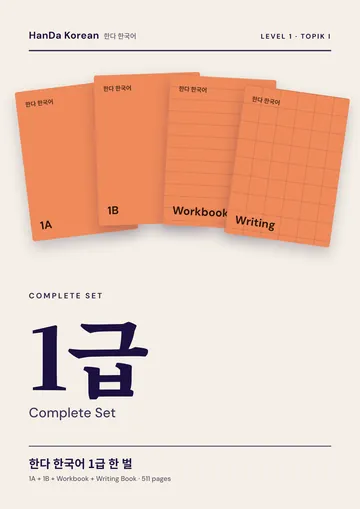 HanDa Korean Level 1 — Complete Set
Everything for level 1 — books, workbook and writing book · 511 pages
$10
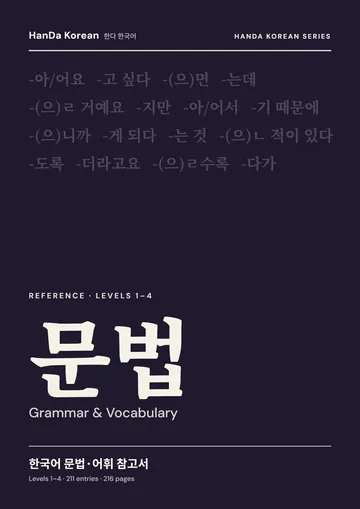 Korean Grammar & Vocabulary Reference
Every pattern in one place · 216 pages
$8
Practice this with an AI tutor
HanDa corrects every sentence you write or say — in real conversation, not flashcards.