Korean In-Law Family Terms: 어머님, 아버님, 형수님
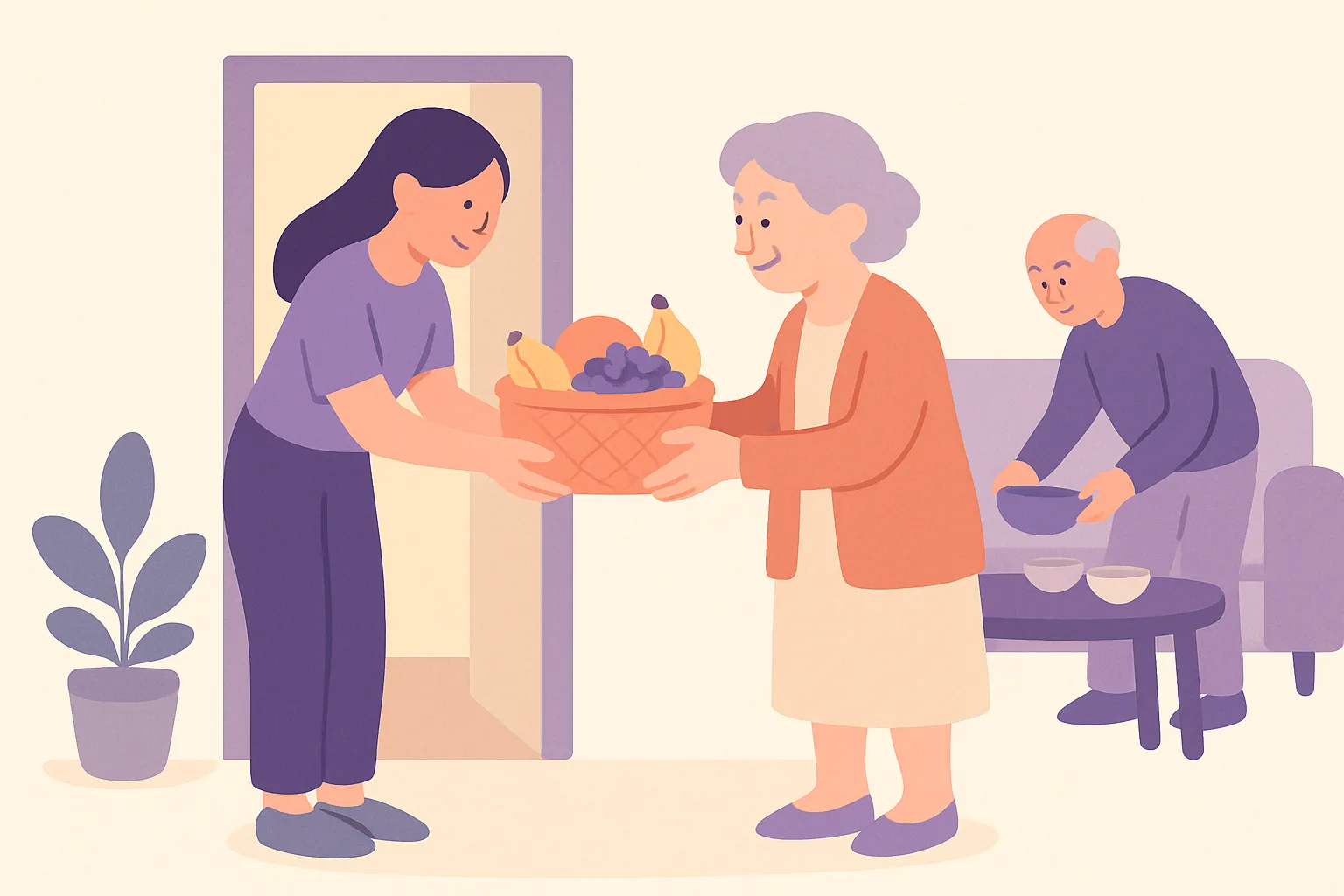
Quick answer: 어머님 (eomeonim) and 아버님 (abeonim) are the honorific forms of "mother" and "father", and Koreans use them for someone else's parents — most often their spouse's parents, spoken to their face. 형수님 (hyeongsunim) is what a man calls his older brother's wife. The rule underneath all of it: the 님 is a signal that this person is not your own parent.
That one idea does most of the work. English has "mother" and "mother-in-law", and subtitles use both words loosely, so you hear 어머님 on screen and read "Mother" and assume it's just a fancier 어머니. It isn't. In a K-drama, the moment a character switches from 어머니 to 어머님, the relationship on screen has changed.
어머니 vs 어머님: whose mother is it?
어머니 is my mother. 어머님 is a mother who belongs to someone else — your husband's, your wife's, your friend's, your student's.
어머니, 저 왔어요. — "Mom, I'm home." (to your own mother)
어머님, 저 왔어요. — "Mother, I'm here." (a wife arriving at her husband's parents' house)
Same sentence, two completely different scenes. The 님 is the whole difference.
This is the same 님 that turns 아버지 into 아버님, 딸 into 따님, 아들 into 아드님. It lifts the person out of your own circle and places them above you, at a polite distance.
So one of the most common learner mistakes is calling your own mother 어머님 in conversation:
- ✗ 우리 어머님은 부산에 사세요.
- ✓ 우리 어머니는 부산에 사세요. — "My mother lives in Busan."
(You will see 어머님께 at the top of a letter, even to your own mother — written Korean is more formal. But out loud, to your own mom, it sounds oddly stiff, like you're addressing a stranger.) If you're still sorting out the basic set, start with the everyday family words and come back to this page.
The other 어머님 you hear constantly
In dramas, shop staff, teachers and hospital receptionists call adult women 어머님 and adult men 아버님 — whether or not anyone's children are involved. It's a warm, slightly old-fashioned way of addressing a customer or a parent.
지호 어머님, 잠시 시간 괜찮으세요? — "Jiho's mother, do you have a moment?" (a teacher to a parent)
어머님, 이쪽으로 앉으세요. — "Ma'am, please sit over here."
Subtitles render this as "ma'am" and the Korean texture vanishes. When you hear it, picture the speaker: it's almost always someone in a service or school role.
A wife's side: 어머님, 아버님, 시어머니
A married woman addresses her husband's parents as 어머님 and 아버님, directly, to their face.
아버님, 식사하셨어요? — "Father, have you eaten?"
어머님, 김치 진짜 맛있어요. — "Mother, this kimchi is really delicious."
But when she talks about them to a friend, she switches to the relationship word: 시어머니 (husband's mother) and 시아버지 (husband's father). The 시 prefix means "husband's family."
우리 시어머니는 요리를 참 잘하세요. — "My mother-in-law is a really good cook."
So the same woman says 어머님 to her face and 시어머니 behind her back — not rudely, that's simply the correct reference word. Saying 시어머니 to her would be like saying "my mother-in-law" directly at her.
A husband's side: 장모님 and 장인어른
A married man calls his wife's mother 장모님 and her father 장인어른. These are the traditional terms and they're used both to the face and in reference.
장모님, 제가 할게요. — "Mother, let me do that."
장인어른께 전화드렸어요. — "I called my father-in-law."
Many men now also say 어머님 and 아버님 to their wife's parents; both are heard, and 어머님/아버님 sounds a little warmer and more modern. 장모님 is still extremely common in dramas, especially from men over forty.
형수님: the brother's-wife words
Here's where English gives up. "Sister-in-law" covers at least six different Korean words, and Korean picks based on who is speaking and older or younger.
| Relationship | Term | Who says it |
|---|---|---|
| older brother's wife | 형수님 | a man |
| younger brother's wife | 제수씨 | a man |
| older sister's husband | 매형 | a man |
| younger sister's husband | 매제 | a man |
| older sister's husband | 형부 | a woman |
| younger sister's husband | 제부 | a woman |
| brother's wife | 올케 | a woman |
형수님, 오랜만이에요. — "It's been a while." (a man to his older brother's wife)
형수님, 제가 도와드릴게요. — "Let me help you with that."
제수씨, 애들은 잘 커요? — "Are the kids doing well?" (a man to his younger brother's wife)
Notice 형수님 carries the honorific, while 제수씨 takes 씨 — she married into the family below him in age, so the register drops a notch. That tiny difference is the whole Korean seniority system in miniature. If you haven't met it yet, the 오빠 / 형 / 언니 / 누나 system is the same logic applied to friends.
The rest of the in-law map
A wife joining her husband's family learns a whole new vocabulary list:
| She means | She says |
|---|---|
| husband's older brother | 아주버님 |
| husband's older brother's wife | 형님 |
| husband's older sister | 형님 |
| husband's younger, unmarried brother | 도련님 |
| husband's younger, married brother | 서방님 |
| husband's younger sister | 아가씨 |
And a husband, on his wife's side:
| He means | He says |
|---|---|
| wife's older brother | 형님 |
| wife's younger brother | 처남 |
| wife's older sister | 처형 |
| wife's younger sister | 처제 |
처제, 밥 먹고 가. — "Stay and eat before you go." (to his wife's younger sister, 반말)
형님, 오시느라 고생하셨어요. — "Thank you for coming all this way." (to his wife's older brother)
You don't need to memorize these. You need to recognize them, because family-gathering scenes are built out of them — and because when a drama has a character refuse to use one of these words, that's the fight.
One honest note: some of these terms, 도련님 and 아가씨 especially, strike many Koreans today as unequal, since the wife's side has no matching set. Plenty of younger families now just use first names with 씨. If you marry into a Korean family, follow what that family actually does.
What subtitles lose
When a drama character says 어머님, the subtitle says "Mother" — and you lose the information that she married into this house. When 형수님, 제수씨, 처제 and 올케 all come out as "sister-in-law," you lose who's older, whose side of the family it is, and how much respect is being paid.
So the practical skill is just this: hear the 님. If you catch 어머님 instead of 어머니, you already know the speaker is standing in someone else's family. If you ever meet Korean in-laws yourself, the safest opening is a bow and a careful 안녕하세요 or 안녕하십니까 — then use the title the family gives you.
FAQ
What does 어머님 mean in Korean?
어머님 is the honorific form of 어머니 ("mother"). It's used for someone else's mother, most commonly a spouse's mother spoken to directly, and also by teachers or shop staff addressing an adult woman politely. Calling your own mother 어머님 in everyday speech sounds distant and unnatural.
What is the difference between 어머니 and 시어머니?
어머니 is your own mother. 시어머니 is your husband's mother — the 시 prefix marks the husband's family. A wife says 시어머니 when talking about her, but says 어머님 when speaking to her.
What does 형수님 mean in Korean?
형수님 means a man's older brother's wife. Only a man uses it, and only for the wife of an older brother; a younger brother's wife is 제수씨. A woman uses completely different words — 올케 for her brother's wife, 형부 for her older sister's husband.
Practice
- You're a married woman standing in front of your husband's mother. What do you call her?
- A man greets his older brother's wife at a family dinner. Complete it: ______, 오랜만이에요.
- Fix this sentence: 우리 어머님은 부산에 사세요.
- A teacher is speaking to a student's mother. Fill the blank: 지호 ______, 잠시 시간 괜찮으세요?
- A woman tells her friend that her husband's mother cooks well. Fill the blank: 우리 ______는 요리를 참 잘하세요.
Answers
- 어머님 — to her face. (You'd say 시어머니 only when talking about her to someone else.)
- 형수님, 오랜만이에요.
- 우리 어머니는 부산에 사세요. — 어머님 for your own mother sounds oddly formal in speech.
- 지호 어머님, 잠시 시간 괜찮으세요?
- 우리 시어머니는 요리를 참 잘하세요.
Learn this properly, not just once
Blog posts teach one thing at a time. The HanDa books teach level 1 in order — every lesson built to be spoken, with a workbook and writing book beside it.
 HanDa Korean Level 1 — Complete Set
Everything for level 1 — books, workbook and writing book · 511 pages
$10
 Korean Grammar & Vocabulary Reference
Every pattern in one place · 216 pages
$8
Practice this with an AI tutor
HanDa corrects every sentence you write or say — in real conversation, not flashcards.