9 Korean Family Words: Mom, Dad, Grandma, Grandpa, Aunt, Uncle
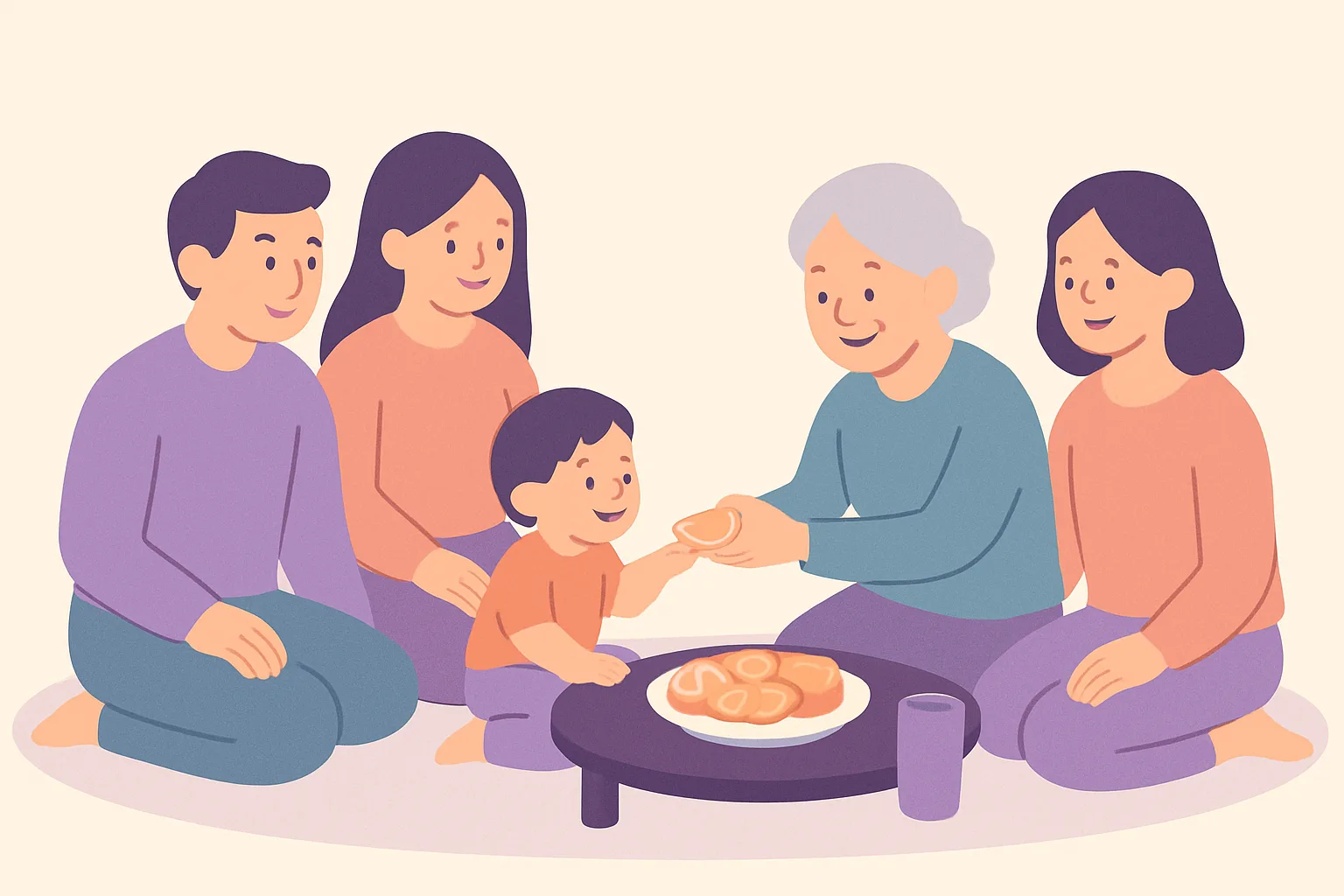
Quick answer: Mom in Korean is 엄마 (eomma) and dad is 아빠 (appa); the polite forms are 어머니 and 아버지. Grandma is 할머니, grandpa is 할아버지. Korean splits aunts and uncles by side of the family: 이모 is your mother's sister, 고모 is your father's sister, 삼촌 is your father's brother, and 외삼촌 is your mother's brother.
The one idea to take away: in English, "aunt" is a label you use behind someone's back and a name you use to their face ("Aunt Linda"). In Korean, these words are both — you call the person 이모 directly, with no name attached — and each one tells a Korean listener exactly how that person is related to you. Say 이모 and everyone knows it's your mother's sister. That's information English simply doesn't carry.
Here are the nine you'll use ninety percent of the time.
1. 엄마 — mom (어머니 — mother)
엄마, 나 왔어. — Mom, I'm home. (반말)
엄마 is what you call her to her face your whole life — Korean adults in their forties still say 엄마, and it doesn't sound childish the way "mommy" would. 어머니 is the formal version: you use it in writing, in a job interview, when speaking to someone much older about your mother, or when addressing a friend's mother. One more form you'll hear: 어머님, used for your mother-in-law or for someone else's mother when you want to be extra respectful.
우리 엄마는 요리를 정말 잘하세요. — My mom is a really good cook.
2. 아빠 — dad (아버지 — father)
아빠, 이것 좀 들어 주세요. — Dad, please hold this for me.
Same pattern as 엄마. 아빠 is warm and everyday; 아버지 is the respectful form you use in formal situations or when you want distance. Men often switch to 아버지 in adulthood more than women switch to 어머니, but both are completely normal.
저희 아버지는 작년에 퇴직하셨어요. — My father retired last year.
Notice the honorific verb ending -(으)시- in 하세요 and 퇴직하셨어요. Koreans use honorifics for their own parents even when talking to outsiders, which surprises learners who expect humble forms everywhere.
3. 부모님 — (my) parents
저희 부모님은 부산에 사세요. — My parents live in Busan.
부모님 already contains the honorific 님, and that's the normal word — plain 부모 shows up in writing and set phrases, but in speech you say 부모님, even about your own parents. Pair it with 저희 (humble "our") when you're speaking politely to someone outside the family, and 우리 when you're relaxed.
부모님께 전화드렸어요. — I called my parents.
4. 할머니 — grandma (외할머니 — mother's mother)
할머니, 식사하셨어요? — Grandma, have you eaten?
할머니 covers both grandmothers in everyday speech; when you need to be specific, 친할머니 is your father's mother and 외할머니 is your mother's mother. That 외- prefix literally means "outside" and marks the mother's side — a leftover from a system that counted the father's line as the inside one.
방학 때 외할머니 댁에 갔어요. — I went to my grandmother's house over the school break.
댁 is the honorific word for "house," used for elders. 할머니 집 isn't wrong among family, but 댁 sounds properly respectful. Greeting an older relative usually comes with a bow, and the depth matters — see how to bow and what to say.
5. 할아버지 — grandpa (외할아버지 — mother's father)
할아버지 생신이 다음 주예요. — Grandpa's birthday is next week.
생신 is the honorific word for birthday — 생일 for friends, 생신 for grandparents. Pronunciation note: 할아버지 comes out as [하라버지] because the ㄹ slides into the empty ㅇ. If that kind of linking throws you off when you listen, Korean sound changes are worth twenty minutes of your time.
할아버지는 아직도 매일 등산을 다니세요. — Grandpa still goes hiking every day.
6. 이모 — mother's sister
이모가 용돈을 주셨어요. — My aunt gave me some spending money.
이모 is specifically your mother's sister, older or younger — age doesn't change the word. Her husband is 이모부. 이모 also leaks outside the family: kids call their mother's close friends 이모, and in casual restaurants adults call the middle-aged woman serving them 이모, which sounds friendly rather than rude. If that use of family words with strangers interests you, there's a whole system of titles Koreans use instead of names.
이모, 여기 물 좀 주세요. — Excuse me (ma'am), could we get some water? (in a casual restaurant)
7. 고모 — father's sister
고모가 서울에서 카페를 하세요. — My aunt runs a café in Seoul.
고모 is your father's sister; her husband is 고모부. Unlike 이모, 고모 stays inside the family — you would never call a stranger 고모, and doing so sounds odd, almost comic. If you mix up 이모 and 고모 in front of relatives, nobody will be confused for long, but they will correct you, because the two words quietly say which parent the person belongs to.
이번 추석에 고모 댁에 가기로 했어요. — We decided to go to my aunt's place this Chuseok.
8. 삼촌 — father's brother (외삼촌 — mother's brother)
삼촌이 공항까지 태워다 주셨어요. — My uncle drove me to the airport.
Strictly, 삼촌 is your father's unmarried brother, but in daily speech it's the all-purpose word for a young-ish uncle on the father's side, and kids use it for close family friends too — a man who comes to the house often becomes 삼촌. Your mother's brother is 외삼촌, with the same 외- prefix you saw in 외할머니, and his wife is 외숙모.
외삼촌은 부산에 사세요. — My uncle (mom's brother) lives in Busan.
9. 큰아버지 / 작은아버지 — father's older / younger brother
설날에는 큰아버지 댁에 모여요. — On Lunar New Year we gather at my uncle's house.
Once your father's brother marries, the word usually shifts: his older brother is 큰아버지 ("big father"), his younger brother is 작은아버지 ("small father"), and their wives are 큰어머니 and 작은어머니. You'll hear these most around holidays, when the whole family meets at the oldest brother's home. Many families stay casual and keep saying 삼촌, so follow whatever your Korean family or friends use.
작은아버지가 과일을 한 상자 보내 주셨어요. — My uncle sent a whole box of fruit.
The two sides at a glance
| Relation | Mother's side | Father's side |
|---|---|---|
| Grandmother | 외할머니 | 할머니 (친할머니) |
| Grandfather | 외할아버지 | 할아버지 (친할아버지) |
| Aunt (parent's sister) | 이모 | 고모 |
| Uncle (parent's brother) | 외삼촌 | 삼촌 / 큰아버지 / 작은아버지 |
The shortcut: 외 means mother's side. Everything without 외 defaults to the father's side, except 이모, which is its own word.
FAQ
What is the Korean word for mom and dad?
Mom is 엄마 and dad is 아빠 in everyday speech — Koreans use these all their lives, not just as children. The formal equivalents are 어머니 (mother) and 아버지 (father), used in writing, formal introductions, and when speaking respectfully about someone else's parents. For a friend's parents or your in-laws, add 님: 어머님, 아버님.
What's the difference between 이모 and 고모?
이모 is your mother's sister and 고모 is your father's sister — the Korean words tell you which side of the family the aunt comes from, something English "aunt" doesn't. Their husbands follow the same logic: 이모부 and 고모부. 이모 is also used warmly toward a mother's close friend or a server at a casual restaurant, while 고모 stays strictly within the family.
Why do Koreans say 우리 엄마 instead of 내 엄마?
Korean uses 우리 ("our") for things shared by a group you belong to — family, country, school — so 우리 엄마, 우리 집, 우리 학교 are the normal forms. 내 엄마 sounds possessive and strange, as if you were claiming her against someone. In polite speech, swap 우리 for the humble 저희: 저희 부모님.
Practice
- Your mother's younger sister comes to visit. What do you call her?
- Your father's sister lives in Seoul. Fill in: ( )가 서울에 사세요.
- Say "My parents live in Busan" politely.
- Fix this sentence: 내 엄마는 선생님이에요.
- Greet your grandmother politely and ask if she has eaten.
Answers
- 이모 — mother's sisters are 이모 regardless of age.
- 고모가 서울에 사세요. (Father's sister.)
- 저희 부모님은 부산에 사세요.
- 우리 엄마는 선생님이세요. (Use 우리, not 내, and the honorific -세요 for a parent. 저희 어머니는 선생님이세요. also works in formal speech.)
- 할머니, 식사하셨어요?
Learn this properly, not just once
Blog posts teach one thing at a time. The HanDa books teach level 1 in order — every lesson built to be spoken, with a workbook and writing book beside it.
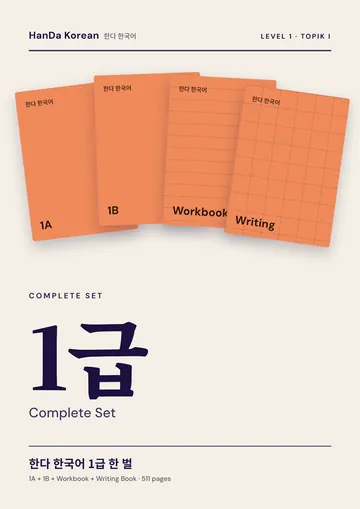 HanDa Korean Level 1 — Complete Set
Everything for level 1 — books, workbook and writing book · 511 pages
$10
HanDa Korean Level 1 — Complete Set
Everything for level 1 — books, workbook and writing book · 511 pages
$10
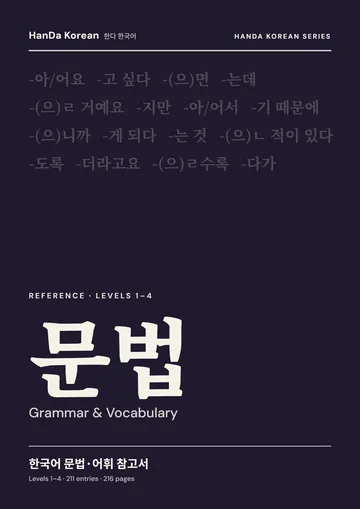 Korean Grammar & Vocabulary Reference
Every pattern in one place · 216 pages
$8
Korean Grammar & Vocabulary Reference
Every pattern in one place · 216 pages
$8
Practice this with an AI tutor
HanDa corrects every sentence you write or say — in real conversation, not flashcards.