Bowing in Korea: How to Bow and What to Say in Korean
Here is the one thing to understand about bowing in Korea: the bow is not a separate ritual. It is the body half of a greeting, and the words are the other half. Koreans almost never bow in silence, and they almost never say a greeting with a completely still head. The two move together, and the depth of the bow matches the weight of the words.
Once you see it that way, the whole thing gets much easier. You don't have to memorize angles. You just have to know what you're saying, and let your head follow.
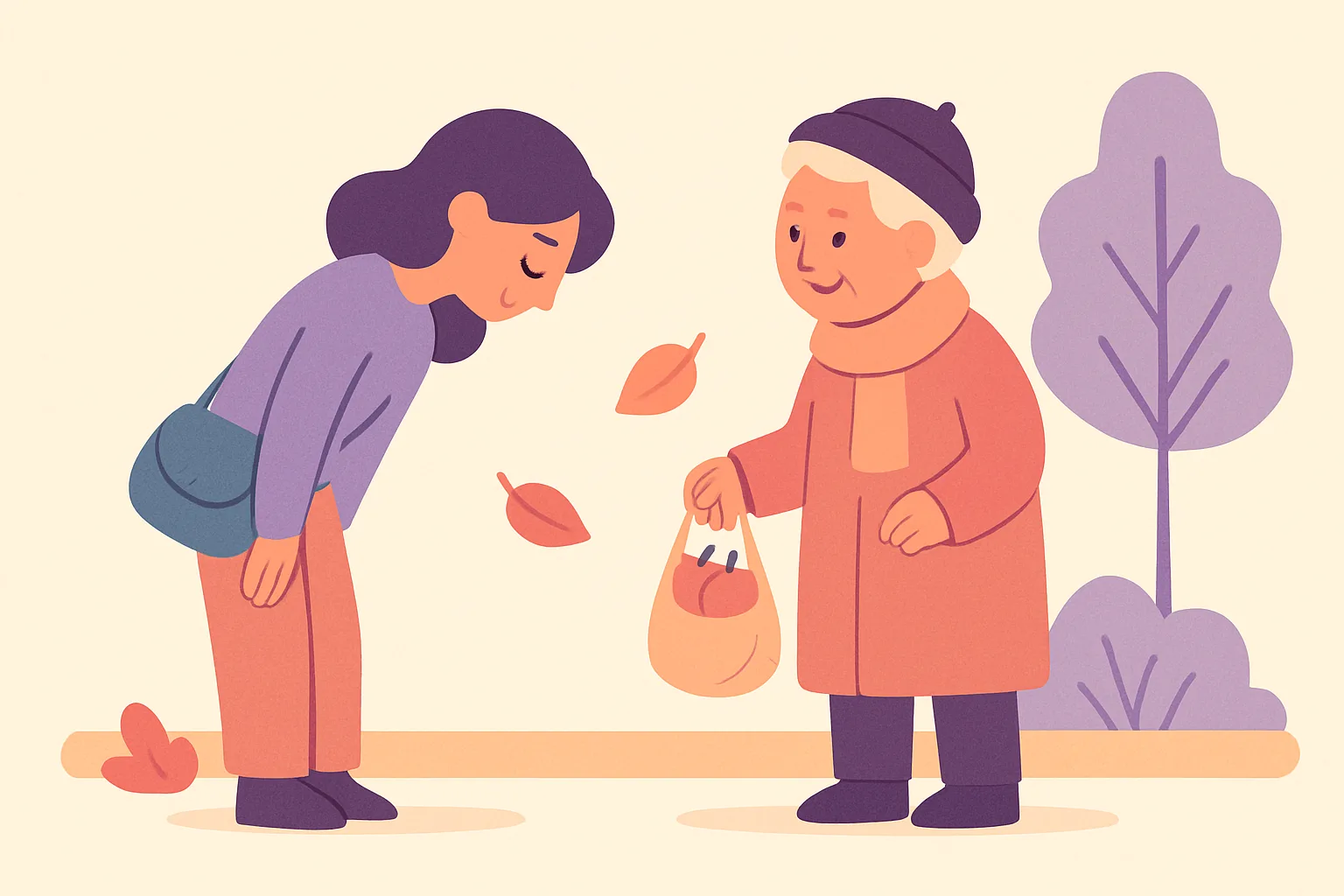
The everyday nod — about fifteen degrees
This is the one you'll use constantly. A small dip of the head and shoulders, down and up in about a second, eyes dropping briefly. It goes with the ordinary greetings:
- 안녕하세요. — Hello.
- 감사합니다. — Thank you.
- 네, 안녕히 가세요. — Yes, goodbye (to someone leaving).
You use this walking into a convenience store, taking your change, passing a neighbor in the elevator, greeting a coworker at 9 a.m. It is light and quick. If you bend deeply at the waist to a barista handing you an iced americano, it reads as strange — either comic or oddly apologetic.
There's a word for the smallest version of this, 목례 (a slight nod of the head, no words). That's what you give the same colleague the third time you pass them in the hallway. Greeting someone fully every single time is not required; ignoring them completely is what's rude.
The deeper bow — about thirty to forty-five degrees
Bend from the waist, back straight, held a beat longer. This goes with words that carry weight: a first meeting, a real thank-you, an apology, saying goodbye to someone much older or senior.
- 처음 뵙겠습니다. — Nice to meet you (first time, formal).
- 잘 부탁드립니다. — Literally "please treat me well" — said when you start working with someone.
- 정말 감사합니다. — Thank you so much.
- 죄송합니다. — I'm sorry.
Notice these are all 합쇼체 — the most formal polite level, ending in -습니다. That's not an accident. The deeper bow goes with the more formal ending; 해요체 goes with the small nod. If you're unsure which ending belongs where, the breakdown in this guide to Korean speech levels is worth ten minutes.
A mismatch is what sounds wrong to Korean ears. 안녕 + a deep bow is a joke — 안녕 is 반말, what you say to a close friend, and bending at the waist while saying it looks like you're performing. The opposite mismatch, 죄송합니다 said with a flat, upright head, sounds like you don't mean it at all.
The full floor bow — twice a year, maybe
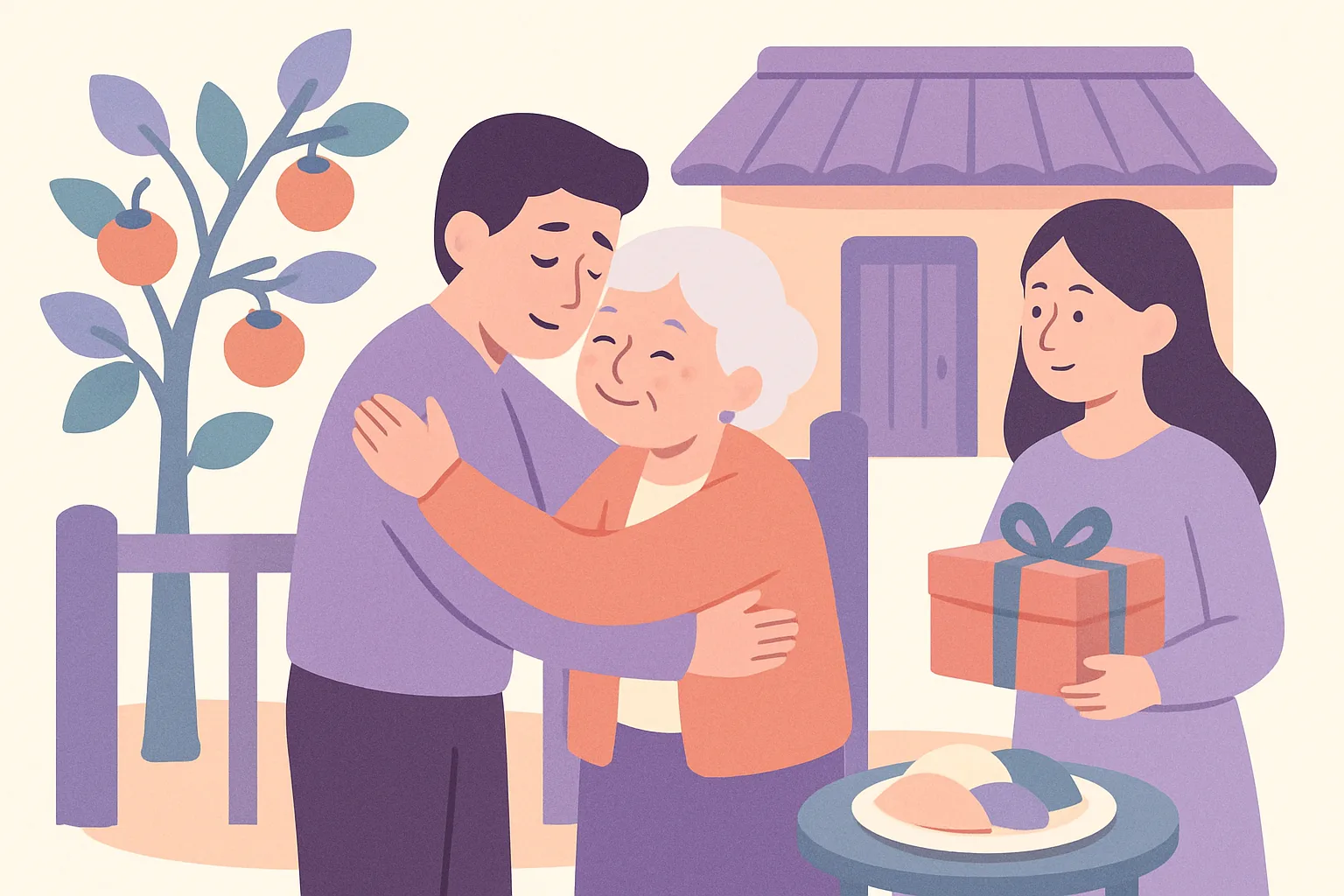
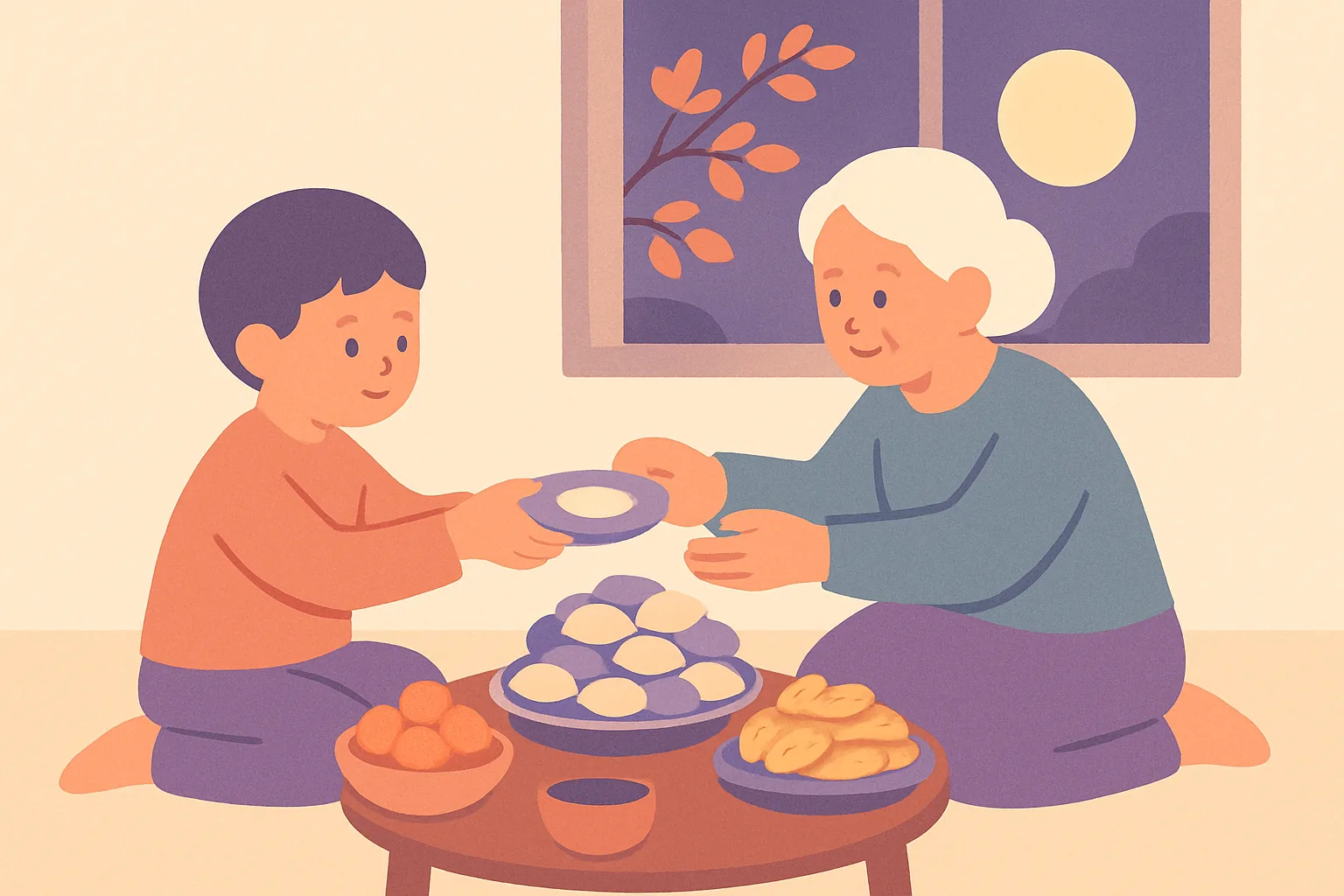
큰절 is the deep kneeling bow done on New Year's Day and at major family occasions, and at memorial rites. As a visitor you will probably only encounter it if a Korean family invites you home for a holiday — and if they do, they will show you, because the form differs for men and women and nobody expects you to know it. You don't need to practice it. The seasonal family side of Korean life is covered in this piece on going home for Chuseok.
Hello is one word; goodbye is two
This trips up nearly every beginner. Korean splits "goodbye" by who is leaving.
| Situation | What you say | Literal sense |
|---|---|---|
| The other person is leaving, you're staying | 안녕히 가세요. | "Go in peace." |
| You're leaving, they're staying | 안녕히 계세요. | "Stay in peace." |
| Both of you are leaving | 안녕히 가세요. (both say it) | — |
So when you walk out of a café, the staff says 안녕히 가세요 and you say 안녕히 계세요 — or honestly, most people just say 감사합니다 with a nod and go. That's completely normal.
With someone you're close to, 잘 가요 (go well / bye — said to the person who is leaving) and 들어가세요 (go on home) are softer and very common. 들어가세요 is also how a lot of calls end — more on that in the article on Korean phone phrases.
Greetings that aren't "hello"
A large share of Korean daily greetings aren't hello at all. They're announcements of movement, and each comes with a nod.
- Leaving the house: 다녀오겠습니다. — "I'll go and come back." The person staying answers 잘 다녀와요. (Go well.)
- Coming back: 다녀왔습니다. — "I'm back."
- Leaving the office before your coworkers: 먼저 들어가 보겠습니다. — I'll head out first. The ones staying say 네, 들어가세요.
- Someone finishes a shift or a long task: 수고하셨습니다. — Thank you for your work.
- Seeing someone after a long gap: 오랜만이에요. — It's been a while. (More formal: 오랜만입니다.)
One caution on 수고하셨습니다: it's warm and standard between coworkers and to people junior to you, but many Koreans consider it slightly off when said upward to a boss, because it carries a faint tone of evaluating someone's effort. To a superior, 감사합니다 or 먼저 들어가 보겠습니다 is safer.
Hands, eyes, and the handshake question
Koreans do shake hands, especially in business — and the bow doesn't disappear. The usual combination is a small bow with the handshake. Two details matter more than the angle:
- The senior person offers their hand first. You wait.
- Use two hands, or support your right forearm with your left hand. Same logic applies to giving and receiving anything — a glass, a business card, money, a gift. Two hands, or one hand touching the other arm.
Eyes: drop them as you bow and meet the other person's gaze when you come back up. Holding steady eye contact all the way through a deep bow to an elder looks confrontational.
And when you add a name to the greeting, get the title right — 민수 씨, 안녕하세요 is friendly-polite, but calling your manager by name plus 씨 is not. What 씨 actually means and when it stops working is worth knowing before you try it.
The short version
Small nod + 해요체 for daily life. Deeper bow + 합쇼체 for first meetings, thanks, apologies, and seniors. Say something every time. Keep the two halves matched, and you'll look like you know what you're doing — which, by then, you will.
Practice
Choose what you'd say in each situation.
- You're leaving a restaurant. The staff says 안녕히 가세요. What do you say back?
- Your coworker, the same age as you, finishes a late shift and goes home. What do you say?
- You're introduced to your friend's father for the first time. Words, and how deep?
- You pass the same neighbor in the apartment hallway for the second time in five minutes.
- You step out of the office at 6 p.m. while your team is still working.
Answers
- 안녕히 계세요. (They're staying, you're going.) 감사합니다 with a nod is equally normal.
- 수고하셨습니다. — fine to a peer. A small nod is enough.
- 처음 뵙겠습니다. (and often 잘 부탁드립니다) with a proper bow from the waist, around 30–45 degrees.
- 목례 — just a small nod, no words needed. Repeating 안녕하세요 every time isn't necessary.
- 먼저 들어가 보겠습니다. with a light bow. They'll answer 네, 들어가세요 or 수고하셨습니다.
Learn this properly, not just once
Blog posts teach one thing at a time. The HanDa books teach level 1 in order — every lesson built to be spoken, with a workbook and writing book beside it.
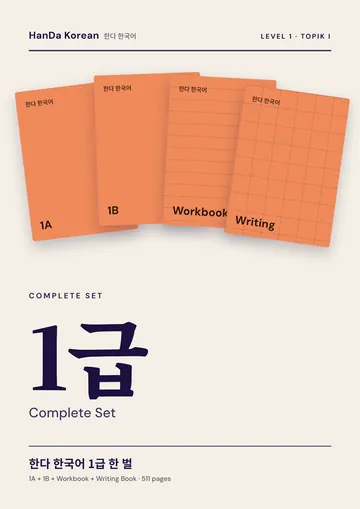 HanDa Korean Level 1 — Complete Set
Everything for level 1 — books, workbook and writing book · 511 pages
$10
HanDa Korean Level 1 — Complete Set
Everything for level 1 — books, workbook and writing book · 511 pages
$10
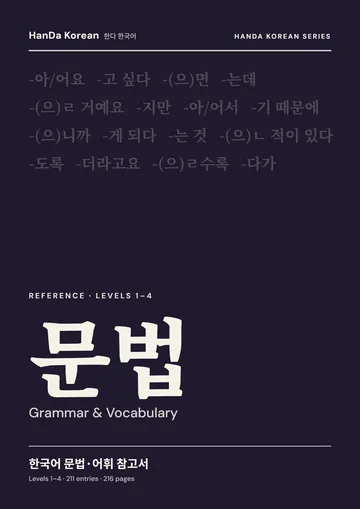 Korean Grammar & Vocabulary Reference
Every pattern in one place · 216 pages
$8
Korean Grammar & Vocabulary Reference
Every pattern in one place · 216 pages
$8
Practice this with an AI tutor
HanDa corrects every sentence you write or say — in real conversation, not flashcards.