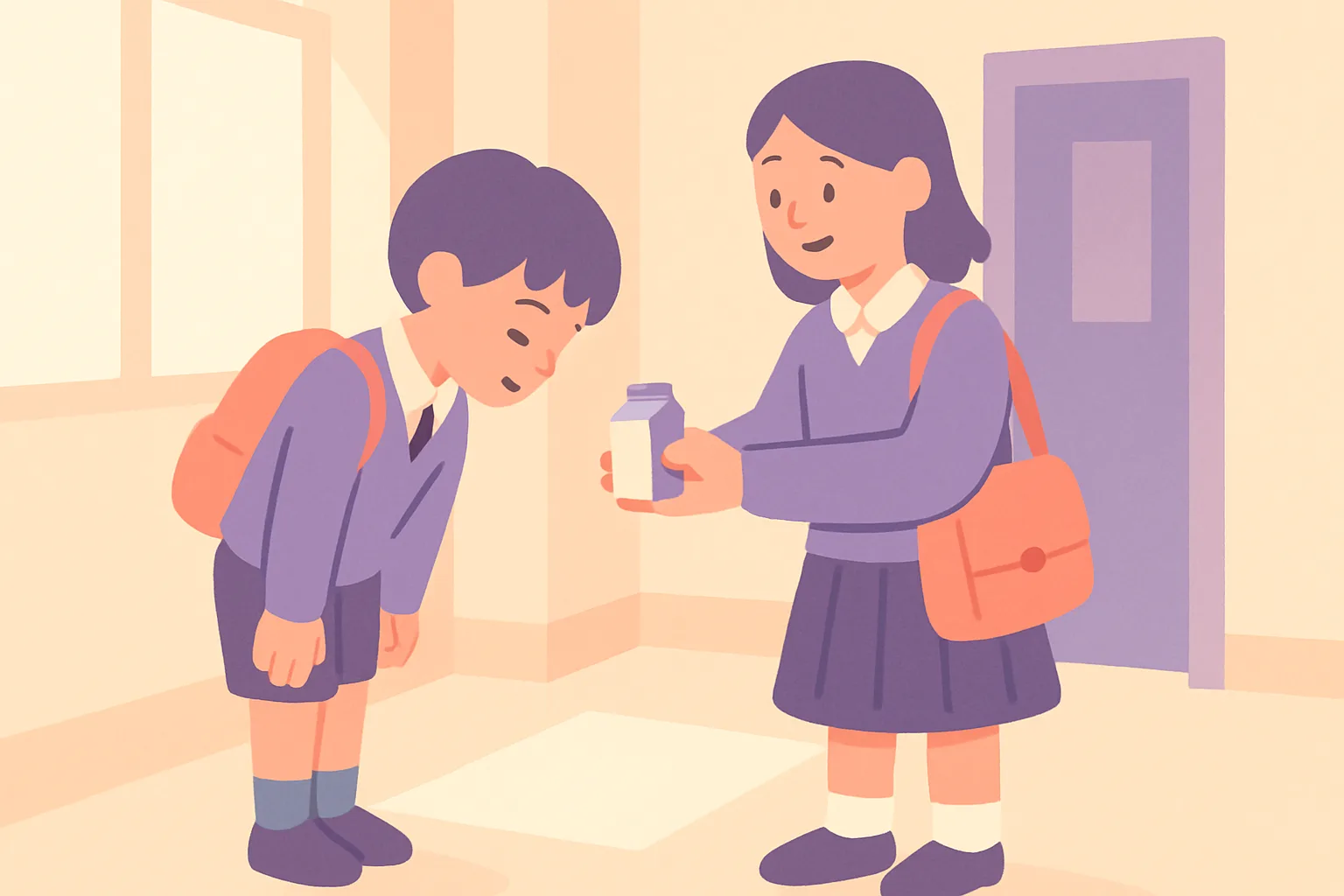
What 씨 Means in Korean: Names and Address in K-Dramas

You've heard it a hundred times. Two characters meet, and for twenty episodes one of them says 민준 씨. Then, in one quiet scene, she says 민준아 — and the whole room changes. The English subtitle says "Minjun" both times.
Here's the idea to walk away with: in Korean, what you call someone is a statement about the relationship, and you cannot avoid making that statement. English lets you say "Hey, can you look at this?" with no name and no label. Korean mostly doesn't. Every time a character opens their mouth, they're choosing a form of address, and that choice carries age, rank, closeness and mood. Dramas use it as a plot device because real Koreans feel it instantly.
씨 is not "Mr./Ms."
The standard translation is "Mr." or "Ms.," and it's misleading. 씨 is a polite but horizontal marker. You use it with someone you treat as an equal — a coworker at your level, a classmate you're not close with, someone you just met who's roughly your age.
You do not use it with someone above you. Calling your manager 민준 씨 is not formal, it's insulting. That's why the office in every drama runs on job titles instead.
Also: 씨 takes a space after the name — 민준 씨, not 민준씨. If spacing is a sore spot for you, the Korean spacing rules cover why.
The forms, side by side
Take the name 김민준 (surname 김, given name 민준).
| Form | Example | Who uses it |
|---|---|---|
| given name + 씨 | 민준 씨 | polite, friendly-ish, equal footing — coworkers, new acquaintances |
| full name + 씨 | 김민준 씨 | official and distant — first meeting, a clinic calling you in, HR |
| surname + 씨 | 김 씨 | avoid it — sounds dismissive, like labeling a stranger |
| full name, nothing added | 김민준 | calling someone out, scolding, roll call |
| given name + 아/야 | 민준아 / 수아야 | close friends, or someone younger |
| title + 님 | 과장님, 선생님 | anyone above you |
So when a drama character switches from 김민준 씨 to 민준 씨, that's already a small step closer, even though both are polite.
김민준 씨, 들어오세요. Kim Minjun, please come in. (A receptionist calling the next person.)
민준 씨, 이거 한번 봐 주세요. Minjun-ssi, could you take a look at this? (A coworker, same rank.)
Why nobody calls the boss by name
At work, you address people by their job title + 님, not their name:
과장님, 잠깐 시간 괜찮으세요? Manager, do you have a moment?
팀장님께서 먼저 가셨어요. The team leader already left.
If you need to distinguish two managers, you put the surname in front: 김 과장님, 박 팀장님. Note the surname sits before the title, never alone with 씨.
School and university work the same way: 선생님 for a teacher, 교수님 for a professor, 선배 or 선배님 for someone in a year above you.
선배, 제가 할게요. Sunbae, I'll do it. (Volunteering — and if you want to know why it's 할게요 and not 할래요, see -(으)ㄹ게요 vs -(으)ㄹ래요.)
The flip side: a senior person rarely says 후배 to your face. They use your name. That asymmetry — titles going up, names coming down — is the whole hierarchy in miniature.
The shouted full name
When a Korean parent uses the child's full name with nothing attached, something has gone wrong. It's the Korean equivalent of your mother using your middle name.
김민준! 너 지금 뭐 하는 거야? Kim Minjun! What do you think you're doing?
In a drama, a character who normally says 민준아 suddenly saying 김민준 has snapped. The subtitle just prints "Minjun!" — the shock is in the surname.
Dropping 씨: the moment the relationship changes
The friendly direction is 씨 → 아/야. The rule for the ending is simple:
- Name ends in a consonant → 아: 민준아, 지훈아, 수진아
- Name ends in a vowel → 야: 지호야, 수아야, 민서야
민준아, 밥 먹었어? Minjun, did you eat?
수아야, 이거 네 거지? Sua, this is yours, right?
Notice those are 반말 — you can't say 민준아 and then keep using 해요체. The name form and the speech level move together. (Korean speech levels explained if you want that mapped out.)
In real life people negotiate the switch out loud, and dramas love that beat:
우리 말 편하게 해요. Let's drop the formal speech.
그냥 이름 부르셔도 돼요. You can just call me by my name.
And the reverse is brutal. Two people who have been saying 민준아 and 수아야 for years have a fight, and one of them says 민준 씨. Nothing else changes. The subtitle is unchanged. Korean viewers wince.
One more small thing you'll hear: when a consonant-ending name is used about someone casually, Koreans add 이 — 민준이.
민준이 아직 안 왔어? Minjun's not here yet?
Why characters repeat names instead of saying "you"
English subtitles are full of "you." The Korean often isn't. Instead of a pronoun, polite Korean repeats the person's name:
민준 씨는 어떻게 생각해요? What do you think, Minjun-ssi?
너 is fine between close friends in 반말. 당신 is the one learners misuse. In dramas you hear it mainly in two places: between married couples, and in a cold confrontation.
당신 누구예요? Who are you? — said to someone who shouldn't be there.
If you use 당신 to a coworker, it lands somewhere between stiff and hostile. Use their name + 씨, or their title.
And when you don't know the name at all, you don't guess — you use 저기요 or a role word. Nine ways to address strangers in Korean goes through those.
님, quickly
님 outranks 씨. It's built into 선생님, 고객님, 사장님, and it's also attached directly to names in business email and online communities: 민준 님. If you're ever unsure between 씨 and 님 when writing to someone, 님 is the safer one.
Practice
Choose the natural form of address.
- You just joined a team. A coworker your age is named 이수아. What do you call her?
- Your team leader's surname is 박. What do you call him?
- Your close friend is named 지호. Call his name to get his attention.
- Your close friend is named 민준. Call his name.
- Translate, politely, to a coworker named 민준: "Minjun, what do you think?"
Answers
- 수아 씨 — given name + 씨, with a space. (김수아 씨 would be fine on day one, but it stays distant.)
- 팀장님, or 박 팀장님. Never 박 씨, and never his name + 씨 (e.g. 박민수 씨) for someone above you.
- 지호야 — the name ends in a vowel.
- 민준아 — the name ends in a consonant.
- 민준 씨는 어떻게 생각해요? — the name replaces "you." 당신은 어떻게 생각해요? would sound cold or confrontational.
Next time you watch, keep one ear on how each character names the others. You'll spot the relationship shifting an episode before the subtitles admit it.
Learn this properly, not just once
Blog posts teach one thing at a time. The HanDa books teach level 1 in order — every lesson built to be spoken, with a workbook and writing book beside it.
 HanDa Korean Level 1 — Complete Set
Everything for level 1 — books, workbook and writing book · 511 pages
$10
HanDa Korean Level 1 — Complete Set
Everything for level 1 — books, workbook and writing book · 511 pages
$10
 Korean Grammar & Vocabulary Reference
Every pattern in one place · 216 pages
$8
Korean Grammar & Vocabulary Reference
Every pattern in one place · 216 pages
$8
Practice this with an AI tutor
HanDa corrects every sentence you write or say — in real conversation, not flashcards.