10 Korean Words for Remember and Forget: 기억나다, 잊다
Quick answer: "I remember" in Korean is 기억나요 (gieongnayo) and "I don't remember" is 기억 안 나요. Korean usually treats remembering as something that happens to you — the memory surfaces on its own — which is why the thing you remember takes 이/가, not 을/를: 이름이 기억 안 나요 ("The name won't come to me").
If you watch K-dramas, you hear these words constantly. Someone stares at an old photo and says the memory just came back. Someone swears they'll never forget. Someone wakes up in a hospital bed and doesn't know their own name. Subtitles flatten all of it into "remember" and "forget," but Korean splits the idea into several words, and picking the wrong one is one of the most common learner mistakes. Here are the ten you'll actually hear, with how each one lands on a Korean ear.
1. 기억나다 — a memory comes to you
나 기억나? — "Do you remember me?"
This is the one in the dramatic doorway scene. 기억나다 is intransitive: the memory rises up by itself, so the thing remembered is the subject. Say 이름이 기억 안 나요 ("I can't remember the name"), never 이름을 기억나요 — that sentence is simply broken to a Korean ear. Pronunciation tip: 기억나 comes out as [기엉나], because ㄱ turns into ㅇ before ㄴ.
2. 기억하다 — to hold something in memory, on purpose
이거 꼭 기억하세요. — "Please be sure to remember this."
기억하다 is transitive and deliberate — you keep something in your head because you choose to. It takes 을/를: 날 기억해 줘 ("Remember me"). Use 기억하다 for instructions and promises, and 기억나다 for whether something pops up or not.
| Korean | Literally | Use it when |
|---|---|---|
| 기억나다 | the memory surfaces | you can / can't recall something |
| 기억하다 | you hold the memory | you're asked to keep something in mind |
| 생각나다 | it comes to mind | anything pops into your head |
3. 기억 안 나 — "I don't remember"
어제 일은 하나도 기억 안 나. — "I don't remember a single thing about yesterday."
This is the everyday 반말 version; in 해요체 it's 기억 안 나요 or 기억이 안 나요. Learners often build 안 기억해 instead, and that sounds like you're refusing to remember — a Korean listener will hear stubbornness, not a blank. If you're not sure whether you ever knew it, 잘 모르겠어요 ("I'm not sure") is the softer choice.
4. 잊지 마 — "Don't forget"
약속 잊지 마. — "Don't forget your promise."
잊다 is the plain verb "to forget," and you'll hear it most in this negative command. Polite version: 잊지 마세요. The flip side is a promise: 절대 안 잊을게요 — "I'll never forget." Said quietly at an airport gate, it's one of the heaviest lines in Korean.
5. 잊어버렸어 — "I forgot it (and it's gone)"
비밀번호를 잊어버렸어요. — "I forgot the password."
Adding -어버리다 means the thing is gone for good, often with a little regret. 잊다 alone sounds bookish in conversation; 잊어버렸어요 is what people actually say. Compare 잊었어 (neutral, plain) with 잊어버렸어 ("ugh, it's completely gone") — the second one carries the sigh.
6. 까먹었어 — "I totally forgot" (casual)
아, 까먹었다! — "Ah, I forgot!"
까먹다 is the casual spoken word for forgetting something small: a promise, a name, what you came into the room for. It's friendly and very common, but keep it for friends and people your own age — in a meeting or to a professor, use 잊어버렸습니다 or 깜빡했습니다 instead. (Yes, 까먹다 can also mean "to peel and eat"; context does all the work.)
7. 생각나다 — "it just came to me"
아, 생각났다! — "Oh, I've got it!"
생각나다 is wider than 기억나다: any thought, idea, or person can 생각나다. 갑자기 네 생각이 났어 means "I suddenly thought of you" — not a retrieved fact, just someone crossing your mind. That's why it shows up in warm scenes: 이 노래 들으면 네 생각 나 ("This song makes me think of you").
8. 떠오르다 — a memory floats up
그때 그 장면이 문득 떠올랐어요. — "That scene from back then suddenly came back to me."
떠오르다 literally means "to float up," and it's the flashback word — vivid, involuntary, usually a whole image rather than a single fact. It also works for ideas: 좋은 생각이 떠올랐어요 ("A good idea came to me"). It sounds slightly more literary than 생각나다, which is why narration loves it.
9. 추억 — a memory you treasure
좋은 추억이 많아요. — "I have a lot of good memories."
기억 is the neutral record in your head; 추억 is a cherished memory of a time, usually shared with people. You'd say 어릴 때 추억 ("childhood memories") but 기억력이 좋아요 ("I have a good memory"). Both words share the Sino-Korean root 억, which is the kind of pattern that makes learning Korean vocabulary in families so much faster.
10. 기억을 잃다 / 기억이 돌아오다 — lose and regain memory
그 사람은 사고로 기억을 잃었어요. — "He lost his memory in an accident."
The amnesia storyline runs on these two: 기억을 잃다 (lose one's memory) and 기억이 돌아왔어요 ("the memory came back"). Note that Korean sentences with no stated subject default to "I" — 사고로 기억을 잃었어요 on its own means "I lost my memory in an accident" — so name the person when you mean someone else. And notice the pattern again: losing memory is something you do to it, but its return happens on its own. If you want more of the vocabulary around those bedside scenes, see these words from hospital K-dramas.
One thing to take away
Korean splits remembering into having a memory (기억하다) and the memory arriving (기억나다, 생각나다, 떠오르다). English hides this; Korean doesn't. If you only fix one habit today, make it this: say 기억이 안 나요, not 안 기억해요. And when you want to say you'd rather let something go, the natural line is 잊고 싶어요 — a straightforward use of the -고 싶다 pattern for what you want to do.
FAQ
How do you say "I don't remember" in Korean?
Say 기억 안 나요 or 기억이 안 나요 in polite 해요체, and 기억 안 나 with close friends. Avoid 안 기억해요 — it sounds like you are refusing to remember rather than drawing a blank. If you may never have known the information at all, 잘 모르겠어요 ("I'm not sure") is more accurate.
What is the difference between 기억나다 and 기억하다?
기억하다 is transitive and deliberate — you keep something in mind on purpose, as in 이거 기억하세요 ("Remember this"). 기억나다 is intransitive — a memory comes up by itself, as in 이름이 기억나요 ("The name is coming to me"). The particle is the giveaway: 기억하다 takes 을/를, 기억나다 takes 이/가.
What does 추억 mean in Korean?
추억 means a treasured memory of a past time, usually a happy one shared with other people — childhood, school days, a trip. 기억 is the neutral word for memory as information or as a mental faculty. So you say 좋은 추억이에요 ("It's a good memory") but 기억력이 좋아요 ("You have a good memory").
Practice
- Your friend's name won't come to you. Say it in 반말.
- Tell a group politely: "Please be sure to remember this."
- Say in 해요체: "I forgot the password."
- Say: "I have a lot of good memories."
- One of these is wrong — which, and why? 이름을 기억나요 / 이름이 기억나요
Answers
- 이름이 기억 안 나. (Or simply 이름이 생각 안 나.)
- 이거 꼭 기억하세요.
- 비밀번호를 잊어버렸어요.
- 좋은 추억이 많아요.
- 이름을 기억나요 is wrong. 기억나다 is intransitive, so the thing remembered takes 이/가: 이름이 기억나요. Use 을/를 only with 기억하다 — 이름을 기억해요.
Learn this properly, not just once
Blog posts teach one thing at a time. The HanDa books teach level 1 in order — every lesson built to be spoken, with a workbook and writing book beside it.
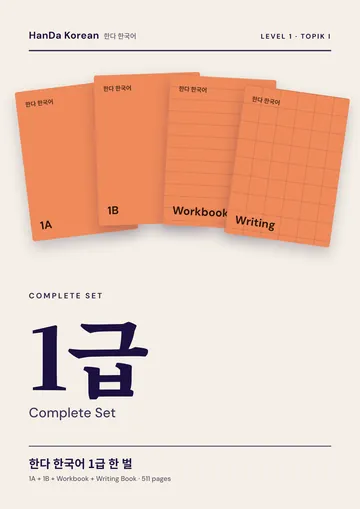 HanDa Korean Level 1 — Complete Set
Everything for level 1 — books, workbook and writing book · 511 pages
$10
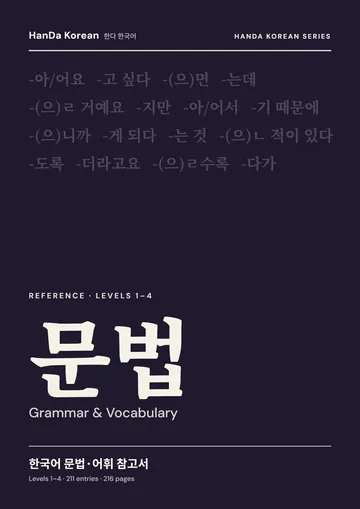 Korean Grammar & Vocabulary Reference
Every pattern in one place · 216 pages
$8
Practice this with an AI tutor
HanDa corrects every sentence you write or say — in real conversation, not flashcards.