-(으)ㄹ게요 vs -(으)ㄹ래요: "I'll Do It" vs "I Want To"
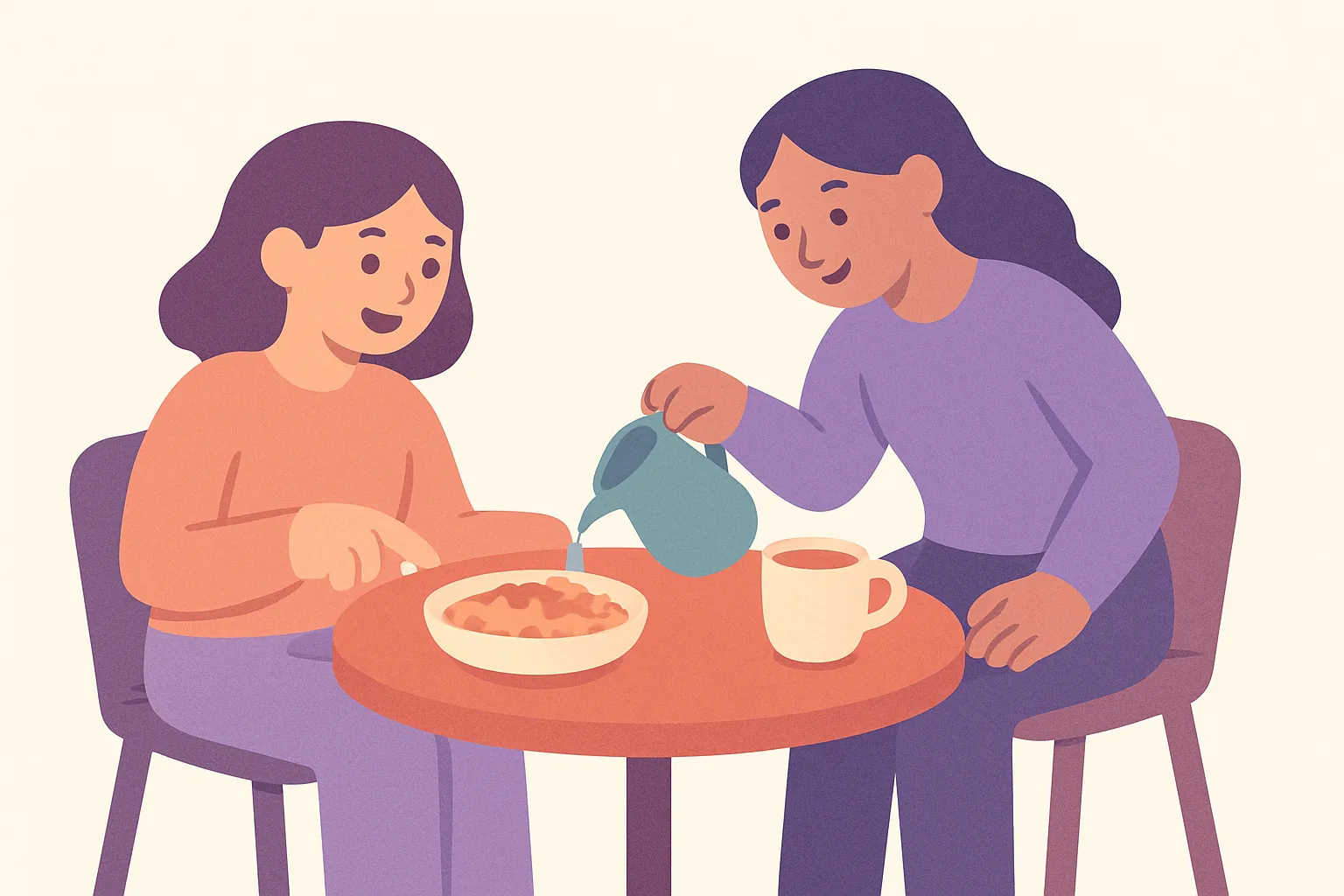
Here's the one idea: -(으)ㄹ게요 makes a promise to the person in front of you. -(으)ㄹ래요 announces your own choice.
Both endings talk about what you are going to do, and both are translated "I'll..." in English, which is exactly why learners mix them up. But Korean speakers feel them very differently. One says I'm doing this for you / because of you — you can count on it. The other says this is what I feel like doing.
Once you hear that difference, most of the confusion disappears.
The form
Both attach to verb stems (action verbs), never to adjectives.
| Stem ends in | -(으)ㄹ게요 | -(으)ㄹ래요 |
|---|---|---|
| vowel (가다) | 갈게요 | 갈래요 |
| consonant (먹다) | 먹을게요 | 먹을래요 |
| ㄹ (만들다) | 만들게요 | 만들래요 |
| ㄷ irregular (듣다) | 들을게요 | 들을래요 |
| ㅂ irregular (돕다) | 도울게요 | 도울래요 |
In 반말 they become -(으)ㄹ게 and -(으)ㄹ래: 나 먼저 갈게. / 나 안 갈래.
Two spelling notes people get wrong constantly:
- 갈게요 is pronounced [갈께요], but you write 갈게요. Never 갈께요.
- 갈래요 is pronounced as written.
And two hard limits on -(으)ㄹ게요:
- Only "I." You cannot use it for someone else. 친구가 올게요 (✗) → 친구가 올 거예요 (○).
- Never a question. 커피 마실게요? does not exist. If you want to ask someone, you need -(으)ㄹ래요.
-(으)ㄹ게요: a promise, aimed at the listener
Use -(으)ㄹ게요 when your action is a response — to a request, a problem, a situation you two are both in. You're committing, and the listener can rely on it.
- 제가 설거지할게요. — I'll do the dishes.
- 내일 다시 전화할게요. — I'll call you again tomorrow.
- 여기서 기다릴게요. — I'll wait here.
- 저 먼저 갈게요. 수고하세요. — I'm heading out first. Take care. (leaving the office)
- 앞으로 조심할게요. — I'll be careful from now on.
Notice how each one only makes sense with someone listening. That's the heart of -(으)ㄹ게요: it's spoken to a person. Alone in your room deciding to nap, you wouldn't say 잘게요 to the wall.
This is also why -(으)ㄹ게요 is the natural answer to a favor:
A: 이거 좀 도와주세요. — Please help me with this. B: 네, 도와줄게요. — Sure, I'll help you.
If B answered 네, 도와줄래요, a Korean ear hears something like "yeah, I feel like helping" — the words describe B's mood instead of B's commitment. It sounds oddly self-centered, almost like a child agreeing on their own terms.
In formal situations (합쇼체), -(으)ㄹ게요 usually upgrades to -겠습니다: 제가 하겠습니다. / 먼저 가 보겠습니다.
-(으)ㄹ래요: your choice, your preference
-(으)ㄹ래요 puts the spotlight on your will. It shows up most when there are options on the table.
- 저는 김치찌개 먹을래요. — I'll have the kimchi stew. (that's my pick)
- 오늘은 집에 있을래요. — I'd rather stay home today.
- 저는 커피 마실래요. — I'll have coffee.
And unlike -(으)ㄹ게요, it works beautifully as a question — which is how you invite people and ask what they want:
- 같이 영화 볼래요? — Do you want to watch a movie together?
- 주말에 뭐 할래요? — What do you want to do this weekend?
- 뭐 드실래요? — What would you like to eat? (honorific 드시다)
The negative is one of the most useful things you can learn: 안 -(으)ㄹ래요 = "I'd rather not."
- 저는 안 갈래요. — I don't want to go.
- 매운 건 안 먹을래요. — I'll pass on spicy food.
That said, a flat 안 갈래요 to a boss or a much older person is too direct — it's your feelings, stated plainly. With people above you, soften it the way described in how to turn things down politely in Korean — 괜찮아요, 다음에요 — or reach for 좀 어려울 것 같아요.
The pair that shows the nuance best
Watch what happens with the same verb:
- 제가 할게요. — Let me do it. (offering to take the job off your hands)
- 제가 할래요. — I want to be the one to do it. (claiming it — a kid with their hand up)
Both are grammatical. Both are natural. They just do different jobs. 할게요 is service; 할래요 is desire. Say 제가 할래요 when your team lead asks for a volunteer and you'll sound eager but a little childish; 제가 하겠습니다 or 제가 할게요 is what an adult says at work.
(Small aside: notice it's 제가, not 저는, in both. When you're stepping forward as the one who'll do it, Korean picks 이/가 — the logic behind that is in 은/는 vs 이/가.)
One more pair, at a restaurant with a friend:
Friend: 뭐 먹을래요? — What do you want to eat? You: 저는 비빔밥 먹을래요. — I'll have bibimbap.
Then when the server comes, you don't repeat 먹을래요 to them. You say 비빔밥 주세요 or 비빔밥으로 할게요. Saying 비빔밥 먹을래요 to a server sounds like you're announcing your mood to a stranger who only needs your order. Preferences go to friends; orders go to staff.
Quick decision test
Ask yourself: am I answering this person, or am I picking?
- Answering, promising, reassuring → -(으)ㄹ게요
- Picking, preferring, refusing, inviting → -(으)ㄹ래요
- Asking someone else → -(으)ㄹ래요 (only option)
Three mistakes to stop making
1. 같이 갈게요? for an invitation. -(으)ㄹ게요 can't be a question. Use 같이 갈래요? or 같이 가요.
2. -(으)ㄹ게요 with adjectives. 예쁠게요 (✗) doesn't mean anything. These endings need action verbs. "I'll be quiet" is 조용히 할게요, using the verb 하다.
3. Using either one for the weather, other people, or facts. 내일 비가 올게요 (✗) → 내일 비가 올 거예요 (○). Both of today's endings are about your will, so they can't predict anything.
If you like pairs like this, the two Korean words for "but" split along a similar line — one is neutral, one pulls the listener in. That's -지만 vs -는데.
Practice
Fill in the blank with -(으)ㄹ게요 or -(으)ㄹ래요 (keep 해요체).
- A: 내일 시간 있어요? 같이 밥 먹어요. → B: 좋아요! 제가 예약 (하다) ____.
- 주말에 같이 등산 (가다) ____? (inviting a friend)
- A: 커피 마실래요, 주스 마실래요? → B: 저는 주스 (마시다) ____.
- 늦어서 죄송해요. 다음부터는 일찍 (오다) ____.
- 오늘 너무 피곤해요. 저는 그냥 집에 (있다) ____.
Answers
- 할게요 — B is responding to A and taking responsibility for the booking. (할래요 would sound like B just fancies making a call.)
- 갈래요 — an invitation, so it must be a question form; -(으)ㄹ게요 is impossible here.
- 마실래요 — choosing between two options.
- 올게요 — a promise made to the person you kept waiting.
- 있을래요 — your own preference; 있을게요 would sound like you're promising to stay home for the listener.
Learn this properly, not just once
Blog posts teach one thing at a time. The HanDa books teach level 1 in order — every lesson built to be spoken, with a workbook and writing book beside it.
 Korean Grammar & Vocabulary Reference
Goes with this post · 216 pages
$8
Korean Grammar & Vocabulary Reference
Goes with this post · 216 pages
$8
 HanDa Korean Level 1 — Complete Set
Everything for level 1 — books, workbook and writing book · 511 pages
$10
HanDa Korean Level 1 — Complete Set
Everything for level 1 — books, workbook and writing book · 511 pages
$10
Practice this with an AI tutor
HanDa corrects every sentence you write or say — in real conversation, not flashcards.