고향 and 내려가다: Korean Words for Going Home at Chuseok
Around 추석, one sentence gets said thousands of times a day:
이번 추석에 고향에 내려가요. I'm going down to my hometown this Chuseok.
Not 고향에 가요 — 고향에 내려가요. Down. And when the holiday is over, the same person 올라와요 — comes back up.
That's the one idea in this article: Korean travel verbs for the holidays carry a built-in center. Seoul is up, everywhere else is down, and the word you choose quietly tells people where you are, where your family is, and which direction you're pointing. Learn this pair and a whole week of Chuseok small talk opens up.
내려가다 and 올라가다: the Seoul-shaped map
추석 falls on the fifteenth day of the eighth lunar month, and it's the holiday when people go back to where their family is. Most of the country's jobs are in and around Seoul; most people's parents and grandparents are not. So the holiday becomes a giant movement outward and then back.
The language follows that shape:
- 내려가다 — to go down (from Seoul / a city, out to the hometown)
- 올라가다 — to go up (back toward Seoul)
- 내려오다 — to come down (said by someone already at the hometown)
- 올라오다 — to come up (said by someone already in Seoul)
가다 vs 오다 works the same as always: 가다 moves away from where the speaker is, 오다 moves toward it. Put 내려 or 올라 on the front and you get four very specific verbs.
금요일 저녁에 내려가요. I'm heading down Friday evening. (I'm in Seoul now.)
할머니가 "언제 내려와?"라고 물어보셨어요. Grandma asked, "When are you coming down?" (She's at the hometown. 반말 to a grandchild is normal.)
추석 끝나고 월요일에 올라갈 거예요. I'll go back up on Monday after Chuseok. (I'm at the hometown now.)
언제 올라와요? 같이 저녁 먹어요. When are you coming back up? Let's have dinner. (Said by a friend in Seoul.)
If you mix these up, nobody will be confused for long — but it lands like saying "when are you coming" to someone while you're standing somewhere else. A tiny wrong-footedness. Get it right and you sound like you live here.
Could you just say 가다?
Yes. 고향에 가요 is correct, neutral and perfectly natural, especially in writing or when the up/down framing doesn't matter.
So why do natives reach for 내려가다 so often? Because it says more in the same breath. 내려가다 implies away from the big city, toward the place I'm from. It carries the whole picture — the packed highway, the parents waiting, the few days off. 가다 is just movement.
The rule of thumb is simple: Seoul is 위 (up), the rest of the country is 아래 (down) — and this mostly matches the map, since Seoul sits near the north. For a city clearly north of Seoul, people tend to follow the actual map instead. But for 부산, 광주, 대구, 전주, 제주 and almost everywhere else, it's 내려가다 without a second thought.
This isn't only a holiday thing, either. Someone who moved to Seoul for university will say 대학 때 서울로 올라왔어요 — "I came up to Seoul for university." It's one of the most common life-story sentences in Korean.
고향: not quite "hometown"
고향 is usually translated "hometown," but it means something closer to the place I'm from and where my people are — where you grew up, where your parents still live, the place you go back to. Someone born in Seoul who has never left can absolutely say 고향이 서울이에요, but you'll also hear people answer with their parents' region rather than the hospital they were born in.
고향이 어디세요? Where are you from?
This is standard first-meeting small talk, not nosiness — it sits right next to asking someone's job. If you're new to that kind of conversation, these first-meeting phrases pair well with it. As a foreigner you can answer simply:
저는 캐나다에서 왔어요. 고향은 밴쿠버예요. I'm from Canada. My hometown is Vancouver.
The words around the trip
| Korean | English | Where you'll hear it |
|---|---|---|
| 명절 | traditional holiday | 명절이라 가게가 문을 닫았어요. |
| 귀성길 | the trip home for the holiday | mostly news and weather reports |
| 막히다 | to be jammed (traffic) | 길이 너무 막혀요. |
| 휴게소 | highway rest area | 휴게소에서 좀 쉬었다 가요. |
| 예매하다 | to book (tickets) | 기차표 예매했어요? |
| 차례 | the holiday ancestral rite | 아침에 차례를 지내요. |
| 성묘 | visiting the family graves | 오후에 성묘 가요. |
| 송편 | half-moon rice cakes | 송편 빚는 거 도와줄까요? |
| 용돈 | pocket money (given to kids) | 할아버지한테 용돈 받았어요. |
A few of these in sentences:
명절이라 길이 많이 막혀요. The roads are really jammed because it's a holiday.
내려가는 길에 휴게소에서 한 번 쉬었어요. We stopped once at a rest area on the way down.
아침에 차례 지내고 오후에 성묘 갔어요. We did the ancestral rite in the morning and visited the graves in the afternoon.
What to say to someone who's going
Before they leave, the natural thing is a safe-travels line, not just a generic holiday greeting:
조심히 내려가세요. Get down there safely.
고향 잘 다녀오세요. Have a good trip home. (Literally: go and come back well.)
안 막혔으면 좋겠네요. I hope the traffic isn't bad.
When they're back at work:
잘 다녀왔어요? Did the trip go well?
어제 올라왔어요. 오는 데 다섯 시간 걸렸어요. I came back up yesterday. It took five hours to get here.
You can also blame the traffic directly: 길이 막혀서 다섯 시간 걸렸어요. — "It took five hours because the roads were jammed."
For the holiday greeting itself — 추석 잘 보내세요 and friends — see the Chuseok greetings guide.
And if you're not going? Say so plainly and give the reason:
저는 이번 추석에 못 내려가요. 일이 있거든요. I can't go down this Chuseok. I've got work, you see.
That -거든요 is doing real work there — it marks the reason as new information the listener didn't have. There's a fuller explanation of -거든요 if that ending still feels slippery.
The quick version
Ask yourself two questions before you pick the verb:
- Toward the hometown, or back to the city? → 내려 or 올라
- Away from where I'm standing, or toward it? → 가다 or 오다
That's it. 내려가요, 내려와요, 올라가요, 올라와요 — four verbs that make you sound like you've done this trip before.
Practice
- You live in Seoul. Your family is in 대구. Say: "I'm going down to Daegu this Chuseok."
- You're at your parents' house. A friend in Seoul texts to ask when you're coming back. Write her question in 해요체.
- A coworker is leaving tonight for her hometown. Wish her a safe trip down.
- Translate: 명절이라 길이 많이 막혀요.
- Say "I can't go down this year — I have to work" using -거든요.
Answers
- 이번 추석에 대구에 내려가요.
- 언제 올라와요? (She's in Seoul, so the movement is toward her: 올라오다.)
- 조심히 내려가세요. (Also fine: 고향 잘 다녀오세요.)
- The roads are really jammed because it's a holiday.
- 올해는 못 내려가요. 일해야 되거든요.
Learn this properly, not just once
Blog posts teach one thing at a time. The HanDa books teach level 1 in order — every lesson built to be spoken, with a workbook and writing book beside it.
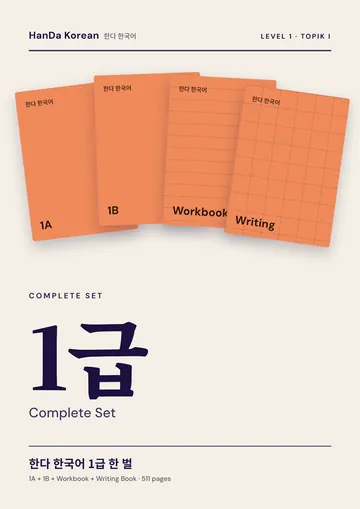 HanDa Korean Level 1 — Complete Set
Everything for level 1 — books, workbook and writing book · 511 pages
$10
HanDa Korean Level 1 — Complete Set
Everything for level 1 — books, workbook and writing book · 511 pages
$10
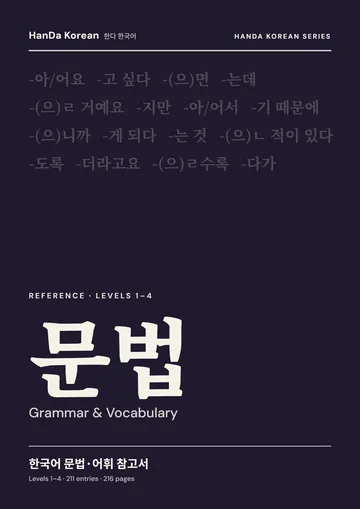 Korean Grammar & Vocabulary Reference
Every pattern in one place · 216 pages
$8
Korean Grammar & Vocabulary Reference
Every pattern in one place · 216 pages
$8
Practice this with an AI tutor
HanDa corrects every sentence you write or say — in real conversation, not flashcards.