How to Say Hello in Korean: 안녕하세요, 안녕, 안녕하십니까
Quick answer: "Hello" in Korean is 안녕하세요 (annyeonghaseyo) — polite, safe with almost anyone, any time of day. Use 안녕 (annyeong) only with close friends, people clearly younger than you, and children. 안녕하십니까 is the formal version, used in announcements, speeches, and by staff on duty. If you learn one, learn 안녕하세요.
Here's the one idea to walk away with: these three aren't three different greetings. They're the same greeting at three different politeness levels, and Koreans choose between them based on who's in front of them — not on the time of day, not on how formal the room feels. Get the relationship right and the word picks itself.
What 안녕하세요 literally says
안녕 (安寧) means "peace, well-being." 안녕하세요 is, underneath, a question: are you at peace? That's why Koreans often say it with a slight rise at the end, almost like a question, even though it's usually written with a period.
This matters for a practical reason. Because it's a well-being check, not a time stamp, it works at 7 a.m. and at 9 p.m. There is no separate "good morning" or "good evening" you need to learn. One greeting, all day.
One pronunciation note: in normal-speed speech the ㅎ in 하 gets very soft, so it comes out closer to a smooth annyeong-aseyo than a crisp ha. Don't punch the 하.
The three levels, side by side
| Greeting | Level | Who you say it to |
|---|---|---|
| 안녕 | 반말 | Close friends, younger siblings, kids, your own age once you've agreed to drop formality |
| 안녕하세요 | 해요체 | Everyone else — neighbors, shop staff, classmates, your boss, your friend's parents |
| 안녕하십니까 | 합쇼체 | Public address, formal self-introductions, staff greeting customers, military, interviews |
Notice how wide the middle row is. 안녕하세요 is not "medium polite" the way learners imagine. It's the default adult greeting in Korea, and using it with a professor or a company president is completely fine.
A real exchange: meeting a neighbor
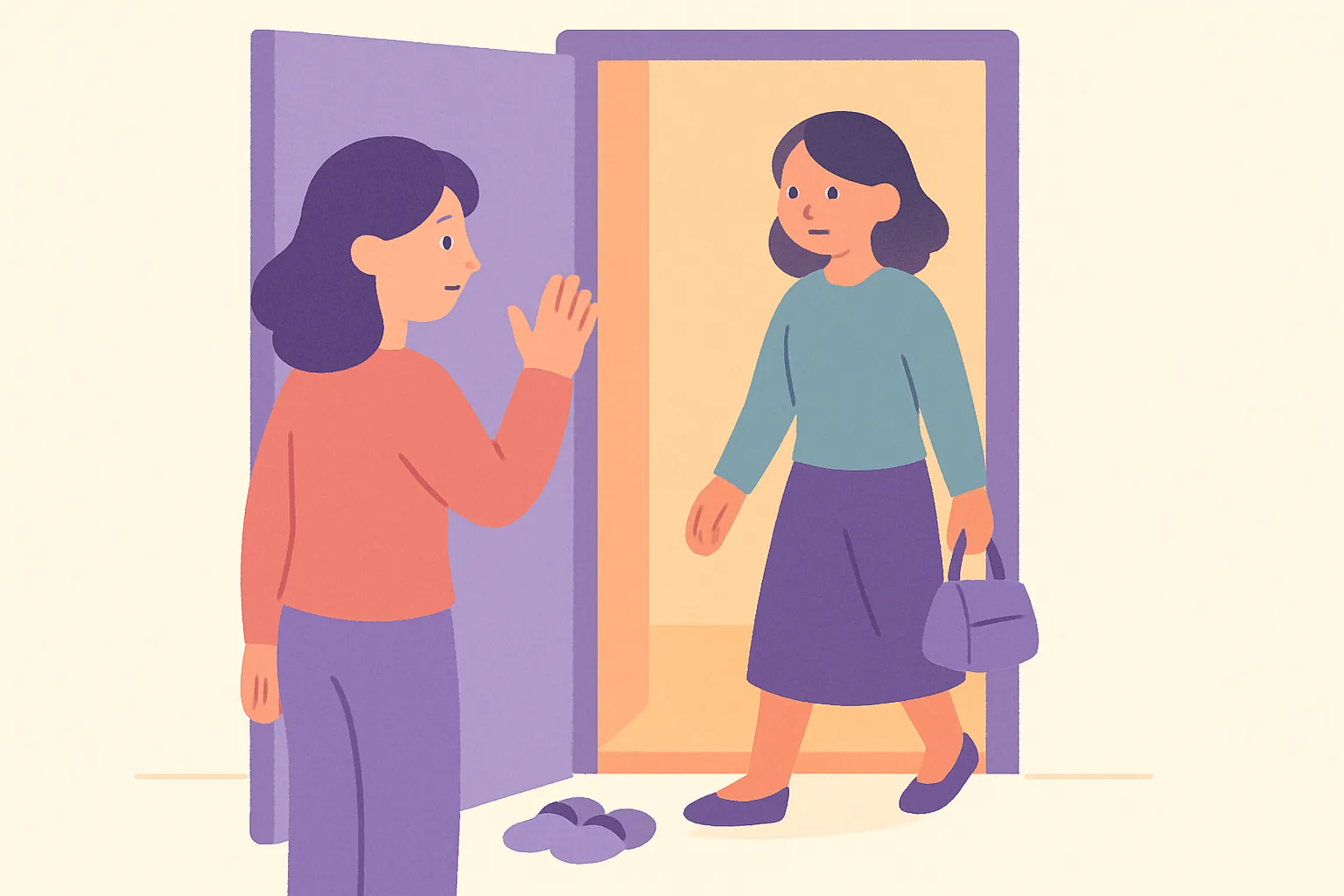
Morning, in an apartment elevator. You recognize the person from your floor.
A: 안녕하세요. Hello.
B: 네, 안녕하세요. 출근하세요? Oh, hello. Heading to work?
A: 네. 다녀오겠습니다. Yes. See you later. (lit. I'll go and come back)
B: 네, 조심히 가세요. Okay, go safely.
Three things worth noticing.
First, B answers with 네 before the greeting. That little 네 is everywhere in Korean. It softens the start of a turn and sounds much warmer than a bare 안녕하세요 bounced back.
Second, B adds a question. 안녕하세요 on its own is complete but a bit bare between people who sort of know each other. Natives tack on something light: 출근하세요? (Off to work?), 어디 가세요? (Where are you off to?), 식사하셨어요? (Have you eaten?). None of these are real questions. They're the Korean equivalent of "how's it going" — a nod in sentence form.
Third, the goodbye is a different word. Korean doesn't reuse 안녕하세요 on the way out at this politeness level; you'd say 안녕히 가세요 or 안녕히 계세요 depending on who's leaving. If that split is new to you, the goodbye article walks through it.
When 안녕 is right — and when it stings
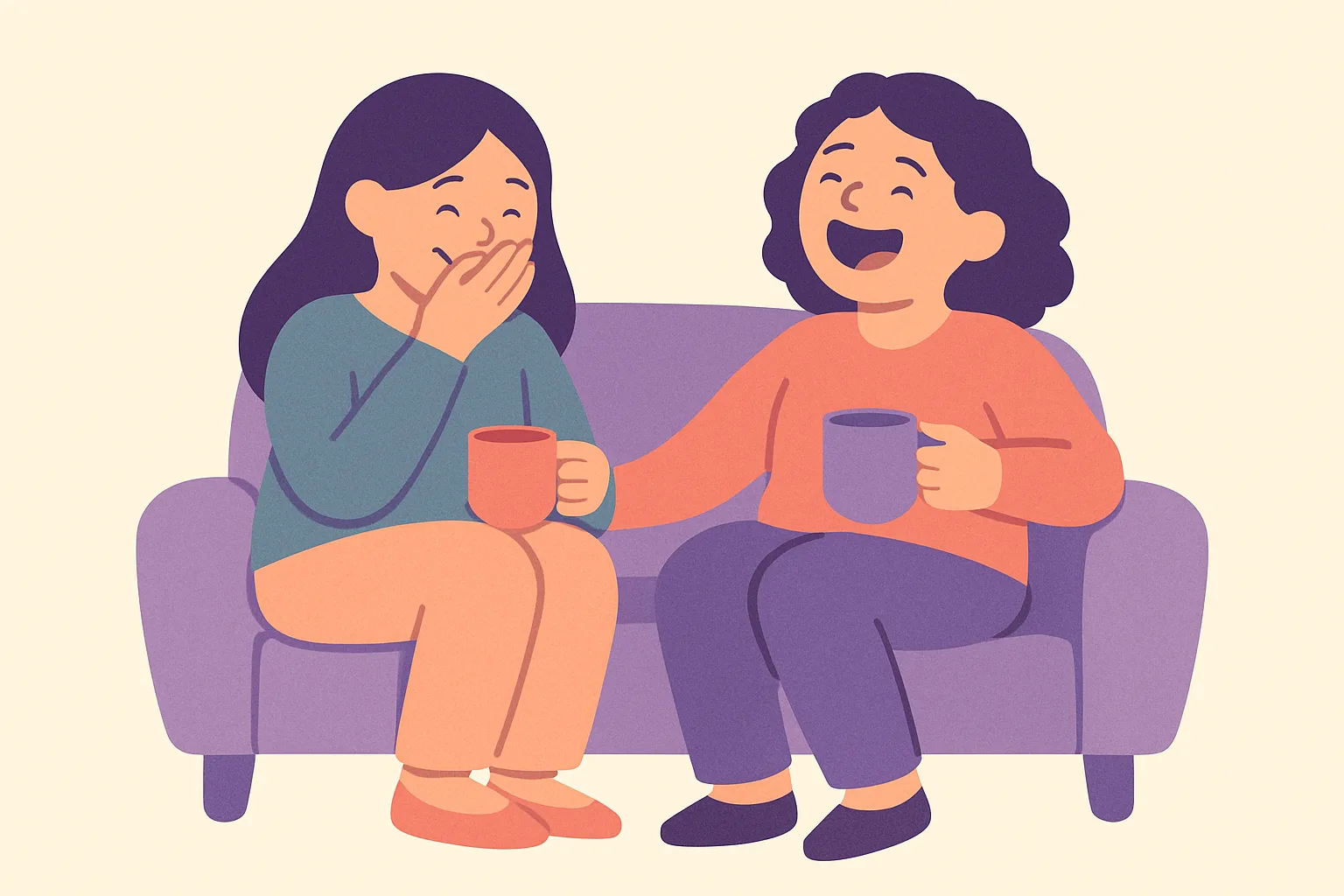
안녕 is 반말. Say it to a close friend, a child, or someone you've explicitly agreed to speak casually with:
- 안녕! 오랜만이야. — Hey! Long time no see.
- 민지야, 안녕. — Minji, hi.
Said to a teacher, a boss, an older relative, or a stranger, 안녕 lands the way "yo" would land at a job interview. Not offensive exactly — it sounds like a child who hasn't learned yet. That's forgivable from a foreigner and still worth avoiding.
One trap: 안녕 also means goodbye in 반말. 안녕! works for both hello and bye between friends, which is why learners sometimes hear it at the end of a conversation and get confused. Context decides.
In text messages, friends stretch it: 안녕~ or 안녕ㅎㅎ. That friendly tail is part of the same register as the ㅋㅋ and ㅇㅇ you see in Korean texting.
When Koreans step up to 안녕하십니까
안녕하십니까 is 합쇼체 — the most formal spoken level. You hear it:
- in announcements and speeches: 안녕하십니까. 잠시 안내 말씀 드리겠습니다. — Hello. I have a brief announcement.
- in a formal self-introduction: 안녕하십니까. 저는 김수진입니다. — Hello. I'm Kim Sujin.
- from staff on duty — hotel desks, banks, flight crews — greeting a customer.
- from a new employee greeting the office on the first morning.
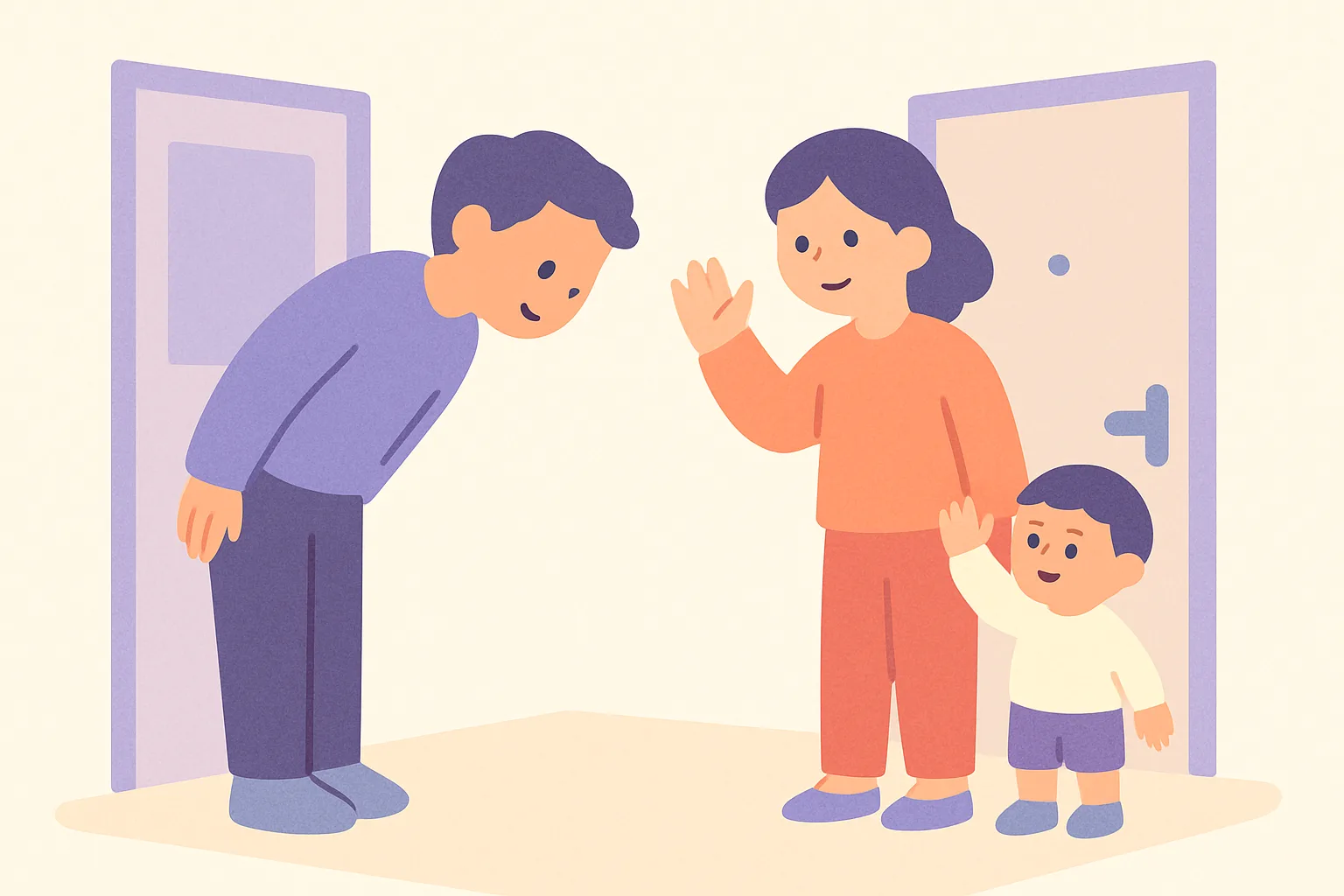
It's crisp and a little ceremonial. Using it with a friend's mother would sound stiff and oddly official, like greeting her as if she were an audience. But in a job interview or when you stand up to introduce yourself to a group, it's exactly right — and it pairs with a deeper bow, which this piece on bowing covers in detail.
What to do when it goes off script
A shop clerk says 어서 오세요 and you freeze. 어서 오세요 means welcome / come on in. You don't say it back — it's something the host says to the guest. A small nod is enough; 안녕하세요 is also fine and sounds friendly.
Someone greets you and you don't recognize them. Say 안녕하세요 anyway, with a nod. Then: 죄송해요, 혹시 어디서 뵀죠? — Sorry, where have we met? The 혹시 at the front softens it a lot.
You see the same colleague three times before lunch. Korean doesn't want a full 안녕하세요 each time. Greet properly once in the morning; after that a nod or a quick 네 does the job. Repeating the full phrase all day sounds like you've forgotten you already met.
Someone greets you on the phone. Phone calls open with 여보세요, not 안녕하세요 — see the phone call phrases for how that conversation unfolds.
You greet a stranger on the street and they look startled. Koreans don't greet strangers in passing the way some cultures do. Greet neighbors, staff, people you're introduced to, people you're about to deal with — not random people on the sidewalk.
FAQ
What does 안녕하세요 mean in English?
It means "hello," and it works for "hi," "good morning," "good afternoon" and "good evening" all at once. Literally it asks whether you are well and at peace, which is why it's often said with a slightly rising, question-like tone. It's polite 해요체 and safe with essentially anyone you meet.
Can I say 안녕 to someone older than me?
No — not unless they're family you're already casual with, or they've invited you to speak 반말. To an older stranger, an older colleague, or a teacher, 안녕 sounds childish, like skipping a step you're expected to take. 안녕하세요 is never the wrong choice with someone older.
Is there a Korean word for "good morning"?
Not one you need. 안녕하세요 covers morning, afternoon and evening. You may hear 좋은 아침 ("good morning") in some offices, but it's a borrowed habit rather than a standard greeting, and a learner is better off with 안녕하세요 every time.
Practice
Choose 안녕, 안녕하세요 or 안녕하십니까 for each situation.
- You walk into a café where you go every week. The barista looks up.
- You stand up to introduce yourself at a company meeting.
- Your close friend walks into your apartment.
- You meet your friend's mother for the first time.
- A seven-year-old neighbor child waves at you in the hallway.
Answers
- 안녕하세요. (The barista will likely say 어서 오세요 — you don't repeat that back.)
- 안녕하십니까. 저는 ○○입니다. — Formal self-introduction to a group.
- 안녕. — 반말 with a close friend.
- 안녕하세요. — Polite and correct. 안녕하십니까 would sound oddly official in someone's home.
- 안녕. — 반말 to a child is normal and warm.
Learn this properly, not just once
Blog posts teach one thing at a time. The HanDa books teach level 1 in order — every lesson built to be spoken, with a workbook and writing book beside it.
 HanDa Korean Level 1 — Complete Set
Everything for level 1 — books, workbook and writing book · 511 pages
$10
HanDa Korean Level 1 — Complete Set
Everything for level 1 — books, workbook and writing book · 511 pages
$10
 Korean Grammar & Vocabulary Reference
Every pattern in one place · 216 pages
$8
Korean Grammar & Vocabulary Reference
Every pattern in one place · 216 pages
$8
Practice this with an AI tutor
HanDa corrects every sentence you write or say — in real conversation, not flashcards.