Korean Goodbyes: 안녕히 가세요 vs 안녕히 계세요
Textbooks give you two Korean goodbyes and leave you to guess. Here's the rule, and it never changes:
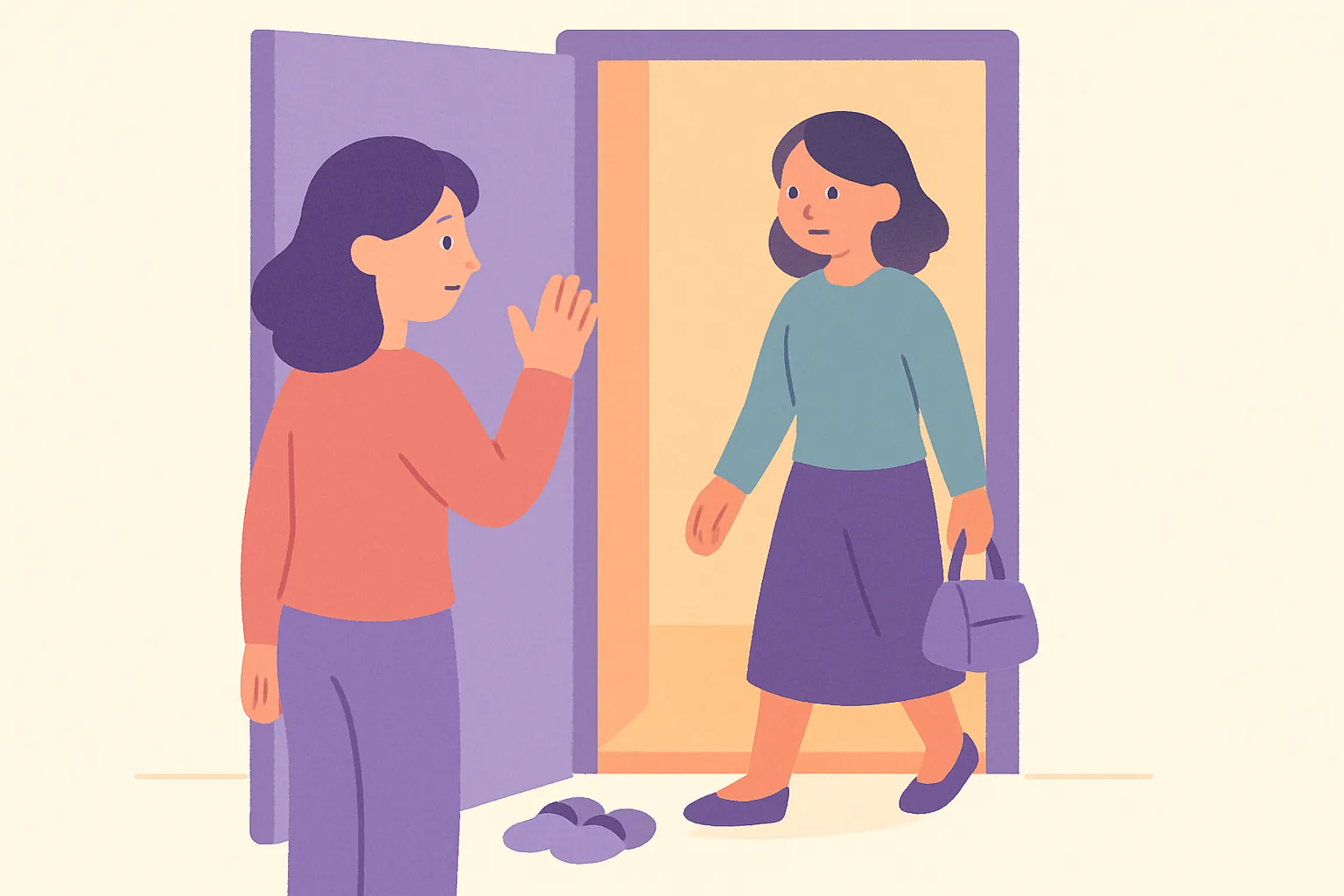
The person who stays says 안녕히 가세요. The person who leaves says 안녕히 계세요.
가세요 comes from 가다 (to go) — go well. You say it to someone who is going somewhere. 계세요 comes from 계시다, the honorific of 있다 (to stay, to be) — stay well. You say it to someone who is staying put.
So when you walk out of a café, the barista says 안녕히 가세요 to you, and you say 안녕히 계세요 back. Not the same words. Say 안녕히 가세요 to the barista and you've told a person who isn't going anywhere to have a safe trip. Koreans will understand you, but it lands the way "you too" lands when the waiter says enjoy your meal and you're the one eating.
See it in a conversation
민준 has had dinner at his friend 민지's family home. He's getting ready to leave.
민준: 어머니, 저 이제 가 볼게요. Ma'am, I'm going to get going now.
어머니: 벌써 가요? 더 놀다 가요. Already? Stay a bit longer.
민준: 아니에요. 너무 늦었어요. 잘 먹었습니다. No, it's really late. Thank you for the meal.
어머니: 그래요. 조심히 가요. All right. Get home safely.
민준: 안녕히 계세요. Goodbye (stay well).
어머니: 안녕히 가세요. Goodbye (go well).
At the front door, 민지 walks him out:
민지: 잘 가. 도착하면 연락해. Bye. Text me when you get there.
민준: 응, 들어가. Yeah — go on inside.
Two things to notice. First, 민준 doesn't just announce 안녕히 계세요 out of nowhere — he opens with 저 이제 가 볼게요 (I'll get going now). That softening verb 가 보다 is what makes leaving polite. Starting a goodbye with a bare 안녕히 계세요 at someone's dinner table feels abrupt.
Second, the mother offers 더 놀다 가요. Expect that. A Korean host will almost always tell you to stay longer once, and the expected answer is a light refusal — 아니에요, 늦었어요 — not a long explanation.
들어가세요 — the goodbye you'll hear most
In real life, Koreans say 들어가세요 constantly, and it covers both directions depending on who's where.
- To someone heading home: 들어가세요 = go on in (to your house), meaning get home safe.
- To someone seeing you off at their own door or gate: 들어가세요 = go back inside, so they don't stand in the cold watching you walk away.
Common full versions:
| Korean | English | When |
|---|---|---|
| 조심히 들어가세요. | Get home safely. | To anyone leaving, especially at night |
| 조심히 가세요. | Go safely. | Same, slightly more general |
| 다음에 봬요. | See you next time. | Warm, polite, very common |
| 또 봬요. | See you again. | Casual-polite, friends and acquaintances |
| 먼저 가 볼게요. | I'll head off first. | When you leave before others |
다음에 봬요 is spelled 봬요 (from 뵈어요). Many learners write 뵈요 — that one is wrong, and Koreans notice it in writing.
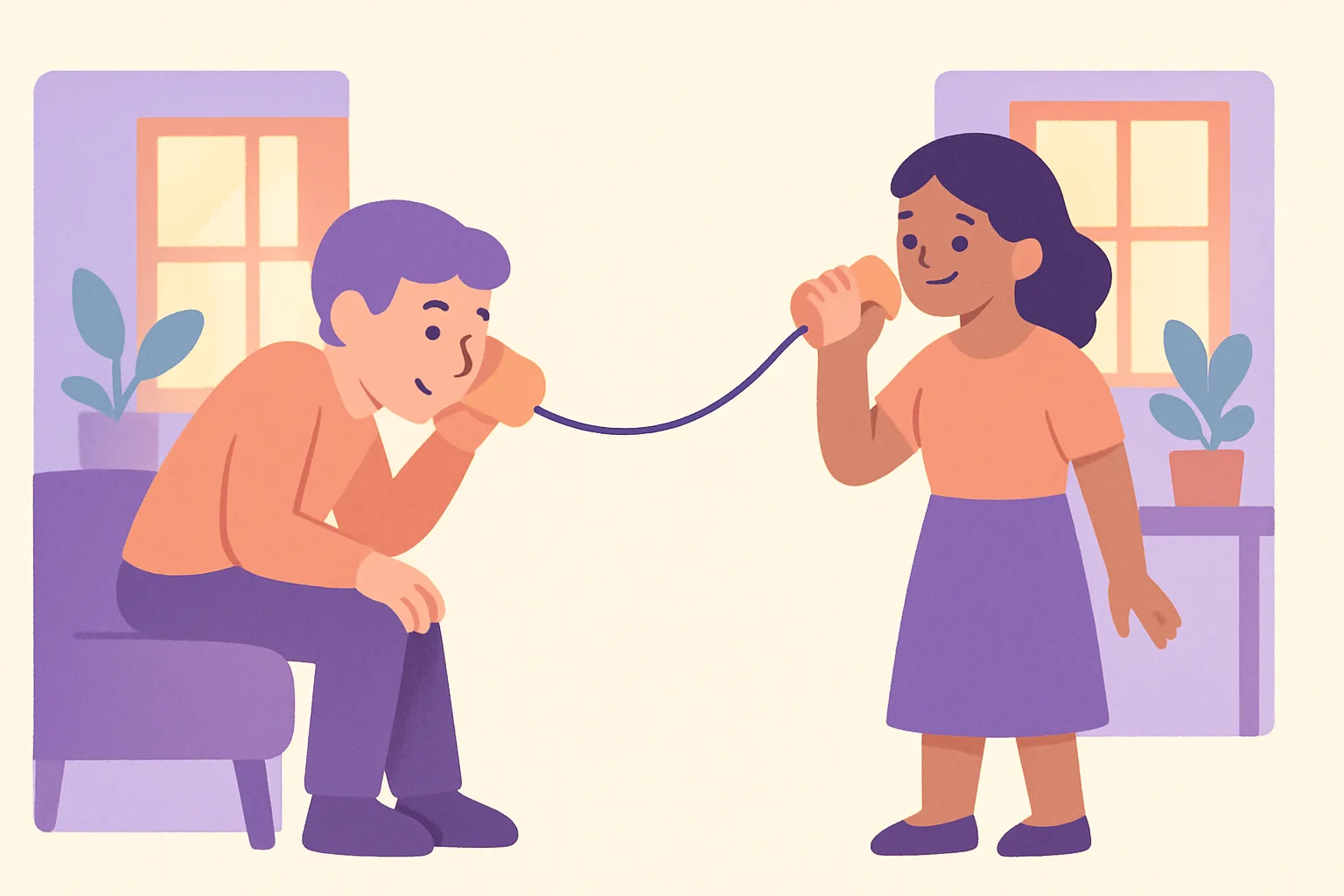
You'll also hear 들어가세요 at the end of phone calls, especially from older speakers — it's a soft way to say let's hang up now. If that's new to you, the rest of the call script is in what to say on a Korean phone call.
Both of you are leaving
If you and the other person are both walking away — you part at a subway exit, you both leave the restaurant — then both of you say 안녕히 가세요. Nobody is staying, so nobody says 계세요. This is the one case where the two people use the same words.
At a shop, at work
At a shop or café. The clerk says 안녕히 가세요 to every customer. Honestly, most Korean customers answer with 감사합니다, a small nod, or nothing at all. 안녕히 계세요 is correct and polite; 감사합니다 is what you'll hear more often. Either is safe. A small nod with it goes a long way — see how bowing works with Korean greetings.
Leaving the office. This one has its own script, and it's where learners slip. You're leaving while others are still working, so you are the one going — but 안녕히 계세요 sounds stiff to coworkers. Instead:
- To your boss or a senior, in 합쇼체: 먼저 들어가 보겠습니다. (I'll head home first.) or 내일 뵙겠습니다. (See you tomorrow.)
- To colleagues and juniors: 수고하셨습니다. (Thank you for your hard work.)
- The people staying answer: 네, 들어가세요. or 수고하셨습니다.
A note on 수고하세요 (present tense, to someone still working): it's fine to peers, service staff and people younger than you, but it's not ideal pointed up at a boss — 수고하셨습니다 at the end of the day is the safer choice. If workplace rank is still fuzzy for you, Korean titles you use instead of names sorts out who's who.
And in very formal settings — announcements, hotels, airports — you'll hear the 합쇼체 versions: 안녕히 가십시오, 안녕히 계십시오. You don't need to produce these, just recognize them.
The 반말 versions
With close friends and people younger than you, the same split applies:
- You're staying, they're going: 잘 가. (Bye / go well.)
- You're going, they're staying: 잘 있어. (Bye / stay well.)
- They're seeing you off at their door: 들어가. (Go on inside.)
- Either direction, very casual: 안녕.
안녕 on its own is the one Korean goodbye that works both ways — but it's 반말, so keep it for friends, not for your friend's mother.
In practice 잘 있어 is less common than 잘 가, simply because friends usually part on the street rather than in one person's home. If you're the guest leaving, 간다 or 갈게 (I'm off) plus 잘 있어 is natural.
When it goes off script
They keep you at the door. Korean goodbyes stretch. Expect a second round — 진짜 가요? / 조금만 더 있다 가요. Repeat 늦었어요, 다음에 또 올게요 (it's late, I'll come again next time) and keep moving toward the door with a smile.
You can't tell who's leaving. Default to 안녕히 가세요. If the other person turns out to be leaving too, you were right; if they stay, it's a minor slip nobody comments on.
You freeze and say the wrong one. Say 아, 안녕히 계세요 with a small laugh and move on. Nobody holds it against a learner — but the fix is so cheap that it's worth getting right once and never thinking about it again. If freezing is the real problem, getting the words out when you blank will help more than more vocabulary.
Practice
Which goodbye do you say?
- You finish your coffee and walk out of a café. The barista says 안녕히 가세요. You say…
- You and a coworker leave the building together and split up at the crosswalk. Both of you say…
- Your friend walks you out to the elevator and stands there waving. In 반말, you tell her to go back inside.
- It's 7 p.m. and you're leaving the office while your 팀장님 is still at her desk. In 합쇼체, what do you say?
- A friend is leaving your apartment. In 반말, what do you say to her?
Answers
- 안녕히 계세요. (감사합니다 or a nod is just as normal.)
- 안녕히 가세요. — both of you, because both of you are leaving.
- 들어가. (잘 가 also works, but 들어가 is what you say to someone going back into their own building.)
- 먼저 들어가 보겠습니다. or 내일 뵙겠습니다. — 안녕히 계세요 is grammatically fine but sounds stiff at work.
- 잘 가. (조심히 가 or 조심히 들어가 if it's late.)
Learn this properly, not just once
Blog posts teach one thing at a time. The HanDa books teach level 1 in order — every lesson built to be spoken, with a workbook and writing book beside it.
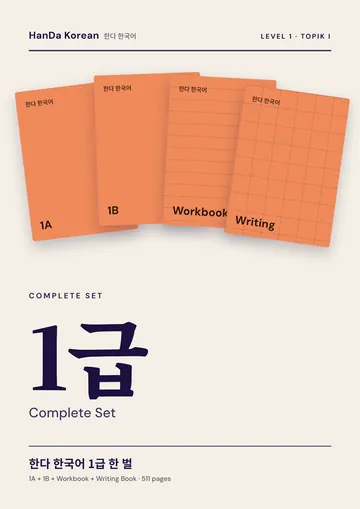 HanDa Korean Level 1 — Complete Set
Everything for level 1 — books, workbook and writing book · 511 pages
$10
HanDa Korean Level 1 — Complete Set
Everything for level 1 — books, workbook and writing book · 511 pages
$10
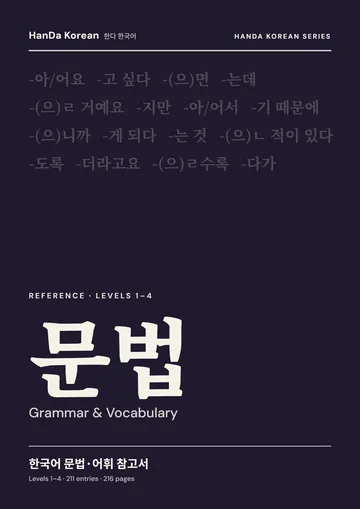 Korean Grammar & Vocabulary Reference
Every pattern in one place · 216 pages
$8
Korean Grammar & Vocabulary Reference
Every pattern in one place · 216 pages
$8
Practice this with an AI tutor
HanDa corrects every sentence you write or say — in real conversation, not flashcards.