10 Korean Texting Abbreviations: ㅋㅋ, ㅇㅇ and More
You get added to a group chat and the Korean on your screen has no vowels. Someone writes ㅇㅇ, someone else writes ㄱㅅㄱㅅ, and every third line is ㅋㅋㅋㅋ. Nothing you studied prepared you for this.
Here's the one thing to understand before the list: Korean texting shorthand is 반말 in disguise. Those consonant clusters are casual speech squeezed down to one key each, so they carry the same social weight as speaking 반말 out loud. ㅇㅋ to a close friend is normal. ㅇㅋ to your manager is roughly "yep, got it" said while walking away. If you're still sorting out which speech level goes where, the three Korean speech levels is the foundation this sits on.
A normal exchange between two friends looks like this:
A: 지금 뭐 해? B: 집. 왜? A: 저녁 같이 먹을래? B: ㅇㅇ 좋아 ㅋㅋ 몇 시? A: 7시 어때? B: ㅇㅋ 이따 봐
That's the whole conversation, and it's completely natural. Now here's what each piece is doing.
1. ㅋㅋ — "haha"
ㅋㅋㅋ 아 진짜 웃겨. — Hahaha, that's so funny.
ㅋ is the consonant from 크크, a chuckle. Length equals intensity: ㅋㅋ is the everyday default, ㅋㅋㅋㅋㅋㅋ means you actually laughed. Be careful with a single ㅋ — to a Korean eye it reads cold or sarcastic, like a flat "ha." When in doubt, type two.
2. ㅎㅎ — a smile rather than a laugh
감사합니다 ㅎㅎ — Thank you ㅎㅎ (said with a smile).
ㅎㅎ comes from 하하 and lands softer and politer than ㅋㅋ. This is the one you can safely attach to formal Korean at work — it takes the stiffness off 감사합니다 or 알겠습니다 without being playful. Many Koreans use ㅎㅎ with seniors and ㅋㅋ with friends, almost by reflex.
3. ㅠㅠ — crying eyes
ㅠㅠ 나 오늘 야근이야. — I have to work late today ㅠㅠ.
The vowel ㅠ looks like two eyes with tears running down; ㅜㅜ is the same idea. It covers everything from real sadness to mild whining about the weather, and it often works as an apology softener: 미안 ㅠㅠ. Like ㅎㅎ, it's tone, not words, so it attaches to polite Korean fine — 죄송해요 ㅠㅠ is normal in a friendly message.
4. ㅇㅇ — "yeah"
ㅇㅇ 나도 들었어. — Yeah, I heard that too.
This is 응응 stripped to its consonants — a casual yes between people who speak 반말. It is efficient and friendly among friends and flatly rude to anyone senior to you, because 응 itself is 반말. There's no polite version of ㅇㅇ; if the situation calls for politeness, you type 네.
5. ㄴㄴ — "nope"
ㄴㄴ 오늘은 안 돼. — Nope, today doesn't work.
ㄴㄴ is from English "no no," and it's lighter than it looks — it declines without sounding annoyed. Friends only, same as ㅇㅇ. Notice that Koreans usually add the real reason right after, because two consonants alone can feel abrupt even between friends.
6. ㅇㅋ — "OK"
ㅇㅋ 그럼 7시에 보자. — OK, then let's meet at 7.
From 오케이. It confirms a plan in two keystrokes and is extremely common in friend chats. In a work chat, swap it for 넵 or 알겠습니다 — ㅇㅋ to a 선배 or a client reads as if you couldn't be bothered to type a full word.
7. ㄱㅅ — "thanks"
ㄱㅅ! 잘 먹을게. — Thanks! I'll enjoy it.
ㄱㅅ is 감사 with the vowels removed, and you'll also see it written ㄳ. Doubling it — ㄱㅅㄱㅅ — makes it warmer, the way repeating anything does in Korean texting. For an actual favor from someone older, type the whole thing: 감사합니다. Shorthand gratitude reads as casual gratitude.
8. ㅈㅅ — "sorry"
ㅈㅅ 이제 봤어. — Sorry, I just saw this.
From 죄송. This is the standard way friends apologize for a late reply or a small mistake. The thing to know: ㅈㅅ is for small stuff only. If you've genuinely inconvenienced someone — or if they're older than you — the abbreviation makes the apology sound insincere, and 죄송해요 or 미안해 is what you want. Same instinct applies on the phone, where full phrases beat shortcuts.
9. ㅇㅈ — "true" / "I agree"
ㅇㅈ. 나도 그렇게 생각했어. — True. I thought the same thing.
ㅇㅈ is 인정, literally "acknowledgment," used the way English speakers say "facts" or "no lies." It agrees with an opinion, not with a request — you can't answer 내일 올 수 있어? with ㅇㅈ. It's popular with younger speakers and all over comment sections, including K-pop live chats.
10. 넵 / 넹 — the polite alternatives
넵, 확인했습니다. — Yes, I've checked.
When shorthand is off limits, Koreans don't go back to stiff Korean — they soften the polite word instead. 넵 is the workhorse of Korean work chat: it's 네 with a friendly bounce, respectful but not cold. 넹 is its cuter cousin, fine with friends and friendly coworkers, too casual for a boss. Plain 네 by itself is correct but can read a little flat, which is why so many messages end up as 넵 or 네네.
Five more you'll see
| Shorthand | From | Meaning |
|---|---|---|
| ㅊㅋ | 축하 | congrats |
| ㄷㄷ | 덜덜 (shivering) | whoa / that's intense |
| ㅂㅂ | bye bye | bye |
| ㄱㄱ | go go | let's go / do it |
| ㅅㄱ | 수고 | "nice work" — friends and juniors only |
When it goes off script
If someone sends you letters you don't recognize, just ask. 그게 무슨 뜻이에요? (What does that mean?) is perfectly normal, and Korean friends generally enjoy explaining. And if you're unsure whether shorthand is appropriate with a particular person, use this test: would you say 응 to their face? If yes, ㅇㅇ is fine. If you'd say 네, type 네 — or 넵.
Practice
- Your friend texts 내일 영화 볼래? and you reply ㅇㅇ ㅋㅋ. What have you said, in full Korean?
- Your team leader writes 내일 9시까지 오세요. Which reply is appropriate: ㅇㅋ / 넵, 알겠습니다 / ㅇㅈ?
- You're replying to a close friend three hours late. Write a short message apologizing, using shorthand.
- A friend texts 나 취업했어! (I got a job!). Reply with congratulations in shorthand.
- You want to add a warm tone to 감사합니다 in a message to a 선배. Do you add ㅋㅋㅋ or ㅎㅎ?
Answers
- 응, 좋아 — "Yeah, sounds good," with a laugh attached. (ㅇㅇ = 응응, ㅋㅋ = the chuckle.)
- 넵, 알겠습니다.
ㅇㅋis 반말-level casual andㅇㅈonly agrees with opinions, not instructions. - ㅈㅅ 이제 봤어 ㅠㅠ — "Sorry, I just saw this."
- ㅊㅋㅊㅋ! or in full: 축하해!
- ㅎㅎ.
ㅋㅋㅋis playful and reads as too casual toward a senior;ㅎㅎis the soft, safe one.
Learn this properly, not just once
Blog posts teach one thing at a time. The HanDa books teach level 1 in order — every lesson built to be spoken, with a workbook and writing book beside it.
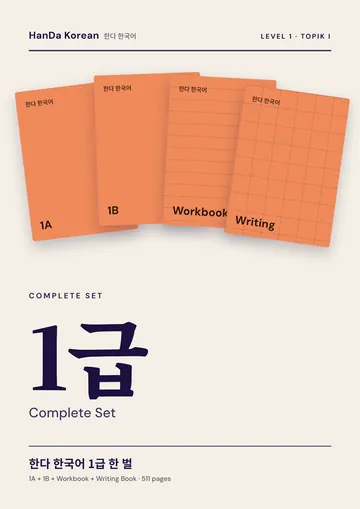 HanDa Korean Level 1 — Complete Set
Everything for level 1 — books, workbook and writing book · 511 pages
$10
HanDa Korean Level 1 — Complete Set
Everything for level 1 — books, workbook and writing book · 511 pages
$10
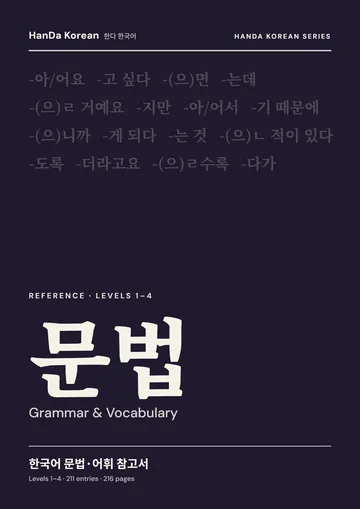 Korean Grammar & Vocabulary Reference
Every pattern in one place · 216 pages
$8
Korean Grammar & Vocabulary Reference
Every pattern in one place · 216 pages
$8
Practice this with an AI tutor
HanDa corrects every sentence you write or say — in real conversation, not flashcards.