How to Say Sorry in Korean: 죄송합니다 vs 미안해

Quick answer: The two Korean words for "sorry" are 죄송하다 (joesonghada) and 미안하다 (mianhada). Use 죄송합니다 or 죄송해요 with anyone older than you, your boss, or a stranger; use 미안해요 or 미안해 with friends, classmates and people younger than you. 죄송 is the humble one, 미안 is the close one.
Here's the one idea to walk away with: in Korean, two separate things decide how your apology sounds. The word (죄송 vs 미안) says how far above you the other person stands. The ending (-합니다 / -해요 / -해) says how formal the moment is. English only has one dial — "I'm terribly sorry" vs "my bad." Korean has two, and you have to set both.
The four forms, side by side
| Korean | Speech level | Say it to |
|---|---|---|
| 죄송합니다 | 합쇼체 (formal) | your boss, a teacher, a customer, an older stranger |
| 죄송해요 | 해요체 (polite) | a shop owner, a neighbour, an older friend |
| 미안해요 | 해요체 (polite) | someone your age or younger you're not close to |
| 미안해 | 반말 (casual) | friends, siblings, your partner |
And a fifth you'll hear in textbooks: 미안합니다. It's grammatical, but it sits oddly. The formal ending says "this is a serious situation," while 미안 says "we're on the same level" — so it comes out sounding stiff, or even slightly cold, like a manager apologising downward. If you're ever unsure in a formal setting, 죄송합니다 is the safe one. Koreans almost never regret saying it.
The opposite swap is the mistake learners actually make. Saying 미안해요 to your 부장님 isn't rude exactly, but it lands the way "sorry about that" would land in an email to a client — too light for the room. If Korean office titles are involved, so is 죄송합니다.
One word is not an apology
This is where most learners stop too early. In Korean, "sorry" on its own can sound thin. What makes an apology land is the reason clause in front of it — usually -아서/어서, "because."
- 늦어서 죄송합니다. — I'm sorry I'm late.
- 기다리게 해서 죄송해요. — Sorry for making you wait.
- 연락 못 해서 미안해. — Sorry I didn't get in touch.
- 시끄럽게 해서 죄송합니다. — Sorry for the noise.
Notice how the apology names the thing. A Korean ear hears that as taking responsibility; a bare 죄송합니다 with no object can sound like you're clearing your throat.
When it's genuinely your fault, there's a stronger move:
- 제가 잘못했어요. — I was wrong. / It was my fault.
- 제 잘못이에요. — It's my fault.
And then the repair — what you'll do next:
- 앞으로 조심하겠습니다. — I'll be careful from now on. (formal, workplace)
- 다음부터 조심할게요. — I'll be careful from next time. (polite, everyday)
- 다음부터 안 그럴게. — I won't do it again. (casual, to a friend)
Reason + apology + repair. That three-part shape is what a full Korean apology looks like, and you can build it with grammar you already have.
In real life: arriving late
At work (합쇼체, to a manager):
A: 부장님, 늦어서 죄송합니다. B: 무슨 일 있었어요? A: 길이 많이 막혔습니다. 다음부터는 더 일찍 나오겠습니다. B: 네, 다음부터는 미리 연락 주세요. A: 네, 알겠습니다.
A: Sir, I'm sorry I'm late. — B: Did something happen? — A: The traffic was bad. I'll leave earlier from now on. — B: Okay, next time let me know in advance. — A: Yes, understood.
With a friend (반말):
A: 미안해, 많이 기다렸지? B: 아니야, 나도 방금 왔어. A: 다음에는 내가 살게. B: 그래, 그럼 봐줄게.
A: Sorry, did you wait long? — B: No, I just got here too. — A: Next time it's on me. — B: Fine, I'll let it slide then.
Same situation, completely different register. Both are correct. Mixing them up — 미안해, 부장님 or 죄송합니다 to your best friend — is what sounds strange. The second one isn't offensive, by the way; between close friends an over-formal apology reads as sarcasm or as we are not okay right now, which is sometimes exactly the point. You'll catch this in dramas, where a character suddenly switching to 죄송합니다 with someone close is a whole plot beat. Subtitles rarely show that shift.
죄송한데… — sorry as a door opener
Half the time Koreans say "sorry," nothing is wrong. 죄송한데 / 미안한데 is a softener before a request, like English "sorry, but could you —":
- 죄송한데, 길 좀 여쭤봐도 될까요? — Sorry, could I ask you for directions?
- 죄송한데, 자리 좀 바꿔 주실 수 있어요? — Sorry, could we switch seats?
- 미안한데, 부탁 하나만 해도 돼? — Sorry, can I ask you one favour?
Two neighbours of this that aren't apologies at all:
- 실례합니다 — Excuse me. Formal, used when you interrupt or step into someone's space.
- 잠시만요 — One moment / coming through. What people actually say squeezing past you on the subway. Not 죄송합니다.
If you bump into someone, though, 죄송합니다 (or a quick 죄송해요) with a small nod is exactly right. The nod matters as much as the words — see how bowing works if you want the physical half.
How to reply when someone apologises to you
You'll need these more often than you think:
- 괜찮아요. — It's okay. The default.
- 아니에요, 괜찮아요. — No, really, it's fine.
- 신경 쓰지 마세요. — Don't worry about it.
- 괜찮아. 신경 쓰지 마. — same, to a friend.
And don't reach for 천만에요 here — that's a stiff, barely-used reply to thanks, not to sorry. The 감사합니다 / 고마워 split works on the same two dials as this one, so learning them as a pair saves you time.
FAQ
What is the difference between 죄송합니다 and 미안합니다?
Both mean "I'm sorry," but 죄송하다 is humble and shows deference, while 미안하다 is neutral and used between equals or toward someone younger. With a boss, teacher, stranger or customer, say 죄송합니다. 미안합니다 keeps the formal ending but drops the deference, so it can sound cold or oddly top-down — most Koreans would use 죄송합니다 instead.
How do you say sorry to a friend in Korean?
Say 미안해, or just 미안 for something tiny. Add the reason in front to make it real: 늦어서 미안해 (sorry I'm late), 연락 못 해서 미안해 (sorry I didn't text). Using 죄송합니다 with a close friend sounds overly stiff and can come across as sarcastic or distant.
Can you say 죄송해 in Korean?
Practically, no. 죄송하다 is a humble word, and humbling yourself in casual 반말 to someone close is a contradiction, so 죄송해 sounds wrong to a Korean ear. The casual form of "sorry" is 미안해; the lowest 죄송 normally goes is 죄송해요.
Practice
Choose the natural apology for each situation.
- You step on someone's foot on the bus. They look about sixty.
- You text a classmate your own age that you can't make it tonight.
- You're fifteen minutes late to a meeting with your 팀장님, and you want to add what you'll do next time.
- A friend apologises for forgetting your birthday. Reply in 반말.
- You want to ask a stranger to take a photo for you — open the request politely.
Answers
- 죄송합니다. (or 아, 죄송해요. — with a small nod)
- 오늘 못 가서 미안해.
- 늦어서 죄송합니다. 다음부터 조심하겠습니다.
- 괜찮아. 신경 쓰지 마.
- 죄송한데, 사진 좀 찍어 주실 수 있어요?
Learn this properly, not just once
Blog posts teach one thing at a time. The HanDa books teach level 1 in order — every lesson built to be spoken, with a workbook and writing book beside it.
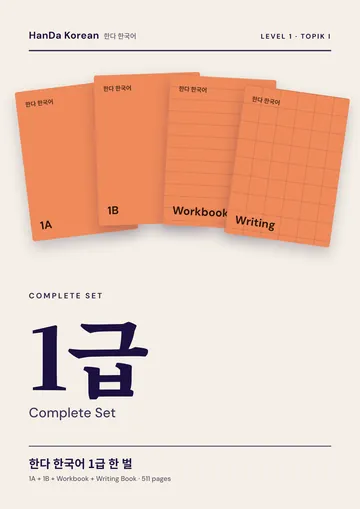 HanDa Korean Level 1 — Complete Set
Everything for level 1 — books, workbook and writing book · 511 pages
$10
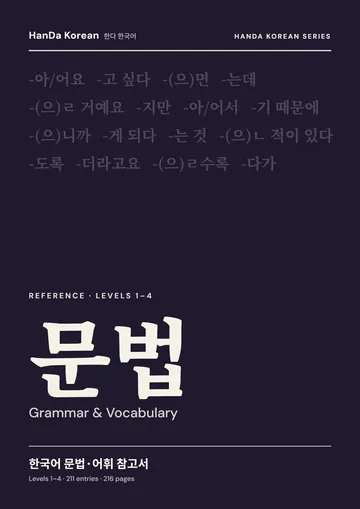 Korean Grammar & Vocabulary Reference
Every pattern in one place · 216 pages
$8
Practice this with an AI tutor
HanDa corrects every sentence you write or say — in real conversation, not flashcards.