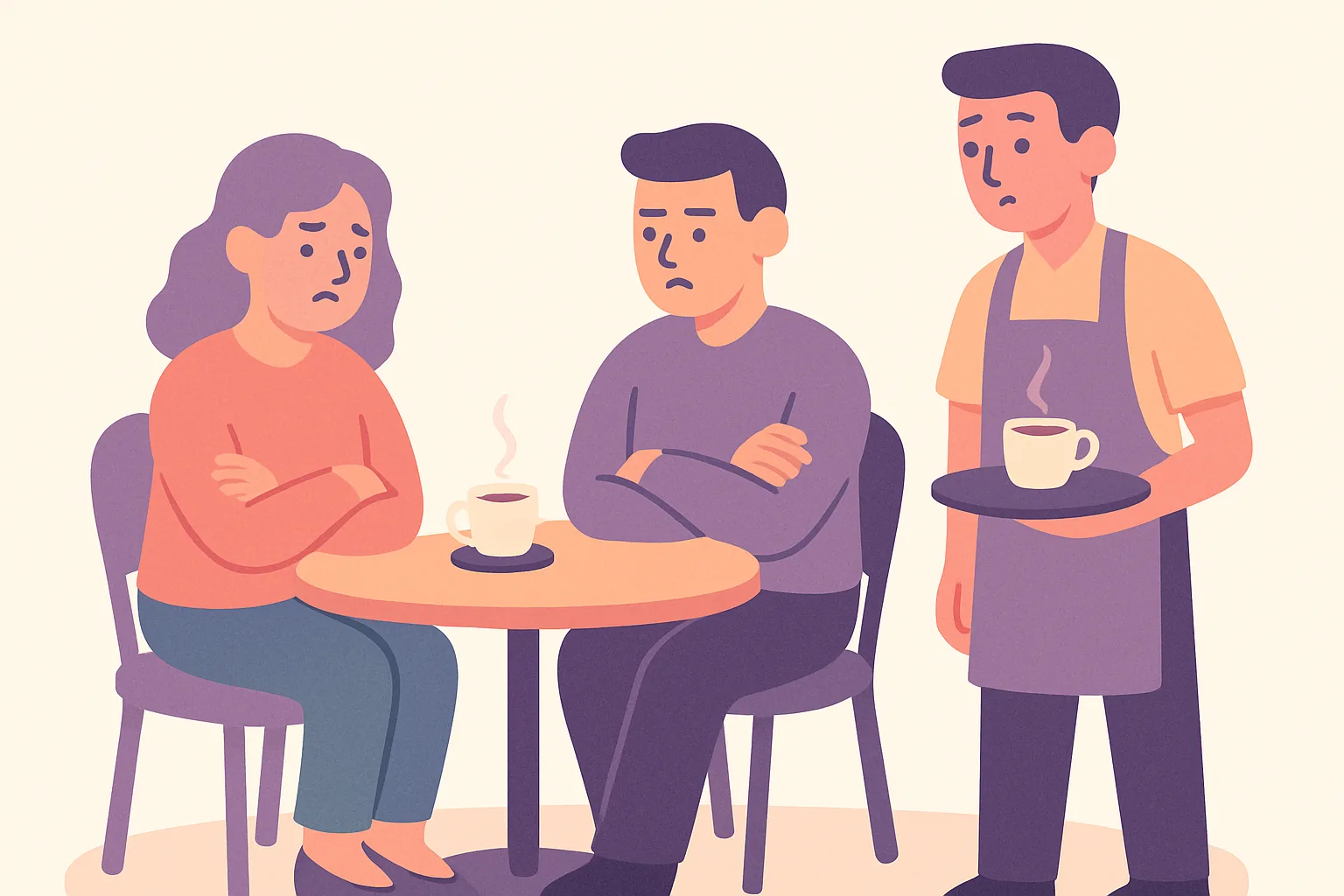
8 Korean Phrases in Every K-Drama and What Subtitles Miss
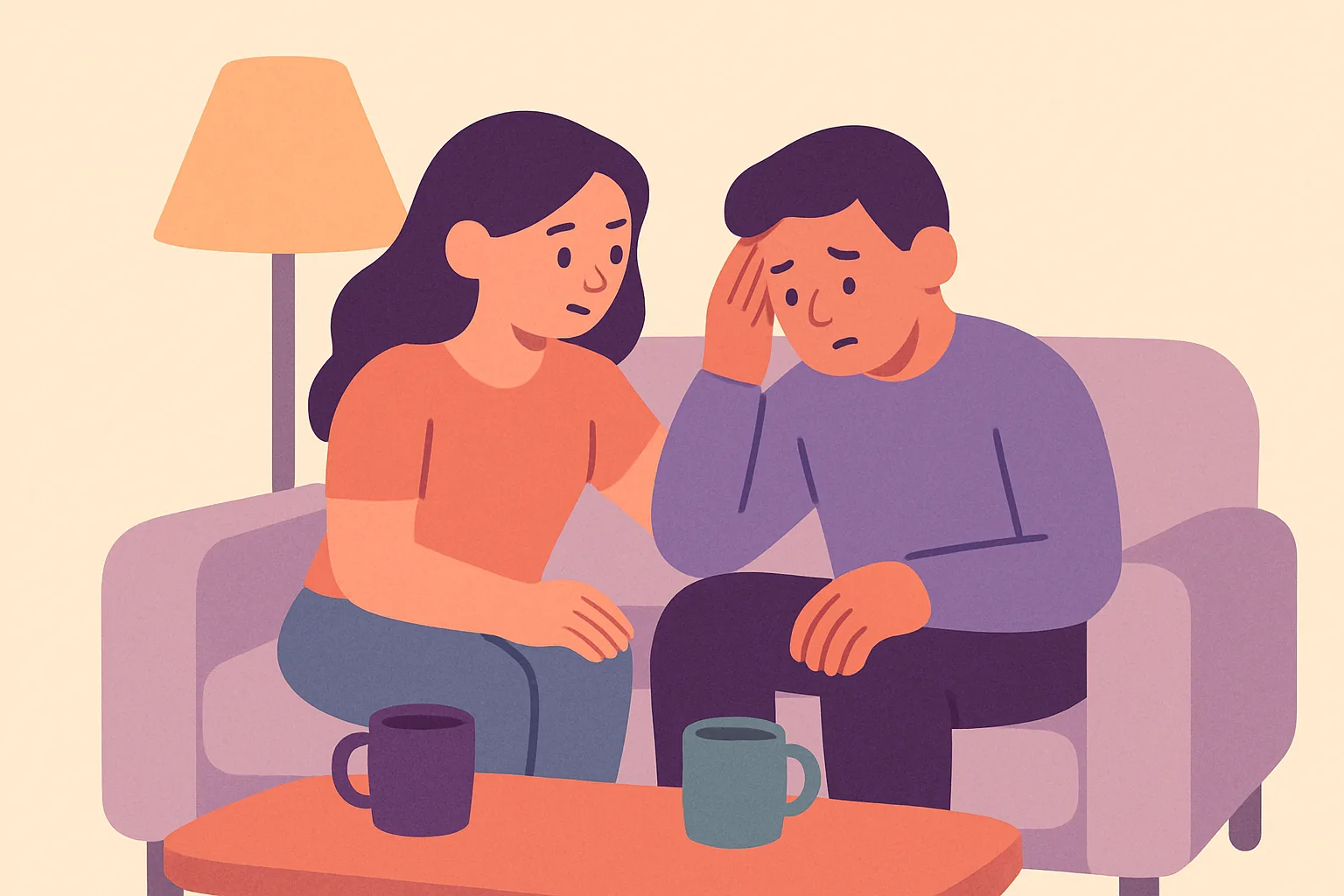
Here is the thing nobody tells you about subtitles: they are not translating the words. They are translating what the line does in the scene. A subtitle writer has about two seconds of screen time and one job — keep the story moving. So 됐어 becomes "It's fine," 그러게 becomes "Yeah," and 아니 becomes "No," and you quietly learn the wrong thing.
A subtitle strategy that actually works: watch the episode normally, enjoy it, then go back to one two-minute scene and listen only for the short lines — the two-syllable reactions, the things characters say while walking out of a room. Those are the lines Koreans really use, and they repeat across every drama you will ever watch. Below are eight of them, with what they carry that the subtitle drops.
1. 아니, 왜 말을 안 했어? — "Hold on, why didn't you tell me?"
Sentence-initial 아니 very often denies nothing at all. It is a reset button: wait, hold on, hang on a second. Subtitles print "No," and learners end up thinking Koreans contradict each other constantly.
You hear it when someone is surprised, flustered, or about to re-explain themselves: 아니, 그런 뜻이 아니야. — "No, that's not what I meant." Here 아니 is buying a beat before the correction. In polite speech people usually soften it to 아니요 or 아니, 그게... with 요-endings after it. Dropping a bare 아니 in front of a boss sounds blunt, so save this one for friends.
2. 왜 그래? — "What's wrong?" / "What's with you?"
The same two words are warm concern or a sharp accusation, and only the tone decides. Said softly, leaning in: 왜 그래? 무슨 일 있어? — "What's wrong? Did something happen?" Said flat and loud, it means "what is your problem."
The polite version is 왜 그러세요?, which you hear when a stranger is acting oddly on the street. Listen for how the actor's voice falls at the end — that falling, gentle 왜 그래 is the caring one. When the pitch jumps up, someone is annoyed. If panic is the mood instead, the line you will hear next is probably 어떡해, which has its own confusing twin, 어떻게.
3. 괜찮아요. — "I'm fine." / "No thanks."
Everyone learns 괜찮아요 as "I'm okay." In real life, half the time it is a polite refusal. A server offers more side dishes, a friend offers to pay, someone offers you their seat — the answer is 아니에요, 괜찮아요. — "No, it's okay, thank you."
This is the one that trips up learners in Korea. If someone asks 더 드릴까요? ("Shall I give you more?") and you say 괜찮아요 meaning "yes, I'm good with more," you will get nothing. A small hand raise with it makes the refusal unmistakable.
4. 됐어. — "Forget it." / "That's enough."
Subtitles love rendering this as "It's fine," which makes it sound gentle. It is not. 됐어 closes the topic, usually with irritation: 됐어, 내가 할게. — "Forget it, I'll do it myself."
It can also mean "stop" in the middle of an apology — 됐어, 그만해. Even the 요-form 됐어요 keeps the cold edge, so if you genuinely want to decline something kindly, use 괜찮아요 from number 3 instead. Hearing 됐어 from a Korean friend means you have about one more sentence before the conversation ends.
5. 그러게 (말이야). — "Right?" / "Tell me about it."
Pure agreement with a shrug built in. One person complains, the other says 그러게 말이야 — "Seriously, I know." It implies I was thinking the same thing and neither of us can do anything about it.
There is a second use with a little bite: 그러게, 내가 조심하라고 했잖아. — "See? I told you to be careful." Same word, but now it means "that's exactly what I warned you about." Context and tone separate them, and dramas use both constantly.
6. 알겠습니다. vs 알았어. — "Understood." vs "Fine, okay."
Both get subtitled as "Okay," and they are not interchangeable. 네, 알겠습니다. — "Yes, understood." is the standard reply to an instruction at work; it carries willingness, I've got it and I'll do it. You will hear it in every office scene, usually right after someone's job title.
알았어 is 반말 and tilts toward "yeah, yeah, fine" — a child to a nagging parent, a friend giving in. Repeated twice, 알았어, 알았어, it is openly impatient. Never say 알았어요 to a boss; 알겠습니다 is the safe form every time.
7. 수고했어. / 고생 많으셨습니다. — "Good work today."
Subtitles say "Good job," which sounds like praise for a performance. The Korean means something closer to you put in effort and I saw it. 오늘 수고 많았어. — "You worked hard today." is what a coworker says as people pack up, not a compliment on quality.
수고했어 is 반말, 수고하셨습니다 is the polite version, and 고생 많으셨습니다 carries more sympathy — for someone who had a genuinely rough day. With a much older superior, some people prefer 고생 많으셨습니다 or simply 감사합니다, since 수고 can feel like you are evaluating them. It pairs naturally with the goodbye you pick depending on who is leaving.
8. 몰라. — "I don't know." / "Leave me alone."
Literally "I don't know," but in dramas it is very often a mood, not a lack of information. Someone asks why you are upset and you say 몰라. — the subtitle reads "I don't know," but every Korean viewer hears I don't want to talk about it.
You will also hear 몰라, 하기 싫어. — "Whatever, I don't want to do it." Said to a friend it is sulky and a bit cute; said to a teacher or a boss it is rude, so the polite 잘 모르겠어요 ("I'm not sure") is the version you want in real life. Notice that 모르겠어요 sounds softer than 몰라요 — the -겠- adds exactly the hedge English gets from "I'm not quite sure."
How to use this while watching
Pick one of these eight and watch for it in your next episode. Every time it appears, notice three things: who says it, what their voice does at the end, and what the subtitle chose. That gap between the subtitle and the sound is where the real Korean lives. One phrase per episode is plenty — you will hear it four or five times in forty minutes, which is more repetition than any flashcard gives you.
Practice
What would you say?
- Your friend suddenly goes quiet and looks upset. You lean in, worried, and ask (two words).
- A café worker asks 물 더 드릴까요? You have enough. Politely decline.
- Your team leader asks you to send a file by 5. You accept, politely, at work.
- A friend says 요즘 너무 바빠. You feel exactly the same. Agree in two words.
- A coworker is heading home at the end of a long day. Say the standard polite send-off.
Answers
- 왜 그래? (soft, falling tone — concern, not accusation)
- 아니에요, 괜찮아요.
- 네, 알겠습니다. (not 알았어요)
- 그러게 말이야. (or just 그러게)
- 수고하셨습니다. (or 수고하셨어요 with a close coworker)
Learn this properly, not just once
Blog posts teach one thing at a time. The HanDa books teach level 1 in order — every lesson built to be spoken, with a workbook and writing book beside it.
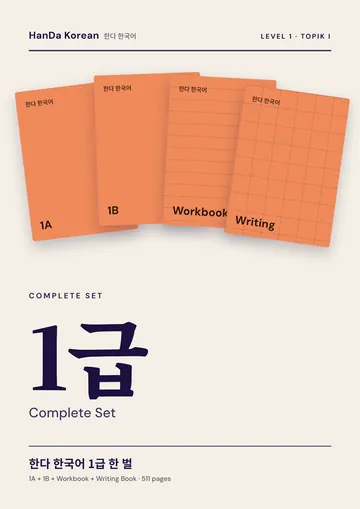 HanDa Korean Level 1 — Complete Set
Everything for level 1 — books, workbook and writing book · 511 pages
$10
HanDa Korean Level 1 — Complete Set
Everything for level 1 — books, workbook and writing book · 511 pages
$10
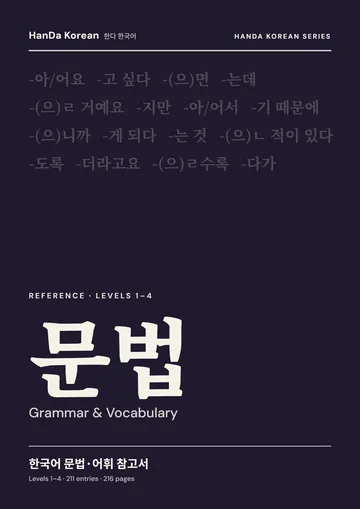 Korean Grammar & Vocabulary Reference
Every pattern in one place · 216 pages
$8
Korean Grammar & Vocabulary Reference
Every pattern in one place · 216 pages
$8
Practice this with an AI tutor
HanDa corrects every sentence you write or say — in real conversation, not flashcards.