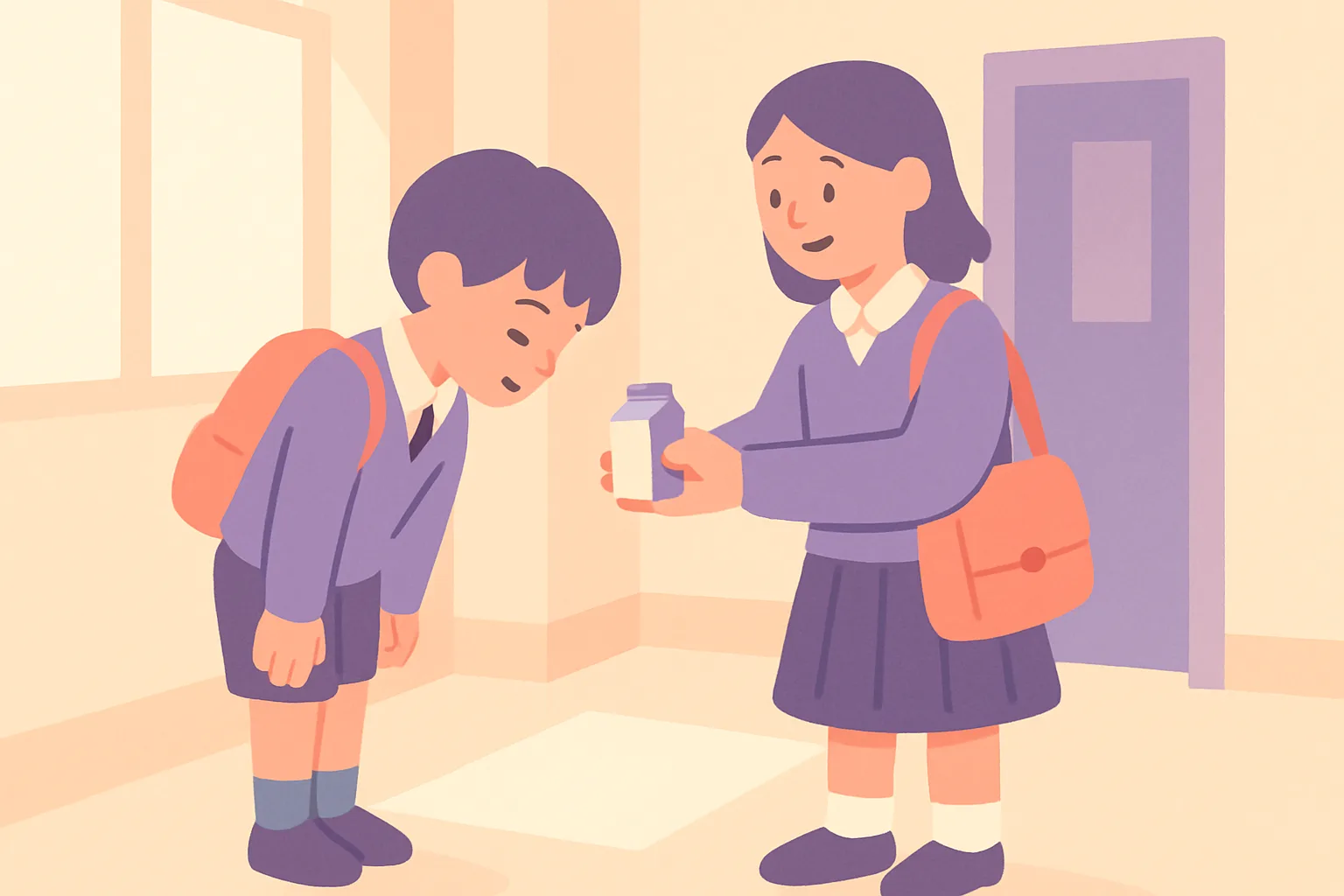
Korean Argument Phrases in K-Dramas: Rude Without Swearing

You've seen the scene. Two people in an office, or a hospital corridor, or across a restaurant table. Nobody raises their voice much. Nobody says anything that looks shocking in the subtitles — just "What did you say?" and "So what?" — and yet the whole room freezes and somebody walks out.
Here's the one idea to take away: in Korean, the insult is usually in the grammar, not the vocabulary. You can wreck a relationship with the word 밥 if you attach the wrong ending to it. Swearing exists, of course, but most K-drama arguments are fought with ordinary words plus a sudden change in how the speaker is positioning the two of you. English subtitles flatten all of this, because English has no way to show it.
Once you can hear the change, those scenes get twice as interesting.
The baseline: every conversation sits at a level
Before the fight, two people have already agreed — silently — on a speech level. Polite 해요체 with a coworker. 반말 with a close friend. Stiff 합쇼체 with a client. That agreement is the floor you're standing on, and in an argument, people break it on purpose. If the three levels aren't solid for you yet, start with the guide to 해요체, 합쇼체 and 반말 — everything below is built on it.
1. Dropping to 반말 with someone who hasn't earned it
This is the big one. A character who has been saying 해요체 all episode suddenly drops the 요:
- 그건 제 잘못이 아니에요. — That's not my fault. (neutral, polite)
- 그건 내 잘못 아니야. — That's not my fault. (same meaning, 반말, and it's a slap)
The subtitle is identical. In Korean, the second one says I no longer consider you someone I owe respect to. Against a stranger, a boss, or an older person, that's close to the rudest thing you can do without opening your mouth to swear.
And Korean has a ready-made comeback for it. Three of them, really:
- 지금 저한테 반말하신 거예요? — Did you just speak 반말 to me?
- 말이 짧네? — literally your words are short, huh? Meaning: you dropped the honorifics. Very common, very cold.
- 말씀 조심하세요. — Watch what you say. (still perfectly polite in form, which is what makes it chilling)
Notice that 말씀 조심하세요 is grammatically respectful. Politeness and warmth are not the same thing in Korean, which brings us to the trick learners never expect.
2. Going up a level is also an attack
Two close friends use 반말. If one of them suddenly says:
- 네, 알겠습니다. — Yes, understood. (formal 합쇼체)
…that's not politeness. That's a door closing. Between people who normally speak 반말 — friends, a couple, siblings — switching to 존댓말 means fine, we're strangers now. Korean couples do this in fights constantly:
- 알아서 하세요. — Do whatever you want. (said to a partner you normally call 자기야 — ice cold)
So rudeness isn't "low level = rude." It's any unilateral change of level. Down means you're beneath me. Up means you're nothing to me.
3. 너, 당신, 그쪽 — pronouns as weapons
Korean avoids "you" in normal conversation; people use names and titles instead. So reaching for a pronoun is already a move.
| Word | When it's fine | When it's a fight |
|---|---|---|
| 너 | close friends, your own kids, younger siblings | anyone else — especially a senior or a stranger |
| 당신 | married couples (affectionate), song lyrics, written notices | face-to-face with a stranger: hostile |
| 그쪽 | distant but neutral with a stranger | said flat and sharp: dismissive |
- 당신이 무슨 상관이에요? — What business is it of yours?
- 그쪽이 먼저 그랬잖아요. — You started it.
- 너 몇 살이야? — How old are you?
That last one deserves a note. In an English argument, asking someone's age is random. In Korean it's a direct challenge — establish the hierarchy right now, because by my count you're younger and you just spoke to me like an equal. You'll hear it in drama street fights and in real Korean ones.
4. The cold full name + 씨
When a boss who has always said 민수 씨 switches to the full name:
- 김민수 씨, 말씀이 좀 심하시네요. — Mr. Kim Minsu, that was out of line.
Still polite. Still 씨. But the full name plus the honorific 시 makes it formal enough to be a warning shot — it marks distance, like being called by your first and last name at home. How 씨 and name forms work is worth reading alongside this, because the warmth of Korean address is all in these small swaps.
5. Endings that pick a fight
These are short, so they fly past in a scene. All of them are 반말 and all of them are confrontational:
- 뭐라고? — What did you say? (compare the neutral 뭐라고 하셨어요?)
- 말 다 했어? — Are you finished? Classic. Means you've gone too far.
- 그래서 어쩌라고? — So what do you want me to do about it? The polite-shaped 그래서 어쩌라고요? is barely softer; the attitude is in the phrase, not the 요.
- 됐어. / 됐어요. — Forget it. / Enough. Shuts a conversation down.
- 내가 언제 그랬어? — When did I ever do that?
And one that trips learners up badly: -거든요. It's a normal, useful ending for giving information the listener doesn't have, but with a flat or rising tone it turns defensive and snippy.
- 저 그런 적 없거든요. — I've never done that, actually.
Same ending, two completely different temperatures. The full breakdown of -거든요 covers the friendly uses; just know that in an argument scene it's the Korean equivalent of "...actually."
6. Yelling 야 at the wrong person
야! gets translated as "Hey!" and that's badly misleading. 야 is for close friends and people clearly younger than you. Shouted at a stranger, a customer, or a senior, it's an act of aggression on its own.
- 야, 말 다 했어? — Hey — you done? (a fight is now happening)
- 저기요, 잠깐만요. — Excuse me, one second. (the neutral way to get a stranger's attention)
If a drama character calls out 저기요 in a hard, clipped voice, that's still annoyance — but 야 is a different category.
How to use this
Don't. Not actively, anyway. These lines are for listening — so you catch the moment a scene turns, and so you never accidentally produce one. The common learner accident is harmless-looking: dropping the 요 with an older coworker because the sentence felt long, or using 당신 for "you" because a dictionary said so. Korean ears don't hear it as a beginner slip. They hear a choice.
The safe default stays the same: 해요체, names and titles instead of pronouns, and 저 for "I." Let the characters do the shouting.
Practice
- A stranger bumps into you on the street and shouts 야!. Why is this worse than 저기요!?
- Your coworker has used 해요체 with you for a year. Today, mid-disagreement, he says 그거 네가 했잖아. What changed, and what is he signaling?
- Two close friends are fighting and one says 네, 알겠습니다. Is that an apology? Why or why not?
- Translate into Korean: Did you just speak 반말 to me?
- What does 말이 짧네? accuse the other person of doing?
Answers
- 야 is only for close friends or people clearly younger than you. Used on a stranger it claims superiority over them, so it's an insult, not just a loud "hey." 저기요 is the neutral way to get a stranger's attention.
- He dropped from 해요체 to 반말 and used 너 (네가). He's unilaterally cancelling the respect they'd agreed on — I don't owe you politeness anymore.
- No. Between friends who normally speak 반말, switching up to formal 합쇼체 means cold distance: we're strangers now. Going up a level can be just as hostile as going down.
- 지금 저한테 반말하신 거예요? (also fine: 지금 저한테 반말하셨어요?)
- Of dropping honorifics — of speaking 반말 to someone who hasn't given permission. Literally "your words are short."
Learn this properly, not just once
Blog posts teach one thing at a time. The HanDa books teach level 1 in order — every lesson built to be spoken, with a workbook and writing book beside it.
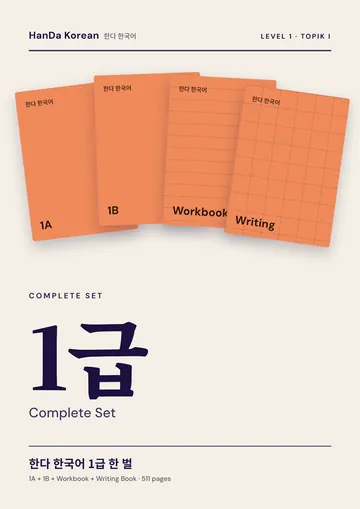 HanDa Korean Level 1 — Complete Set
Everything for level 1 — books, workbook and writing book · 511 pages
$10
HanDa Korean Level 1 — Complete Set
Everything for level 1 — books, workbook and writing book · 511 pages
$10
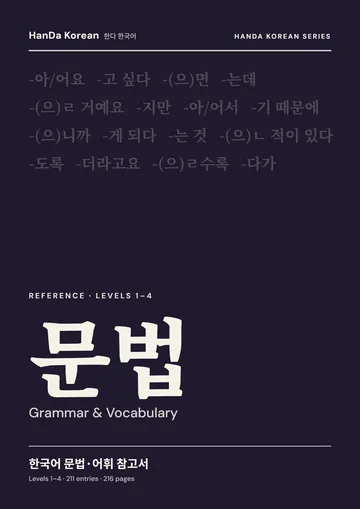 Korean Grammar & Vocabulary Reference
Every pattern in one place · 216 pages
$8
Korean Grammar & Vocabulary Reference
Every pattern in one place · 216 pages
$8
Practice this with an AI tutor
HanDa corrects every sentence you write or say — in real conversation, not flashcards.