Korean Office Titles in K-Dramas: 부장님, 팀장님, 본부장님
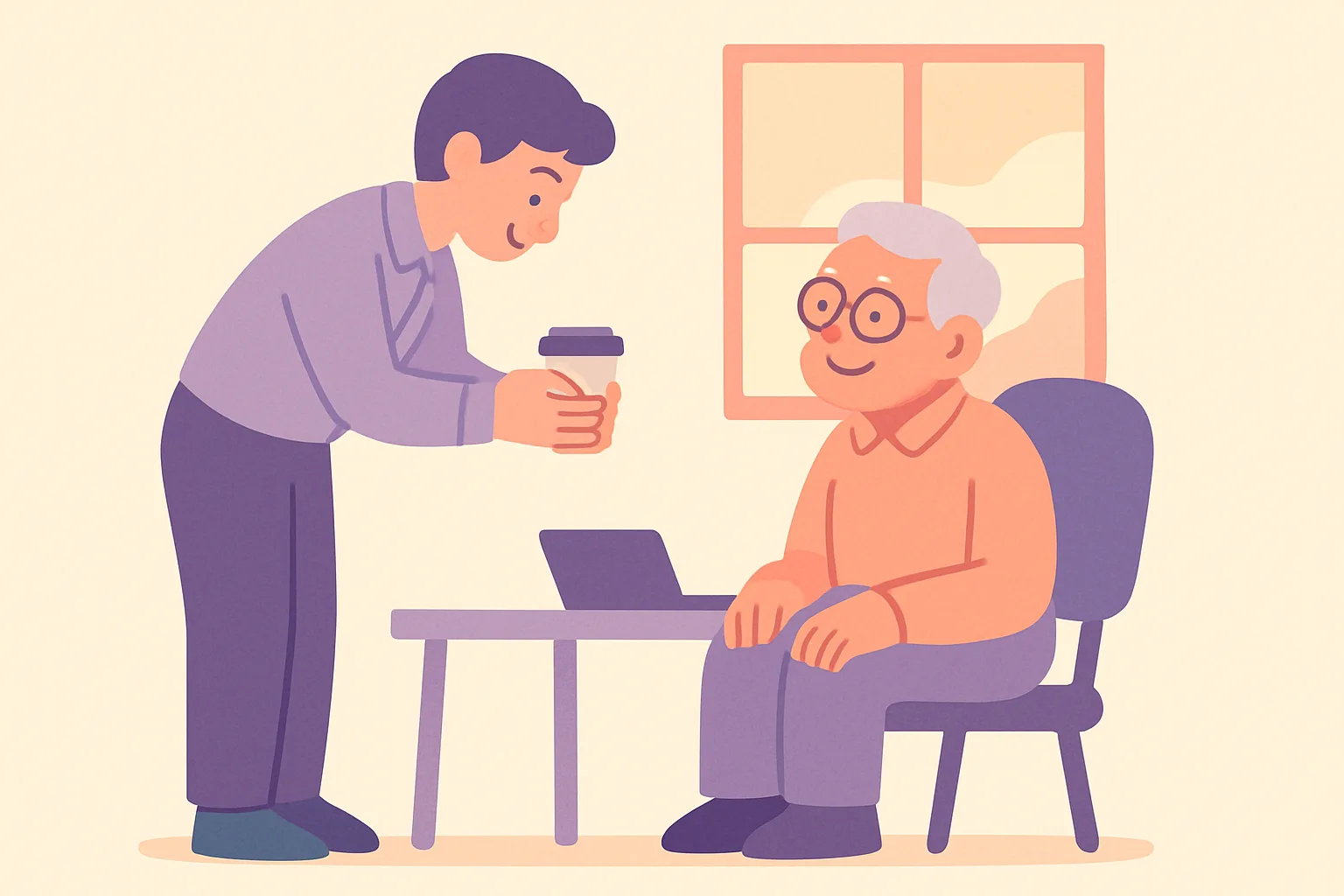
Watch any Korean office drama with subtitles and you'll see characters called "Mr. Kim," "sir," or just "Director." What you're actually hearing is something English doesn't do: the job title is the person's name, and it's also the word for "you."
That's the one idea. A junior employee can go a whole workday without once saying the boss's name or any word meaning "you." Instead they say 팀장님 — over and over, in every sentence, in the place where English would put a pronoun. Once you hear it, you can't unhear it.
The ladder you hear in dramas
Korean companies have two overlapping systems: 직급 (rank — how senior you are) and 직책 (position — what you're actually in charge of). Dramas mix both, which is why the words pile up.
| Korean | Roughly | Notes |
|---|---|---|
| 사원 | staff, entry level | the new hire everyone sends on coffee runs |
| 대리 | assistant manager | first real rung up |
| 과장 | manager, section chief | 직급 |
| 차장 | deputy general manager | 직급 |
| 부장 | department head | 직급 — the classic drama boss |
| 팀장 | team leader | 직책 — leads your team |
| 실장 | head of an office or unit | 직책 |
| 본부장 | division head | 직책 — above 팀장, big office, own secretary |
| 이사 / 상무 / 전무 | executive levels | board-adjacent |
| 사장 / 회장 | president / chairman | see rich-family dramas |
If a character has both a rank and a position, Koreans normally address them by the position: a 과장 who runs your team is 팀장님, not 과장님. The position says what they are to you right now, and that's what matters when you're speaking to them.
The top of that ladder gets its own vocabulary and its own kind of plot — 회장님 and 사모님 live in a different genre, and I wrote about the words you hear in rich-family dramas separately.
Rule 1: going up, always add 님
To or about anyone above you, the title takes 님. No exceptions in a normal workplace.
부장님, 지금 잠깐 괜찮으세요? Sir (department head), do you have a moment right now?
본부장님은 지금 회의 중이십니다. The division head is in a meeting right now.
Saying 부장 with no 님 to the person's face is not a small slip. It sounds like you're calling down to them — the kind of thing a character does on purpose, in a tense scene, right before everything goes wrong. In dramas, dropping 님 is a weapon.
You can add a surname in front for clarity: 김 부장님, 박 팀장님. With the full name it's 김민수 부장님. Note the spacing — the name and the title are separate words.
Rule 2: the title is the word for "you"
This is the part subtitles flatten completely. Where English says "What do you think?", Korean repeats the title.
팀장님은 어떻게 생각하세요? What do you think? (literally: what does the team leader think?)
이 건은 팀장님께 먼저 보고드리겠습니다. I'll report this matter to you first.
Learners often reach for 당신 here, because dictionaries list it as "you." Don't. To a boss, 당신 sounds cold and confrontational — it belongs in arguments and in formal writing, not in a normal office sentence. The safe, natural, invisible choice is the title.
And notice the honorific -시- riding along: 괜찮으세요, 생각하세요, 회의 중이십니다. The title and the verb ending work as a pair. If you say 팀장님 but then use a plain verb, a Korean ear hears the mismatch immediately.
Rule 3: going down, the 님 comes off
A 부장 talking to a 대리 drops the 님, or uses the person's given name with 씨.
김 대리, 이거 오늘까지 부탁해요. Kim, please get this to me by today.
지훈 씨, 회의실 예약했어요? Jihoon, did you book the meeting room?
Both are normal from a senior. Which one a character picks tells you a lot about them — 김 대리 is businesslike, 지훈 씨 is warmer and more personal. If you want the full picture of how 씨 behaves (and why 김 씨 alone is rude), see what 씨 really means in Korean.
Some newer companies have dropped ranks entirely and call everyone by name plus 님: 지훈 님, 민수 님. Watch the space — after a job title, 님 is a suffix and attaches (부장님), but after a personal name it's a separate dependent noun and takes a space (지훈 님). You'll see this style in dramas set at startups. It's real, but it's still the minority.
Rule 4: never put 님 on your own title
Introducing yourself, you say the bare title:
안녕하십니까. 영업팀 김민수 부장입니다. Hello. I'm Kim Minsu, department head of the sales team.
저는 김민수 부장님입니다 is a real beginner mistake, and to a Korean ear it's funny in a painful way — you've just bowed to yourself. 님 only ever goes on other people.
One more thing about talking to outsiders: when you mention your own boss to a client or a visitor, keep the 님. 저희 부장님께서 곧 내려오십니다. Our department head will be down shortly. Old etiquette books say to drop the honorific in front of someone higher, but current standard guidance for workplaces is to keep it, and that's what you'll hear.
What the subtitles lose
When a subtitle says "Mr. Lee, could I speak with you?" and the Korean is 이사님, 잠깐 말씀 좀 드릴 수 있을까요?, you've lost two things: that the speaker is lower, and that the speaker chose the deferential 합쇼체/해요체 register to match. The distance in that line is doing plot work. The English version is just polite.
The reverse matters too. When a character who has always said 부장님 suddenly says the man's name — or says 부장 with the 님 sliced off — that's the moment the relationship breaks. No English subtitle can carry it, but you can hear it.
When you leave at the end of the day
Two lines you'll hear in every office drama, both in 합쇼체:
부장님, 먼저 들어가 보겠습니다. Sir, I'll head out first.
내일 뵙겠습니다. See you tomorrow.
The second one is 뵙다, the humble form of "to see/meet." Using it with a boss is standard; with a friend it would sound like you're being sarcastic.
It doesn't stop at the office
This title-instead-of-name habit runs through all of Korean life. The restaurant owner is 사장님, the taxi driver is 기사님, the pharmacist is 약사님, and almost everyone teaching you anything is 선생님.
사장님, 이거 하나 더 주세요. Excuse me (owner), one more of these please.
If you're wondering what to call people when you don't know their job at all, these titles you use instead of someone's name cover the everyday cases.
Practice
Fix or choose. Answers below.
- You want to ask your team leader if she has a minute. Fill in: ______, 잠깐 시간 괜찮으세요?
- What's wrong with this self-introduction? 안녕하십니까. 저는 마케팅팀 이수진 과장님입니다.
- A new employee says to the department head: 부장, 이거 확인해 주세요. What should it be?
- A client asks where your boss is. Which is the modern standard? (a) 저희 부장은 곧 오십니다. (b) 저희 부장님께서 곧 오십니다.
- Your 과장 also runs your team as 팀장. Face to face, which do you call her?
Answers
- 팀장님 — 팀장님, 잠깐 시간 괜찮으세요?
- Never put 님 on your own title. It should be 마케팅팀 이수진 과장입니다.
- 부장님, 이거 확인해 주세요. Dropping 님 when speaking to a superior sounds openly disrespectful.
- (b). Current workplace guidance keeps the honorific for your own boss even in front of outsiders.
- 팀장님. When someone holds both a rank (직급) and a position (직책), you address them by the position.
Start with one habit: next office scene you watch, stop listening for names and count how many times you hear 팀장님. That repetition isn't the writers being lazy. It's Korean doing what pronouns do in English — and now you can hear exactly who outranks whom without reading a single subtitle.
Learn this properly, not just once
Blog posts teach one thing at a time. The HanDa books teach level 1 in order — every lesson built to be spoken, with a workbook and writing book beside it.
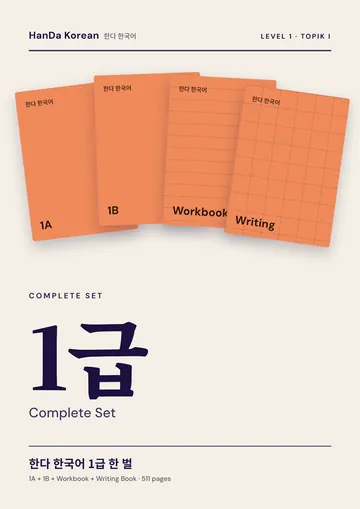 HanDa Korean Level 1 — Complete Set
Everything for level 1 — books, workbook and writing book · 511 pages
$10
HanDa Korean Level 1 — Complete Set
Everything for level 1 — books, workbook and writing book · 511 pages
$10
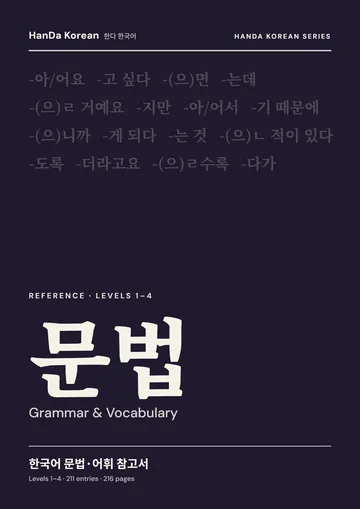 Korean Grammar & Vocabulary Reference
Every pattern in one place · 216 pages
$8
Korean Grammar & Vocabulary Reference
Every pattern in one place · 216 pages
$8
Practice this with an AI tutor
HanDa corrects every sentence you write or say — in real conversation, not flashcards.