8 Untranslatable Korean Words and When Koreans Use Them
People love to call these words "untranslatable," which makes them sound mystical. They aren't. Here's the one idea to walk away with: these words don't match an English word, they match a situation. Stop hunting for the perfect translation and learn the moment instead — the moment you throw away good food, the moment someone forgets to text you back, the moment the soup hits. Once you know the moment, the word comes out by itself.
Everything below is in 해요체, the polite everyday style you'd use with a coworker, a shop owner, or a friend's parent. Each one works in 반말 too — just drop to 눈치가 빨라, 아까워, 섭섭해.
1. 눈치 — the social radar everyone is expected to have
그 친구는 눈치가 빨라요. — That friend catches on fast (reads the room instantly).
눈치 is your ability to sense what people are feeling and what the situation needs without being told. 눈치가 빠르다 is a real compliment; 눈치가 없어요 ("he has no 눈치") is a real complaint — it means someone keeps saying the wrong thing at the wrong time, not that they're unintelligent. There's also 눈치를 보다, to keep checking someone's mood: 저는 상사 눈치를 많이 봐요 means I'm always watching my boss's mood, with a tired, walking-on-eggshells feeling to it. If you want more of these, here are eight 눈치 phrases you'll hear in dramas.
2. 정 — attachment that grows out of time spent together
이 동네에 정이 많이 들었어요. — I've grown really attached to this neighborhood.
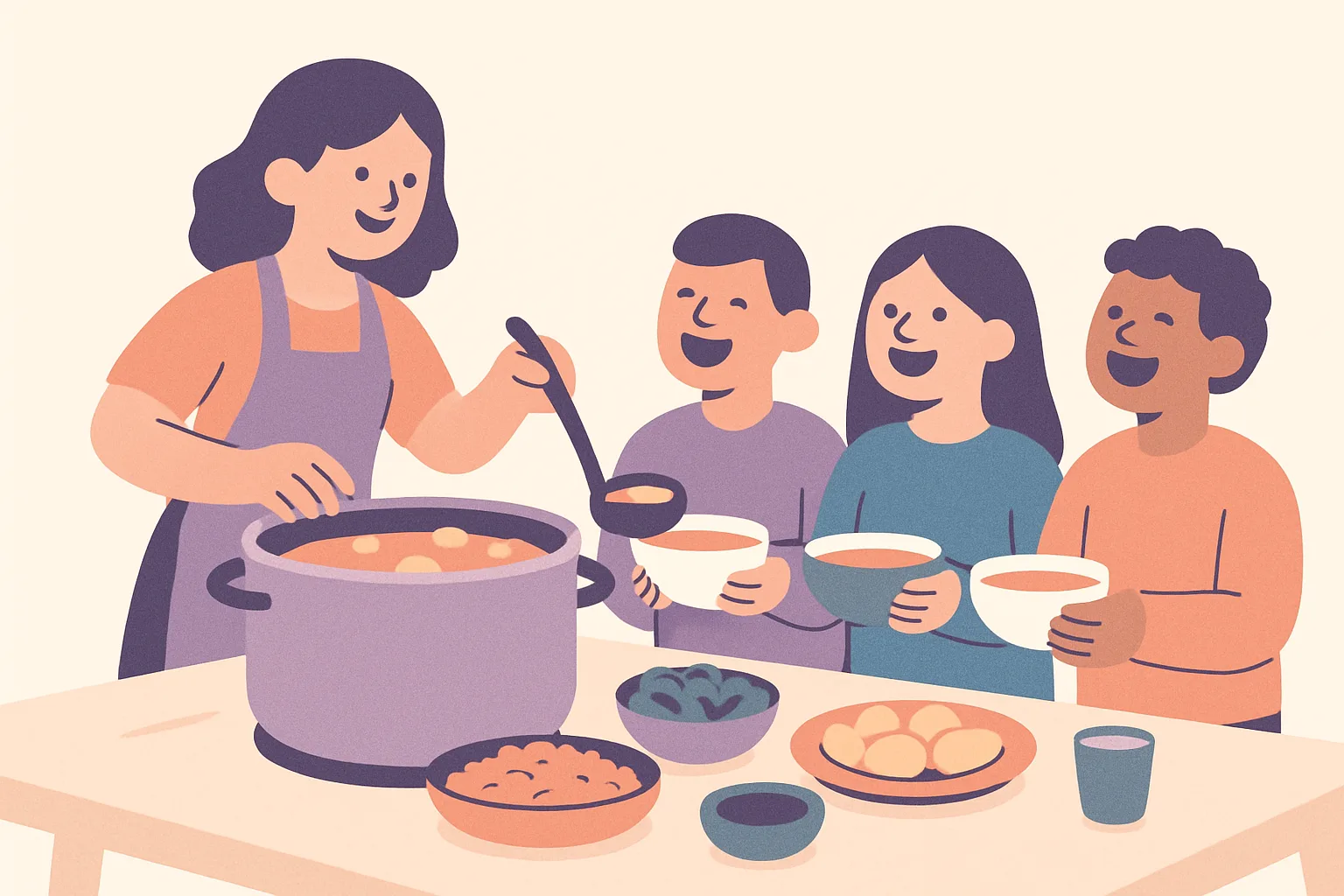
정 isn't love or friendship. It's the sticky warmth that builds up between people — or between you and a place, or even an old pair of shoes — simply because you've been together a while. The verb is 정이 들다 (attachment forms), and you can say it about a person, a town, or a stray cat. 우리 사장님은 정이 많으세요 describes someone who gives you extra side dishes and asks if you've eaten — a warm, can't-help-themselves kind of person. That extra scoop of food is 정 in its most common form, which is why so many phrases for sharing food from one pot sound so affectionate.
3. 답답하다 — stuffy, blocked, going nowhere
말이 안 통해서 답답해요. — We can't get through to each other and it's so frustrating.
One word covers a stuffy room, a tight collar, a heavy chest, and a conversation that isn't moving. The common thread is blocked — air, feelings, or progress. 마스크를 쓰면 답답해요 is physical; 설명을 세 번 했는데 또 못 알아들어서 답답해요 (I explained three times and they still didn't get it, it's maddening) is emotional. You can also aim it at a person: 저 사람 진짜 답답해요 means they're slow, indecisive, and it's making you want to shake them. It's blunt, so say it about situations more than about people in front of you.
4. 아깝다 — too good to waste
음식을 버리기 아까워요. — It feels like such a waste to throw the food away.
아깝다 is the little pang you feel when something valuable is about to be lost for no good reason. Food, money, time, a nice day spent indoors: 날씨가 좋은데 집에 있기 아까워요. It also pops out as a one-word reaction when someone just barely misses something — the ball hits the post, you miss the train by thirty seconds, and everyone says 아, 아깝다! (Ahh, so close!). Note that it isn't the English "wasteful" judgment of a person; it's your own feeling about the thing being lost.
5. 섭섭하다 — hurt that someone gave you less than you hoped
연락을 안 해서 좀 섭섭했어요. — You didn't get in touch, so I was a little hurt.
This is the soft, personal disappointment you feel when someone close to you doesn't do what you quietly expected — didn't call, didn't invite you, forgot. It's much gentler than 화나다 (angry); saying 섭섭해요 is a way of telling someone they hurt you while staying warm with them. It also covers the ache of a goodbye: 친구가 이사 가서 섭섭해요. Compare 아쉽다, which is regret that something ended or fell short with no person to blame — 시간이 짧아서 아쉬웠어요 (a shame the time was so short). 섭섭하다 points at a person; 아쉽다 points at a situation. For more feeling words at this level of precision, see nine Korean words for feelings beyond happy and sad.
6. 억울하다 — wronged, and no one believes you
저는 아무것도 안 했는데 혼나서 억울해요. — I didn't do anything and still got scolded — it's so unfair.
억울하다 is the specific burn of being blamed for something you didn't do, or losing something you deserved. English needs a whole sentence: "it's unfair and I can't prove it." Important detail — it's almost always about yourself or someone you're defending, not about injustice in the abstract. If a friend tells you a story like this, the perfect response is 진짜 억울했겠다 (that must have felt so unfair) in 반말, or 많이 억울하셨겠어요 to someone older.
7. 귀찮다 — I can't be bothered
오늘은 요리하기 귀찮아요. — I can't be bothered to cook today.
Not tired, not lazy as a character flaw — just that specific feeling where a small task looks like too much effort right now. Koreans use it constantly: 나가기 귀찮아요, 씻기 귀찮아요, 설명하기 귀찮아요. Pointed at a person it changes shape and means bothersome: 동생이 자꾸 귀찮게 해요 (my little brother keeps pestering me). Careful with that second use — don't tell someone 귀찮아요 to their face unless you mean it.
8. 시원하다 — cool, but also the relief of something hot
국물이 시원해요. — The broth is so refreshing.
Yes, the soup is boiling, and yes, 시원하다 normally means "cool." Here it means the clean, clearing feeling of hot broth after a long day — it clears your head the way cold air does. Same word for a good massage (안마를 받으니까 시원해요) and for a hot bath. And 속이 시원해요 is the release after you finally say the thing you'd been holding in: 할 말을 다 하니까 속이 시원해요 (I said everything I wanted to and I feel so much lighter). When a Korean friend sighs 시원하다 over a steaming bowl, they're not confused about temperature.
Why learners get these wrong
The usual mistake isn't grammar — it's reaching for the English word first. Someone decides 섭섭하다 = "sad" and says 영화가 섭섭했어요 about a film, which lands strangely, because 섭섭하다 needs a person who let you down. Or they use 답답하다 for general stress, when Korean wants 스트레스 받아요 unless something is genuinely blocked. Pin each word to its situation and these never happen.
Practice
Which word fits? Answer in 해요체.
- Your coworker broke the printer, and the boss scolded you.
- You've lived above the same little shop for five years and you're moving out next week.
- There's half a pizza left and no fridge space, but throwing it out feels wrong.
- You explained the directions three times and they still took the wrong bus.
- Your close friend had a birthday party and didn't tell you about it.
Answers
- 억울해요. (저는 아무것도 안 했는데 혼나서 억울해요.)
- 정이 들었어요. (이 동네에 정이 많이 들었어요.)
- 아까워요. (버리기 아까워요.)
- 답답해요. (세 번 설명했는데 또 못 알아들어서 답답해요.)
- 섭섭해요. (말 안 해 줘서 좀 섭섭했어요.)
Learn this properly, not just once
Blog posts teach one thing at a time. The HanDa books teach level 1 in order — every lesson built to be spoken, with a workbook and writing book beside it.
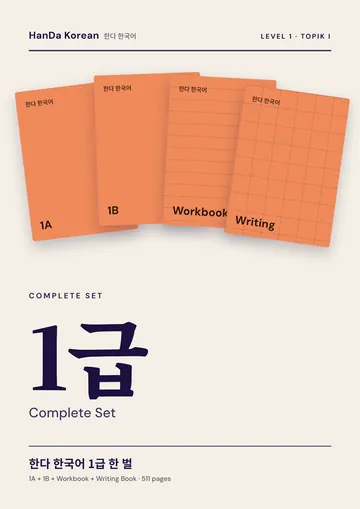 HanDa Korean Level 1 — Complete Set
Everything for level 1 — books, workbook and writing book · 511 pages
$10
HanDa Korean Level 1 — Complete Set
Everything for level 1 — books, workbook and writing book · 511 pages
$10
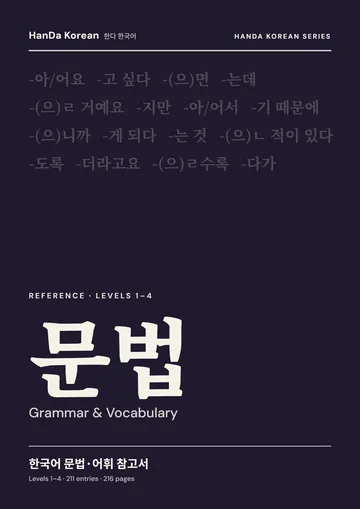 Korean Grammar & Vocabulary Reference
Every pattern in one place · 216 pages
$8
Korean Grammar & Vocabulary Reference
Every pattern in one place · 216 pages
$8
Practice this with an AI tutor
HanDa corrects every sentence you write or say — in real conversation, not flashcards.