9 First Korean Phrases for Beginners and When to Use Each
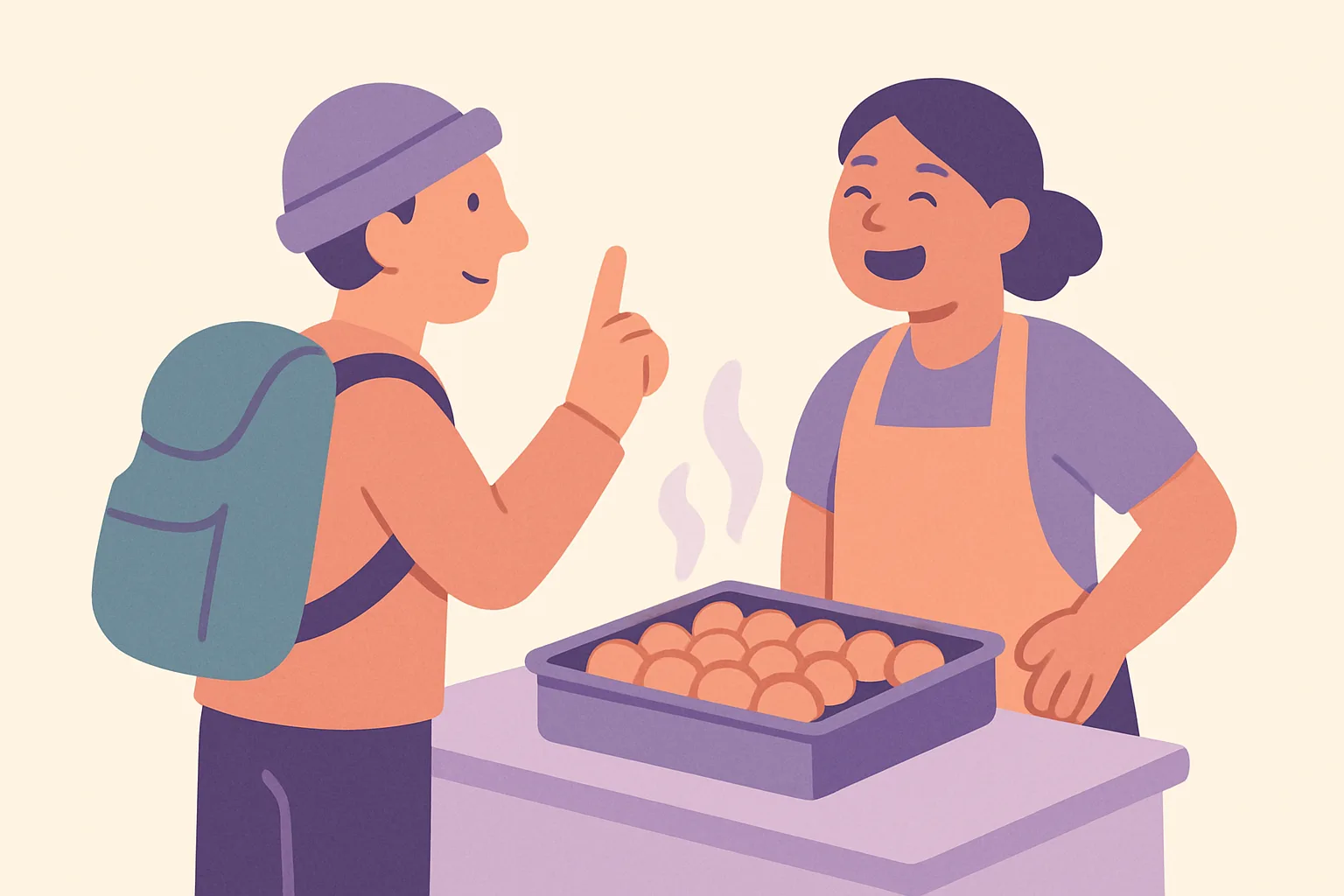
Quick answer: After 안녕하세요 (hello) and 감사합니다 (thank you), the Korean phrases a beginner needs most are the repair phrases — the ones you use when the conversation gets away from you: 잠시만요 (jamsimanyo, "one moment"), 한국어 잘 못해요 ("I don't speak Korean well"), 천천히 말해 주세요 ("please speak slowly"), 다시 한번 말씀해 주세요 ("please say that again"), 모르겠어요 ("I'm not sure") and 알겠어요 ("got it").
Most beginner lists stop at greetings. But greetings are the easy part — you say 안녕하세요, the other person says something back, and then what? The phrases below are the ones that keep you standing in the conversation instead of walking away from it. Learn these nine and you can survive almost any short exchange in Korea, even with a vocabulary of fifty words.
If you haven't nailed the greeting itself yet, start with the three ways to say hello in Korean and come back. Everything below is in 해요체 or 합쇼체 — the polite styles you'd use with strangers, clerks, coworkers and anyone older.
1. 네 — "Yes" / "I'm listening" / "Sorry?"
커피 드릴까요? — 네, 주세요. "Shall I get you a coffee?" — "Yes, please."
네 does far more work than English "yes." Koreans say it to agree, to show they're still listening on the phone, and to acknowledge an instruction. Said with a rising tone — 네? — it becomes "Sorry, what?", and it is the softest, most natural way to ask someone to repeat themselves. 예 is the same word in a slightly more formal register; both are fine.
2. 잠시만요 — "One moment" / "Coming through"
잠시만요, 금방 갈게요. "One moment, I'll be right there."
잠시만요, 좀 지나갈게요. "Excuse me, let me get past."
This is the single most useful phrase on the list. It buys you time when you're digging for your card, it moves people aside on a packed subway, and it holds a phone line. 잠깐만요 means exactly the same thing and sounds a touch more casual. Both are polite enough for a stranger — Koreans use 잠시만요 twenty times a day without thinking about it.
3. 죄송합니다 — "I'm sorry" / "Excuse me"
늦어서 죄송합니다. "I'm sorry I'm late."
죄송합니다 is the safe default apology with anyone you don't know well, anyone older, and anyone at work. 죄송해요 is the slightly softer 해요체 version; 미안해요 is for friends and people younger than you, and using it with a stranger or a boss sounds a little too familiar. If you bump someone on the street, a quick 죄송합니다 with a small nod is all that's expected.
4. 감사합니다 — "Thank you"
도와주셔서 감사합니다. "Thank you for helping me."
Say it to the shop clerk, the taxi driver, the person who holds the door. With friends your age it relaxes into 고마워, but 감사합니다 is never wrong in public. The full picture — including when 고맙습니다 fits better — is in 감사합니다 vs 고마워.
5. 한국어 잘 못해요 — "I don't speak Korean well"
죄송해요, 한국어 잘 못해요. "Sorry, I don't speak Korean well."
한국어 공부한 지 얼마 안 됐어요. "I haven't been studying Korean very long."
This is not an apology for existing — it's a signal, and Koreans read it instantly. Say it and most people will slow down, use shorter sentences, or switch to gestures. The pronunciation of 못해요 is [모태요], one smooth word. Note that saying it in Korean, in a decent accent, usually earns you the opposite reaction: 한국어 잘하시네요 ("your Korean is good"). Take the compliment with a smile.
6. 천천히 말해 주세요 — "Please speak slowly"
조금만 천천히 말씀해 주세요. "Please speak just a little more slowly."
Speed, not vocabulary, is what defeats most beginners. 천천히 말해 주세요 is perfectly polite; 천천히 말씀해 주세요 uses the honorific 말씀하다 and is what you'd say to an older person, a doctor, or someone at a counter. Adding 조금만 ("just a little") makes the request feel smaller and friendlier — Koreans soften requests this way constantly.
7. 다시 한번 말씀해 주세요 — "Please say that again"
네? 다시 한번 말씀해 주세요. "Sorry? Could you say that once more?"
Use this when you caught the shape of the sentence but not the content. 다시 한번 말해 주세요 is the plain polite version and is fine with people your age. Be careful with 뭐라고요? — it technically means "what did you say?", but depending on tone it can land as challenging rather than curious. 네? plus this phrase is always safe.
8. 모르겠어요 — "I'm not sure" / "I don't know"
저도 잘 모르겠어요. "I'm not sure either."
무슨 말인지 모르겠어요. "I don't understand what you mean."
Here's the nuance a dictionary skips: 몰라요 and 모르겠어요 both mean "I don't know," but 몰라요 is flat and can sound like a door closing — a bit like snapping "no idea." The -겠- in 모르겠어요 adds a layer of hedging that makes it sound thoughtful instead of dismissive. Add 잘 in front (잘 모르겠어요) and it's softer still. Beginners should default to 잘 모르겠어요 and almost never use bare 몰라요 with strangers.
9. 알겠어요 / 알겠습니다 — "Got it" / "Understood"
세 시까지 오세요. — 네, 알겠습니다. "Please come by three o'clock." — "Yes, understood."
The mirror image of 모르겠어요, and another place learners slip. 알아요 means "I already know that" — say it when your boss explains something and you sound like you're pushing back. 알겠어요 means "I've received that, I'll do it," which is what you actually want. In a workplace or with an older person, use 알겠습니다; it's the standard acknowledgment in any office where titles matter.
The one thing to take away
Beginners usually freeze not because they lack words, but because they have no move for the moment after they stop understanding. These nine phrases are that move. 네?, 잠시만요, 천천히 말해 주세요 and 잘 모르겠어요 buy you time, invite the other person to help, and keep the conversation open instead of ending it with an awkward smile. If the freezing itself is your problem, there's more on getting words out when your mind goes blank.
FAQ
What are the first Korean phrases I should learn?
Start with 안녕하세요 (hello), 감사합니다 (thank you) and 죄송합니다 (sorry), then add the repair phrases: 잠시만요 (one moment), 한국어 잘 못해요 (I don't speak Korean well), 천천히 말해 주세요 (please speak slowly), 다시 한번 말씀해 주세요 (please say that again), 잘 모르겠어요 (I'm not sure) and 알겠어요 (got it). Greetings open a conversation; the repair phrases are what let you stay in it.
How do you say "I don't speak Korean well" in Korean?
한국어 잘 못해요. 못해요 is pronounced [모태요], joined as one word. A more formal version is 한국어를 잘 못합니다. Koreans hear this as a polite request to slow down, not as an apology, and most will adjust immediately.
What's the difference between 몰라요 and 모르겠어요?
Both translate as "I don't know," but 몰라요 is blunt and can sound dismissive to a Korean ear, especially to a stranger or someone older. 모르겠어요 — and even more so 잘 모르겠어요 — softens it into "I'm not quite sure." As a learner, make 잘 모르겠어요 your default.
Practice
- You're squeezing past people to get off a crowded subway car. What do you say?
- Your coworker is speaking too fast. Ask them politely to slow down a little.
- Someone says "내일 아홉 시까지 오세요." Answer that you understood, politely.
- A stranger asks you for directions and you have no idea. What's the softer answer?
- Say in Korean: "Sorry, I don't speak Korean well."
Answers
- 잠시만요. (or 잠시만요, 좀 지나갈게요.)
- 조금만 천천히 말씀해 주세요. (or 천천히 말해 주세요.)
- 네, 알겠습니다. (not 알아요)
- 잘 모르겠어요. (softer than 몰라요)
- 죄송해요, 한국어 잘 못해요.
Learn this properly, not just once
Blog posts teach one thing at a time. The HanDa books teach level 1 in order — every lesson built to be spoken, with a workbook and writing book beside it.
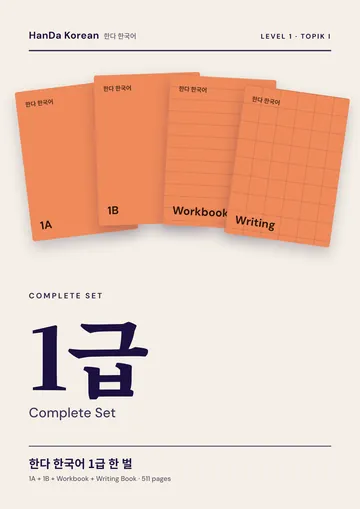 HanDa Korean Level 1 — Complete Set
Everything for level 1 — books, workbook and writing book · 511 pages
$10
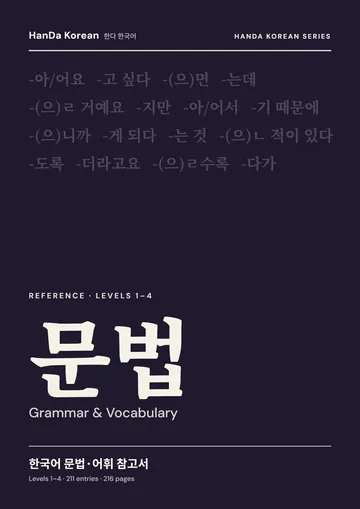 Korean Grammar & Vocabulary Reference
Every pattern in one place · 216 pages
$8
Practice this with an AI tutor
HanDa corrects every sentence you write or say — in real conversation, not flashcards.