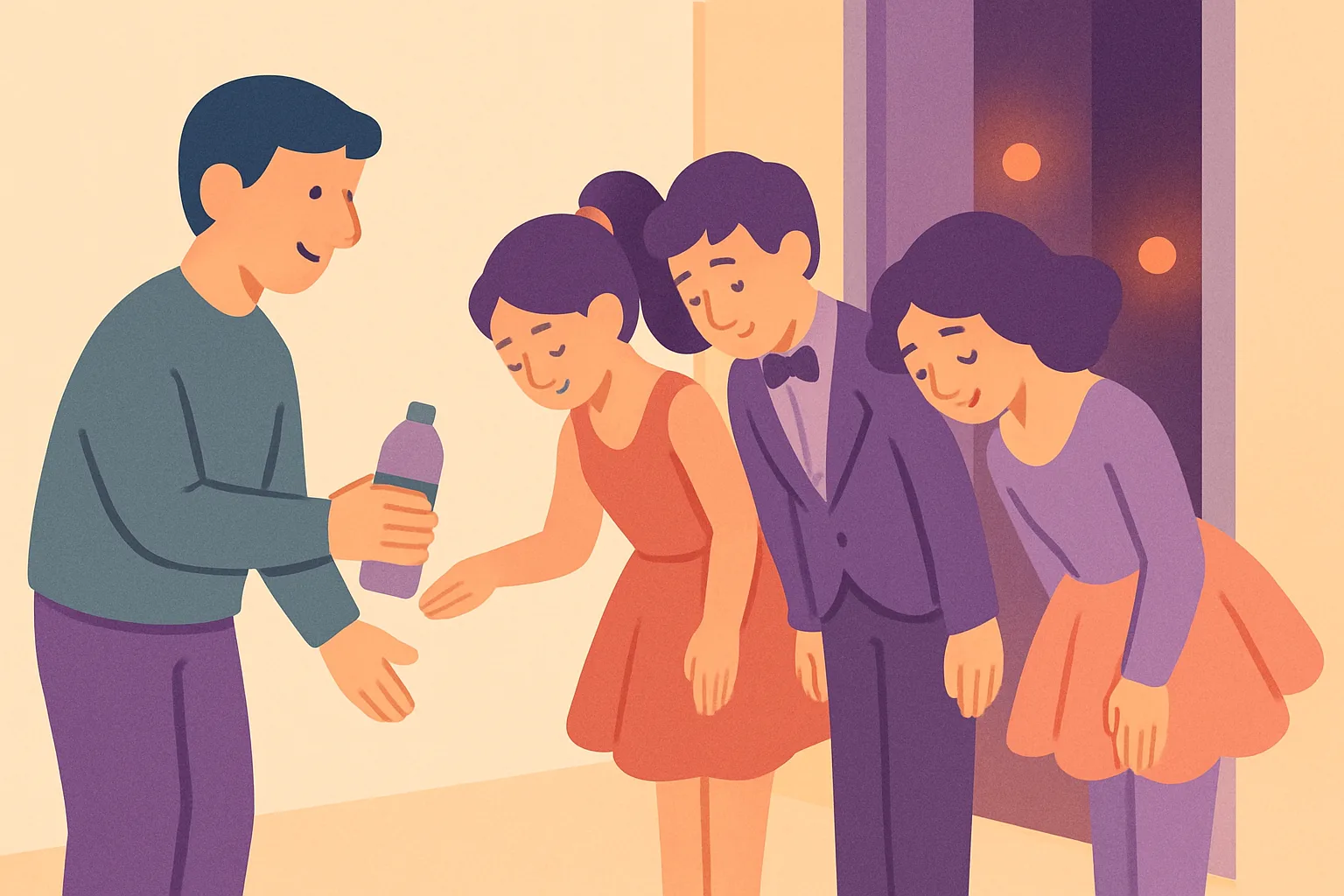
What 파이팅 (Fighting) Means in Korean and How to Use It
Quick answer: 파이팅 (paiting) — also spelled and pronounced 화이팅 — means "You can do it! Go for it! Let's go!" It comes from the English word fighting, but it has nothing to do with fighting. Koreans shout it before or during an effort — an exam, a game, a stage, a long Monday — to send someone energy.
If you've watched a K-pop group huddle up backstage, or a crowd of fans raise their fists at the end of a fan meeting, you've heard it. It's probably the single most-used word in Korean fan culture, and it's also the one learners misuse most, because the English word hiding inside it points in the wrong direction.
The one idea: 파이팅 is for before, not after
This is the thing to walk away with. Korean has a clear split between words of encouragement and words of appreciation, and 파이팅 sits firmly on the encouragement side.
| Korean | When | Meaning |
|---|---|---|
| 파이팅! | before / during the effort | "Go get it. You've got this." |
| 힘내! | when someone is worn down | "Hang in there. Cheer up." |
| 수고했어요 | after the effort | "Good work. You put in effort." |
| 잘했어요 | after, judging the result | "You did well." |
So when an idol finishes a concert and the staff bow to each other, nobody shouts 파이팅 — that moment belongs to 수고하셨습니다. But five minutes before they walk on stage, hands stacked in the middle of a circle, 파이팅 is exactly the word.
내일 콘서트 파이팅! Good luck with tomorrow's concert!
오늘도 파이팅! Let's get through today too!
아자 아자 파이팅! Come on, come on, let's go!
아자 아자 is a little rhythmic run-up that Koreans put in front of 파이팅 when they're cheering out loud — the sort of thing a group says together while they bounce once on their toes.
Why there are two spellings
Korean has no f sound. When English fighting came into Korean, two different approximations stuck: 파이팅 with ㅍ, and 화이팅 with ㅎ+ㅘ, which feels closer to the breathy English f to many Korean ears.
- 파이팅 is the standard, dictionary-approved spelling. You'll see it in subtitles, captions and anything edited.
- 화이팅 is what people actually type and say most of the time, in messages, comments and handwritten fan signs.
Neither is wrong in daily life. Online you'll also see it squashed down to 화팅 or 홧팅 in fast texting, the same way English drops letters. Write 파이팅 if you want to be safe; say whichever one comes out of your mouth, because Koreans use both.
파이팅 vs 힘내: the mistake that sounds slightly cold
These two look interchangeable in a dictionary, and they are not.
힘내 literally means "put out strength" — and it carries the assumption that the person has run out of it. You use it when someone is sad, tired, struggling, grieving a little. It's sympathy.
파이팅 assumes nothing. It's neutral fuel, handed to someone standing at a starting line.
A friend texts you: 요즘 너무 힘들어. (Things have been so hard lately.) You answer: 힘내. 내가 있잖아. (Hang in there. You've got me.)
A friend texts you: 나 내일 면접이야. (I have an interview tomorrow.) You answer: 파이팅! 잘할 거야. (Go get it! You'll do great.)
Answering a hard, sad message with only 파이팅! can land a bit breezy — like clapping someone on the back and walking off. Answering an exciting upcoming event with 힘내세요 sounds like you think they're already exhausted. That second one is the mistake learners make more often, and Koreans will understand you perfectly, but something in the sentence will feel slightly tilted. If you want the softer, warmer version of "you know you've got this," the -잖아요 ending does a lot of work: 잘할 수 있잖아요. (You can do this, you know you can.)
파이팅 as a verb, and who you can say it to
파이팅 is mostly an interjection — it stands alone, shouted. But it also works as a verb among friends in 반말:
우리 끝까지 파이팅하자! Let's keep going to the end!
And in offices and fan settings you'll hear the padded, polite-ish version:
부장님, 파이팅입니다! You've got this, sir!
Here's the nuance: 파이팅 is light and friendly by nature. No ending makes it genuinely formal. With a classmate, a teammate, a colleague of similar rank, or shouted across a crowd, it's perfect. With someone much older or senior in a serious moment — a job interview, surgery, a family matter — Koreans usually reach for a full sentence instead:
잘하실 거예요. You'll do well, I'm sure.
응원하겠습니다. I'll be rooting for you. (합쇼체, formal and sincere)
The fan version: 응원할게요
응원하다 means "to cheer for, to support." It's the serious, heartfelt cousin of 파이팅, and it's the word fans write and say when they want to mean it.
끝까지 응원할게요. I'll support you all the way.
항상 응원하고 있어요. I'm always cheering for you.
이번 앨범도 응원할게요. 파이팅! I'll be cheering for this album too. You've got this!
That last pattern — one sincere sentence, then 파이팅 as the exclamation point — is exactly how Korean fans close a comment or a message. If you're putting together something longer around a release, the comeback vocabulary pairs with it naturally, and there are more ready-made lines in phrases for talking about your favorite idol.
A few places 파이팅 shows up that aren't K-pop
- A coworker heading into a meeting: 파이팅!
- A parent sending a kid off on exam day: 시험 잘 봐. 파이팅! (Do well on the test. You've got this!)
- Two people at the gym on the last set: 마지막이야, 파이팅! (Last one, let's go!)
- A group photo where everyone raises a fist — the fist is 파이팅.
It's not a fan word that leaked into daily life. It's a daily-life word that fan culture shouts louder.
FAQ
What does 파이팅 mean in Korean?
파이팅 means "you can do it," "go for it," or "let's go." It comes from English fighting, but Koreans use it purely as encouragement before or during an effort — an exam, a game, a performance, a hard day. It never means that someone should fight.
Is it 화이팅 or 파이팅?
Both. 파이팅 is the official standard spelling and the one you'll see in subtitles and published text. 화이팅 is more common in everyday typing and casual writing, and nobody considers it an error. In speech the two sound slightly different but are completely interchangeable.
What's the difference between 파이팅 and 힘내?
파이팅 is neutral energy for something that hasn't happened yet — it assumes the person is ready. 힘내 means "find your strength" and assumes the person is drained or going through something hard. Use 파이팅 before an interview, 힘내 when a friend is having a rough week.
Practice
Pick the natural Korean response.
- Your friend texts: 나 내일 오디션이야. What do you send back?
- A concert just ended and the crew is packing up. 파이팅 or 수고하셨습니다?
- A friend texts: 요즘 너무 지쳐. 파이팅! or 힘내?
- Say "I'll be cheering for you" in 해요체.
- Which spelling would you expect in an official subtitle: 화이팅 or 파이팅?
Answers
- 파이팅! 잘할 거야. — Go get it! You'll do great. (반말, to a friend)
- 수고하셨습니다. — 파이팅 is for before the effort; this moment is after it.
- 힘내. — The friend is worn down, so 힘내 fits. 파이팅 alone would sound a little breezy here.
- 응원할게요. — I'll be cheering for you.
- 파이팅 — the standard spelling, used in edited text.
Learn this properly, not just once
Blog posts teach one thing at a time. The HanDa books teach level 1 in order — every lesson built to be spoken, with a workbook and writing book beside it.
 HanDa Korean Level 1 — Complete Set
Everything for level 1 — books, workbook and writing book · 511 pages
$10
 Korean Grammar & Vocabulary Reference
Every pattern in one place · 216 pages
$8
Practice this with an AI tutor
HanDa corrects every sentence you write or say — in real conversation, not flashcards.