10 Korean Words for "Wash": 씻다, 감다, 빨다, 닦다
Quick answer: The general Korean verb for "wash" is 씻다 (ssitda) — 손을 씻어요 means "I wash my hands." But Korean switches verbs depending on what you're washing: hair takes 감다 (gamda), clothes take 빨다, dishes take 설거지하다, and teeth and tables take 닦다. Saying 머리를 씻어요 is understandable but immediately marks you as a learner.
This is one of those places where English is lazy and Korean is picky. We wash our hands, wash our hair, wash the car, wash the dishes, wash our face — one verb for all of it. Korean splits that job among half a dozen words, and each one has a fixed partner noun. The good news: once you learn the pair, you never have to think about it again. It works exactly like the four Korean verbs for "put" — the noun tells you which verb to grab.
| What you're washing | Korean verb |
|---|---|
| hands, feet, fruit, yourself | 씻다 |
| face | 세수하다 |
| hair | 감다 |
| teeth | 닦다 / 양치하다 |
| a table, shoes, a window | 닦다 |
| clothes | 빨다 / 빨래하다 |
| dishes | 설거지하다 |
1. 씻다 — to wash (hands, feet, fruit, yourself)
손 씻고 와. — "Go wash your hands (and come back)."
씻다 is the default. Use it for body parts other than the face and hair, for food, and for yourself as a whole. On its own, 씻다 often means "wash up" — shower, brush, the full routine. 씻고 바로 잤어요. "I washed up and went straight to bed." One more: 과일은 씻어서 드세요. "Wash the fruit before you eat it."
2. 세수하다 — to wash your face
아직 세수도 안 했어요. — "I haven't even washed my face yet."
There is a dedicated verb just for the face, and Koreans use it constantly. 얼굴을 씻다 is not wrong in a technical sense, but nobody says it; 세수하다 is what comes out of a Korean mouth. It's also the standard excuse for not being ready: 세수만 하고 나갈게요. "I'll just wash my face and head out."
3. 머리를 감다 — to wash your hair
오늘 머리 감았어요? — "Did you wash your hair today?"
감다 exists for exactly one thing: hair. Not shampoo, not scalp, not the shower in general — 머리. Learners who say 머리를 씻다 sound like they're scrubbing their skull. Note that 감다 is also the verb for closing your eyes (눈을 감다), which is a different word that happens to look the same. Useful everyday line: 머리 감고 말려야 돼요. "I have to wash my hair and dry it."
4. 양치하다 / 이를 닦다 — to brush your teeth
밥 먹고 양치했어? — "Did you brush your teeth after eating?"
Two natural options. 양치하다 is the all-purpose word (the full form 양치질하다 also exists). 이를 닦다 is just as common and a bit more concrete. To a child you'd say 이 닦고 자. "Brush your teeth and go to bed." Avoid 이빨 — it's the casual, slightly rough word, used for animals' teeth or in rough speech.
5. 닦다 — to wipe, scrub, polish
식탁 좀 닦아 줄래요? — "Could you wipe the table?"
닦다 means rubbing a surface clean with a cloth, not soaking it in water. Tables, windows, shoes, glasses, a phone screen — all 닦다. 구두를 닦았어요. "I polished my shoes." It's also what you do to tears: 눈물 닦아. "Wipe your tears." If you want to soften a request, the little word 좀 does the work, as in the first example.
6. 샤워하다 / 목욕하다 — to shower / to take a bath
샤워하고 올게요. — "I'll go take a shower."
샤워하다 is the quick daily one. 목욕하다 means sitting and soaking — in a tub at home, or at a 목욕탕 (public bath). The two aren't interchangeable; telling someone 목욕했어요 after a two-minute rinse sounds odd. 주말에 목욕탕에 가요. "I go to the bathhouse on weekends."
7. 빨다 / 빨래하다 — to wash clothes
이 옷은 손으로 빨아야 해요. — "These clothes have to be washed by hand."
빨다 is the verb for laundry specifically. In daily speech people usually say 빨래하다 ("do the laundry") because 빨다 by itself also means to suck on something, so the noun form keeps things clear. 빨래 다 했어요? "Have you finished the laundry?" The formal written word — on care labels and at a dry cleaner's — is 세탁하다.
8. 설거지하다 — to wash the dishes
설거지는 내가 할게. — "I'll do the dishes." (반말, to a friend or family)
This is a noun, 설거지, plus 하다. Koreans almost never describe the chore as 그릇을 씻다; the whole job has its own word. It's the classic household negotiation: 밥은 내가 했으니까 설거지는 네가 해. "I cooked, so you do the dishes." The same logic shows up all over Korean home life — see the Korean of taking out the trash for the rest of the chore vocabulary.
9. 헹구다 — to rinse
비누 거품 잘 헹구세요. — "Rinse the soap off well."
헹구다 is washing with clean water to get something off — soap, detergent, mouthwash. It often follows another washing verb, but it can also stand on its own: 쌀을 헹구다 ("rinse the rice"), 채소를 헹구다, 입을 헹구다. At the dentist you'll hear 입 헹구세요. "Rinse your mouth." If you use 씻다 where 헹구다 belongs, it still makes sense, but 헹구다 is the precise, natural choice.
10. 세탁기를 돌리다 — to run the washing machine
세탁기 돌렸어? — "Did you run the washing machine?"
Machines don't get 하다 — they get 돌리다, literally "to turn." Same for the vacuum: 청소기 좀 돌릴게요. "I'm going to vacuum." This one is pure daily life and almost never taught in beginner classes, which is exactly why it's worth stealing.
The one rule to remember
In Korean, the noun chooses the verb. 머리 → 감다. 옷 → 빨다. 이 → 닦다. 그릇 → 설거지하다. So don't memorize "wash = 씻다" and translate from English; memorize the pair as a single chunk — 머리를 감다, 빨래를 하다 — the way you memorize a phone number. Your sentences will sound native without you having to think about it.
FAQ
How do you say "wash your hands" in Korean?
손을 씻으세요 is the polite form, and 손 씻어 is what you'd say to a child or a close friend. In speech the object marker 을 usually drops: 손 씻으세요. Before a meal, a Korean parent will say 밥 먹기 전에 손 씻어 — "Wash your hands before you eat."
What is the difference between 씻다 and 감다 in Korean?
씻다 is the general verb for washing hands, feet, fruit, or yourself. 감다 is used only for hair: 머리를 감다. They're not interchangeable — 머리를 씻다 sounds wrong to a Korean ear, even though the meaning gets through.
How do you say "do the laundry" in Korean?
빨래하다 is the everyday phrase: 빨래했어요 ("I did the laundry"). If you mean specifically running the machine, say 세탁기를 돌리다. 손빨래하다 means to wash by hand, and 세탁하다 is the formal word you'll see on clothing labels and at dry cleaners.
Practice
Fill in the natural verb for each sentence.
- 밥 먹기 전에 손을 ______. (polite request)
- 어제 저녁에 머리를 ______.
- 이 옷은 손으로 ______ 해요.
- 식탁 좀 ______ 줄래요?
- 밥은 내가 할 테니까 ______는 네가 해.
Answers
- 씻으세요 — 밥 먹기 전에 손을 씻으세요.
- 감았어요 — 어제 저녁에 머리를 감았어요.
- 빨아야 — 이 옷은 손으로 빨아야 해요.
- 닦아 — 식탁 좀 닦아 줄래요?
- 설거지 — 밥은 내가 할 테니까 설거지는 네가 해.
Learn this properly, not just once
Blog posts teach one thing at a time. The HanDa books teach level 1 in order — every lesson built to be spoken, with a workbook and writing book beside it.
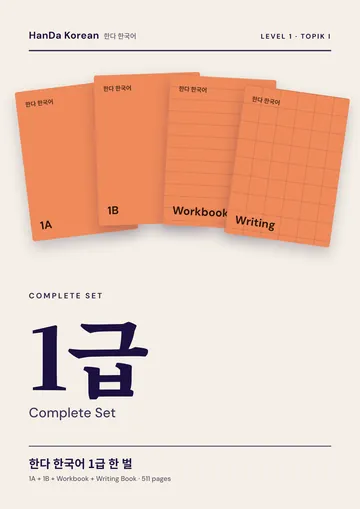 HanDa Korean Level 1 — Complete Set
Everything for level 1 — books, workbook and writing book · 511 pages
$10
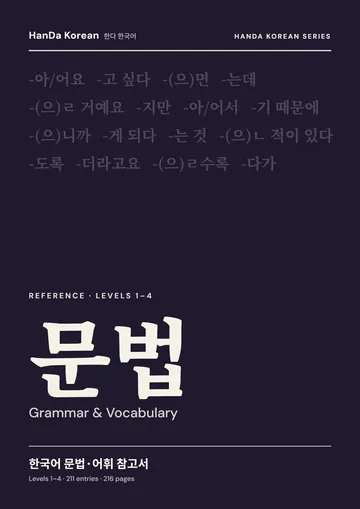 Korean Grammar & Vocabulary Reference
Every pattern in one place · 216 pages
$8
Practice this with an AI tutor
HanDa corrects every sentence you write or say — in real conversation, not flashcards.