Q1
군고구마
What does this word mean?
pear
roasted sweet potato
black pepper
side dish
군고구마 — roasted sweet potato (food)
Q2
to exercise
How do you say this in Korean?
운동하다
마시다
타다
앉다
운동하다 — to exercise (verbs_basic)
Q3
가끔
What does this word mean?
especially
slowly
well
sometimes
가끔 — sometimes (adverbs)
Q4
to be cloudy
How do you say this in Korean?
흐리다
폭우
영상
온도
흐리다 — to be cloudy (weather)
Q5
이따가
What does this word mean?
lunch/noon
night
in a little while
next week
이따가 — in a little while (time)
Q6
seaweed (wakame)
How do you say this in Korean?
미역
물
배추
무
미역 — seaweed (wakame) (food)
Q7
앉다
What does this word mean?
to bring
to see / watch
to end / finish
to sit
앉다 — to sit (verbs_basic)
Q8
to do laundry
How do you say this in Korean?
빨래하다
올리다
전화하다
필요하다
빨래하다 — to do laundry (verbs_basic)
Q9
object marker — marks the direct object
Which Korean grammar pattern expresses this?
을/를
없어요
에
-이에요/예요
을/를 (object marker) — object marker — marks the direct object. e.g. 저는 커피를 마셔요. (I drink coffee.)
Q10
Say that the bus came.
Which sentence says this correctly?
이것은 물이에요.
이것은 커피예요.
버스가 왔어요.
뭐 먹어요?
이/가 (subject marker) — subject marker — marks the grammatical subject. 받침X → 가
Q11
Say that you have a younger brother.
Which sentence says this correctly?
저는 집에 있어요.
친구를 만나요.
교실에 학생이 없어요.
저는 남동생이 있어요.
있어요 (소유) — to have (possession). 저는 + 명사 + 이/가 있어요
Q12
to be (A is B) — identifying nouns
Which Korean grammar pattern expresses this?
없어요
-이에요/예요
있어요?
뭐
-이에요/예요 — to be (A is B) — identifying nouns. e.g. 저는 선생님이에요. (I am a teacher.)
Q13
to be (A is B) — identifying nouns
Which Korean grammar pattern expresses this?
-이에요/예요
을/를
에서
에
-이에요/예요 — to be (A is B) — identifying nouns. e.g. 이것은 책이에요. (This is a book.)
Q14
-아/어요
What does this grammar pattern mean?
at / in (place where an action happens)
object marker — marks the direct object
topic marker — introduces or contrasts a topic
present tense polite ending
-아/어요 (present polite) — present tense polite ending. e.g. 저는 영화를 봐요. (I watch a movie.)
Q15
음식은 밖에서 드세요.
What does this sentence from the passage mean?
Please eat food outside.
After reading, I'll meet a friend and eat dinner together.
I will also eat a lot of delicious food.
Gimbap is cheap and delicious.
음식은 밖에서 드세요. = Please eat food outside.
Q16
여섯 시에 닫아요.
What does this sentence from the passage mean?
It closes at six o'clock.
Please be quiet in the library.
School starts at 9 in the morning.
If you come to Korea, definitely try pork belly.
여섯 시에 닫아요. = It closes at six o'clock.
Q17
책은 두 권까지 빌릴 수 있어요.
What does this sentence from the passage mean?
If you have time next month, let's meet up again.
"I'm watching TV at home."
Today was a good day.
You can borrow up to two books.
책은 두 권까지 빌릴 수 있어요. = You can borrow up to two books.
Q18
조용히
What does this word mean in the passage?
new hire
to be joyful
quietly
below / down
조용히 (jo-yong-hi) — quietly
Q19
도서관
What does this word mean in the passage?
to reconcile
library
tissue
water supply
도서관 (do-seo-gwan) — library
Q20
Which sentence does NOT appear in the passage above?
도서관은 매일 아홉 시에 열어요.
책은 두 권까지 빌릴 수 있어요.
도서관 안에서는 조용히 해 주세요.
김치는 배추하고 마늘, 고추로 만들어요.
"김치는 배추하고 마늘, 고추로 만들어요." (Kimchi is made with napa cabbage, garlic, and chili peppers.) is from a different passage.
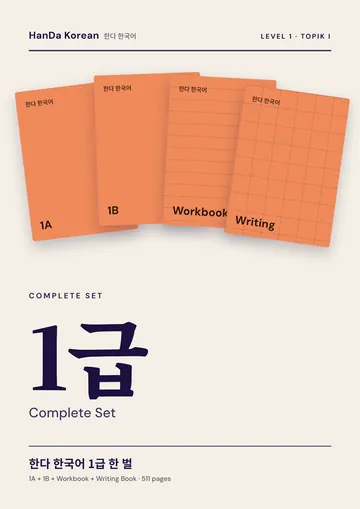 HanDa Korean Level 1 — Complete Set
Complete level 1 — student books, workbook and writing book · 511 pages
$10
HanDa Korean Level 1 — Complete Set
Complete level 1 — student books, workbook and writing book · 511 pages
$10
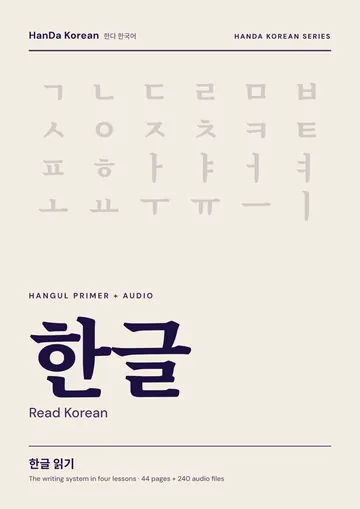 Read Korean
If reading is still slow, start here · 44 pages
$5
Read Korean
If reading is still slow, start here · 44 pages
$5
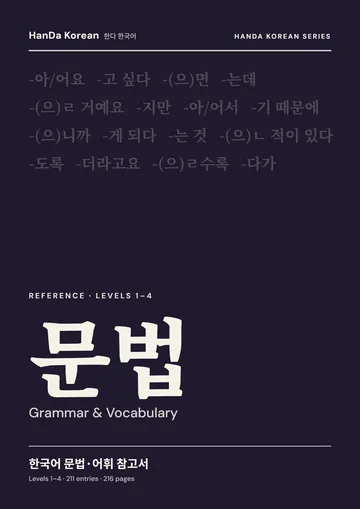 Korean Grammar & Vocabulary Reference
Every pattern from level 1 to 6 in one book · 216 pages
$8
Korean Grammar & Vocabulary Reference
Every pattern from level 1 to 6 in one book · 216 pages
$8
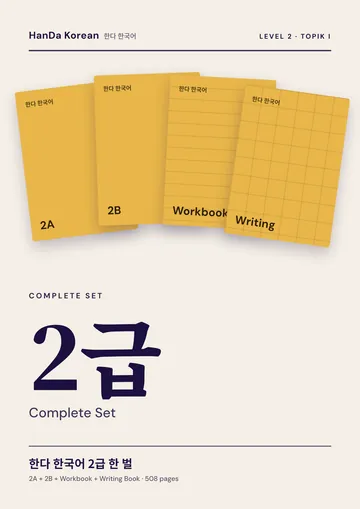 HanDa Korean Level 2 — Complete Set
Complete level 2 — student books, workbook and writing book · 508 pages
$10
HanDa Korean Level 2 — Complete Set
Complete level 2 — student books, workbook and writing book · 508 pages
$10