Q1
기숙사
What does this word mean?
fee/commission
elevator
answer
dormitory
기숙사 — dormitory (daily_life)
Q2
next year
How do you say this in Korean?
내년
모레
주말
이번 달
내년 — next year (time)
Q3
영어
What does this word mean?
notes
English (subject)
review
exam/test
영어 — English (subject) (school)
Q4
to be narrow
How do you say this in Korean?
재미있다
좁다
느리다
바쁘다
좁다 — to be narrow (adjectives_basic)
Q5
고구마
What does this word mean?
sweet potato
cotton candy
sesame oil
vegetable
고구마 — sweet potato (food)
Q6
studio apartment
How do you say this in Korean?
원룸
기차
수영장
소리
원룸 — studio apartment (daily_life)
Q7
다시
What does this word mean?
certainly
barely
already
again
다시 — again (adverbs)
Q8
gray
How do you say this in Korean?
빨간색
회색
하얀색
하늘색
회색 — gray (colors)
Q9
-이에요/예요
What does this grammar pattern mean?
at / in (place where an action happens)
subject marker — marks the grammatical subject
present tense polite ending
to be (A is B) — identifying nouns
-이에요/예요 — to be (A is B) — identifying nouns. e.g. 저것은 가방이에요. (That is a bag.)
Q10
Say that you study at a café.
Which sentence says this correctly?
친구를 만나요.
저는 책이 있어요.
카페에서 공부해요.
음악을 들어요.
에서 (action location) — at / in (place where an action happens). 장소 + 에서 + 동사
Q11
이/가
What does this grammar pattern mean?
present tense polite ending
to (destination with movement verbs)
subject marker — marks the grammatical subject
Is A B? — yes/no question
이/가 (subject marker) — subject marker — marks the grammatical subject. e.g. 버스가 왔어요. (The bus came.)
Q12
에
What does this grammar pattern mean?
topic vs subject — contrast
present tense polite ending
object marker — marks the direct object
at / in / to (static location, destination, or time)
에 (location/time) — at / in / to (static location, destination, or time). e.g. 저는 학교에 가요. (I go to school.)
Q13
Say that this is a book.
Which sentence says this correctly?
저는 옷을 사요.
저는 한국어를 공부해요.
저는 여덟 시에 일어나요.
이것은 책이에요.
-이에요/예요 — to be (A is B) — identifying nouns. 명사(받침O) + 이에요
Q14
Say that the food is delicious, using the topic marker 은.
Which sentence says this correctly?
어디에 가요?
책상 위에 노트북이 있어요.
교실에 학생이 없어요.
음식은 맛있어요.
은/는 (topic marker) — topic marker — introduces or contrasts a topic. 받침O → 은
Q15
아버지는 회사에 다니세요.
What does this sentence from the passage mean?
After reading, I'll meet a friend and eat dinner together.
Restaurants give many side dishes, so it's great.
My father works at a company.
Various side dishes came out, and they were all delicious.
아버지는 회사에 다니세요. = My father works at a company.
Q16
언니는 대학교에서 공부해요.
What does this sentence from the passage mean?
From three in the afternoon, bread is also sold cheaply.
My older sister studies at university.
"Do you have time today? Want to eat together?"
Please try eating spicy food once too.
언니는 대학교에서 공부해요. = My older sister studies at university.
Q17
아버지, 어머니, 언니 그리고 저예요.
What does this sentence from the passage mean?
My father, mother, older sister, and me.
Minsu, my birthday party is this Saturday.
I like comedy movies more than action movies.
After reading a book, please put it back in its place.
아버지, 어머니, 언니 그리고 저예요. = My father, mother, older sister, and me.
Q18
사랑하다
What does this word mean in the passage?
what kind of / some
to increase
snack/cookie
to love
사랑하다 (sa-rang-ha-da) — to love
Q19
명
What does this word mean in the passage?
counter for people
moving (house)
date
cash
명 (myeong) — counter for people
Q20
Which sentence does NOT appear in the passage above?
우리 가족은 모두 네 명이에요.
저는 우리 가족을 정말 사랑해요.
우유는 하나에 천 원이에요.
아버지는 회사에 다니세요.
"우유는 하나에 천 원이에요." (Milk is one thousand won each.) is from a different passage.
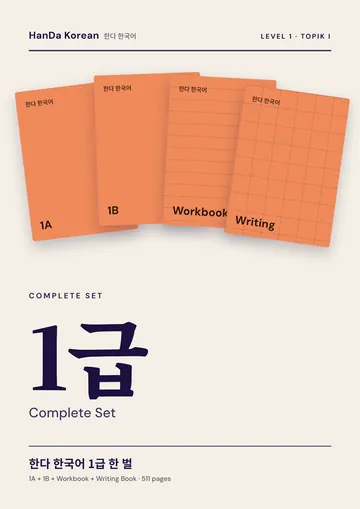 HanDa Korean Level 1 — Complete Set
Complete level 1 — student books, workbook and writing book · 511 pages
$10
HanDa Korean Level 1 — Complete Set
Complete level 1 — student books, workbook and writing book · 511 pages
$10
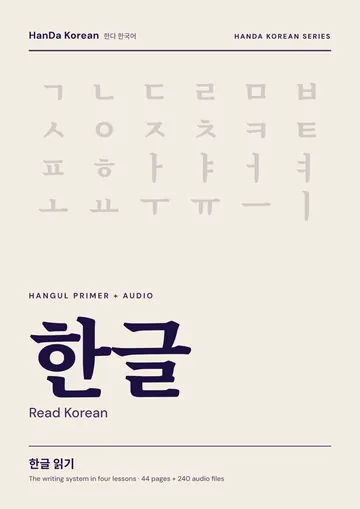 Read Korean
If reading is still slow, start here · 44 pages
$5
Read Korean
If reading is still slow, start here · 44 pages
$5
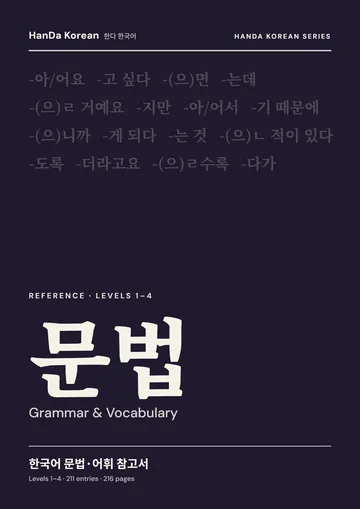 Korean Grammar & Vocabulary Reference
Every pattern from level 1 to 6 in one book · 216 pages
$8
Korean Grammar & Vocabulary Reference
Every pattern from level 1 to 6 in one book · 216 pages
$8
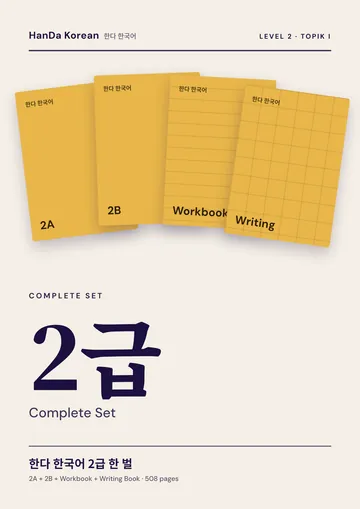 HanDa Korean Level 2 — Complete Set
Complete level 2 — student books, workbook and writing book · 508 pages
$10
HanDa Korean Level 2 — Complete Set
Complete level 2 — student books, workbook and writing book · 508 pages
$10