Taking a Taxi in Korean: What to Say to the Driver
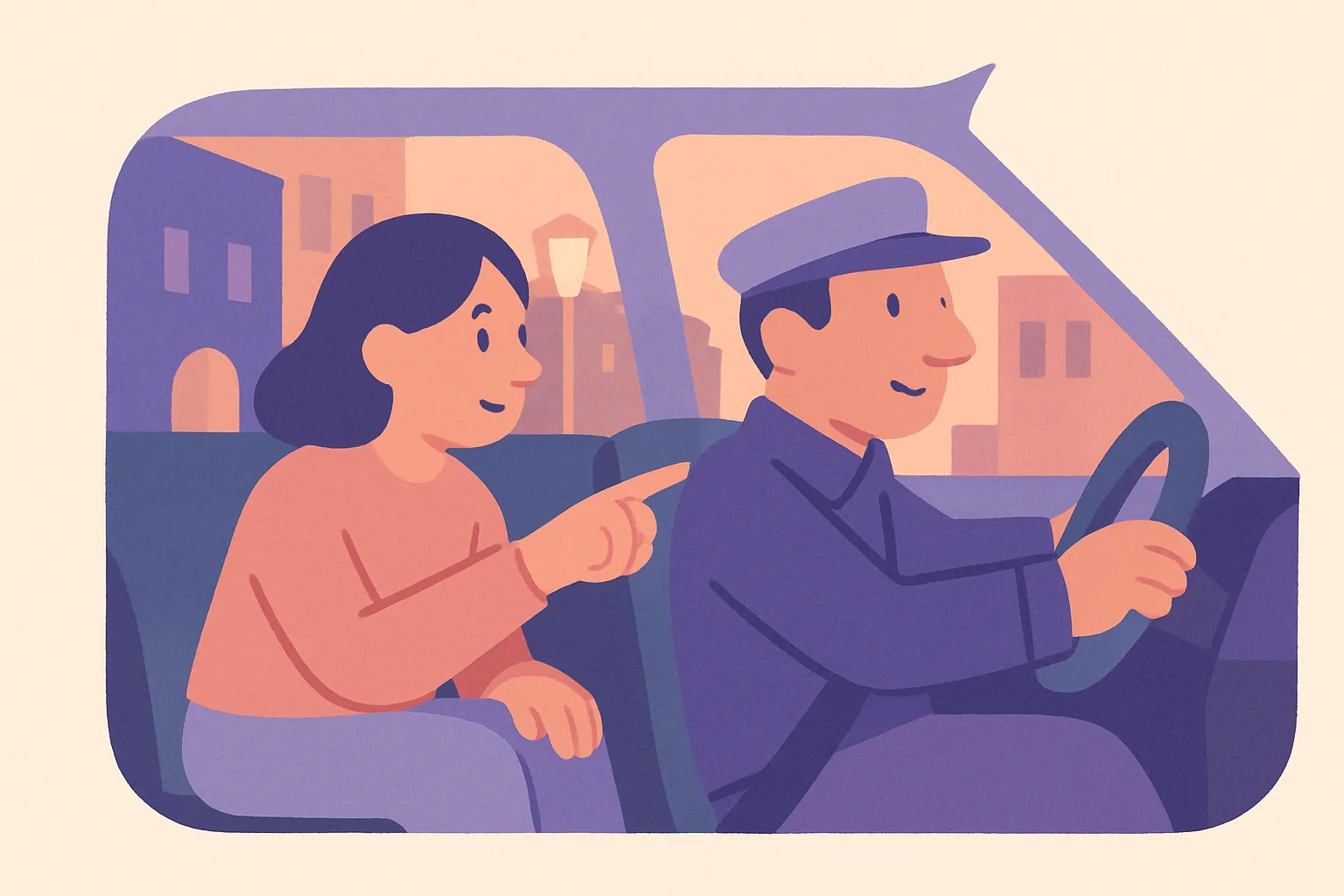
Here is the one thing to take away: in a Korean taxi, almost everything you say is a -아/어 주세요 request. Where you're going, where to stop, open the trunk, turn on the air conditioning — all of it is "please do this for me." Learn that one pattern properly and you can handle a whole ride without ever freezing up.
The pattern
주다 means to give. Attach it to a verb and you get "do this as a favor to me":
- 가다 → 가 주세요 — please go (for me)
- 세우다 → 세워 주세요 — please stop (the car, for me)
- 열다 → 열어 주세요 — please open it (for me)
Without 주세요, you get a bare command. That's the mistake learners make most often in taxis, and it sounds strange to a Korean ear:
❌ 서울역에 가세요. — You go to Seoul Station. ⭕ 서울역으로 가 주세요. — Please take me to Seoul Station.
가세요 is what you say to someone who is leaving — off you go. Said from the back seat, it lands like you're shooing the driver away on his own errand. It won't cause a diplomatic incident, but it marks you instantly as someone reading from a phrasebook. 가 주세요 is the natural one.
You may also hear older passengers say ○○으로 갑시다 (let's go to ○○). It's real Korean, but it's blunt and a bit old-fashioned coming from a young person or a foreigner. Stick with 가 주세요.
One more small thing: -(으)로 vs 에. 서울역으로 가 주세요 and 서울역에 가 주세요 are both correct. -(으)로 points at a direction and is what you'll hear most in taxis — it's also the particle the driver uses when he asks 어디로 가세요? Copy him.
The ride, start to finish
You get in the back. The driver doesn't say hello; he just asks where to.
기사님: 어디로 가세요? — Where are you headed? 나: 홍대입구역으로 가 주세요. — To Hongdae Station, please. 기사님: 네, 홍대입구역이요. 알겠습니다. — Yes, Hongdae Station. Got it.
Notice the driver's 어디로 가세요? Here 가세요 is correct — he's asking about your going, with the honorific 시. The same words are polite from him and wrong from you. That's the whole lesson in one exchange.
Also notice 알겠습니다 rather than 알겠어요. Drivers usually speak in 합쇼체, the formal polite style used in service work. You don't have to match it — plain 해요체 from the back seat is perfectly normal and polite.
A minute later, you're worried about time:
나: 좀 급한데, 빠른 길로 가 주세요. — I'm in a bit of a hurry, so please take the fast route. 기사님: 이 시간에는 좀 막혀요. — It gets a bit congested at this hour. 나: 아, 많이 막히네요. — Ah, traffic really is heavy.
That 막히네요 is you reacting to something you're seeing out the window right now — the ending for noticing something on the spot. It's the small-talk move that makes you sound like a person rather than a destination.
Near the end:
기사님: 다 왔습니다. 어디에 세워 드릴까요? — We're here. Where should I pull over? 나: 저 편의점 앞에서 세워 주세요. — Please stop in front of that convenience store. 기사님: 네, 여기요? — Okay, right here? 나: 네, 여기서 내릴게요. 카드로 계산할게요. — Yes, I'll get off here. I'll pay by card. 기사님: 네, 카드 주세요. 나: 감사합니다.
여기서 내릴게요 — I'll get off here — is a promise about your own next action, which is exactly what -(으)ㄹ게요 is for. 세워 주세요 asks him to stop the car; 내릴게요 announces what you are about to do. Both are normal; Koreans often use them back to back, just like above.
If you want to call out to the driver first, 기사님 is the word — never 아저씨 unless you know him. The 님 is what makes it respectful, the same instinct behind the other ways Koreans address strangers.
The requests worth memorizing
All the same shape. Drop 좀 in front to soften it — it's the Korean equivalent of "just" or "a little," and natives put it almost everywhere.
| Korean | English |
|---|---|
| 여기서 세워 주세요 | Please stop here |
| 조금만 더 가 주세요 | Please go just a bit further |
| 다음 신호에서 좌회전해 주세요 | Please turn left at the next light |
| 유턴해 주세요 | Please make a U-turn |
| 이 주소로 가 주세요 | Please go to this address |
| 트렁크 좀 열어 주세요 | Please open the trunk |
| 에어컨 좀 켜 주세요 | Please turn on the air conditioning |
| 영수증 좀 주세요 | Please give me a receipt |
| 천천히 가 주세요 | Please drive slowly |
Want it softer still? -아/어 주시겠어요? turns the request into a question: 창문 좀 열어 주시겠어요? (Would you mind opening the window?). Useful when you're asking for something extra rather than something the driver was going to do anyway.
When it goes off script
He asks which way to go. 큰길로 갈까요? (Shall I take the main road?) — answer 편한 길로 가 주세요 (whichever way is easiest, please) or 네, 그렇게 가 주세요 (yes, please go that way).
He asks if this is the right spot. 여기 맞으세요? — 네, 맞아요. Or, if not: 조금만 더 가 주세요.
You change your mind. 죄송한데, 목적지 좀 바꿔도 될까요? — Sorry, could I change the destination? Then give the new one: 강남역으로 가 주세요.
You've gone past it. 아, 조금 지났어요. 여기서 세워 주세요. — Ah, we've passed it a bit. Please stop here.
You can't pronounce the place name. Don't fight it. Show the map and say 이 주소로 가 주세요. Drivers hear this every day.
He starts chatting and you lose the thread. 죄송해요, 한국어를 잘 못해요. — Sorry, my Korean isn't good. Most drivers will smile and let it go. Silence in a taxi is completely normal; you owe no one a conversation.
That's the whole ride. Destination in 가 주세요, stop in 세워 주세요, exit in 내릴게요 — and 좀 sprinkled wherever you want to sound gentler.
Practice
Say these in Korean.
- Please take me to Seoul Station.
- Please stop in front of that convenience store.
- I'll get off here.
- Sorry, could I change the destination?
- Fix this sentence: 인천공항에 가세요.
Answers
- 서울역으로 가 주세요. (서울역에 가 주세요 is also fine.)
- 저 편의점 앞에서 세워 주세요.
- 여기서 내릴게요.
- 죄송한데, 목적지 좀 바꿔도 될까요?
- 인천공항으로 가 주세요. — 가세요 is a command aimed at the driver; you need 주세요 to make it a request for yourself.
Learn this properly, not just once
Blog posts teach one thing at a time. The HanDa books teach level 1 in order — every lesson built to be spoken, with a workbook and writing book beside it.
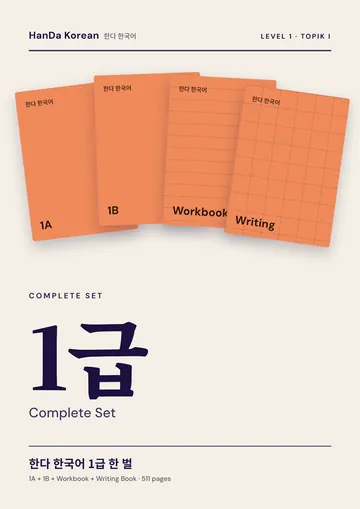 HanDa Korean Level 1 — Complete Set
Everything for level 1 — books, workbook and writing book · 511 pages
$10
HanDa Korean Level 1 — Complete Set
Everything for level 1 — books, workbook and writing book · 511 pages
$10
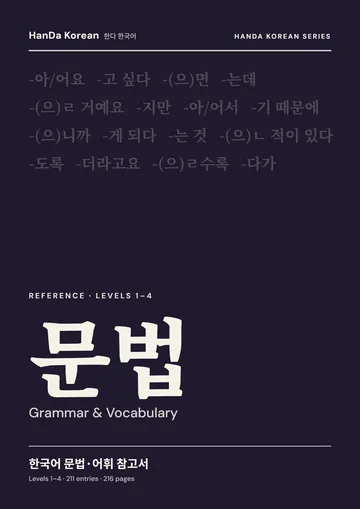 Korean Grammar & Vocabulary Reference
Every pattern in one place · 216 pages
$8
Korean Grammar & Vocabulary Reference
Every pattern in one place · 216 pages
$8
Practice this with an AI tutor
HanDa corrects every sentence you write or say — in real conversation, not flashcards.