9 Korean Fan Words K-pop Fans Should Know: 최애, 입덕, 덕질

You can know 300 textbook words and still be lost in a Korean fan comment section. That's because fandom Korean runs on its own small vocabulary — and most of it is built from one syllable: 덕.
Here's the key that unlocks half of today's list. The Japanese word otaku came into Korean as 오타쿠, got reshaped into 오덕후, and then shortened to 덕후 — a person obsessed with something. From there Koreans started treating 덕 like a building block: 입덕, 탈덕, 덕질, 성덕. Once you see 덕 as "obsession," the rest of the words decode themselves.
Nine words below. Each one stands alone, so take the ones you need.
1. 팬덤 — fandom
그 그룹은 팬덤이 정말 커요. — That group has a really big fandom.
팬덤 is just the English word "fandom" written in Hangul, and it means the same thing: the organized body of fans as a whole, not one person. Koreans use it the way English does — 팬덤 이름 (fandom name), 팬덤 문화 (fan culture). If you want to say "I'm a fan," that's 팬이에요, not 팬덤이에요; 팬덤 is the group, never the individual.
2. 덕후 — a superfan, a nerd about something
저 케이팝 덕후예요. — I'm a total K-pop nerd.
덕후 is casual and affectionate when you use it about yourself, and it isn't limited to K-pop at all — 영화 덕후 (film nerd), 빵 덕후 (bread obsessive) are completely normal. Calling yourself one sounds friendly and a little self-deprecating. Calling an older person or someone you've just met a 덕후 can land as too familiar, so keep it for yourself and close friends.
3. 입덕 — getting into a fandom
작년에 입덕했어요. — I got into them last year.
입 (enter) + 덕 (obsession) = the moment you fall in. The single most useful fan question in Korean is 입덕 계기가 뭐예요? — What made you become a fan? (계기 = the trigger, the thing that started it). Fans ask each other this constantly, and it's a natural, friendly opener in a comment section. 입덕하다 is a verb, so you conjugate it: 입덕했어요, 입덕한 지 일 년 됐어요 (it's been a year since I got into them).
4. 덕질 — doing fan stuff
요즘 덕질하느라 바빠요. — I've been busy with fan stuff lately.
질 is a suffix for an activity, so 덕질 covers the whole package: streaming, collecting photocards, going to concerts, staying up for a live stream. There's no neat English word for it — "fangirling" is close but narrower. Say 덕질하다 for the activity and you'll sound like a fan rather than a learner reciting vocabulary. If you want to write a letter as part of your 덕질, the five-line fan letter template is the easiest place to start.
5. 최애 — your favorite (person or thing)
제 최애는 막내예요. — My favorite member is the maknae.
최 (most) + 애 (love) — the one you love most. In a group it means your bias; the second favorite is 차애. But 최애 has escaped the fandom completely, and Koreans now use it for food, cafés, anything: 이게 제 최애 간식이에요. — This is my favorite snack. One caution: 최애 for a person is fandom language. Don't use it about your friend or your partner unless you're joking.
6. 탈덕 — leaving a fandom
저 작년에 탈덕했어요. — I left the fandom last year.
탈 is the 탈 of 탈출 (escape), so 탈덕 is the opposite of 입덕 — you stopped being a fan. It sounds like a clean break, almost like quitting a job, so it carries a little weight. If you just like them less than before, Koreans would say 예전만큼은 아니에요 (not like before) rather than announcing 탈덕.
7. 응원봉 — lightstick
응원봉 챙겼어요? — Did you bring your lightstick?
응원 means cheering or support and 봉 is a stick or rod, so 응원봉 is literally a cheering stick. This is the real word — fans say 응원봉, not 라이트스틱, although you'll see the Konglish version too. The verb that goes with it is 챙기다 (to pack, to remember to bring), which is exactly what a friend asks you before a concert.
8. 영업 — getting someone else into it
제가 영업 좀 할게요. — Let me sell you on them.
영업 normally means "business" or "sales" — you'll see 영업 중 on a shop door. Fans borrowed it for the act of converting a friend: sending clips, explaining members, wearing someone down. The passive form shows up just as often: 친구한테 영업당했어요. — A friend got me into them. It's playful, never serious, and works best among people your own age. In group chats you'll see it mixed in with Korean texting shorthand like ㅋㅋ and ㅇㅇ.
9. 성덕 — a fan whose dream came true
드디어 성덕이 됐어요. — I've finally become a successful fan.
성공한 덕후 (a successful fan), shortened. It means the thing you hoped for actually happened — your comment got read on a live stream, you got a wave at a concert, you shook hands with the person you'd admired for years. It's a word of pure joy, used with a bit of comic exaggeration, and fans say it about themselves constantly.
A note on how fans talk to idols
These nine words are what fans say about their fandom. Talking to an idol is a different register — comments are usually 해요체, warm and polite, and fans often use 오빠, 언니 or the person's stage name rather than 씨. If you're unsure which address term fits, the guide to Korean titles instead of names covers the logic.
One more thing worth knowing: 덕 words are slang. They're fine in comments, fan chats and conversations with friends, but you wouldn't write 덕질 in a school essay or say it to your Korean teacher the first week. Think of them the way you'd think of "stan" in English — everyone understands it, nobody uses it in a job interview.
Practice
Answer in Korean. 해요체 throughout.
- Ask a new friend what made them become a fan.
- Your friend asks who your favorite member is. Say it's the leader (리더).
- You're leaving for a concert. Ask your friend if they packed their lightstick.
- Say you've been busy with fan stuff lately.
- Which word means you stopped being a fan — 입덕, 탈덕, or 성덕?
Answers
- 입덕 계기가 뭐예요?
- 제 최애는 리더예요.
- 응원봉 챙겼어요?
- 요즘 덕질하느라 바빠요.
- 탈덕 (입덕 = joining, 성덕 = a fan whose wish came true)
If you learn only one of these today, make it 입덕 계기가 뭐예요? It's a real question Korean fans ask each other, it invites a long answer, and it's the fastest way to turn a comment section into a conversation.
Learn this properly, not just once
Blog posts teach one thing at a time. The HanDa books teach level 1 in order — every lesson built to be spoken, with a workbook and writing book beside it.
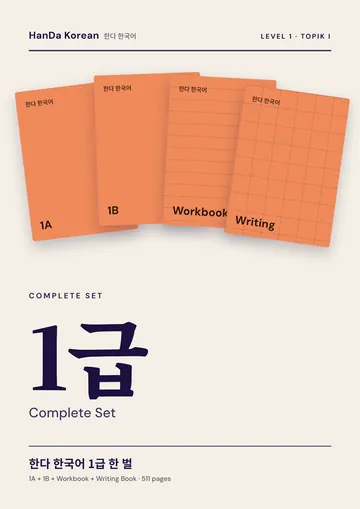 HanDa Korean Level 1 — Complete Set
Everything for level 1 — books, workbook and writing book · 511 pages
$10
HanDa Korean Level 1 — Complete Set
Everything for level 1 — books, workbook and writing book · 511 pages
$10
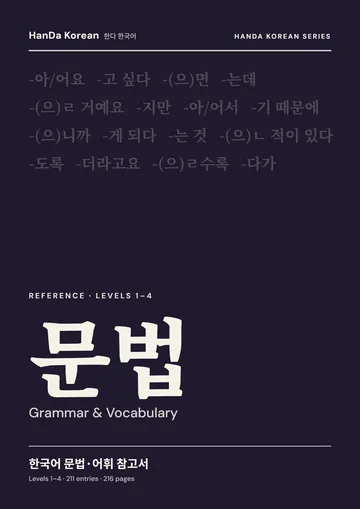 Korean Grammar & Vocabulary Reference
Every pattern in one place · 216 pages
$8
Korean Grammar & Vocabulary Reference
Every pattern in one place · 216 pages
$8
Practice this with an AI tutor
HanDa corrects every sentence you write or say — in real conversation, not flashcards.