Q1
( )에 들어갈 가장 알맞은 것을 고르십시오.
Choose the best expression for the blank.
이 의자는 버려진 나무로 ( ).
만들었습니다
만들게 됩니다
만들어졌습니다
만들고 싶습니다
The subject is '의자', so the passive '만들어졌습니다' (was made) is needed. '만들었습니다' is tempting, but it is active and needs a human subject who made the chair.
Q2
( )에 들어갈 가장 알맞은 것을 고르십시오.
Choose the best expression for the blank.
가: 부산으로 이사했다면서요?
가기로 했어요
가게 됐어요
가고 싶어요
가지 않았어요
'-게 되다' shows a change of situation caused by outside circumstances ('회사 결정으로'). '가기로 했어요' means the speaker decided it himself, which conflicts with '가기 싫었는데'.
Q3
( )에 들어갈 가장 알맞은 것을 고르십시오.
Choose the best expression for the blank.
의사 선생님이 저에게 건강을 위해 매일 30분씩 ( ) 했어요.
걷는다고
걸으라고
걷느냐고
걸었다고
A doctor advising a patient gives an indirect command, so '-(으)라고 하다' is used. '걷다' is a ㄷ-irregular verb, so it becomes '걸으라고'. '걷는다고' is tempting, but it reports a statement ('walks'), which does not fit advice about a future habit.
Q4
( )에 들어갈 가장 알맞은 것을 고르십시오.
Choose the best expression for the blank.
한국어를 오래 공부했는데도 말하기가 아직 어렵습니다.
공부했는데
공부했으면
공부했으니까
공부했더라면
'-았/었는데' links a background fact with a contrasting result: studied for a long time, but speaking is still hard. '공부했으니까' gives a reason, which does not fit because long study is not a reason for difficulty. '공부했으면' and '공부했더라면' are conditional and clash with the stated present fact.
Q5
( )에 들어갈 가장 알맞은 것을 고르십시오.
Choose the best expression for the blank.
가: 요즘 야근이 많아서 그런지 몸이 계속 안 좋아요.
나곤 해서
나는 바람에
날까 봐
났던 탓에
'-(으)ㄹ까 봐' expresses worry about a possible future result, and it fits '걱정되니까 좀 쉬세요'. '나는 바람에' is tempting, but it states a cause of an already-happened result and conflicts with the present worry. '나곤 해서' means it happens repeatedly, and '났던 탓에' blames a past event, so neither fits.
Q6
( )에 들어갈 가장 알맞은 것을 고르십시오.
Choose the best expression for the blank.
어제 친구에게서 ( ) 책을 읽어 보니 정말 재미있었어요.
빌린
빌리던
빌리는
빌릴
The book was borrowed and now is in hand, so the completed modifier '-(으)ㄴ' fits: '빌린 책'. '빌리던' is tempting, but it suggests an action in progress or left unfinished. '빌리는' is the present modifier and does not fit the completed action.
Q7
밑줄 친 부분과 의미가 가장 비슷한 것을 고르십시오.
Choose the expression closest in meaning to the underlined part.
그는 새로 시작한 사업이 잘될지 몰라서 계속 마음을 졸였다 .
불안해하며 걱정했다
기대하며 기다렸다
미안해하며 사과했다
실망하며 포기했다
'마음을 졸이다' means to feel anxious and worried about an uncertain outcome, which matches '불안해하며 걱정했다'. '기대하며 기다렸다' is tempting because he is also waiting for a result, but it expresses hopeful anticipation, not anxiety. The other choices describe apology and giving up, which the sentence does not say.
Q8
밑줄 친 부분과 의미가 가장 비슷한 것을 고르십시오.
Choose the expression closest in meaning to the underlined part.
그 가수는 노래를 잘할 뿐만 아니라 춤도 잘 춥니다.
잘하더라도
잘하려면
잘하는 바람에
잘하는 데다가
'-(으)ㄹ 뿐만 아니라' adds another item, as does '-는 데다가'. '잘하는 바람에' gives a negative cause and does not fit this praise.
Q9
밑줄 친 부분과 의미가 가장 비슷한 것을 고르십시오.
Choose the expression closest in meaning to the underlined part.
아무리 바빠도 아침은 꼭 먹습니다.
바쁘니까
바쁘다가
바쁘더라도
바쁘려면
'-아/어도' means 'even if', and '-더라도' has the same concessive meaning. '바쁘니까' gives a reason ('because busy'), which would make eating breakfast illogical.
Q10
밑줄 친 부분과 의미가 가장 비슷한 것을 고르십시오.
Choose the expression closest in meaning to the underlined part.
요즘 일이 많아서 정신이 없습니다 .
몹시 피곤합니다
매우 바쁩니다
걱정이 많습니다
의욕이 없습니다
'정신이 없다' with '일이 많아서' means being extremely busy. '몹시 피곤합니다' is tempting as a result of overwork, but it is not the meaning of the idiom.
Q11
( )에 들어갈 가장 알맞은 것을 고르십시오.
Choose the word that best fits the blank.
저는 이번 프로젝트에서 홍보 업무를 ( ) 있습니다.
막고
맞고
받고
맡고
'업무를 맡다' means to be in charge of a task. '받고' is tempting because of '업무를 받다', but it means receiving, not being responsible for, a task.
Q12
( )에 들어갈 가장 알맞은 것을 고르십시오.
Choose the word that best fits the blank.
회사는 신제품에 대한 고객의 의견을 ( ) 있습니다.
모으고
묶고
쌓고
담고
'의견을 모으다' means to gather opinions. '쌓다' and '묶다' are used for physical things or experience, not opinions.
Q13
( )에 들어갈 가장 알맞은 것을 고르십시오.
Choose the word that best fits the blank.
길이 막혀서 약속 시간에 ( ) 것 같아서 친구에게 전화를 했다.
놓칠
느릴
늦을
지날
'약속 시간에 늦다' is the natural collocation, so '늦을' is correct. '놓칠' needs an object such as '버스를' or '기회를', and '약속 시간에' does not take it. '느릴' describes slow speed, not being late, and '지날' needs '시간이' as a subject.
Q14
( )에 들어갈 가장 알맞은 것을 고르십시오.
Choose the word that best fits the blank.
저는 어제 병원에서 독감 주사를 ( ).
맞혔습니다
맞았습니다
맞췄습니다
맡았습니다
'주사를 맞다' means to get a shot. '맞히다' and '맞추다' are similar-looking words but mean 'hit the answer' and 'adjust or fit', so they do not fit.
Q15
무엇에 대한 글입니까?
What is the text about?
[안내]
자료 대출 절차
자료실 이용 규칙
자료실 운영 시간 변경
자료 촬영 신청 방법
The notice gives hours, a rule that materials cannot leave the room, and a rule about photos, so it is about usage rules. '자료 대출 절차' is tempting because of the materials, but borrowing is explicitly not allowed. '자료 촬영 신청 방법' covers only the last sentence.
Q16
무엇에 대한 글입니까?
What is the text about?
주차장 이용 안내
임시 주차장 설치 계획
지하 주차장 요금 안내
주차장 공사로 인한 이용 제한
건물 앞 도로 통행 금지
The notice says the underground parking lot cannot be used during floor work, so it is about use restrictions due to construction. '임시 주차장 설치 계획' is tempting because the temporary lot is mentioned, but it is only given as an alternative. The other choices mention fees or road closure, which are not in the notice.
Q17
다음을 읽고 내용이 같은 것을 고르십시오.
Read and choose the statement that matches the passage.
저는 지난달부터 자전거로 출근하고 있습니다. 처음에는 힘들었는데 이제는 익숙해졌습니다. 버스를 타면 30분쯤 걸리지만 자전거로는 20분이면 도착합니다. 게다가 운동도 되고 교통비도 아낄 수 있어서 좋습니다. 다만 비가 오는 날에는 자전거를 탈 수 없어서 지하철을 이용합니다.
비가 오면 대중교통으로 출근한다.
회사까지 자전거보다 버스가 더 빠르다.
처음부터 자전거를 타는 것이 편했다.
자전거 때문에 교통비가 더 든다.
The passage says that on rainy days the writer uses the subway, which matches '비가 오면 대중교통으로 출근한다'. '버스가 더 빠르다' reverses the facts: the bus takes 30 minutes and the bike 20.
Q18
다음을 읽고 내용이 같은 것을 고르십시오.
Read and choose the statement that matches the passage.
우리 동네에서는 매주 수요일 저녁에 '플라스틱 없는 장터'가 열립니다. 이곳에서는 사람들이 집에서 쓰던 용기를 가져와 채소나 곡물을 담아 갑니다. 처음에는 불편하다는 사람이 많았지만 지금은 참여하는 주민이 두 배로 늘었습니다. 장터에서 일하는 사람들도 포장 비용이 줄어서 만족한다고 합니다. 다음 달에는 아이들을 위한 체험 행사도 준비하고 있습니다.
장터는 주말마다 열린다.
처음부터 참여하는 주민이 많았다.
상인들은 포장 비용 때문에 불만이다.
손님이 자기 그릇을 가져오면 물건을 거기에 담아 준다.
Customers bring their own containers and take vegetables or grains in them, which matches the correct choice. '상인들은 불만이다' is wrong because the sellers are satisfied that packaging costs have dropped.
Q19
다음을 순서대로 맞게 배열한 것을 고르십시오.
Choose the correct order of the sentences.
(가) 그래서 요즘은 집에서 간단하게 운동하는 사람이 늘고 있다.
(가)-(다)-(나)-(라)
(나)-(다)-(가)-(라)
(다)-(나)-(가)-(라)
(다)-(가)-(나)-(라)
(다) introduces the general idea, (나) adds the problem with '하지만', (가) gives the result with '그래서', and (라) explains how home exercise works. Starting with (나) fails because '하지만' needs a preceding statement to contrast with.
Q20
( )에 들어갈 말로 가장 알맞은 것을 고르십시오.
Choose the clause that best fills the blank.
요즘 길을 찾을 때 지도 앱을 쓰는 사람이 많다. 앱을 따라가면 처음 가는 곳도 쉽게 도착할 수 있다. 그런데 앱에만 의존하다 보면 ( ). 길을 직접 기억하려고 하지 않기 때문이다. 그래서 가끔은 앱을 끄고 주변 건물과 표지판을 보면서 걸어 보는 것도 좋다.
길이 더 복잡해질 수 있다
방향을 찾는 능력이 약해질 수 있다
목적지에 늦게 도착할 수 있다
새로운 앱을 배워야 할 수 있다
The next sentence says people do not try to remember the route themselves, so their sense of direction can weaken. '목적지에 늦게 도착할 수 있다' contradicts the earlier point that apps make arriving easy.
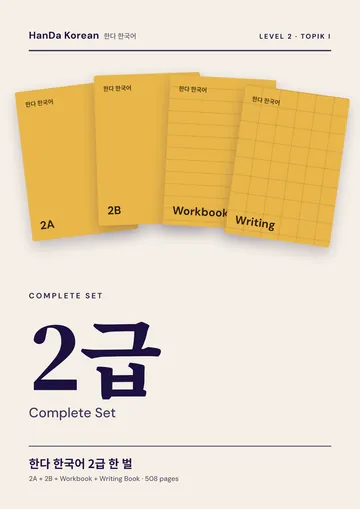 HanDa Korean Level 2 — Complete Set
Complete level 2 — student books, workbook and writing book · 508 pages
$10
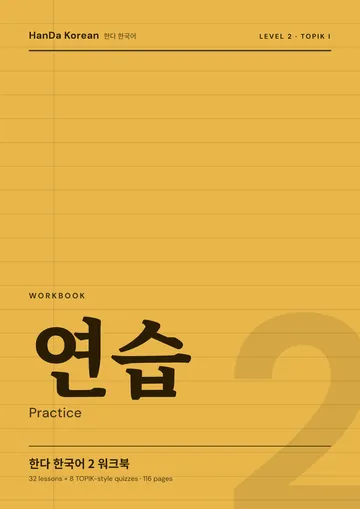 HanDa Korean 2 Workbook
Extra drilling on the same lessons · 116 pages
$6
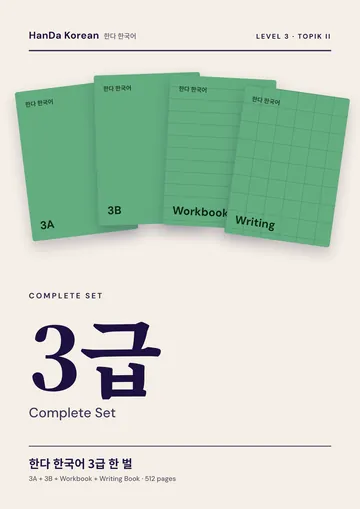 HanDa Korean Level 3 — Complete Set
Complete level 3 — student books, workbook and writing book · 512 pages
$10
 Korean Grammar & Vocabulary Reference
Every pattern from level 1 to 6 in one book · 216 pages
$8
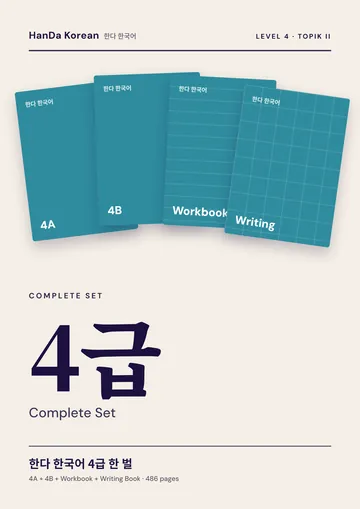 HanDa Korean Level 4 — Complete Set
Complete level 4 — student books, workbook and writing book · 486 pages
$10