Q1
( )에 들어갈 가장 알맞은 것을 고르십시오.
Choose the best expression for the blank.
건강을 ( ) 매일 아침 일찍 일어나 운동을 합니다.
지켜서
지키기 위해
지키다가
지키면서
The sentence states a purpose (keeping health), so '지키기 위해' fits. '지켜서' expresses a reason or sequence and does not make sense here, and '지키다가' would mean an action is interrupted.
Q2
( )에 들어갈 가장 알맞은 것을 고르십시오.
Choose the best expression for the blank.
비행기 시간에 늦지 ( ) 택시를 타고 공항으로 갔습니다.
않으려고
않으니까
않지만
않는데도
'-(으)려고' expresses the intention behind an action: 'in order not to be late for the flight, I took a taxi.' '않으니까' gives a reason, but 'because I will not be late, I took a taxi' is illogical. '않지만' and '않는데도' express contrast, which does not fit the context.
Q3
( )에 들어갈 가장 알맞은 것을 고르십시오.
Choose the best expression for the blank.
어제 영화를 보( ) 너무 피곤해서 잠이 들어 버렸어요.
러
도록
다가
려면
'-다가' shows an ongoing action being interrupted by another event: falling asleep while watching. '-러' would need a movement verb afterward (e.g. 보러 갔어요), so it does not fit 'fell asleep'.
Q4
( )에 들어갈 가장 알맞은 것을 고르십시오.
Choose the best expression for the blank (dialogue).
가: 민수 씨는 평소에 아침을 먹고 출근해요?
먹지 않는
먹을 수 없는
먹어 본
먹을 뻔한
'-는 편이다' describes a general tendency, so '먹지 않는 편이에요' (I tend not to eat breakfast) fits the question about '평소에'. '먹을 수 없는' is tempting but means being unable to eat, which does not describe a habit and does not combine naturally with '편이다'. '먹어 본' and '먹을 뻔한' do not fit the habit question.
Q5
( )에 들어갈 가장 알맞은 것을 고르십시오.
Choose the best expression for the blank (dialogue).
가: 담배를 끊는다고 들었어요.
끊기로 했어요
끊어 본 적이 있어요
끊는 편이에요
끊을 수 있어요
A decision made for a future period ('이번 달부터') is expressed with '-기로 했어요'. '끊어 본 적이 있어요' talks about past experience, which does not match 'from this month'.
Q6
( )에 들어갈 가장 알맞은 것을 고르십시오.
Choose the best expression for the blank.
저는 한복을 한 번도 ( ) 이번 축제 때 꼭 입어 보고 싶어요.
입어 봤기 때문에
입은 적이 없어서
입을 수 있어서
입는 편이어서
'한 번도 입은 적이 없어서' (because I have never worn it) naturally gives the reason for wanting to try it. '입어 봤기 때문에' contradicts '한 번도', and '입는 편이어서' implies a habit, which does not fit never having worn it.
Q7
밑줄 친 부분과 의미가 가장 비슷한 것을 고르십시오.
Choose the expression closest in meaning to the underlined part.
요즘 일이 많아서 정신이 없어요 .
걱정이 많아 잠을 못 자요
매우 바빠서 여유가 없어요
일이 어려워 포기하고 싶어요
피곤해서 쉬고 싶어요
'정신이 없다' after 'a lot of work' means being so busy there is no room to breathe. '피곤해서 쉬고 싶어요' is tempting but describes tiredness, not busyness.
Q8
밑줄 친 부분과 의미가 가장 비슷한 것을 고르십시오.
Choose the expression closest in meaning to the underlined part.
길이 막혀서 약속에 늦었어요.
길이 막히는 바람에
길이 막히기 위해
길이 막히는 데다가
길이 막히거나
'-는 바람에' expresses a cause leading to a negative result, same as '-아서' here. '막히는 데다가' adds another fact and would need a second problem to follow.
Q9
밑줄 친 부분과 의미가 가장 비슷한 것을 고르십시오.
Choose the expression closest in meaning to the underlined part.
그 일은 제가 맡겠습니다 .
제가 도와 드리겠습니다
제가 확인해 보겠습니다
제가 부탁하겠습니다
제가 책임지고 하겠습니다
'맡다' here means to take charge of a task, so '책임지고 하겠습니다' matches. '도와 드리겠습니다' means only helping someone else with their task.
Q10
밑줄 친 부분과 의미가 가장 비슷한 것을 고르십시오.
Choose the expression closest in meaning to the underlined part.
새로 시작한 사업이 드디어 자리를 잡았습니다 .
알려졌습니다
확대되었습니다
안정되었습니다
중단되었습니다
'자리를 잡다' means to become established and stable. '확대되었습니다' (expanded) is tempting, but it is about size, not stability.
Q11
( )에 들어갈 가장 알맞은 것을 고르십시오.
Choose the word that best fits the blank.
우리 팀은 이번 프로젝트에서 중요한 역할을 ( ).
막았습니다
맡았습니다
맞았습니다
받았습니다
'역할을 맡다' means to take on a role. '받았습니다' is tempting because it means 'received', but '역할을 받다' is not a natural collocation.
Q12
( )에 들어갈 가장 알맞은 것을 고르십시오.
Choose the word that best fits the blank.
친구와 오해가 생겨서 두 사람의 사이가 점점 ( ).
낮아졌어요
줄어들었어요
멀어졌어요
떨어졌어요
'사이가 멀어지다' means a relationship grows distant. '떨어졌어요' means physically falling or separating, and does not collocate with '사이'.
Q13
( )에 들어갈 가장 알맞은 것을 고르십시오.
Choose the word that best fits the blank.
시험을 앞두고 너무 긴장해서 가슴이 계속 ( ).
달려요
날아요
걸어요
뛰어요
'가슴이 뛰다' describes a pounding heart. '달려요' shares the meaning 'run' but is not used for the heart.
Q14
( )에 들어갈 가장 알맞은 것을 고르십시오.
Choose the word that best fits the blank.
회의 내용을 간단히 ( ) 메일로 보내 주세요.
정리해
정해
조정해
준비해
'내용을 정리하다' means to organize or summarize content, which suits sending it by email. '정해' (decide) and '조정해' (adjust) do not fit 'content'.
Q15
무엇에 대한 글입니까?
What is the notice about?
도서관 이용 안내
책을 빌리는 방법
도서관에 가는 방법
도서관을 이용할 수 있는 때
도서관에서 열리는 행사
The notice lists when the reading room and the loan and return desk are available and the closed day, so it is about when the library can be used. '책을 빌리는 방법' is tempting because loans are mentioned, but only times are given, not how to borrow.
Q16
무엇에 대한 글입니까?
What is the notice about?
플라스틱은 깨끗이 씻어서 내놓으세요.
쓰레기를 버리는 시간
재활용품을 내놓는 요령
재활용품을 모으는 장소
쓰레기봉투를 사는 방법
Each line explains how to prepare items before putting them out (wash, remove labels, separate paper), so the topic is how to put out recyclables. '쓰레기를 버리는 시간' is tempting because it is also about trash, but no times are given.
Q17
다음을 읽고 내용이 같은 것을 고르십시오.
Read and choose the statement that matches the passage.
저는 회사까지 지하철로 한 시간쯤 걸립니다. 전에는 차로 다녔는데 길이 너무 막혀서 작년부터 지하철을 타기 시작했습니다. 지하철에서는 책을 읽거나 영어 공부를 합니다. 처음에는 사람이 많아서 힘들었지만 지금은 익숙해졌습니다. 요즘은 출근 시간이 기다려질 때도 있습니다.
지금도 지하철이 붐벼서 출근하기 힘들어한다.
지하철을 타고 나서부터 영어 학원에 다니고 있다.
처음부터 지하철로 출근하는 것이 즐거웠다.
길이 막히는 것이 싫어서 출근 방법을 바꿨다.
The writer switched from driving because of heavy traffic, which paraphrases the correct choice. '지금도 ... 힘들어한다' is wrong because the crowds were hard only at first and the writer is now used to them.
Q18
다음을 읽고 내용이 같은 것을 고르십시오.
Read and choose the statement that matches the passage.
우리 동네에 올해부터 공유 자전거가 생겼습니다. 앱으로 자전거를 빌리고 아무 곳에나 반납할 수 있습니다. 요금은 30분에 500원입니다. 저는 지난주에 처음 타 봤는데 생각보다 편했습니다. 그런데 비가 오는 날에는 운행하지 않아서 아쉽습니다. 앞으로 출근할 때 자주 이용할 생각입니다.
자전거는 정해진 장소에만 반납해야 한다.
필자는 이 서비스를 이미 여러 번 이용했다.
비가 오는 날에는 자전거를 이용할 수 없다.
요금은 한 시간에 500원이다.
'비가 오는 날에는 운행하지 않아서' means the bikes cannot be used on rainy days. '정해진 장소에만 반납' contradicts '아무 곳에나 반납할 수 있습니다'.
Q19
( )에 들어갈 가장 알맞은 것을 고르십시오.
Choose the clause that best fits the blank.
요즘 많은 사람들이 스마트폰 지도 앱으로 길을 찾습니다. 목적지만 입력하면 가장 빠른 길을 알려 주기 때문에 처음 가는 곳도 어렵지 않게 갈 수 있습니다. 하지만 지도 앱에 너무 의존하면 ( ). 실제로 앱 없이는 집 근처에서도 길을 잃거나 방향 감각이 떨어졌다고 말하는 사람이 많습니다. 그래서 가끔은 앱을 끄고 주변 건물과 표지판을 보며 길을 찾아보는 것이 좋습니다.
새로운 장소를 찾기가 오히려 어려워질 수 있습니다
길을 찾는 데 걸리는 시간이 훨씬 길어질 수 있습니다
스스로 방향을 판단하는 능력이 약해질 수 있습니다
스마트폰 배터리가 빨리 닳아 불편해질 수 있습니다
The next sentences mention getting lost without the app and a weaker sense of direction, so the blank must say one's own ability to judge direction weakens. '길을 찾는 데 걸리는 시간이 훨씬 길어질 수 있습니다' is tempting but the passage says the app gives the fastest route and never discusses travel time.
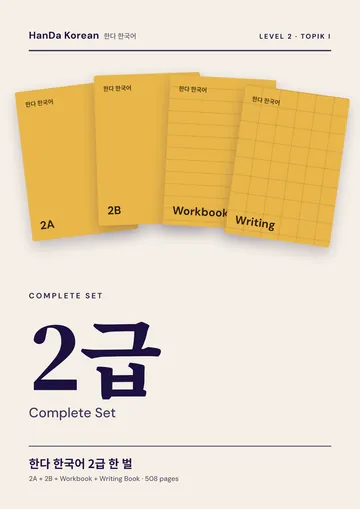 HanDa Korean Level 2 — Complete Set
Complete level 2 — student books, workbook and writing book · 508 pages
$10
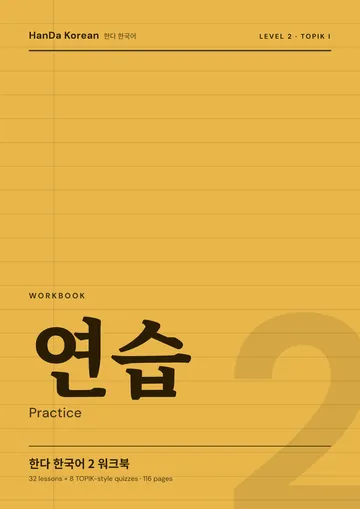 HanDa Korean 2 Workbook
Extra drilling on the same lessons · 116 pages
$6
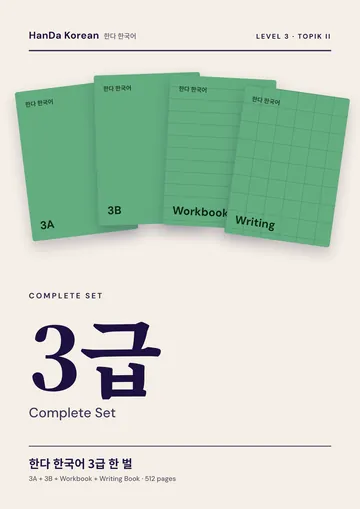 HanDa Korean Level 3 — Complete Set
Complete level 3 — student books, workbook and writing book · 512 pages
$10
 Korean Grammar & Vocabulary Reference
Every pattern from level 1 to 6 in one book · 216 pages
$8
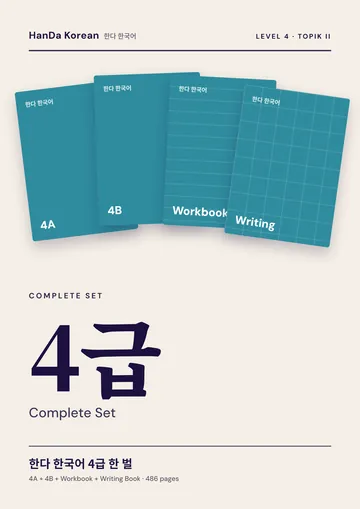 HanDa Korean Level 4 — Complete Set
Complete level 4 — student books, workbook and writing book · 486 pages
$10