Q1
( )에 들어갈 가장 알맞은 것을 고르십시오.
Choose the best expression to fill in the blank.
옆집에서 음악 소리가 너무 크게 ( ) 잠을 잘 수 없었어요.
들어서
들려서
들으니까
들으려고
'들려서' is the passive of 듣다 (sound reaches the listener without intent), so 'the music was audible, so I couldn't sleep' fits. '들어서' and '들으니까' treat the speaker as actively listening, and '들으려고' means 'in order to listen', which does not fit with being unable to sleep.
Q2
( )에 들어갈 가장 알맞은 것을 고르십시오.
Choose the best expression to fill in the blank.
친구가 저에게 어제 왜 모임에 안 ( ) 물어서 일이 있었다고 대답했어요.
왔다고
오자고
오라고
왔냐고
The friend 'asked' (물어서), so the reported question '-냐고' is needed: '왜 안 왔냐고 물어서'. '왔다고' reports a statement, not a question. '오자고' (suggestion) and '오라고' (command) also do not match 'asked why I did not come'.
Q3
( )에 들어갈 가장 알맞은 것을 고르십시오.
Choose the best expression to fill in the blank.
집에 ( ) 손부터 씻었어요.
도착하더라도
도착하기 전에
도착하자마자
도착하느라고
'도착하자마자' means 'as soon as I arrived', so washing hands right after arriving makes sense. '도착하기 전에' (before arriving) conflicts with being at home, and '도착하느라고' (because busy arriving) gives a wrong cause-effect link.
Q4
( )에 들어갈 가장 알맞은 것을 고르십시오.
Choose the best expression to fill in the blank.
비가 아주 많이 ( ) 내일 등산은 갈 거예요.
와도
오니까
오는 바람에
오기 위해
'와도' (even if it rains a lot) matches the contrast with 'I will still go hiking'. '오니까' gives a reason that would lead to NOT going, and '오는 바람에' describes a negative result that already happened, so neither fits the future plan.
Q5
( )에 들어갈 가장 알맞은 것을 고르십시오.
Choose the best expression to fill in the blank.
건강을 ( ) 매일 아침 30분씩 걷고 있습니다.
지키기 위해
지킨 후에
지키니까
지키자마자
'지키기 위해' expresses purpose: 'in order to protect my health, I walk every morning'. '지킨 후에' (after protecting) and '지키자마자' (as soon as) describe time order, which does not make sense with a daily habit. '지키니까' gives a reason that does not fit the ongoing action.
Q6
( )에 들어갈 가장 알맞은 것을 고르십시오.
Choose the best expression to fill in the blank.
수술을 받은 ( ) 한 달 동안은 무거운 물건을 들면 안 됩니다.
후부터
후까지
전부터
전까지
'받은 후부터 한 달 동안' means 'starting after the surgery, for a month', which fits the restriction period. '후까지' (until after) and '전까지' (until before) do not fit because the restriction begins after the surgery. '전부터' is wrong because '받은' (past form) calls for '후', and '-(으)ㄴ 전' is ungrammatical.
Q7
밑줄 친 부분과 의미가 가장 비슷한 것을 고르십시오.
Choose the expression closest in meaning to the underlined part.
그 식당은 맛이 있기는 하지만 너무 비싸요.
있는 데다가
있을 뿐만 아니라
있기는 해도
있기 때문에
'-기는 하지만' concedes one point and then contrasts, and '있기는 해도' has the same concessive meaning. '있는 데다가' and '있을 뿐만 아니라' add information instead of contrasting, and '있기 때문에' gives a reason, which does not fit 'but too expensive'.
Q8
밑줄 친 부분과 의미가 가장 비슷한 것을 고르십시오.
Choose the expression closest in meaning to the underlined part.
친구는 요즘 일이 바빠서 연락을 못 해요.
바쁜 덕분에
바쁘기 때문에
바쁘더라도
바쁘기는 하지만
'바쁘기 때문에' is a neutral statement of cause, the same as '바빠서'. '바쁜 덕분에' signals a positive result, so it clashes with '연락을 못 해요'. '바쁘더라도' and '바쁘기는 하지만' express concession (even if / although), which reverses the logic.
Q9
밑줄 친 부분과 의미가 가장 비슷한 것을 고르십시오.
Choose the expression closest in meaning to the underlined part.
저는 어제 비 오는 날 계단에서 넘어질 뻔했어요 .
넘어질 정도로 심하게 다쳤어요
넘어질 뻔하다가 겨우 균형을 잡았어요
넘어져서 잠깐 쉬어야 했어요
넘어질까 봐 일부러 천천히 걸었어요
'-(으)ㄹ 뻔했다' means something almost happened but did not, so 'I almost fell but regained my balance' matches. '넘어져서 잠깐 쉬어야 했어요' is tempting because it is also about a fall, but it says the person actually fell. '넘어질까 봐 천천히 걸었어요' describes advance caution rather than a near-miss, and the first choice says the person was hurt.
Q10
밑줄 친 부분과 의미가 가장 비슷한 것을 고르십시오.
Choose the expression closest in meaning to the underlined part.
이번 프로젝트를 끝내는 대로 회식을 할 거예요.
끝내자마자
끝내더라도
끝내기 전에
끝내는 동안
'-는 대로' here means 'as soon as', the same as '끝내자마자'. '끝내기 전에' reverses the order of events, and '끝내는 동안' means 'while finishing', so the dinner would happen during the project.
Q11
( )에 들어갈 가장 알맞은 것을 고르십시오.
Choose the word that best fits the blank.
이번 발표는 제가 ( ) 됐습니다.
막게
맡게
맞게
받게
'발표를 맡다' (take charge of a presentation) is the natural collocation. '받게' looks plausible, but '발표를 받다' does not exist, and '막다' (block) and '맞다' (be correct/receive) do not take '발표를' naturally.
Q12
( )에 들어갈 가장 알맞은 것을 고르십시오.
Choose the word that best fits the blank.
수업 시간에는 휴대폰을 ( ) 놓아 주세요.
닫아
끊어
꺼
막아
'휴대폰을 끄다' (turn off) is the natural collocation, giving '꺼 놓다'. '끊어' goes with '전화를 끊다' (hang up), and '닫아' and '막아' do not go with a phone.
Q13
( )에 들어갈 가장 알맞은 것을 고르십시오.
Choose the word that best fits the blank.
길이 많이 막혀서 약속 시간에 ( ).
늦었어요
놓쳤어요
잃었어요
미뤘어요
'약속 시간에 늦다' (be late for the appointment time) is the natural collocation with the particle '에'. '놓쳤어요' needs an object like '버스를 놓치다', not '시간에'. '잃었어요' goes with things lost, and '미뤘어요' needs an object such as '약속을' and does not result from traffic.
Q14
( )에 들어갈 가장 알맞은 것을 고르십시오.
Choose the word that best fits the blank.
스트레스가 ( ) 건강에 안 좋아요.
모이면
쌓으면
놓이면
쌓이면
'스트레스가 쌓이다' (stress builds up) is the fixed collocation with the subject marker 가. '쌓으면' is the active verb and would need '스트레스를', and '모이면' and '놓이면' do not collocate with stress.
Q15
무엇에 대한 글입니까?
What is the text about?
[알려 드립니다]
도서관 열람실 이용 시간 안내
도서관에서 발견된 물건의 보관 장소 변경
주인을 찾는 습득물에 대한 안내
도서관 안내 데스크 직원 모집 공고
The notice says items were found and the owners should check at the desk by Friday, so it is about found items whose owners are being sought (습득물). '도서관 열람실 이용 시간 안내' is tempting because the reading room appears, but it is only where the items were found. '보관 장소 변경' is wrong because the desk is where owners check, not a changed storage location, and the notice mentions no recruitment.
Q16
무엇에 대한 글입니까?
What is the text about?
함께 타면 더 즐거워요!
자전거 안전 장비 판매 안내
한강공원 자전거 도로 이용 규칙
자전거를 함께 타는 모임 참가자 모집
자전거 초보자를 위한 교육 과정 소개
The text gives the weekly time and place and says anyone with a bike can join, so it is recruiting participants for a group ride. '자전거 안전 장비 판매 안내' is tempting because equipment is mentioned, but it is only lent, not sold. '교육 과정' is wrong because no lessons are described.
Q17
다음을 읽고 내용이 같은 것을 고르십시오.
Read the passage and choose the statement that matches.
저는 회사에서 일하면서 퇴근 후에 영어 학원에 다닙니다. 처음에는 피곤해서 그만두고 싶었습니다. 하지만 같은 반 친구들과 함께 공부하니까 점점 재미있어졌습니다. 지난달에는 회사에서 외국 손님을 만났는데, 학원에서 배운 표현을 사용해서 칭찬을 받았습니다. 앞으로는 영어로 회의도 할 수 있도록 계속 공부할 생각입니다.
영어 학원은 회사 안에 있다.
처음부터 영어 공부가 즐거웠다.
아직 외국 손님을 만난 적이 없다.
배운 영어 덕분에 업무에서 인정을 받았다.
The writer used expressions learned at the academy with a foreign guest and was praised, which paraphrases being recognized at work thanks to English. '처음부터 ... 즐거웠다' is wrong because the writer first wanted to quit and only later found it fun.
Q18
다음을 읽고 내용이 같은 것을 고르십시오.
Read the passage and choose the statement that matches.
우리 동네에는 한 달에 한 번 '쓰레기 없는 날'이 있습니다. 이날에는 주민들이 아침에 모여 공원과 길을 청소합니다. 처음에는 참여하는 사람이 열 명 정도였지만 지금은 오십 명이 넘습니다. 청소가 끝나면 모두 함께 간단한 식사를 합니다. 저도 지난달부터 참여하고 있는데, 이웃을 알게 되어서 좋습니다.
청소는 일주일에 한 번 한다.
참가자가 시작할 때보다 늘어났다.
식사를 한 다음에 청소를 시작한다.
필자는 행사가 시작될 때부터 참여했다.
The number of participants grew from about ten to over fifty, which matches 'increased compared with the start'. '일주일에 한 번' changes the frequency (it is once a month), and the meal happens after cleaning, not before.
Q19
다음을 순서대로 맞게 배열한 것을 고르십시오.
Choose the correct order of the sentences.
(가) 그래서 요즘은 스마트폰으로 간단하게 예약하는 사람이 많습니다.
(가)-(나)-(다)-(라)
(나)-(가)-(라)-(다)
(나)-(다)-(가)-(라)
(다)-(나)-(가)-(라)
(나) introduces the past method, (다) gives its problem with '하지만', (가) gives the result with '그래서', and (라) explains why the app is convenient. '(나)-(가)-(라)-(다)' fails because '하지만' in (다) would end the passage on a problem that has no link to the app.
Q20
( )에 들어갈 말로 가장 알맞은 것을 고르십시오.
Choose the best clause to fill in the blank.
요즘 많은 사람이 잠을 충분히 자지 못해 피곤해합니다. 잠이 부족하면 집중력이 떨어지고 병에 걸리기도 쉽습니다. 그래서 전문가들은 ( ) 말합니다. 특히 잠자리에 들기 전에 스마트폰을 보지 않는 것이 좋습니다. 작은 습관을 바꾸면 훨씬 깊은 잠을 잘 수 있습니다.
잠자기 전의 습관부터 바꿔야 한다고
낮에 오래 자는 것이 도움이 된다고
피곤할 때는 운동을 쉬어야 한다고
스마트폰 앱으로 수면을 관리해야 한다고
The following sentences talk about not using a smartphone before bed and changing small habits, so the blank should be about changing pre-sleep habits. '스마트폰 앱으로 수면을 관리해야 한다고' reuses 스마트폰 but contradicts the advice not to look at the phone before sleep.
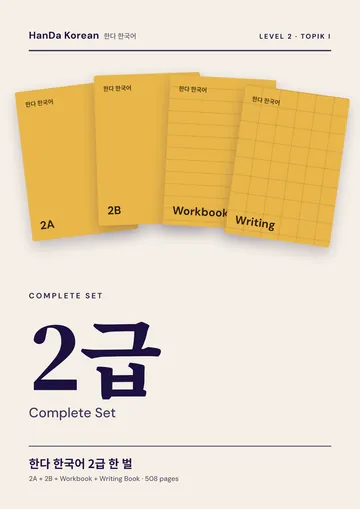 HanDa Korean Level 2 — Complete Set
Complete level 2 — student books, workbook and writing book · 508 pages
$10
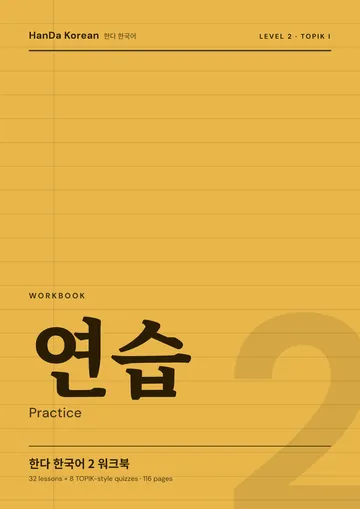 HanDa Korean 2 Workbook
Extra drilling on the same lessons · 116 pages
$6
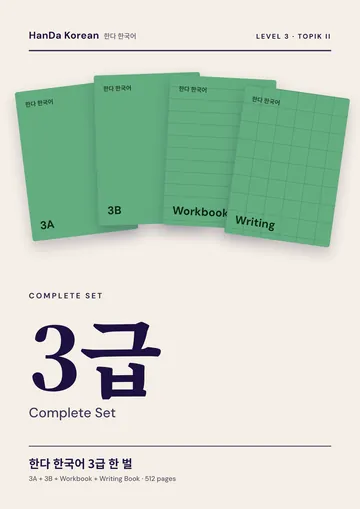 HanDa Korean Level 3 — Complete Set
Complete level 3 — student books, workbook and writing book · 512 pages
$10
 Korean Grammar & Vocabulary Reference
Every pattern from level 1 to 6 in one book · 216 pages
$8
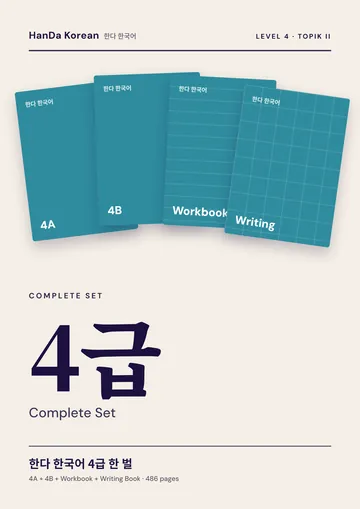 HanDa Korean Level 4 — Complete Set
Complete level 4 — student books, workbook and writing book · 486 pages
$10