Q1
틀림없이
What does this word mean?
according to that
barely
undoubtedly
for instance
틀림없이 — undoubtedly (connective)
Q2
to conceal
How do you say this in Korean?
하회하다
침해하다
은폐하다
방해하다
은폐하다 — to conceal (verbs)
Q3
수행하다
What does this word mean?
to be on duty
to withdraw (suit)
to perform/execute
to conflict/clash
수행하다 — to perform/execute (verbs)
Q4
observation
How do you say this in Korean?
천문학
양이온
관찰
용액
관찰 — observation (science)
Q5
멘티
What does this word mean?
volunteer work
mindfulness
talk/dialogue
mentee
멘티 — mentee (relationships_social)
Q6
operating system
How do you say this in Korean?
보안
운영체제
저장공간
데브옵스
운영체제 — operating system (technology)
Q7
혜성
What does this word mean?
desert
comet
refill station
ocean current
혜성 — comet (nature_environment)
Q8
immigrant
How do you say this in Korean?
이주민
워크스페이스
행정수도
양육수당
이주민 — immigrant (society)
Q9
try doing
Which Korean grammar pattern expresses this?
팔리다
-아/어 보다
-아/어서
-(으)려고 하다
-아/어 보다 — try doing. e.g. 이 카페에서 녹차 라테를 마셔 봤어요. (I tried drinking a green tea latte at this café.)
Q10
-다고 하다
What does this grammar pattern mean?
intending to
reported speech (say that)
to be closed (passive of 닫다)
cannot / be unable to
-다고 하다 — reported speech (say that). e.g. 일기 예보에서 내일 눈이 온다고 했어요. (The weather forecast said it will snow tomorrow.)
Q11
막히다
What does this grammar pattern mean?
while / simultaneously
when (a situation occurs)
to be blocked / congested (passive of 막다)
tends to; is on the ~ side
막히다 — to be blocked / congested (passive of 막다). e.g. 길이 많이 막혀요. (The road is very congested.)
Q12
if you want to / in order to
Which Korean grammar pattern expresses this?
-(으)려면
-지 않다
-냐고 하다
-게 되다
-(으)려면 — if you want to / in order to. e.g. 건강해지려면 운동을 해야 해요. (If you want to be healthy, you have to exercise.)
Q13
Say that the door locked automatically.
Which sentence says this correctly?
저는 술을 마시지 않아요.
안녕하십니까, 저는 오늘부터 근무하게 된 김지훈입니다.
문이 자동으로 잠겼어요.
이제 사전 없이 한국어 메뉴를 읽을 수 있어요.
잠기다 — to be locked (passive of 잠그다). 잠그다 → 잠기다 (기 피동)
Q14
polite command (irregular)
Which Korean grammar pattern expresses this?
-기로 하다
-았/었어요
-(으)세요
-(으)ㄹ 명사 수식
-(으)세요 — polite command (irregular). e.g. 매일 운동하세요. (Please exercise every day.)
외국어 학습의 비결
The Secret to Learning a Foreign Language
많은 사람들이 외국어를 배우다가 중간에 포기하곤 해요. 가장 큰 이유는 짧은 시간에 큰 효과를 기대하기 때문이에요. 하지만 언어는 매일 조금씩 꾸준히 접해야 늘 수 있어요. 문법책만 보기보다 실제 대화를 자주 시도하는 것이 중요해요. 실수해도 괜찮다는 마음을 가지는 것이 빠른 성장의 비결이에요. 결국 언어 학습은 마라톤이지 단거리 경주가 아니에요. 포기하다 to give up · 효과 effect/result · 접하다 to encounter/be exposed to · 시도하다 to attempt · 비결 secret/key · 경주 race
Q15
많은 사람들이 외국어를 배우다가 중간에 포기하곤 해요.
What does this sentence from the passage mean?
It takes about five minutes on foot.
Some of them have changed in meaning and are used in a Korean way.
Cafes have now become a culture beyond a simple space.
Many people tend to give up midway while learning a foreign language.
많은 사람들이 외국어를 배우다가 중간에 포기하곤 해요. = Many people tend to give up midway while learning a foreign language.
Q16
실수해도 괜찮다는 마음을 가지는 것이 빠른 성장의 비결이에요.
What does this sentence from the passage mean?
Having the mindset that mistakes are okay is the secret to fast growth.
From shopping to food orders, everything is done online.
Each season has different things to enjoy, so it is really nice.
In Korean, there are polite speech and casual speech.
실수해도 괜찮다는 마음을 가지는 것이 빠른 성장의 비결이에요. = Having the mindset that mistakes are okay is the secret to fast growth.
Q17
하지만 언어는 매일 조금씩 꾸준히 접해야 늘 수 있어요.
What does this sentence from the passage mean?
But language only improves through small, daily, consistent exposure.
But seeing it greet me when I come home relieves my fatigue.
When throwing away trash, you have to separate it well.
When the vacation comes, I will surely go home.
하지만 언어는 매일 조금씩 꾸준히 접해야 늘 수 있어요. = But language only improves through small, daily, consistent exposure.
Q18
시도하다
What does this word mean in the passage?
freelancer
to be specific
basic livelihood security
to attempt
시도하다 (si-do-ha-da) — to attempt
Q19
비결
What does this word mean in the passage?
aptitude test
to demand
ruler
secret/key
비결 (bi-gyeol) — secret/key
Q20
Which sentence does NOT appear in the passage above?
문법책만 보기보다 실제 대화를 자주 시도하는 것이 중요해요.
결국 언어 학습은 마라톤이지 단거리 경주가 아니에요.
이런 사람들을 '카공족'이라는 말로 부르기도 해요.
많은 사람들이 외국어를 배우다가 중간에 포기하곤 해요.
"이런 사람들을 '카공족'이라는 말로 부르기도 해요." (Such people are sometimes called by the word 'kagongjok'.) is from a different passage.
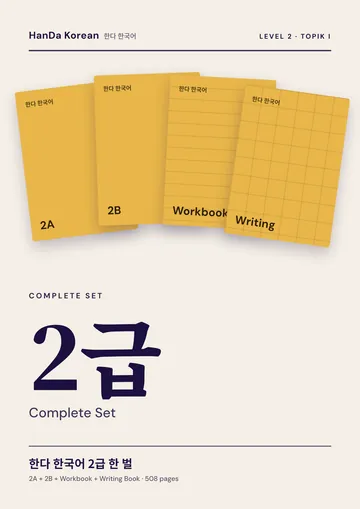 HanDa Korean Level 2 — Complete Set
Complete level 2 — student books, workbook and writing book · 508 pages
$10
HanDa Korean Level 2 — Complete Set
Complete level 2 — student books, workbook and writing book · 508 pages
$10
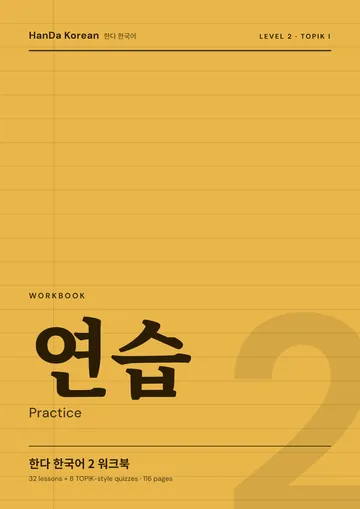 HanDa Korean 2 Workbook
Extra drilling on the same lessons · 116 pages
$6
HanDa Korean 2 Workbook
Extra drilling on the same lessons · 116 pages
$6
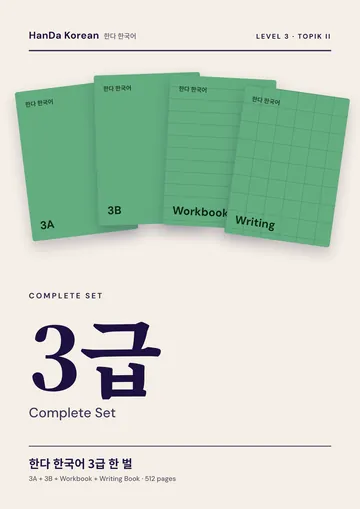 HanDa Korean Level 3 — Complete Set
Complete level 3 — student books, workbook and writing book · 512 pages
$10
HanDa Korean Level 3 — Complete Set
Complete level 3 — student books, workbook and writing book · 512 pages
$10
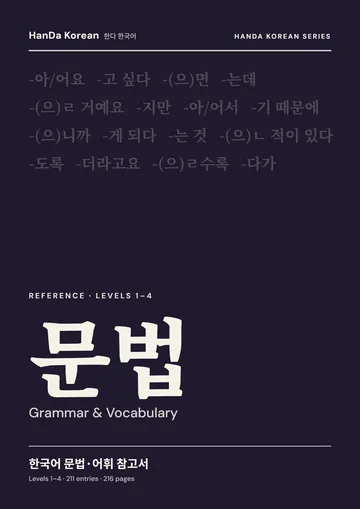 Korean Grammar & Vocabulary Reference
Every pattern from level 1 to 6 in one book · 216 pages
$8
Korean Grammar & Vocabulary Reference
Every pattern from level 1 to 6 in one book · 216 pages
$8
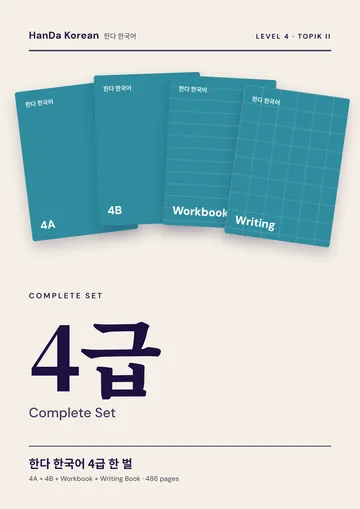 HanDa Korean Level 4 — Complete Set
Complete level 4 — student books, workbook and writing book · 486 pages
$10
HanDa Korean Level 4 — Complete Set
Complete level 4 — student books, workbook and writing book · 486 pages
$10