Korean Gift-Giving Etiquette: What to Say When You Give a Gift
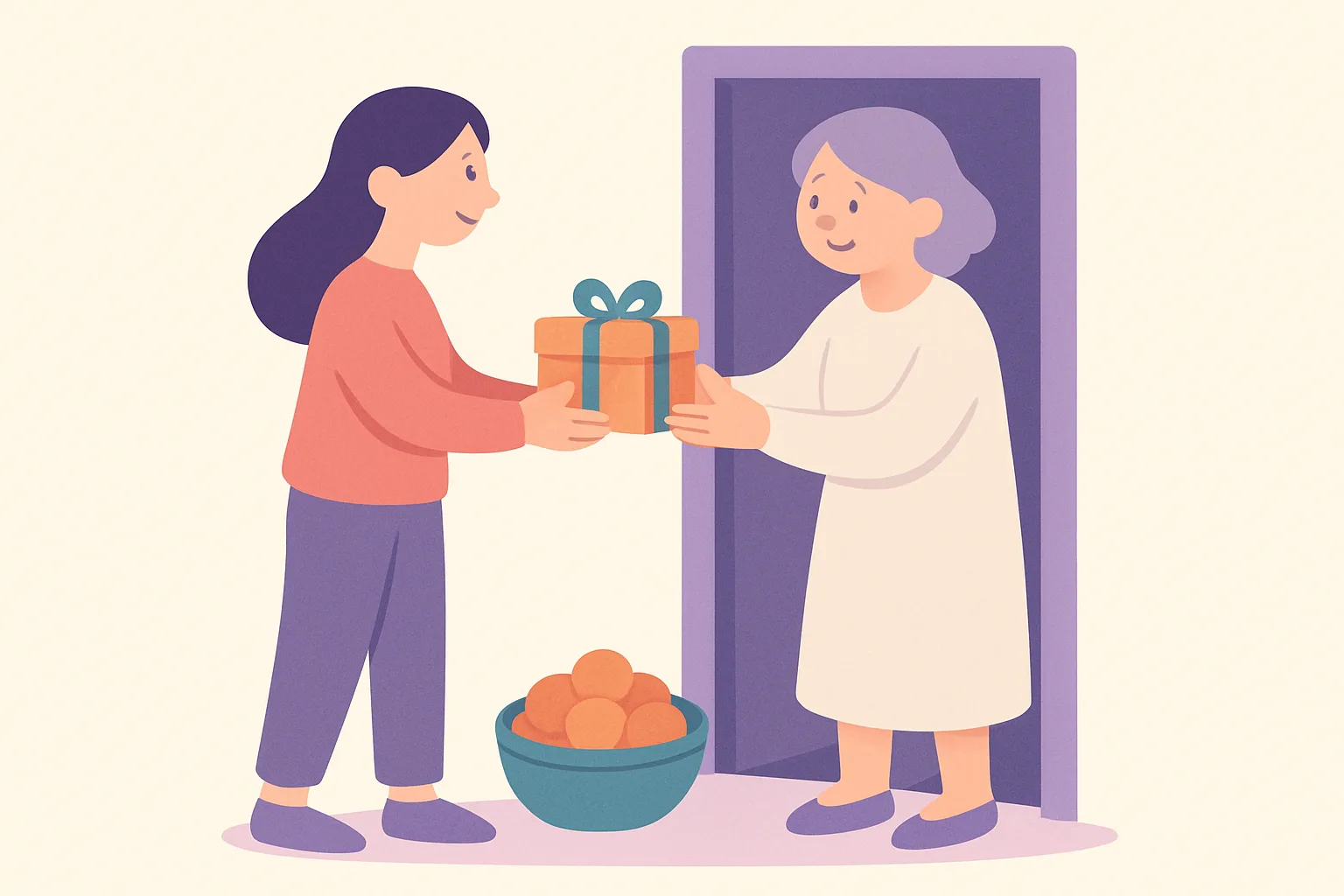
Here is the one thing to remember about giving a gift in Korea: the giver makes the gift small, and the receiver makes it big.
In English we do the opposite. "I found this and thought of you — it's from that shop you love, I hope you like it!" In Korean, talking up your own gift sounds like you're asking to be thanked. So you hand it over and say it's nothing:
이거 별거 아니에요. It's nothing special.
And the person receiving it does the work of making it matter:
아유, 뭘 이런 걸 다 사 오셨어요. Oh, you didn't have to buy something like this.
Once you see that seesaw, the whole ritual makes sense. Let's go through both sides.
Handing it over: what the giver says
The safe, all-purpose line is short and modest. Say it as you hold the gift out:
이거 별거 아니에요. 받으세요. It's nothing much. Please take it.
약소하지만 받아 주세요. It's a small thing, but please accept it.
약소하지만 is a notch more formal — good for a boss, a partner's parents, or anyone clearly older. For a friend's mother at the door of her apartment, 별거 아니에요 is perfect.
Add one of these if you want to sound warm rather than stiff:
마음에 드실지 모르겠어요. I'm not sure if you'll like it.
지나가다가 보고 생각나서 샀어요. I saw it while I was out and thought of you, so I bought it.
Notice that even the warm version stays humble. You are not announcing that you chose carefully; you're saying it happened to catch your eye. Koreans know you chose carefully. That's the point.
If the gift is food
Swap in the food version:
입에 맞으실지 모르겠어요. I'm not sure if it'll suit your taste.
If you're arriving at someone's home
The phrase people actually say at the door, half-apologising for showing up with something:
빈손으로 오기 좀 그래서요. It felt a bit wrong to come empty-handed.
기 좀 그렇다 is that lovely vague Korean "it feels off." It's exactly what a Korean guest says while pushing a bag of fruit at the host.
Two hands. Always two hands.
This part is not optional. Give and receive with 두 손 — both hands — or with your right hand while your left hand lightly touches your forearm.
두 손으로 드리는 게 예의예요. It's polite to hand things over with both hands.
That's a sentence about the rule, not a sentence you'd say out loud while giving something — nobody narrates their own hands. You just do it.
Handing something to an older person with one hand, especially one hand in your pocket, reads as rude in a way that no amount of good Korean will fix. The same rule covers money, business cards, and a cup you're pouring for someone. If you're ever unsure what to do with your hands in Korea, use both. This is one of those situations where reading the room matters more than vocabulary — if you like that idea, we have a whole set of phrases about 눈치, reading the room.
Also note 드리다: it's the humble form of 주다, used when the receiver is older or higher status. 선물을 드렸어요 (I gave a gift to someone above me) vs 선물을 줬어요 (to a friend).
Receiving: protest a little, then thank properly
A Korean receiver almost never just says thanks and takes it. There's a tiny two-step: first push back, then accept.
어머, 안 그러셔도 되는데. Oh, you really didn't have to. (to someone older — with a friend your age, drop the -시-: 안 그래도 되는데.)
뭘 이런 걸 다. Oh, what's all this. (literally "why all this stuff" — the standard "you shouldn't have")
Then — and this is the part learners skip — you say what you're going to do with it:
감사합니다. 잘 쓸게요. Thank you. I'll put it to good use. (for an object)
감사합니다. 잘 먹을게요. Thank you. I'll enjoy it. (for food or drink)
잘 쓸게요 and 잘 먹을게요 land much warmer than 감사합니다 alone, because -(으)ㄹ게요 promises the giver something: your gift won't be wasted. (If that ending is still slippery, here's -(으)ㄹ게요 vs -(으)ㄹ래요.)
And when the receiver thanks you, the giver deflects one more time:
별말씀을요. Don't mention it.
A caution about the pushing-back step: it's a beat, not a real refusal. One 안 그러셔도 되는데 and then you take it. If you refuse three times like a drama scene, the giver will be genuinely stuck. There's a real skill to declining things in Korean — 괜찮아요 and 됐어요 do very different jobs — and we cover it in how to say no politely.
Should you open it right there?
Traditionally, no — you set it aside and open it later, so nobody has to perform a reaction. Younger people now open gifts together all the time. The safest move is to ask:
지금 열어 봐도 돼요? Can I open it now?
If the host says 나중에 볼게요 (I'll look at it later), that's not coldness. It's the old habit.
When Koreans actually bring gifts
- 집들이 (housewarming). The classic gifts are toilet paper and laundry detergent — 휴지 for things unrolling smoothly, 세제 for wealth bubbling up. 집들이 선물로 휴지랑 세제를 많이 사 가요. (People often buy toilet paper and detergent as housewarming gifts.) Fruit, a candle or a plant all work too.
- First visit to someone's home, especially a partner's parents: fruit, a good box of tea, or a cake. Never truly empty-handed.
- 명절 (Chuseok, Lunar New Year): 명절에는 과일이나 고기 같은 선물 세트를 주고받아요. (At the holidays people exchange gift sets of fruit or meat.)
- Coming back from a trip: small snacks for coworkers. Enough to share, not one fancy thing for one person.
- Weddings and funerals: no wrapped gift — cash in an envelope, handed in at the desk.
One practical warning for visitors: gifts to teachers, professors and public officials are restricted by law in Korea, even small ones. A note of thanks is the safe choice there.
What people avoid giving
Superstitions are soft, but they're real enough that you'd rather know:
- Shoes to a romantic partner — the idea is they'll run away from you.
- Anything in fours — 사 sounds like the word for death, the way 13 works in English.
- Sharp things like knives to a couple, said to cut the relationship.
Nobody will be offended if you don't know. But fruit, a nice snack box or flowers are never wrong, and that's why Koreans buy them constantly.
Practice
Write your answer in Korean before you look.
- You're handing a box of tangerines to your friend's mother. Say "It's nothing much" and "I'm not sure if it'll suit your taste."
- Someone older hands you a gift. Say "You really didn't have to," then thank them and promise to use it well.
- You brought a cake to a housewarming. Say "It felt wrong to come empty-handed."
- A coworker gives you a bag of snacks from her trip. Which is right — 잘 쓸게요 or 잘 먹을게요?
- Ask politely whether you may open the gift now.
Answers
- 이거 별거 아니에요. 입에 맞으실지 모르겠어요.
- 안 그러셔도 되는데. 감사합니다, 잘 쓸게요.
- 빈손으로 오기 좀 그래서요.
- 잘 먹을게요. (잘 쓸게요 is for things you use, not eat.)
- 지금 열어 봐도 돼요?
Learn this properly, not just once
Blog posts teach one thing at a time. The HanDa books teach level 1 in order — every lesson built to be spoken, with a workbook and writing book beside it.
 HanDa Korean Level 1 — Complete Set
Everything for level 1 — books, workbook and writing book · 511 pages
$10
HanDa Korean Level 1 — Complete Set
Everything for level 1 — books, workbook and writing book · 511 pages
$10
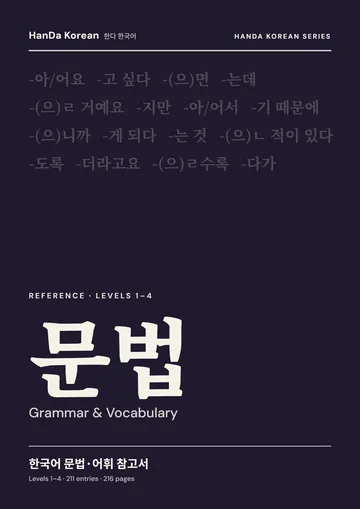 Korean Grammar & Vocabulary Reference
Every pattern in one place · 216 pages
$8
Korean Grammar & Vocabulary Reference
Every pattern in one place · 216 pages
$8
Practice this with an AI tutor
HanDa corrects every sentence you write or say — in real conversation, not flashcards.