Q1
탄원
What does this word mean?
plea
event
donation money
gathering
탄원 — plea (social_life)
Q2
graduation ceremony
How do you say this in Korean?
졸업식
적성
커리큘럼
교육과정개편
졸업식 — graduation ceremony (education)
Q3
갤럭시
What does this word mean?
Galaxy (phone)
network security
big data
database
갤럭시 — Galaxy (phone) (technology)
Q4
hypothesis
How do you say this in Korean?
기생충
가설
연역법
항체
가설 — hypothesis (science)
Q5
경제
What does this word mean?
CPI
GDP
quantitative easing
economy
경제 — economy (economy)
Q6
cell
How do you say this in Korean?
상관분석
광학
가속도
세포
세포 — cell (science)
Q7
독수리
What does this word mean?
mineral
dragonfly
eagle
energy saving
독수리 — eagle (nature_environment)
Q8
to research
How do you say this in Korean?
충원하다
연구하다
사직하다
중재하다
연구하다 — to research (verbs)
Q9
reported speech – indirect question
Which Korean grammar pattern expresses this?
안/못
-고 싶다
피동 -이/히/리/기
-냐고 하다
-냐고 하다 (간접화법 의문 2) — reported speech – indirect question. e.g. 친구가 요즘 뭐가 힘드냐고 물어봤어요. (My friend asked what's been hard for me lately.)
Q10
-보다 더
What does this grammar pattern mean?
more ... than
from / to (time, place)
to be closed (passive of 닫다)
if / when
-보다 더 — more ... than. e.g. 오늘이 어제보다 더 더워요. (Today is hotter than yesterday.)
Q11
Tell a friend to try wearing this hanbok.
Which sentence says this correctly?
파일이 실수로 삭제됐어요.
커피가 차보다 더 맛있어요.
이 한복을 입어 보세요.
남동생한테 생일 선물을 줬어요.
-아/어 보다 — try (doing). 동사 어간 + 아/어 보세요
Q12
when (moment) vs while (duration) – contrast
Which Korean grammar pattern expresses this?
-(으)ㄹ 명사 수식
-(으)러 가다
-(으)면서
-(으)ㄹ 때 vs -는 동안 구분
-(으)ㄹ 때 vs -는 동안 구분 — when (moment) vs while (duration) – contrast. e.g. 밥을 먹는 동안 핸드폰을 보지 마세요. (Don't look at your phone while eating.)
Q13
but / however
Which Korean grammar pattern expresses this?
-(으)ㄹ 것 같다
도
-아/어 두다/놓다
-지만
-지만 — but / however. e.g. 한국어가 어렵지만 재미있어요. (Korean is difficult, but it's fun.)
Q14
-(으)ㄴ 지
What does this grammar pattern mean?
because / since (reason)
since; it has been ~ since
because / so (sequential cause)
negation (won't/can't)
-(으)ㄴ 지 (duration) — since; it has been ~ since. e.g. 친구를 만난 지 오래됐어요. (It has been a long time since I met my friend.)
Q15
잃어버린 날짜와 장소를 정확하게 말해 주세요.
What does this sentence from the passage mean?
The puppy's name is 'Kong' and it is very cute.
Please tell us the exact date and place you lost it.
But as we kept reading and playing together, we gradually grew closer.
Many people tend to give up midway while learning a foreign language.
잃어버린 날짜와 장소를 정확하게 말해 주세요. = Please tell us the exact date and place you lost it.
Q16
물건을 찾을 때는 신분증이 필요합니다.
What does this sentence from the passage mean?
These days working from home has become more common.
I'm excited because they say the new neighborhood's environment is nice.
Each station has elevators and escalators installed.
When you claim an item, you need your ID.
물건을 찾을 때는 신분증이 필요합니다. = When you claim an item, you need your ID.
Q17
물건은 삼 개월 동안 보관합니다.
What does this sentence from the passage mean?
New employees have much to learn from seniors, so a humble attitude is important.
We finally moved to a new house.
Please come in wearing sneakers.
Items are kept for three months.
물건은 삼 개월 동안 보관합니다. = Items are kept for three months.
Q18
분실물
What does this word mean in the passage?
to succeed (in a post)
volunteer service
lost item
remodeling
분실물 (bun-sil-mul) — lost item
Q19
신분증
What does this word mean in the passage?
Olympics
product placement
ID card
to be essential
신분증 (sin-bun-jeung) — ID card
Q20
Which sentence does NOT appear in the passage above?
바쁜 아침에 밥을 거르는 사람이 많아요.
물건은 삼 개월 동안 보관합니다.
센터는 이 역 삼 번 출구 옆에 있습니다.
지하철에서 물건을 잃어버리면 분실물 센터로 오세요.
"바쁜 아침에 밥을 거르는 사람이 많아요." (Many people skip breakfast on busy mornings.) is from a different passage.
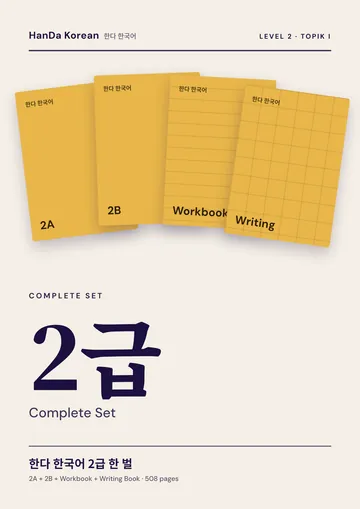 HanDa Korean Level 2 — Complete Set
Complete level 2 — student books, workbook and writing book · 508 pages
$10
HanDa Korean Level 2 — Complete Set
Complete level 2 — student books, workbook and writing book · 508 pages
$10
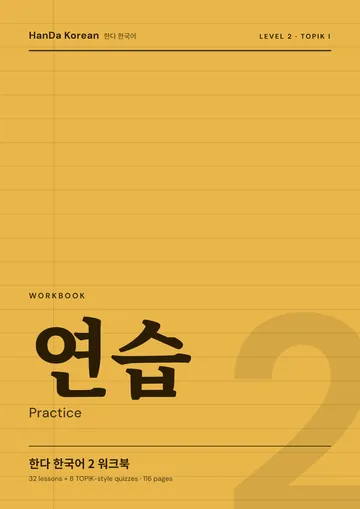 HanDa Korean 2 Workbook
Extra drilling on the same lessons · 116 pages
$6
HanDa Korean 2 Workbook
Extra drilling on the same lessons · 116 pages
$6
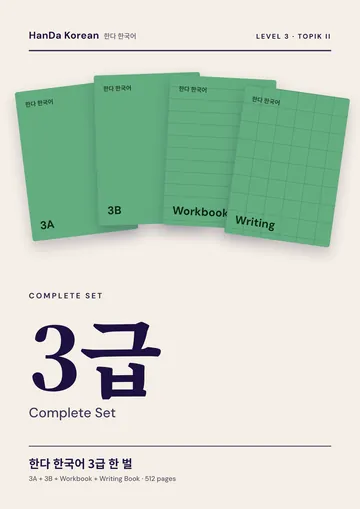 HanDa Korean Level 3 — Complete Set
Complete level 3 — student books, workbook and writing book · 512 pages
$10
HanDa Korean Level 3 — Complete Set
Complete level 3 — student books, workbook and writing book · 512 pages
$10
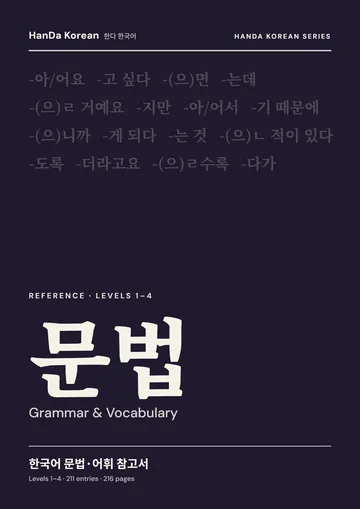 Korean Grammar & Vocabulary Reference
Every pattern from level 1 to 6 in one book · 216 pages
$8
Korean Grammar & Vocabulary Reference
Every pattern from level 1 to 6 in one book · 216 pages
$8
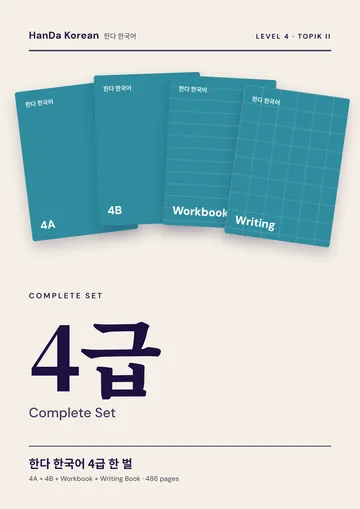 HanDa Korean Level 4 — Complete Set
Complete level 4 — student books, workbook and writing book · 486 pages
$10
HanDa Korean Level 4 — Complete Set
Complete level 4 — student books, workbook and writing book · 486 pages
$10