Q1
월급
What does this word mean?
employee
overtime work
salary
career/experience
월급 — salary (work)
Q2
to hide
How do you say this in Korean?
노력하다
숨기다
정하다
비교하다
숨기다 — to hide (verbs)
Q3
억울하다
What does this word mean?
to feel wronged
hope
emotion
fear
억울하다 — to feel wronged (emotions)
Q4
cinnamon punch
How do you say this in Korean?
옥수수
라면
호박
수정과
수정과 — cinnamon punch (food)
Q5
외롭다
What does this word mean?
to be lonely
emotion
to be angry
to be disappointed
외롭다 — to be lonely (emotions)
Q6
to be low
How do you say this in Korean?
오래되다
맛없다
맛있다
낮다
낮다 — to be low (adjectives_basic)
Q7
정말요
What does this word mean?
really?
but / by the way
for example
that's correct
정말요 — really? (expressions)
Q8
bedroom
How do you say this in Korean?
거울
침실
벽
전화기
침실 — bedroom (house)
Q9
Say that your older brother (오빠) is an office worker.
Which sentence says this correctly?
생일이 언제예요?
오빠는 회사원이에요.
저는 학생이에요.
공원에서 운동해요.
은/는 (topic marker) — topic marker — introduces or contrasts a topic. 받침X → 는
Q10
Say that the flower is pretty.
Which sentence says this correctly?
저는 미국 사람이에요.
음식은 맛있어요.
꽃이 예뻐요.
공원에서 운동해요.
이/가 (subject marker) — subject marker — marks the grammatical subject. 받침O → 이, 받침X → 가
Q11
to be (A is B) — identifying nouns
Which Korean grammar pattern expresses this?
-이에요/예요
에
에서
은/는
-이에요/예요 — to be (A is B) — identifying nouns. e.g. 이것은 물이에요. (This is water.)
Q12
-이에요/예요
What does this grammar pattern mean?
present tense polite ending
to not have (possession)
to be (A is B) — identifying nouns
at (time)
-이에요/예요 — to be (A is B) — identifying nouns. e.g. 이것은 책이에요. (This is a book.)
Q13
Ask when someone's birthday is.
Which sentence says this correctly?
음식은 맛있어요.
저는 선생님이에요.
이것은 책이에요.
생일이 언제예요?
언제 (question word) — when — asking about time. 명사 + 이/가 언제예요?
Q14
to have (possession)
Which Korean grammar pattern expresses this?
있어요
있어요?
어디
에
있어요 (소유) — to have (possession). e.g. 저는 책이 있어요. (I have a book.)
처음 한국 식당에 간 날
My First Visit to a Korean Restaurant
오늘 처음으로 한국 식당에 갔어요. 메뉴를 보는데 한국어가 많아서 어려웠어요. 직원분이 도와줘서 불고기를 시켰어요. 반찬이 여러 가지 나왔는데 다 맛있었어요. 밥을 다 먹고 나서 식혜도 마셨어요. 다음에 또 오고 싶어요! 처음 first time · 메뉴 menu · 직원 staff/employee · 불고기 bulgogi · 식혜 sikhye (sweet rice drink) · 시키다 to order (food)
Q15
메뉴를 보는데 한국어가 많아서 어려웠어요.
What does this sentence from the passage mean?
It is a really fun day.
Please show me the menu.
Kimchi is made with napa cabbage, garlic, and chili peppers.
Looking at the menu was difficult because there was a lot of Korean.
메뉴를 보는데 한국어가 많아서 어려웠어요. = Looking at the menu was difficult because there was a lot of Korean.
Q16
오늘 처음으로 한국 식당에 갔어요.
What does this sentence from the passage mean?
I go to the movie theater every weekend.
Today I went to a Korean restaurant for the first time.
Thank you!
"Hello? What are you doing now?"
오늘 처음으로 한국 식당에 갔어요. = Today I went to a Korean restaurant for the first time.
Q17
밥을 다 먹고 나서 식혜도 마셨어요.
What does this sentence from the passage mean?
Please eat food outside.
After eating all the rice, I also drank sikhye.
So please be sure to take an umbrella.
Every morning, we take a walk together.
밥을 다 먹고 나서 식혜도 마셨어요. = After eating all the rice, I also drank sikhye.
Q18
시키다
What does this word mean in the passage?
to be new
to conceal
to order (food)
to be angry
시키다 (si-ki-da) — to order (food)
Q19
직원
What does this word mean in the passage?
staff/employee
to give (humble)
barely
two (native)
직원 (jik-won) — staff/employee
Q20
Which sentence does NOT appear in the passage above?
밥을 다 먹고 나서 식혜도 마셨어요.
메뉴를 보는데 한국어가 많아서 어려웠어요.
오늘 처음으로 한국 식당에 갔어요.
도서관 안에서는 조용히 해 주세요.
"도서관 안에서는 조용히 해 주세요." (Please be quiet inside the library.) is from a different passage.
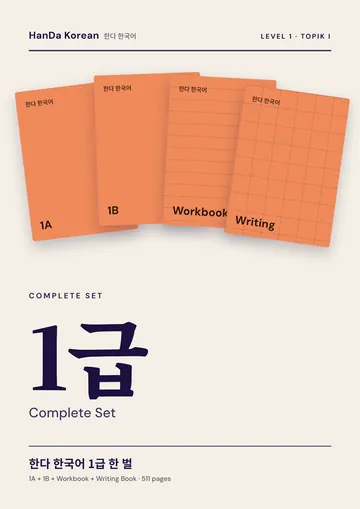 HanDa Korean Level 1 — Complete Set
Complete level 1 — student books, workbook and writing book · 511 pages
$10
HanDa Korean Level 1 — Complete Set
Complete level 1 — student books, workbook and writing book · 511 pages
$10
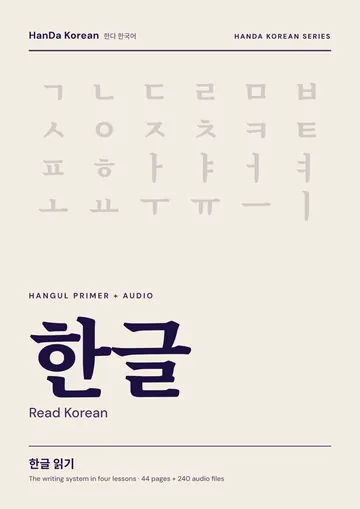 Read Korean
If reading is still slow, start here · 44 pages
$5
Read Korean
If reading is still slow, start here · 44 pages
$5
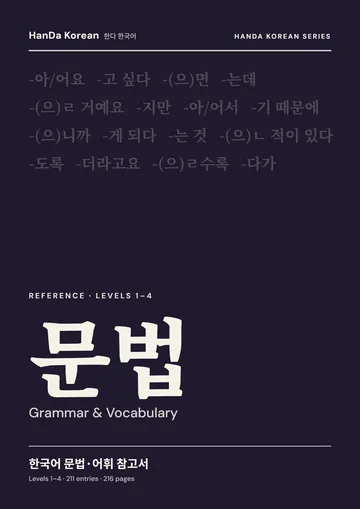 Korean Grammar & Vocabulary Reference
Every pattern from level 1 to 6 in one book · 216 pages
$8
Korean Grammar & Vocabulary Reference
Every pattern from level 1 to 6 in one book · 216 pages
$8
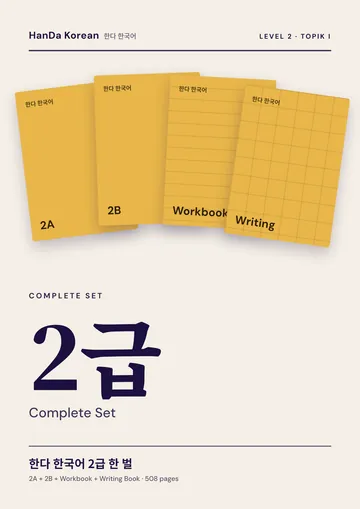 HanDa Korean Level 2 — Complete Set
Complete level 2 — student books, workbook and writing book · 508 pages
$10
HanDa Korean Level 2 — Complete Set
Complete level 2 — student books, workbook and writing book · 508 pages
$10