Q1
평가하다
What does this word mean?
to overtake
to download
to evaluate
to structure
평가하다 — to evaluate (verbs)
Q2
correction report
How do you say this in Korean?
에코챔버
정정보도
취재원보호
디지털경제
정정보도 — correction report (media)
Q3
학위
What does this word mean?
tuition
degree
school system
education fever
학위 — degree (education)
Q4
database
How do you say this in Korean?
데이터베이스
아이디
사물인터넷
엔드포인트보안
데이터베이스 — database (technology)
Q5
유연근무제
What does this word mean?
working dad
immigration
aging rate
flexible work
유연근무제 — flexible work (society)
Q6
camera
How do you say this in Korean?
엣지컴퓨팅
데이터
카메라
키보드
카메라 — camera (technology)
Q7
곰탕
What does this word mean?
rice ball
ox bone soup
stir-fried dish
pork rice soup
곰탕 — ox bone soup (korean_food)
Q8
deforestation
How do you say this in Korean?
개미
지렁이
동굴
산림벌채
산림벌채 — deforestation (nature_environment)
Q9
Formally introduce yourself as a new employee at a company meeting.
Which sentence says this correctly?
안녕하십니까, 저는 오늘부터 근무하게 된 김지훈입니다.
피곤해 보이니까 쉬세요.
저는 한국 음식을 먹고 싶어요.
일이 끝난 후에 친구한테 전화할 거예요.
합쇼체 -(스)ㅂ니다 (formal polite) — formal speech level – statement. 어간 + -(스)ㅂ니다; 받침 있으면 -습니다, 없으면 -ㅂ니다
Q10
-아/어 두다/놓다
What does this grammar pattern mean?
reported speech – command
do and leave in that state
let's (do)
go in order to
-아/어 두다/놓다 — do and leave in that state. e.g. 창문을 열어 놓고 나갔어요. (I left the window open and went out.)
Q11
to be opened (passive of 열다)
Which Korean grammar pattern expresses this?
열리다
-(으)ㄹ게요
-다고 하다
-(으)ㄹ 수 없다
열리다 — to be opened (passive of 열다). e.g. 문이 저절로 열렸어요. (The door opened by itself.)
Q12
become; get (state change)
Which Korean grammar pattern expresses this?
막히다
열리다
-아/어지다
-아/어도
-아/어지다 (상태 변화 피동) — become; get (state change). e.g. 날씨가 갑자기 추워졌어요. (The weather suddenly got cold.)
Q13
Say you are saving money in order to travel to Europe.
Which sentence says this correctly?
공부하고 있는데 너무 배가 고파요.
유럽 여행을 하려고 돈을 모으고 있어요.
도둑이 경찰에게 잡혔어요.
시험 점수가 잘 나와서 기분이 좋아요.
-(으)려고 — intending to / in order to. -(으)려고 뒤에 이동 동사 없어도 됨; -(으)러는 이동 동사 필수
Q14
I'll (do) — promise/intention
Which Korean grammar pattern expresses this?
-기 때문에
-기로 하다
-곤 하다
-(으)ㄹ게요
-(으)ㄹ게요 — I'll (do) — promise/intention. e.g. 제가 전화할게요. (I'll call you.)
제 취미는 사진 찍기
My Hobby Is Taking Photos
제 취미는 사진을 찍는 것이에요. 주말마다 카메라를 들고 여기저기 다녀요. 특히 하늘과 꽃 사진 찍는 것을 좋아해요. 좋은 사진을 찍으면 기분이 아주 좋아요. 사진을 보면서 그날의 기억을 다시 떠올려요. 여러분도 사진으로 추억을 남겨 보세요. 취미 hobby · 사진 photo · 찍다 to take (a photo) · 카메라 camera · 기분 mood, feeling · 기억 memory · 추억 memories, reminiscence
Q15
특히 하늘과 꽃 사진 찍는 것을 좋아해요.
What does this sentence from the passage mean?
To live in Korea, you need to know how to use public transportation well.
I especially like taking photos of the sky and flowers.
If you use polite speech well, Korean people really appreciate it.
Small plans help you achieve big goals.
특히 하늘과 꽃 사진 찍는 것을 좋아해요. = I especially like taking photos of the sky and flowers.
Q16
제 취미는 사진을 찍는 것이에요.
What does this sentence from the passage mean?
Third, at night you should put your phone away and sleep early.
My hobby is taking photos.
Living alone is hard, but there are many good things because it's freeing.
It is a scientific writing system that can record sounds as they are.
제 취미는 사진을 찍는 것이에요. = My hobby is taking photos.
Q17
주말마다 카메라를 들고 여기저기 다녀요.
What does this sentence from the passage mean?
If you make a plan, you can use your time productively.
Together with friends, I helped clean at a senior center.
Bring it to a boil on high heat, then reduce to low heat.
Every weekend I carry my camera and go here and there.
주말마다 카메라를 들고 여기저기 다녀요. = Every weekend I carry my camera and go here and there.
Q18
찍다
What does this word mean in the passage?
world heritage
report
hydroponics
to take (a photo)
찍다 (jjik-da) — to take (a photo)
Q19
사진
What does this word mean in the passage?
PPI
to reverse/come back
proof
photo
사진 (sa-jin) — photo
Q20
Which sentence does NOT appear in the passage above?
봄에는 벚꽃이 피어서 많은 사람들이 등산을 가요.
좋은 사진을 찍으면 기분이 아주 좋아요.
특히 하늘과 꽃 사진 찍는 것을 좋아해요.
제 취미는 사진을 찍는 것이에요.
"봄에는 벚꽃이 피어서 많은 사람들이 등산을 가요." (In spring, cherry blossoms bloom and many people go hiking.) is from a different passage.
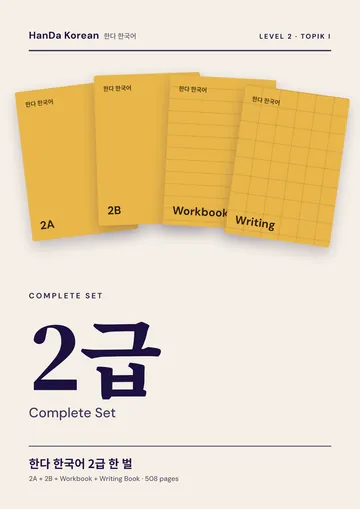 HanDa Korean Level 2 — Complete Set
Complete level 2 — student books, workbook and writing book · 508 pages
$10
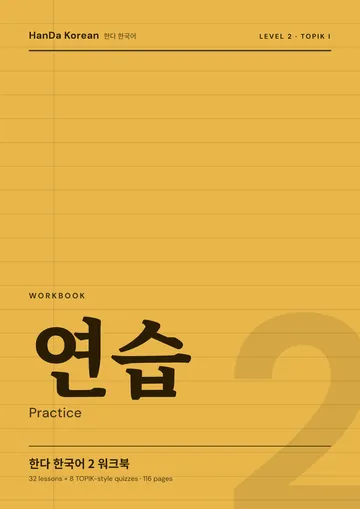 HanDa Korean 2 Workbook
Extra drilling on the same lessons · 116 pages
$6
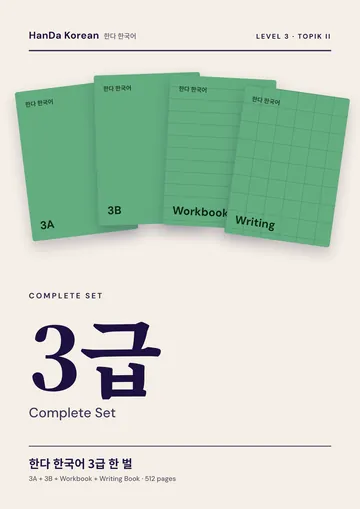 HanDa Korean Level 3 — Complete Set
Complete level 3 — student books, workbook and writing book · 512 pages
$10
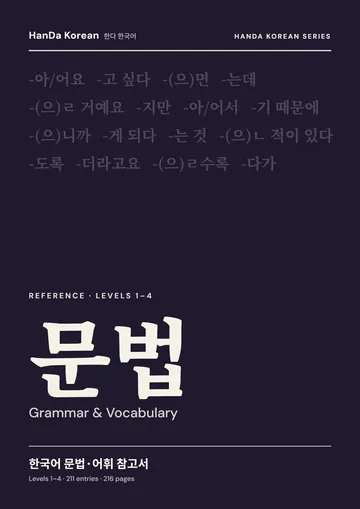 Korean Grammar & Vocabulary Reference
Every pattern from level 1 to 6 in one book · 216 pages
$8
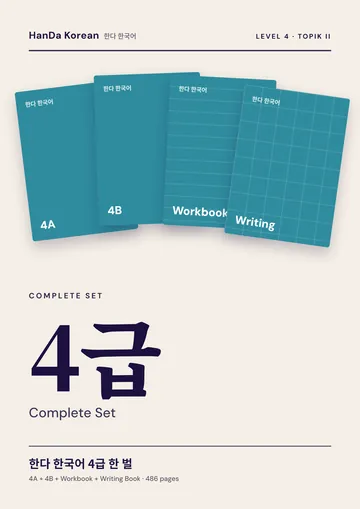 HanDa Korean Level 4 — Complete Set
Complete level 4 — student books, workbook and writing book · 486 pages
$10