Q1
무위도식
What does this word mean?
idle and eating for free
ancient and modern, east and west
elder-younger order
printing type
무위도식 — idle and eating for free (idiom_advanced)
Q2
swap
How do you say this in Korean?
승자독식
스왑
직상장
기준금리
스왑 — swap (economy)
Q3
신문학
What does this word mean?
new literature
literary debate
narrative
people's literature
신문학 — new literature (literature)
Q4
shamanism
How do you say this in Korean?
무속
원효
순교
충
무속 — shamanism (religion)
Q5
고무하다
What does this word mean?
to encourage
to execute
to appeal/plead
to find a clue
고무하다 — to encourage (verbs)
Q6
fault tolerance
How do you say this in Korean?
로드밸런싱
이중화
공직윤리
내결함성
내결함성 — fault tolerance (professional)
Q7
방관
What does this word mean?
leakage
analytical
license
looking on
방관 — looking on (hanja_advanced)
Q8
self-development
How do you say this in Korean?
자기계발
서학개미
루틴만들기
탈덕
자기계발 — self-development (slang)
Q9
there's no way that
Which Korean grammar pattern expresses this?
-(으)ㄹ 정도로
-(으)ㄹ 법하다
-(으)ㄹ 리가 없다
-(으)ㄴ 척하다
-(으)ㄹ 리가 없다 — there's no way that. e.g. 그 사람이 거짓말을 할 리가 없어요. (There's no way he would lie.)
Q10
Use the proverb 가는 말이 고와야 오는 말이 곱다 naturally in a formal sentence about diplomatic negotiations between two countries.
Which sentence says this correctly?
새로운 문화에 적응하는 데 가장 많은 에너지가 필요해요.
시내 그 새 식당에 가 봤는데 사람이 정말 많더라고요.
협상이 이렇게 오래 진행되었으면 합의에 이를 법한데 여전히 결론이 나지 않고 있습니다.
외교 협상에서도 가는 말이 고와야 오는 말이 곱다는 원칙은 예외 없이 적용됩니다.
속담: 가는 말이 고와야 오는 말이 곱다 — you reap what you sow in speech; treat others as you wish to be treated. 속담을 인용 구조 없이 자연스럽게 삽입. '~는 원칙/속담처럼' 형태로 격식 문서에 사용
Q11
-(으)므로
What does this grammar pattern mean?
rather than (doing)
the more... the more (reinforced)
even if / no matter (strong)
therefore; since (formal written)
-(으)므로 — therefore; since (formal written). e.g. 시간이 부족하므로 핵심 내용만 다루겠습니다. (Since time is limited, I will cover only the key points.)
Q12
-(으)ㄴ 만큼
What does this grammar pattern mean?
end up (doing) / finally
it seems likely; it would make sense that
given that; in proportion to (written formal)
rather than (doing)
-(으)ㄴ 만큼 (문어 근거) — given that; in proportion to (written formal). e.g. 책임이 큰 만큼 그에 걸맞은 권한도 부여되어야 합니다. (Given the great responsibility, commensurate authority must also be granted.)
Q13
so much that; to such an extent that
Which Korean grammar pattern expresses this?
-(으)ㄴ들
-(으)ㄴ 나머지
-(으)ㅁ에도 불구하고
-기 마련이다
-(으)ㄴ 나머지 — so much that; to such an extent that. e.g. 너무 놀란 나머지 말을 잇지 못했습니다. (I was so startled that I couldn't continue speaking.)
Q14
-(으)ㄹ수록
What does this grammar pattern mean?
to the extent that / so ... that
the more... the more
since / as much as (reason)
to the point of; on the verge of (social/systemic crisis)
-(으)ㄹ수록 — the more... the more. e.g. 생각할수록 그 결정이 옳았다는 확신이 듭니다. (The more I think about it, the more convinced I am that the decision was right.)
워라밸의 중요성
The Importance of Work-Life Balance
'워라밸'은 일과 삶의 균형을 뜻하는 말이에요. 예전에는 오래 일하는 것을 성실함으로 여겼어요. 하지만 요즘은 쉼과 여가도 중요하게 생각하는 편이에요. 충분히 쉬어야 일의 능률도 올라간다는 연구 결과가 많아요. 회사도 직원의 휴식을 존중하는 분위기로 바뀌고 있어요. 일과 삶이 조화를 이룰 때 우리는 더 행복해질 수 있어요. 균형 balance · 성실함 diligence · 여가 leisure · 능률 efficiency · 존중하다 to respect · 분위기 atmosphere · 조화 harmony
Q15
'워라밸'은 일과 삶의 균형을 뜻하는 말이에요.
What does this sentence from the passage mean?
However, recently receiving counseling and treatment is becoming more natural.
'Work-life balance' is a word meaning the balance of work and life.
Helping others actually gives great joy to oneself too.
On the other hand, new industries and jobs for seniors are also emerging.
'워라밸'은 일과 삶의 균형을 뜻하는 말이에요. = 'Work-life balance' is a word meaning the balance of work and life.
Q16
일과 삶이 조화를 이룰 때 우리는 더 행복해질 수 있어요.
What does this sentence from the passage mean?
When work and life achieve harmony, we can become happier.
Even if we endure small inconveniences, we must think of future generations.
Housing costs keep rising, expanding the burden on younger generations.
The argument that critical thinking and creativity are better fostered through human interaction remains strong.
일과 삶이 조화를 이룰 때 우리는 더 행복해질 수 있어요. = When work and life achieve harmony, we can become happier.
Q17
충분히 쉬어야 일의 능률도 올라간다는 연구 결과가 많아요.
What does this sentence from the passage mean?
In the countryside, the natural environment is good and you can live a leisurely life, but there are fewer jobs and a lack of amenities.
There are many studies showing that you have to rest enough for work efficiency to rise.
If sharing settles as a natural culture, society will become warmer.
When you have fewer things, your home is clean and your mind seems lighter.
충분히 쉬어야 일의 능률도 올라간다는 연구 결과가 많아요. = There are many studies showing that you have to rest enough for work efficiency to rise.
Q18
분위기
What does this word mean in the passage?
phonetics
to be functional
non-literary text
atmosphere
분위기 (bun-wi-gi) — atmosphere
Q19
능률
What does this word mean in the passage?
seonbi spirit
memoir
efficiency
turning a deaf ear
능률 (neung-nyul) — efficiency
Q20
Which sentence does NOT appear in the passage above?
그래서 새로운 기술을 배우려는 사람이 늘고 있어요.
예전에는 오래 일하는 것을 성실함으로 여겼어요.
'워라밸'은 일과 삶의 균형을 뜻하는 말이에요.
회사도 직원의 휴식을 존중하는 분위기로 바뀌고 있어요.
"그래서 새로운 기술을 배우려는 사람이 늘고 있어요." (So the number of people trying to learn new skills is increasing.) is from a different passage.
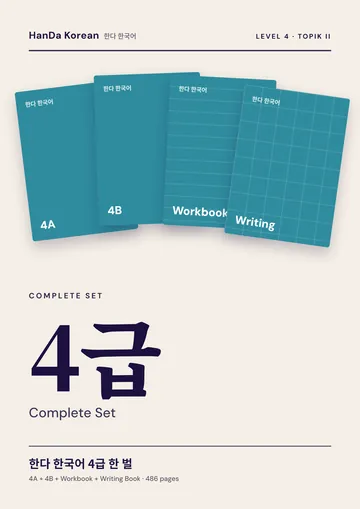 HanDa Korean Level 4 — Complete Set
Complete level 4 — student books, workbook and writing book · 486 pages
$10
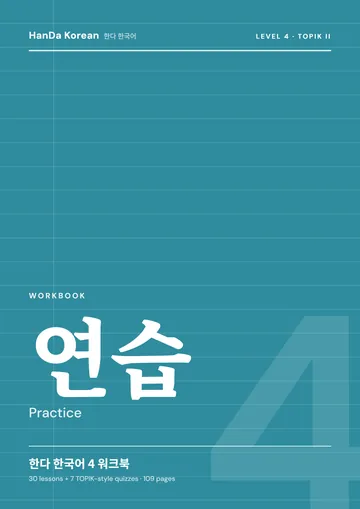 HanDa Korean 4 Workbook
Extra drilling on the same lessons · 109 pages
$6
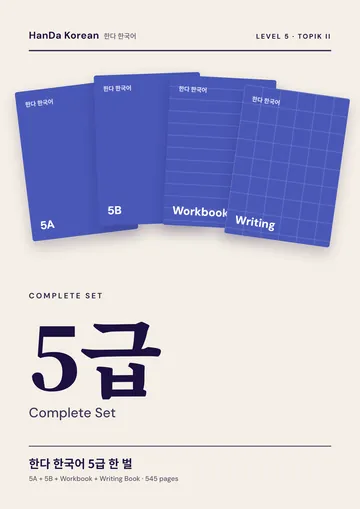 HanDa Korean Level 5 — Complete Set
Complete level 5 — student books, workbook and writing book · 545 pages
$10
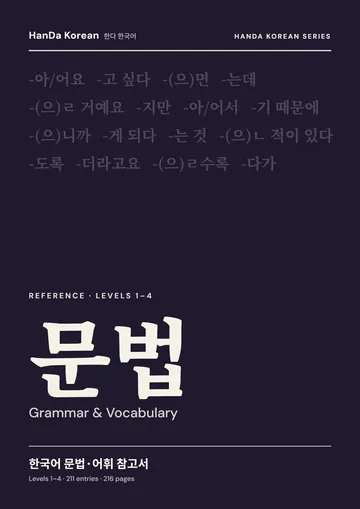 Korean Grammar & Vocabulary Reference
Every pattern from level 1 to 6 in one book · 216 pages
$8
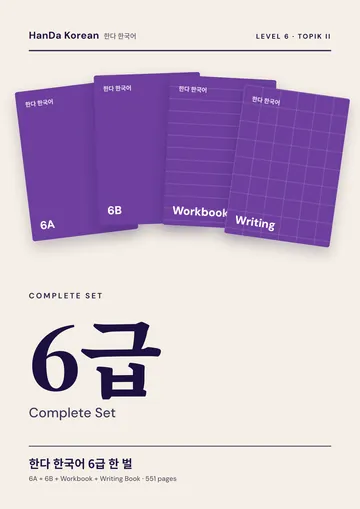 HanDa Korean Level 6 — Complete Set
Complete level 6 — student books, workbook and writing book · 551 pages
$10