Q1
지하
What does this word mean?
music
tax
parcel delivery
underground/basement
지하 — underground/basement (daily_life)
Q2
uncle (paternal)
How do you say this in Korean?
할아버지
누나
삼촌
딸
삼촌 — uncle (paternal) (family)
Q3
사과
What does this word mean?
japchae (stir-fried noodles)
bulgogi
apple
bean sprouts
사과 — apple (food)
Q4
feeling
How do you say this in Korean?
두렵다
속상하다
신나다
느낌
느낌 — feeling (emotions)
Q5
태풍
What does this word mean?
above zero
typhoon
forecast
heavy snow
태풍 — typhoon (weather)
Q6
vacation/leave
How do you say this in Korean?
야근
프로젝트
출근
휴가
휴가 — vacation/leave (work)
Q7
세상에
What does this word mean?
in other words
really?
oh my goodness
and
세상에 — oh my goodness (expressions)
Q8
problem
How do you say this in Korean?
택배
다용도실
문제
놀이터
문제 — problem (daily_life)
Q9
없어요
What does this grammar pattern mean?
there is not / do not have
to not be (A is not B)
subject marker — marks the grammatical subject
Is there / Do you have? — question
없어요 — there is not / do not have. e.g. 강아지가 없어요. (There is no dog.)
Q10
-이에요/예요
What does this grammar pattern mean?
to be (A is B) — identifying nouns
subject marker — marks the grammatical subject
what — asking about food or preference
present tense polite ending
-이에요/예요 — to be (A is B) — identifying nouns. e.g. 이것은 커피예요. (This is coffee.)
Q11
Ask what someone is doing right now.
Which sentence says this correctly?
도서관에서 책을 읽어요.
지금 뭐 해요?
저는 물을 마셔요.
오빠는 회사원이에요.
뭐 (question word) — what — asking about a thing or action. 뭐 + 동사? (억양 올림)
Q12
은/는
What does this grammar pattern mean?
at / in / to (static location, destination, or time)
at (time)
topic marker — introduces or contrasts a topic
at / in (place where an action happens)
은/는 (topic marker) — topic marker — introduces or contrasts a topic. e.g. 저는 학생이에요. (I am a student.)
Q13
at / in / to (static location, destination, or time)
Which Korean grammar pattern expresses this?
에
이/가
-아/어요
-이에요/예요
에 (location/time) — at / in / to (static location, destination, or time). e.g. 저는 집에 있어요. (I am at home.)
Q14
Say that you drink water.
Which sentence says this correctly?
저는 학생이에요.
저는 물을 마셔요.
저는 커피를 마셔요.
저는 의사예요.
-아/어요 (present polite) — present tense polite ending. 마시다 → 마셔요 (이 + 어요 축약)
Q15
오늘 날씨가 정말 좋아요.
What does this sentence from the passage mean?
After reading, I'll meet a friend and eat dinner together.
If you use a transit card, transfers are free.
The weather is really nice today.
My father, mother, older sister, and me.
오늘 날씨가 정말 좋아요. = The weather is really nice today.
Q16
어제는 비가 많이 왔어요.
What does this sentence from the passage mean?
So please be sure to take an umbrella.
I will go with my friend by train.
Every morning, we take a walk together.
It rained a lot yesterday.
어제는 비가 많이 왔어요. = It rained a lot yesterday.
Q17
구름 없는 하늘이 정말 예뻐요.
What does this sentence from the passage mean?
The sky without clouds is really pretty.
Do you have fruit cake? Please give me that.
I buy apples and pears.
Walking outside makes me feel good.
구름 없는 하늘이 정말 예뻐요. = The sky without clouds is really pretty.
Q18
구름
What does this word mean in the passage?
reading
cloud
to take off (clothes)
to be sour
구름 (gu-reum) — cloud
Q19
날씨
What does this word mean in the passage?
weather
baby
gradually
to be annoyed
날씨 (nal-ssi) — weather
Q20
Which sentence does NOT appear in the passage above?
밖에서 걸으면 기분이 좋아요.
구름 없는 하늘이 정말 예뻐요.
집 근처에 떡볶이 가게가 있어요.
오늘 날씨가 정말 좋아요.
"집 근처에 떡볶이 가게가 있어요." (There is a tteokbokki shop near my house.) is from a different passage.
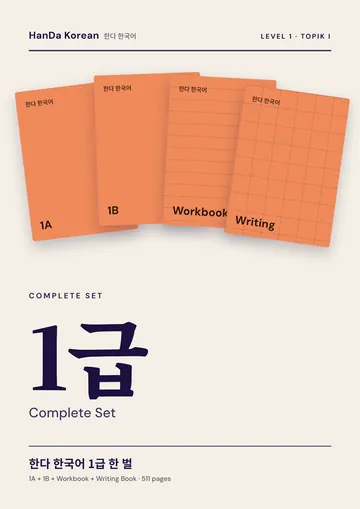 HanDa Korean Level 1 — Complete Set
Complete level 1 — student books, workbook and writing book · 511 pages
$10
HanDa Korean Level 1 — Complete Set
Complete level 1 — student books, workbook and writing book · 511 pages
$10
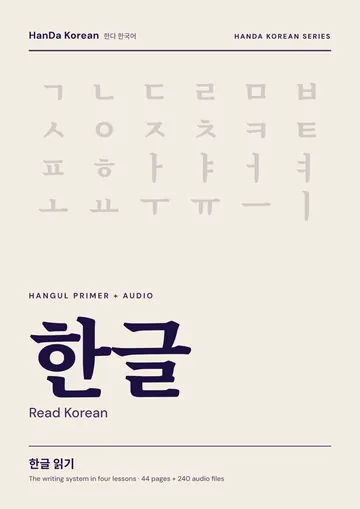 Read Korean
If reading is still slow, start here · 44 pages
$5
Read Korean
If reading is still slow, start here · 44 pages
$5
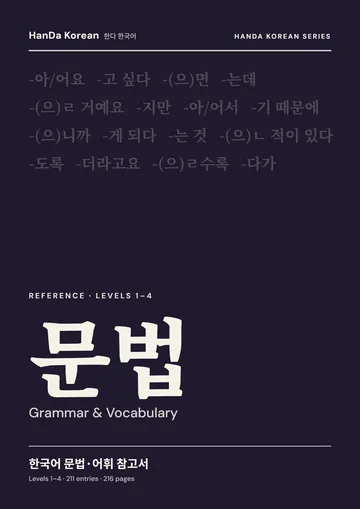 Korean Grammar & Vocabulary Reference
Every pattern from level 1 to 6 in one book · 216 pages
$8
Korean Grammar & Vocabulary Reference
Every pattern from level 1 to 6 in one book · 216 pages
$8
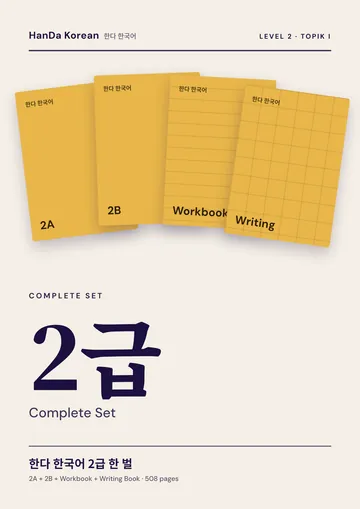 HanDa Korean Level 2 — Complete Set
Complete level 2 — student books, workbook and writing book · 508 pages
$10
HanDa Korean Level 2 — Complete Set
Complete level 2 — student books, workbook and writing book · 508 pages
$10