Korean Idol Hierarchy: 선배, 후배, 막내, 리더 Explained

You've heard idols bow and say 선배님 to someone who looks younger than them. You've heard a group call their 27-year-old member the 막내. Both of those make perfect sense once you know the one rule underneath all of it:
In Korean group life, rank comes from when you entered, and age comes from when you were born — and they are two separate things.
선배/후배 track the first one. 형/누나/오빠/언니/막내 track the second. A group has both systems running at the same time, and the Korean the members speak to each other is decided by the two of them together. Once you see that, a lot of variety-show behavior stops being confusing.
선배 and 후배: it's the debut date
선배 is someone who started before you — at the same school, the same company, or in the same industry. 후배 is someone who started after you. In K-pop, "started" means 데뷔 (debut). A singer who debuted three years ago is a 선배 to one who debuted last month, even if the newer one is five years older.
선배님, 안녕하세요. 잘 부탁드립니다. Hello, sunbae. I look forward to working with you. (안녕하세요 is 해요체 and 잘 부탁드립니다 is the more formal 합쇼체 — that mix is exactly what idols say on camera. If you want it fully formal: 선배님, 안녕하십니까.)
데뷔는 제가 먼저 했어요. 나이는 제가 한 살 어려요. I debuted first. But I'm one year younger.
That second line is the whole situation in two sentences, and Korean speakers say something like it constantly — because they need to tell you which system applies. Note 먼저, not 빨리: 먼저 is about order, 빨리 is about speed.
When you speak to a senior, you add 님: 선배님. When you talk about one, 님 is optional and often dropped in casual speech:
그 선배 진짜 친절해요. That sunbae is really kind.
선배님들께 많이 배웠어요. I learned a lot from the seniors.
And here's the part learners get wrong: you almost never say 후배 to someone's face. 후배 is a word for describing people, not for addressing them. To a junior colleague you use their name.
- ✗ 후배님, 안녕하세요.
- ○ 지훈 씨, 안녕하세요. → Hello, Jihun.
Saying 후배님 to someone lands somewhere between stiff and faintly rude — like announcing "hello, my subordinate." Native speakers just don't do it. 선배님 is a title of respect going upward; there's no matching title going downward.
Inside the group: age words take over
Once everyone debuted on the same day, 선배/후배 is useless within the group. So members switch to age words: 형 (older male, said by a male), 오빠 (older male, said by a female), 누나 (older female, said by a male), 언니 (older female, said by a female).
형, 이거 진짜 맛있어요. Hyung, this is really good.
Notice that 형 sits comfortably with 해요체 here. Among close members, you'll hear the older-person title plus casual-polite endings, or full 반말 if they're very close. What you won't hear is a younger member using flat 반말 while a senior is in the room on a broadcast — the register tightens up in public. (Korean drinking scenes run on exactly the same logic; see 한잔해, 건배, 원샷 for how that plays out around a table.)
막내 is the youngest member. It's a family word first — the youngest child in a household is the 막내 — and it carries warmth, not insult.
제가 우리 팀 막내예요. I'm the youngest in our team.
막내가 제일 어른스러워요. The youngest one is the most mature.
At the other end, the oldest member is the 맏형 (in a group of men) or 맏언니 (in a group of women). These are affectionate job descriptions as much as facts: the 맏형 is expected to look after everyone, the 막내 is allowed to be a bit spoiled.
And if two members were born in the same year:
우리 동갑이에요. We're the same age.
동갑 means same birth year, and it's a small event in Korean — it means nobody has to use honorifics, so they can drop into 반말 with each other. The phrase for that is 말을 놓다, "to put down one's speech":
말 놓으셔도 돼요. You can speak casually to me.
The younger or junior person offers this; the senior accepts it. You'd never demand it upward.
리더: a job, not a rank
리더 is the English word, and it means what you'd expect — but it isn't the same as being oldest. Plenty of groups have a leader who is not the 맏형 or 맏언니. The leader's job is partly linguistic: they speak for the group.
리더가 팀을 대표해서 인사해요. The leader greets people on behalf of the team.
이 사람이 우리 팀 리더예요. He's our team's leader.
That 이 사람이 matters. Korean drops subjects freely, so a bare 우리 팀 리더예요 would most naturally be heard as "I'm our team's leader" — say who you mean. (If subject marking still feels slippery, 은/는 vs 이/가 is the fix.)
When a group bows at the start of a show and one voice says the group greeting while the others join the last line — that's the 리더 doing their job. You'll also hear members say the leader 챙겨요 (looks after everyone). 리더 is a role; 맏형 is a birth order; 선배 is a debut date. Three different axes, and a member can sit anywhere on each.
What this means for you as a fan
One honest warning: you are not their 후배. 선배님 is a word for people inside the same school or industry. A fan calling an idol 선배님 sounds off — it claims a relationship that isn't there. Fans use age words instead:
오빠, 무대 잘 봤어요. Oppa, I watched the stage — it was great.
언니, 오늘 너무 멋있었어요. Unnie, you looked so cool today.
Use 오빠/형 for an older man and 언니/누나 for an older woman, chosen by your gender. If the idol is younger than you, most fans just use the name — adding 씨 or 님 in writing keeps it polite.
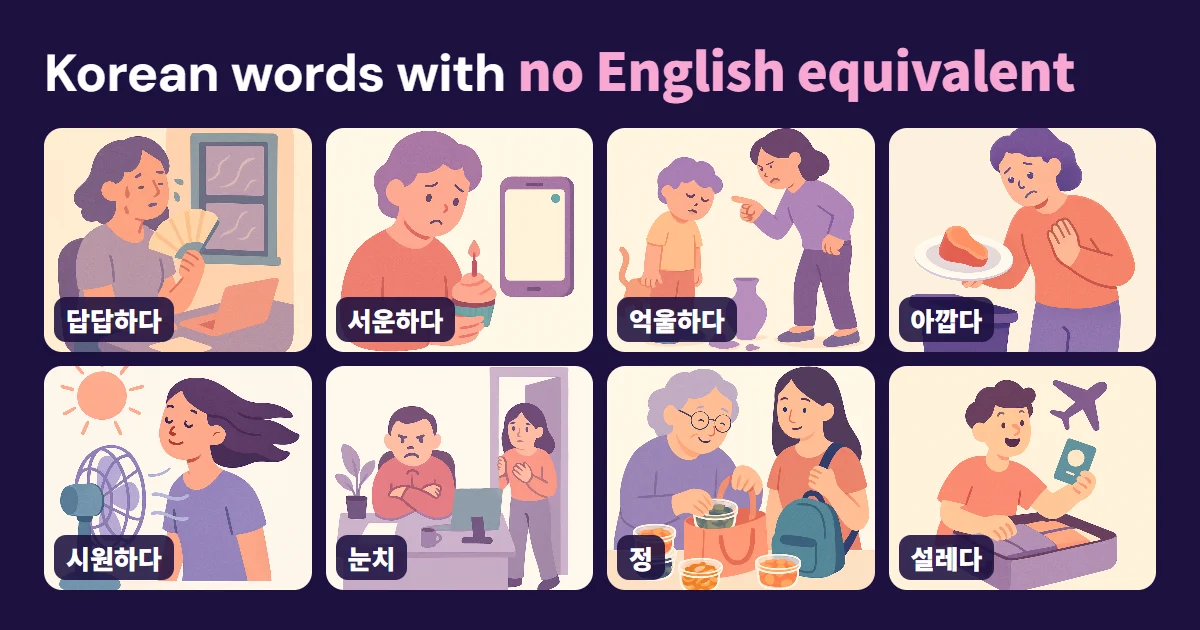
The deeper takeaway is that these four words aren't trivia. They're the switch that decides every verb ending in the conversation. Korean makes you declare the relationship before you can finish a sentence, which is why members ask each other's birth year within about ninety seconds of meeting. If that idea is new to you, Korean words with no English equivalent covers a few more concepts that work the same way — one word doing the job of a whole social rule.
And if 선배/후배/막내 keep sliding out of your head, it's usually because you learned them as translations instead of as relationships. Attach each one to a person you can picture — the friend who started the job before you, the youngest cousin — and they stick. More on that in why Korean vocabulary won't stick.
Practice
- Someone debuted two years before you, but is three years younger than you. Are they your 선배 or your 후배?
- Fill in the blank when greeting that person in public: ______, 안녕하세요.
- One of these is unnatural to say to someone's face. Which? (a) 선배님 (b) 후배님
- Say in Korean: "I'm the youngest in our team."
- You want to tell an older person that it's fine to speak casually to you. What do you say?
Answers
- 선배 — in the industry, debut date decides. By age they're your 동생, but the professional title still applies.
- 선배님, 안녕하세요.
- (b) 후배님. Use the person's name instead: 지훈 씨, 안녕하세요.
- 제가 우리 팀 막내예요.
- 말 놓으셔도 돼요. (Also natural: 말 편하게 하세요.)
Practice this with an AI tutor
HanDa corrects every sentence you write or say — in real conversation, not flashcards.