10 Korean Words You Hear in Almost Every K-pop Song
Here's something that surprises learners: Korean pop songs run on a very small vocabulary. A handful of emotional nouns and adverbs do almost all the work, song after song, group after group. Learn ten of them and you'll start catching whole lines instead of isolated syllables.
But there's a catch worth knowing early: most of these words are 반말 (casual) or poetic. They're perfect in a song and odd in a café. So for each word below I'll tell you what it means, show a natural line with it, and say where it belongs in real life.
(If you're also stuck on the English-sounding words in fan culture, that's a different list — see the Konglish words every K-pop fan meets.)
1. 사랑 — love
사랑해. — I love you.
사랑 is the noun; 사랑하다 is the verb. In songs you'll almost always hear the 반말 form 사랑해, because songs speak to one close person. In real life the level changes with the listener: 사랑해요 to someone you're close to but polite with, and 사랑합니다 (합쇼체) when an idol says it to a hall full of fans — formal, but warm rather than cold. Also useful: 첫사랑 (first love).
2. 마음 — heart, mind, feelings
내 마음 알아? — Do you know how I feel?
마음 is the emotional heart, not the organ (that's 심장). It covers your feelings, your intentions, your state of mind — 마음이 아파요 (my heart hurts / I'm hurting), 마음이 편해요 (I feel at ease). One everyday use you'll need constantly: 마음에 들어요, which means I like it about a thing you've seen or been given.
3. 너 — you (casual)
너만 보여. — I only see you.
너 is the 반말 "you," and songs use it nonstop. Watch the shrinking forms: 너를 → 널, 너의 → 네. In speech and in singing, 네가 is pronounced [니가] so it doesn't sound identical to 내가 (I). In real conversation, 너 is only for close friends or people clearly younger than you — with anyone else, Koreans use the person's name or title instead. That 만 in 너만 is the "only" particle; 만 and 밖에 aren't interchangeable, and songs love both.
4. 그대 — you (poetic)
그대 없이는 살 수 없어요. — I can't live without you.
그대 is the literary, romantic "you." It belongs to lyrics, poems and love letters — nowhere else. If you said 그대 to a Korean friend over coffee, they'd laugh and tell you that you sound like an old ballad. Recognize it, enjoy it, don't deploy it.
5. 우리 — we, us, our
우리 같이 가자. — Let's go together.
In songs, 우리 usually means the couple: 우리 사이 (what's between us), 우리 추억 (our memories). In daily Korean, 우리 does something English doesn't — it replaces "my" for things you share with your group: 우리 엄마 (my mom), 우리 집 (my house), 우리 학교. Saying 내 엄마 sounds strangely possessive to a Korean ear, almost like you're claiming her. Default to 우리 for family and home.
6. 곁 — one's side
네 곁에 있을게. — I'll stay by your side.
곁 means the space right next to a person, and it's warmer than the plain word 옆. You'll hear 곁에 있어 줘 (stay by my side) and 내 곁에 (by my side) constantly in ballads. The -(으)ㄹ게 ending in 있을게 is a promise made to the listener — -(으)ㄹ게요 vs -(으)ㄹ래요 is worth ten minutes of your life, because songs and idols use it every other sentence.
7. 꿈 — dream
꿈에서 널 봤어. — I saw you in my dream.
꿈 covers both meanings English splits: the dream you have asleep and the dream you chase. That's why the word carries so much weight in lyrics — one line can mean both at once. The phrase to steal is 꿈만 같아요 (it feels just like a dream), which is what people genuinely say when something wonderful and unbelievable happens.
8. 눈물 — tears
눈물이 나. — I'm tearing up.
Note the grammar, because it's not what English does. Tears come in Korean: 눈물이 나다, 눈물이 났어요 (I cried / tears came). There's no "cry tears" verb pair — 눈물을 울다 is simply wrong and sounds broken. Use 울었어요 (I cried) or 눈물이 났어요, and keep 눈물 for the noun: 눈물이 많아요 means I cry easily.
9. 다시 — again
다시 만나자. — Let's meet again.
다시 is the workhorse adverb of every chorus: 다시 한번 (one more time), 다시 시작해 (start again), 다시 돌아와 (come back). It's completely neutral and completely everyday, so unlike 그대 you can use it anywhere — 다시 말해 주세요 (please say that again) may be the single most useful sentence in a beginner's toolkit.
10. 영원히 — forever
영원히 잊지 않을게요. — I'll never forget you.
영원히 is the adverb; 영원 is the noun (eternity). It's dramatic by nature, so in normal conversation Koreans reach for 계속 (continuously) or 평생 (a lifetime) instead. But it's exactly right in a song, in a fan letter, or on stage — 영원히 함께해요 (let's be together forever) is the kind of thing an idol says to a crowd and nobody finds it excessive.
Why these ten repeat
Pop lyrics in any language stay simple, but Korean adds a second reason: a song addresses one person with no titles, no 씨, no 님. That strips out most of the vocabulary that makes real Korean complicated and leaves the bare emotional core — 너, 마음, 사랑, 곁. It's why K-pop is genuinely good listening practice for beginners. Just remember that a song is one specific register: intimate 반말 plus poetic vocabulary. When you take these words outside, adjust the ending, swap 그대 for the person's name, and you'll sound like a person instead of a chorus.
Practice
- A friend asks how you feel about a gift you were given. Say I like it.
- Say I saw you in my dream to a close friend (반말).
- Fix this sentence: 어제 눈물을 울었어요.
- Which of these ten words should you never use when talking to a real Korean friend?
- Say my mom the way a Korean would.
Answers
- 마음에 들어요.
- 꿈에서 널 봤어.
- 어제 눈물이 났어요. (or 어제 울었어요.) — tears "come," they aren't "cried."
- 그대 — it's poetic only; use the person's name instead.
- 우리 엄마 (not 내 엄마).
Learn this properly, not just once
Blog posts teach one thing at a time. The HanDa books teach level 1 in order — every lesson built to be spoken, with a workbook and writing book beside it.
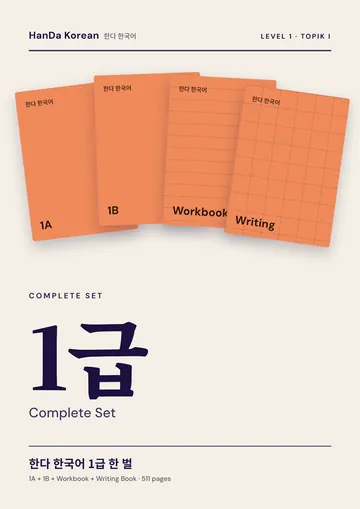 HanDa Korean Level 1 — Complete Set
Everything for level 1 — books, workbook and writing book · 511 pages
$10
HanDa Korean Level 1 — Complete Set
Everything for level 1 — books, workbook and writing book · 511 pages
$10
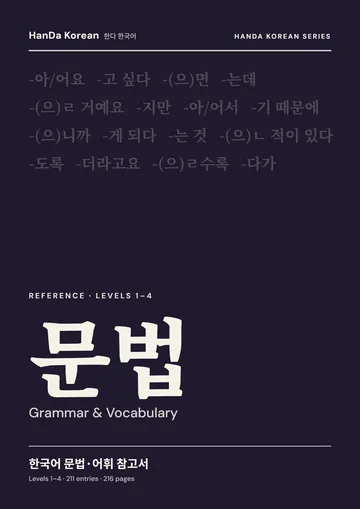 Korean Grammar & Vocabulary Reference
Every pattern in one place · 216 pages
$8
Korean Grammar & Vocabulary Reference
Every pattern in one place · 216 pages
$8
Practice this with an AI tutor
HanDa corrects every sentence you write or say — in real conversation, not flashcards.