배달 vs 택배 vs 배송: Korean Words for Delivery
Quick answer: Korean splits "delivery" into three words. 배달 (baedal) is food or goods brought to you right now by the shop — 배달 왔습니다 ("Your delivery's here"). 택배 (taekbae) is a parcel from a courier company — the box on your doormat. 배송 is the shipping process itself, the word on your order — 배송비 (shipping fee), 배송 중 (in transit). And the one line to memorize: 문 앞에 놔 주세요 — "Please leave it at the door."
Here's the idea in one sentence: Korean names delivery by who is bringing it and what stage it's at, not by one all-purpose verb. English gets by with "delivery" for a pizza, a parcel and a shipping fee. Korean uses a different word for each, and swapping them sounds immediately off — like saying "my pizza is in transit" or "how much is the hot-food-guy fee?"
The three words at a glance
| Word | What it is | Typical sentence |
|---|---|---|
| 배달 | A shop brings food/goods to you now | 배달 왔습니다. |
| 택배 | A courier parcel; also the service | 택배 왔어요. |
| 배송 | The shipping process, seller's side | 아직 배송 중이에요. |
배달 — hot food, arriving now
배달 is the word you'll use most as a visitor. It covers the chicken, the 족발, the tteokbokki that shows up in twenty minutes.
배달되나요? — "Do you deliver?"
배달 얼마나 걸려요? — "How long will the delivery take?"
If you order by phone instead of an app, those two questions plus your address will carry the whole call. The restaurant vocabulary is the same one you'd use when you order at a restaurant, so you're not learning a new menu — just a new opening line.
One small culture note: some restaurants, especially Korean-Chinese places, still deliver in real metal dishes. When you're done, you wash them lightly, put them outside your door, and the shop collects them later.
다 먹고 문 앞에 내놓으면 돼요. — "When you're done eating, just put them outside the door."
택배 — the box at your door
택배 is a parcel delivered by a courier company, and it's also the name of the service. Koreans use it as a plain noun: the box is 택배.
택배 왔어요. — "The parcel's here."
택배가 아직 안 왔어요. — "The parcel hasn't come yet."
택배 잘 받았습니다. — "I received the parcel, thank you." (Say this to the seller or to the friend who sent it.)
The driver is 택배 기사님. 기사님 is the polite way to address a driver of any kind, and you'll hear 기사님 in a taxi too.
배송 — the shipping, not the box
배송 is the process. You see it on order pages and hear it when something is late. You almost never say "배송 왔어요" — the thing that arrives is 택배; the shipping is 배송.
배송비가 얼마예요? — "How much is shipping?"
아직 배송 중이에요. — "It's still in transit."
무료 배송이에요. — "Shipping is free."
Quick test: a box on your doorstep is 택배. The three days it spent travelling is 배송. The chicken that arrives hot is 배달. Get that triangle right and you sound like someone who lives here.
The one line to memorize: 문 앞에 놔 주세요
In Korea, leaving a delivery at the door is completely normal, and the request is a fixed phrase.
문 앞에 놔 주세요. — "Please leave it in front of the door."
문 앞에 두고 가 주세요. — "Please leave it at the door and go."
경비실에 맡겨 주세요. — "Please leave it with the security office."
벨 누르지 말아 주세요. — "Please don't ring the bell."
문 앞에 놔 주세요 is the default — short, neutral, used by everyone. 두고 가 주세요 adds the "and go" nuance, so it's what people write when they really don't want to open the door. 경비실에 맡겨 주세요 is for apartment buildings with a guard post, which is most of them.
Why 놔 주세요 and not 놓으세요
놔 is the contracted form of 놓아, from 놓다 (to put something down). You could technically say 문 앞에 놓으세요, and it's grammatical — but it lands like an instruction to a subordinate: "Put it at the door." Adding -아/어 주세요 reframes the same action as a favor done for you: "Would you put it at the door for me."
That's the whole difference, and it runs through the language. 기다리세요 = "Wait." 기다려 주세요 = "Please wait for me." With strangers doing physical work for you — drivers, couriers, staff — Koreans reach for -아/어 주세요 almost automatically. Dropping it isn't rude exactly, but it sounds brusque, like a manager talking.
What you actually hear at the door
Most of the Korean in a delivery happens in about eight seconds.
Intercom: 누구세요? — "Who is it?"
Driver: 택배입니다. — "It's the courier."
You: 네, 문 앞에 놔 주세요. — "Yes, please leave it at the door."
Driver (calling from outside): 택배 왔습니다! — "Delivery!"
All of this is 해요체/합쇼체 — ordinary polite Korean with a stranger. Never switch to 반말 here, even if the driver sounds young.
When you do open the door and take the box from their hands, say 감사합니다. Many Koreans add 수고하세요 — roughly "keep up the good work, thanks for your effort" — which is normal and warm toward delivery staff, though 수고 phrases have their own rules about who you can say them to. If you're unsure, 감사합니다 is always safe.
One more useful sentence for when something goes wrong:
주문한 게 안 왔어요. — "What I ordered hasn't arrived."
FAQ
What does 택배 mean in Korean?
택배 means a parcel delivered by a courier service, and also the service itself. Koreans say 택배 왔어요 ("the parcel's here") about the box, and 택배 기사님 about the driver. It does not mean food delivery — that's 배달.
What's the difference between 배달 and 배송?
배달 is someone physically bringing something to you now, usually hot food from a nearby shop. 배송 is the shipping process managed by a seller — the word you see in 배송비 (shipping fee) and 배송 중 (in transit). A pizza is 배달; a package travelling across the country for two days is 배송.
How do you say "leave it at the door" in Korean?
문 앞에 놔 주세요. Literally "please put it in front of the door." 놔 is the contracted form of 놓아, and -아/어 주세요 makes it a polite request rather than an order. 문 앞에 두고 가 주세요 works too and adds the sense of "and then go."
Practice
Say these in Korean. Keep everything polite (해요체/합쇼체).
- Please leave it in front of the door.
- Do you deliver?
- The parcel hasn't come yet.
- How much is shipping?
- Please leave it with the security office.
Answers
- 문 앞에 놔 주세요.
- 배달되나요?
- 택배가 아직 안 왔어요.
- 배송비가 얼마예요?
- 경비실에 맡겨 주세요.
Learn this properly, not just once
Blog posts teach one thing at a time. The HanDa books teach level 1 in order — every lesson built to be spoken, with a workbook and writing book beside it.
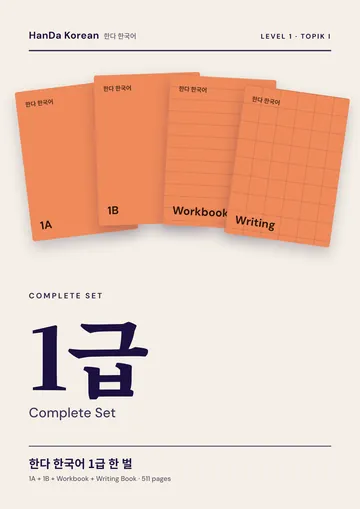 HanDa Korean Level 1 — Complete Set
Everything for level 1 — books, workbook and writing book · 511 pages
$10
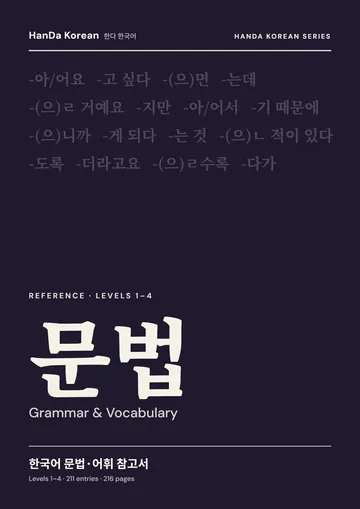 Korean Grammar & Vocabulary Reference
Every pattern in one place · 216 pages
$8
Practice this with an AI tutor
HanDa corrects every sentence you write or say — in real conversation, not flashcards.